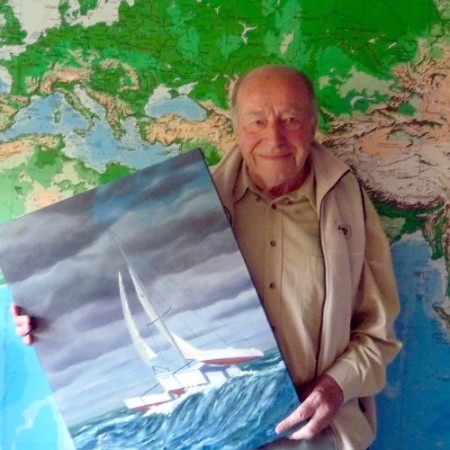
DEREK KELSALL FRINA
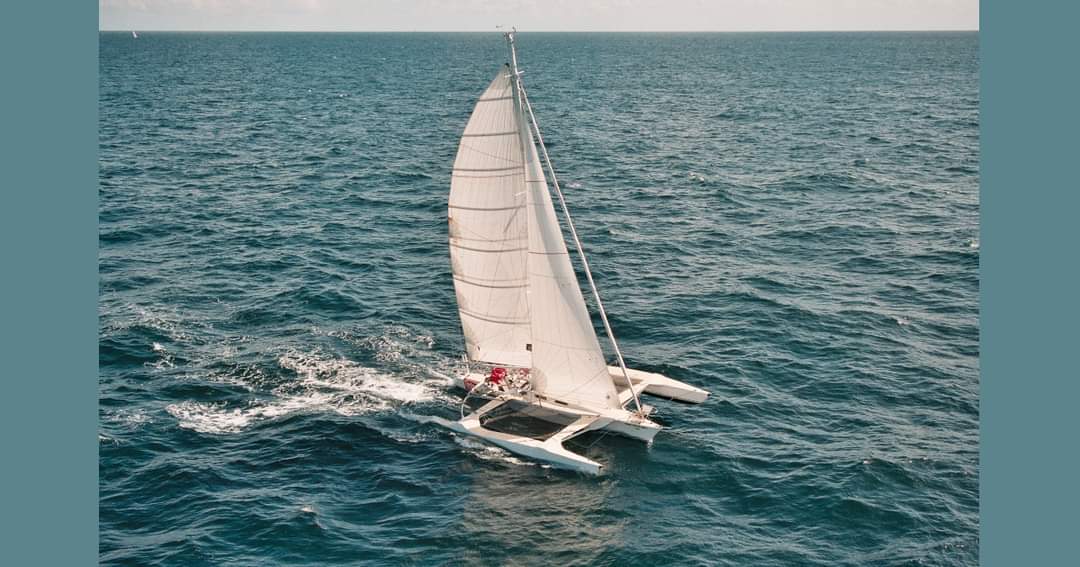
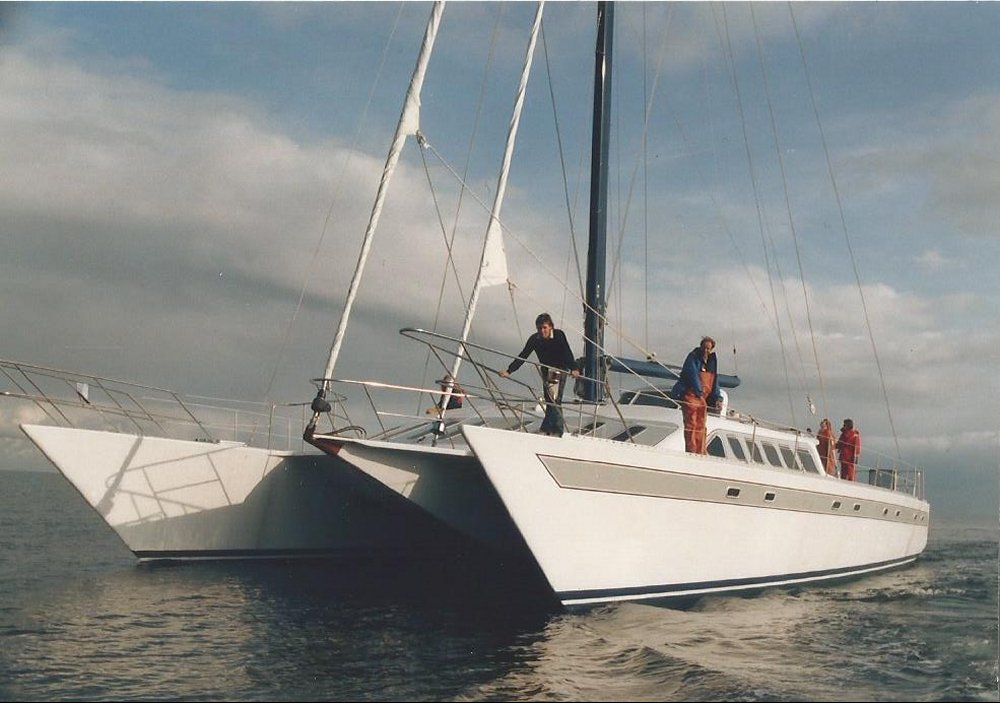
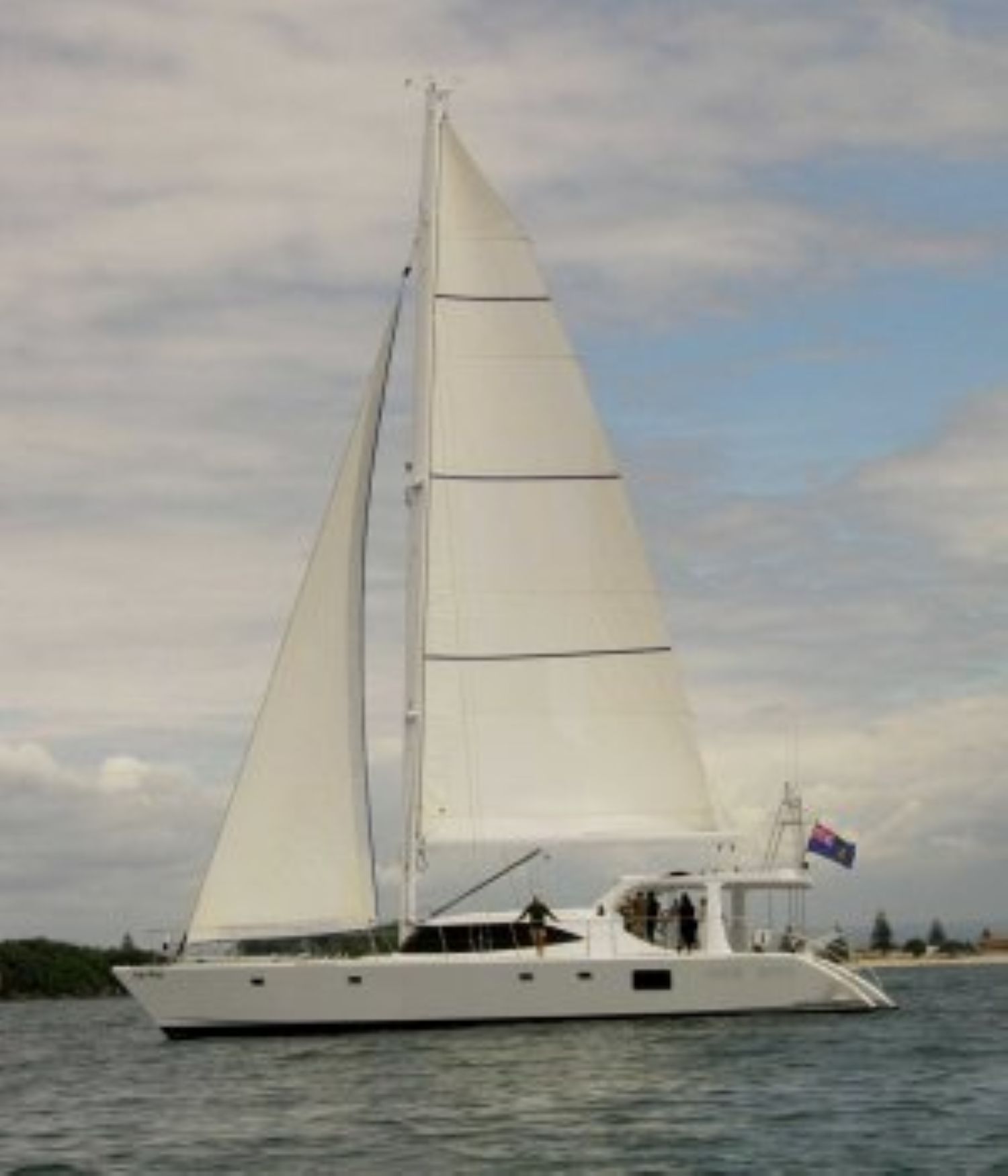
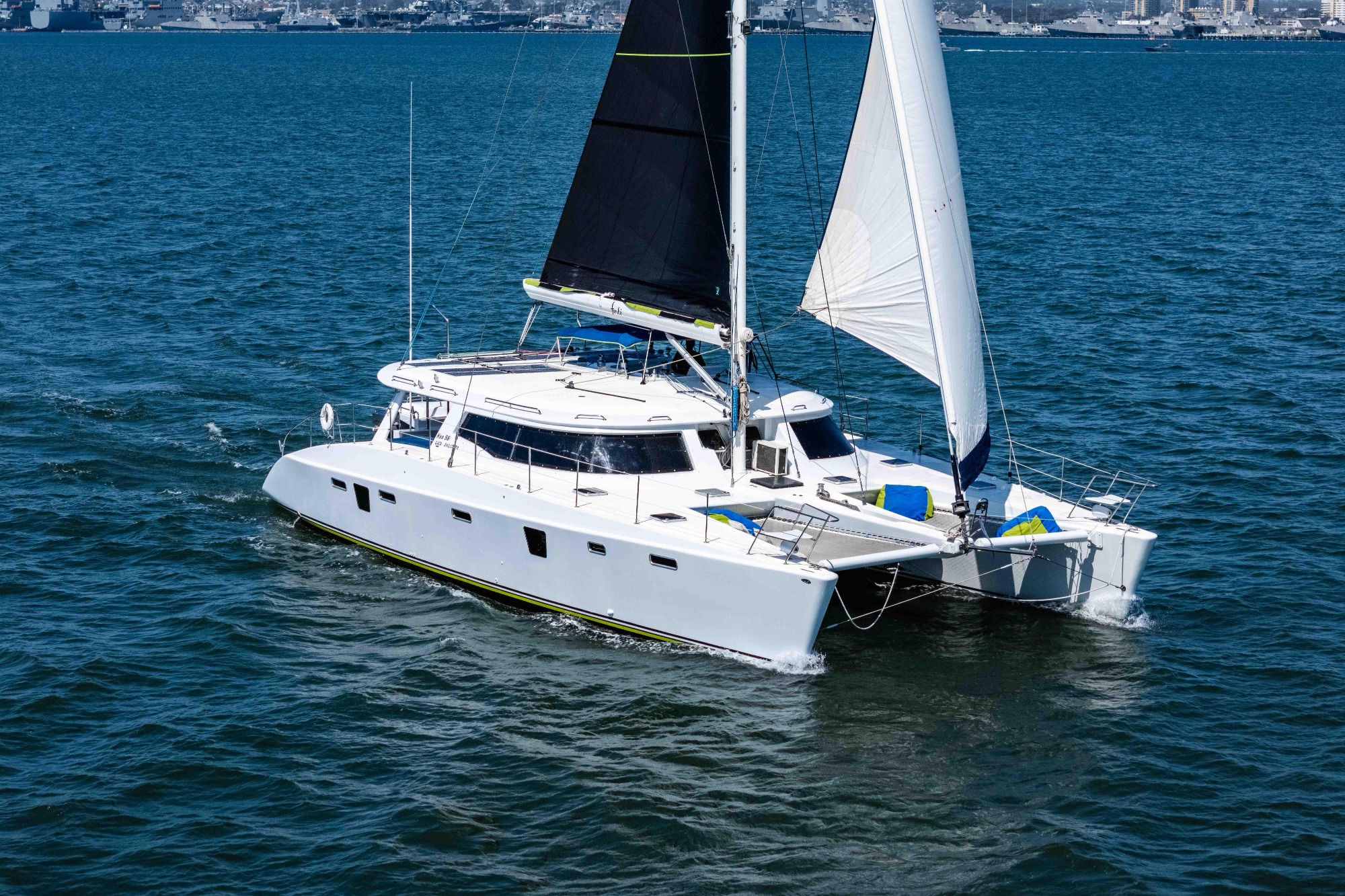
Derek stunned the yachting establishment with the UK's first modern trimaran Toria, in 1966. He was soon one of the most successful multihull yacht designers in the World designing multihulls that were at their launch, the largest in the World and the fastest. The yachts he designed and others he built to other designer's plans were winning races and setting speed records. In the current century until his death in 2022 he continued to design state of the art catamarans like the Ballotta KSS 58 illustrated here which was launched in Peru in 2009.
Arthur Piver had sailed his trimaran Nimble across the Atlantic in 1960 and in 1962 sailed to New Zealand from San Francisco. Piver' voyages and his widely selling designs had a massive impact and in the 60's and 70's hundreds of his trimarans were built by amateurs and professionals. Derek Kelsall had trained as an engineer and he was working in America in the 1960's where he became interested in multihull craft. He built a Piver trimaran and then sailed another one transatlantic back to the UK.
In 1964 back in Britain he built another 35 foot trimaran based on a set of Piver hulls in order to compete in the OSTAR single handed transatlantic yacht race. Although his new and highly modified Piver design raced against two catamarans they both had ballast keels because their owners or designers lacked sufficient faith in the multihull concept. Derek was the first man to race an unballasted multihull across the Atlantic. By the end of 1964 Derek had made three transatlantic voyages in trimarans.
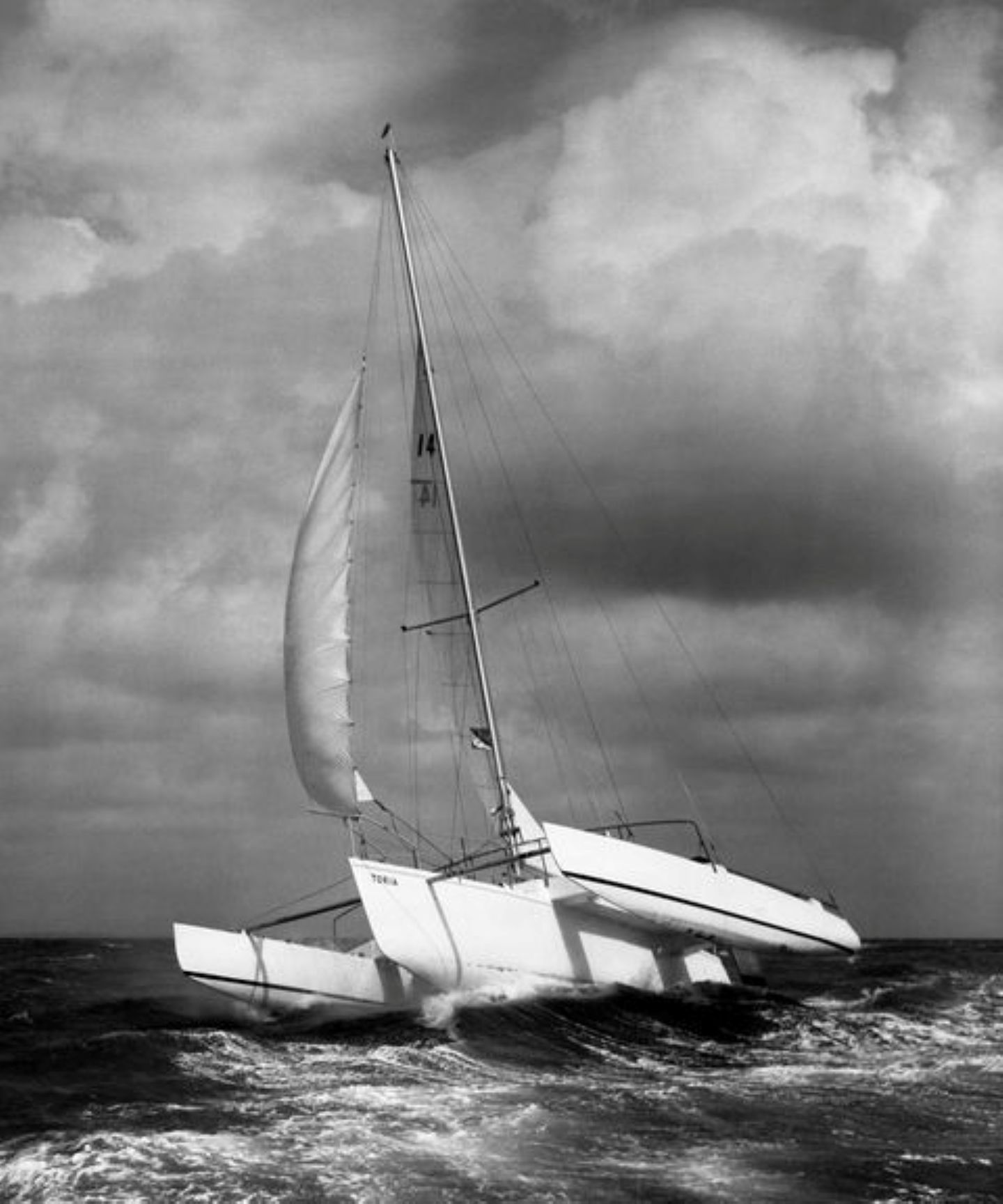
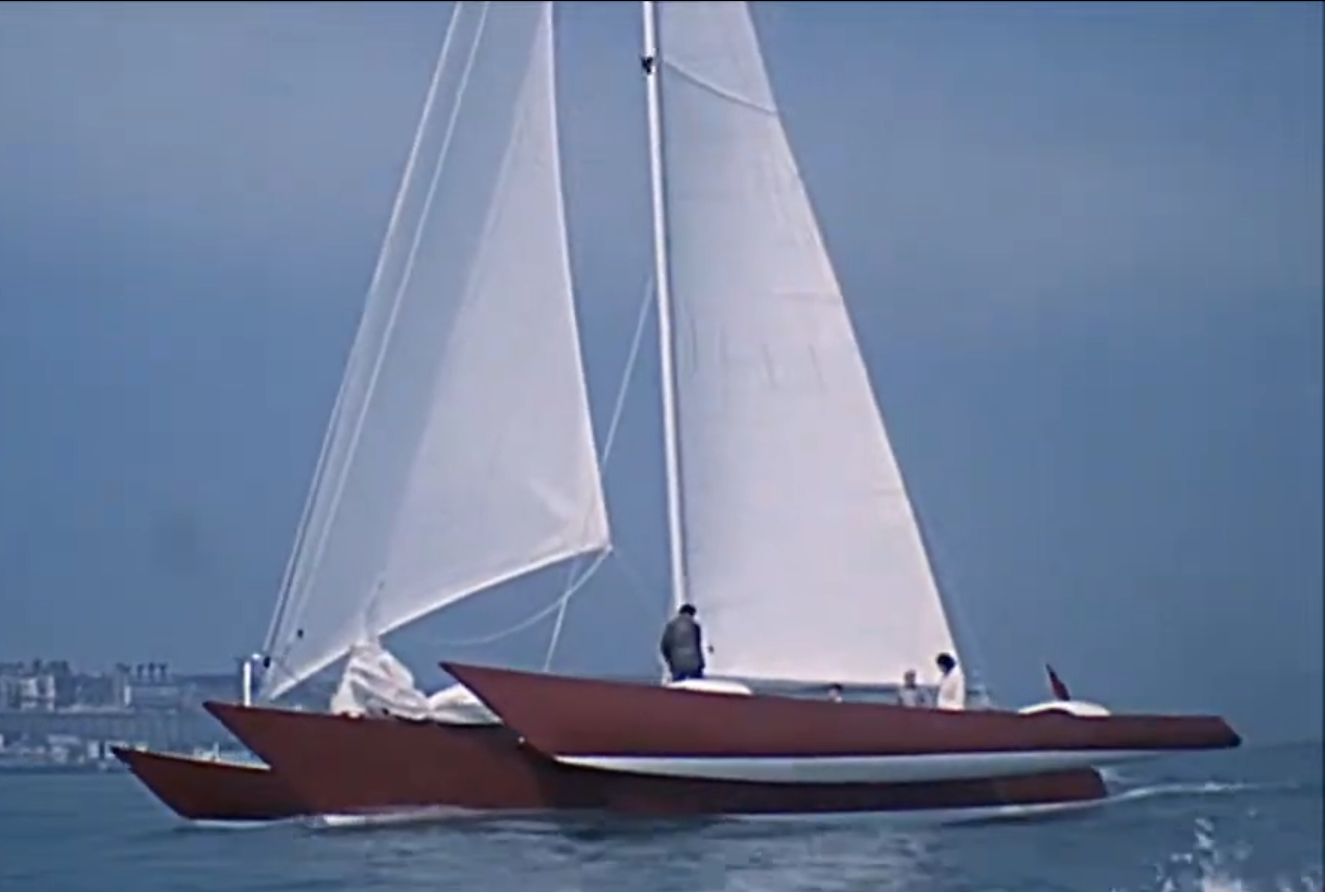
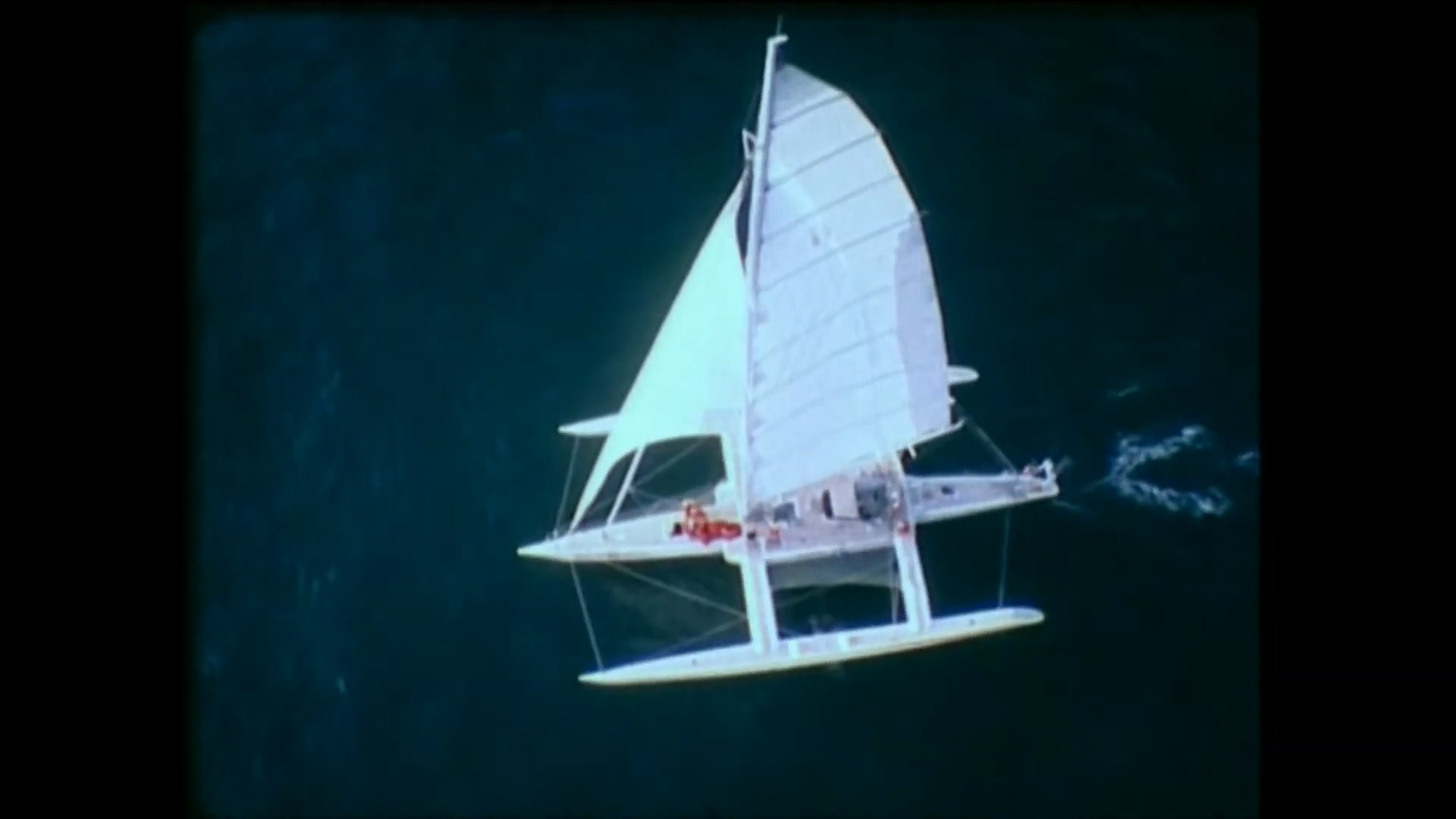
In 1965 Derek became involved in a boatyard in Cornwall and in partnership with the owner constructed a revolutionary 42 foot trimaran named Toria. Built in plastic foam sandwiched in grp with ply beams holding the hulls together she had round bilge hulls and the outriggers were placed to be out of the water at rest. She sailed on two hulls at a time. Nets replaced decks between the hulls. The modern shape of the hulls was influenced by the Tornado racing day sailor catamarans that were achieving terrific speeds. Derek Kelsall is sometimes described as the inventor of the modern trimaran because of Toria and rightly so. His development of the modern concept of open hulls with round bilge shapes was ahead of the rest. Equally he was the first with grp foam sandwich construction in the UK. If you look at Toria and her development Trifle you can see the basic concept behind all trimaran design since 1966.
In Australia Lock Crowther had designed day racer small trimarans and was also developing a similar concept for his Kraken 33 racing trimaran at the same time. In the USA Dick Newick too had built some trimarans and was moving away from the Piver concept as well but it was Derek who really made his mark first by not only designing such a vessel but immediately sailing it to a stunning race victory.
Derek took his new untested boat to Plymouth and raced her for 2000 miles in the 1966 Round Britain yacht race winning the race in record time - he finished a whole day in front of the rest, a record which stood for many years. Two catamarans took the next two places the following day some 19 hours behind Toria.
It was possibly another first that Derek, designed, built and sailed Toria to win the first race she entered. On the back of this success he set up in business as a yacht designer and boatbuilder and designed many fine trimarans and catamarans in a career that continued until his death in 2022. He developed the Toria design further in 1967 with the resulting boat called Trifle proving a very successful and fast cruiser/racer. In 1969 he was commissioned to design the 44 foot Trumpeter for an American Newspaper man Phil Weld who took her in the 1970 Round Britain Race and the 1972 OSTAR crossing the Atlantic three times. Trumpeter won races in America and today she is still sailing in Tahiti.
The boats he designed and others he built to other designer's plans were soon winning races and setting speed records. He pioneered grp foam sandwich boat building. Sandwich construction is now one of the most common types of boat construction with vaccuum bagging, resin infusion and added carbon and epoxy elements. Later he developed methods of building grp foam sandwich where the majority of the boat was made up of flat panels that could be laid up on a flat table using melamine surfaces to achieve a smooth outer hull surface. Shoe moulds were used to make the curved hull bottoms. This was further developed to eliminate the use of solid grp in molds and finally to KSS or Kelsall Swiftsure System where the panels were laid up using resin infusion to make a complete hull sides and then bent to the hull shape around frames. All the other panels of the bulkheads, decks and cabins were then also made in grp foam sandwich panels.
Toria herself was converted into Gancia Girl, a ketch rigged cruising yacht and Derek's crew in the 1966 race Martin Minter-Kemp took her across the Atlantic and back in the 1968 OSTAR. He also raced her in the 1970 RBR. Her last owner was the legendary yachtsman Tony Bullimore who entered her in the 1972 OSTAR. She was sadly lost in mid Atlantic when a fire broke out forcing Tony to abandon ship.
After legendary French sailor Eric Tabarly the winner of the 1964 OSTAR sailed with Derek on Toria he was also determined to get a multihull. Unfortunately he did not go to Derek for a design probably because he had French Navy and government sponsorship so a French designer was required. Andre Allegre designed the revolutionary aluminium 63 foot trimaran Pen Duick IV for the 1968 OSTAR. In a sense Derek's taking Eric on Toria started the modern French multihull craze (albeit the history of Kaimiloa, Ananda and Copula shows the French were into multihulls earlier).
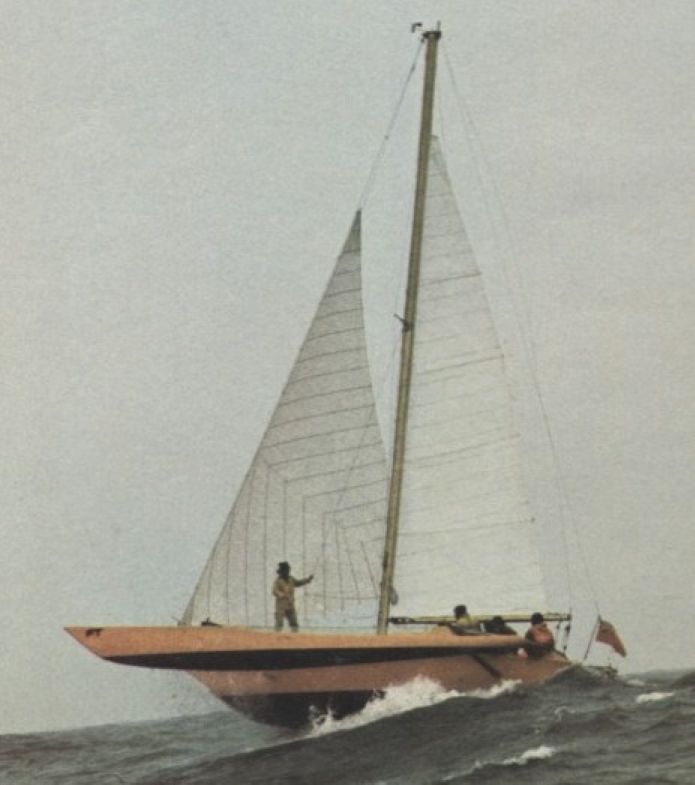
Derek also designed and built many successful trimarans for cruising and some catamarans as well as a revolutionary proa that he entered the 1970 RBR. He was a very much "hands-on" designer who independently of building his own designs built many monohulls designed by very well known yacht designers. 'Sir Thomas lipton' was designed by Robert Clark and claimed victory in the 1968 OSTAR. The 1973 Alan Gurney designed 'Great Britain II' was destined for success in the Whitbread Round the World race (seventh place for Chay Blyth). She went on to become arguably the most well travelled yacht in the World with 50 Atlantic crossings and 6 or more times around the World. Derek also designed and built monohulls himself so he was an all round naval architect and boat builder rather than just a multihull fanatic! I think that wide range of experience across his career gave him great perspective. The variety of designs he created including power boats is a sign of the level of his ability as a designer and in the engineering and construction aspects.
His career was also based on his personal sailing skills; not just the three transatlantic voyages but racing single handed and skippering or crewing on other racing boats. He regularly sailed in the multihull Crystal Trophy races and the annual Round the Island Races often in his own designs. As well as designing and boatbuilding professionally he ran boatyards in Cornwall initially then in Kent.
Apart from Derek's three transatlantic crossings in trimarans I believe that he and his wife Clare delivered a trimaran to the Canaries and then sailed on to the West Indies on a traditional Baltic trader converted for charter. Derek also sailed many of his own designs some single handed.
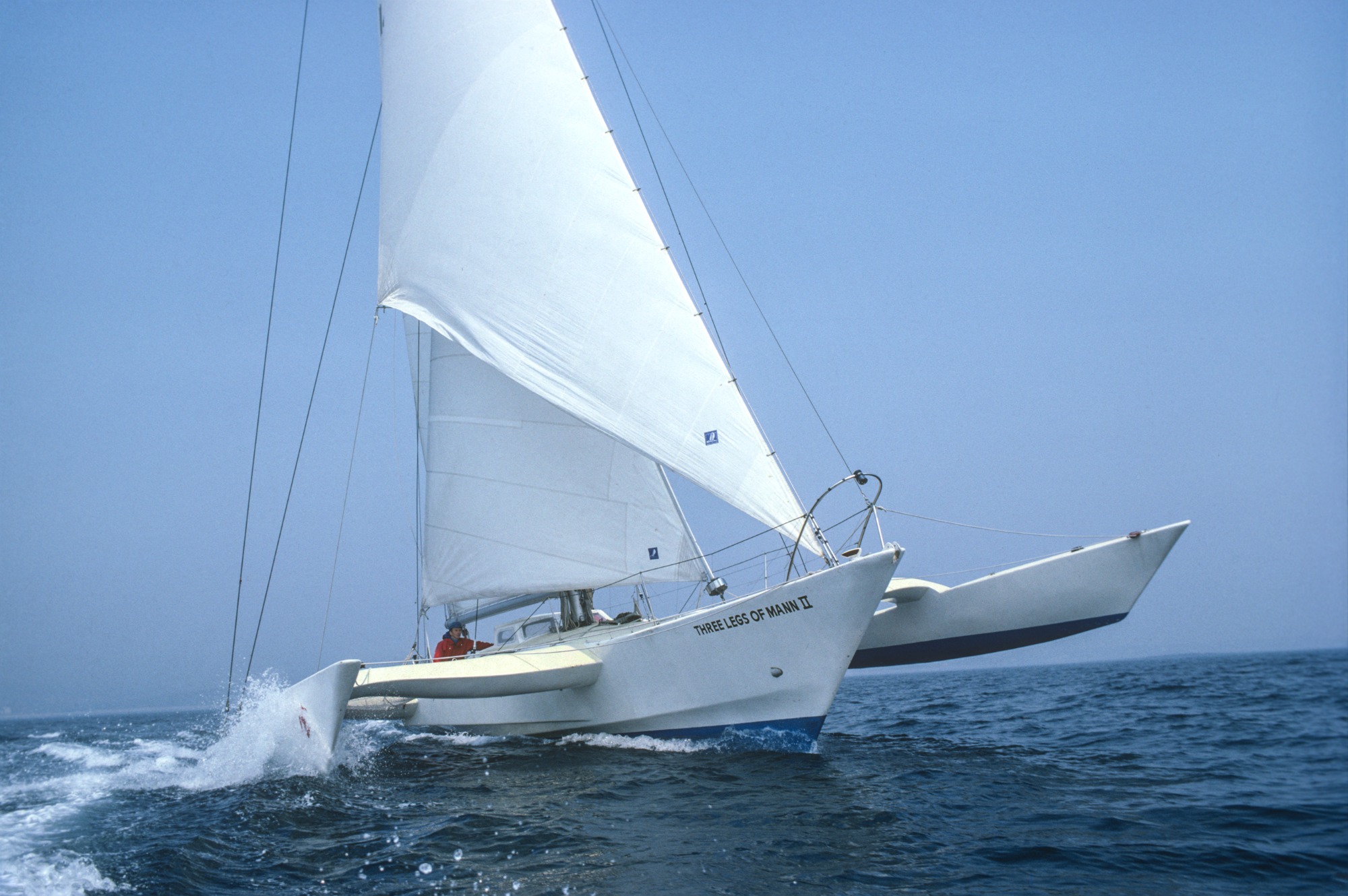
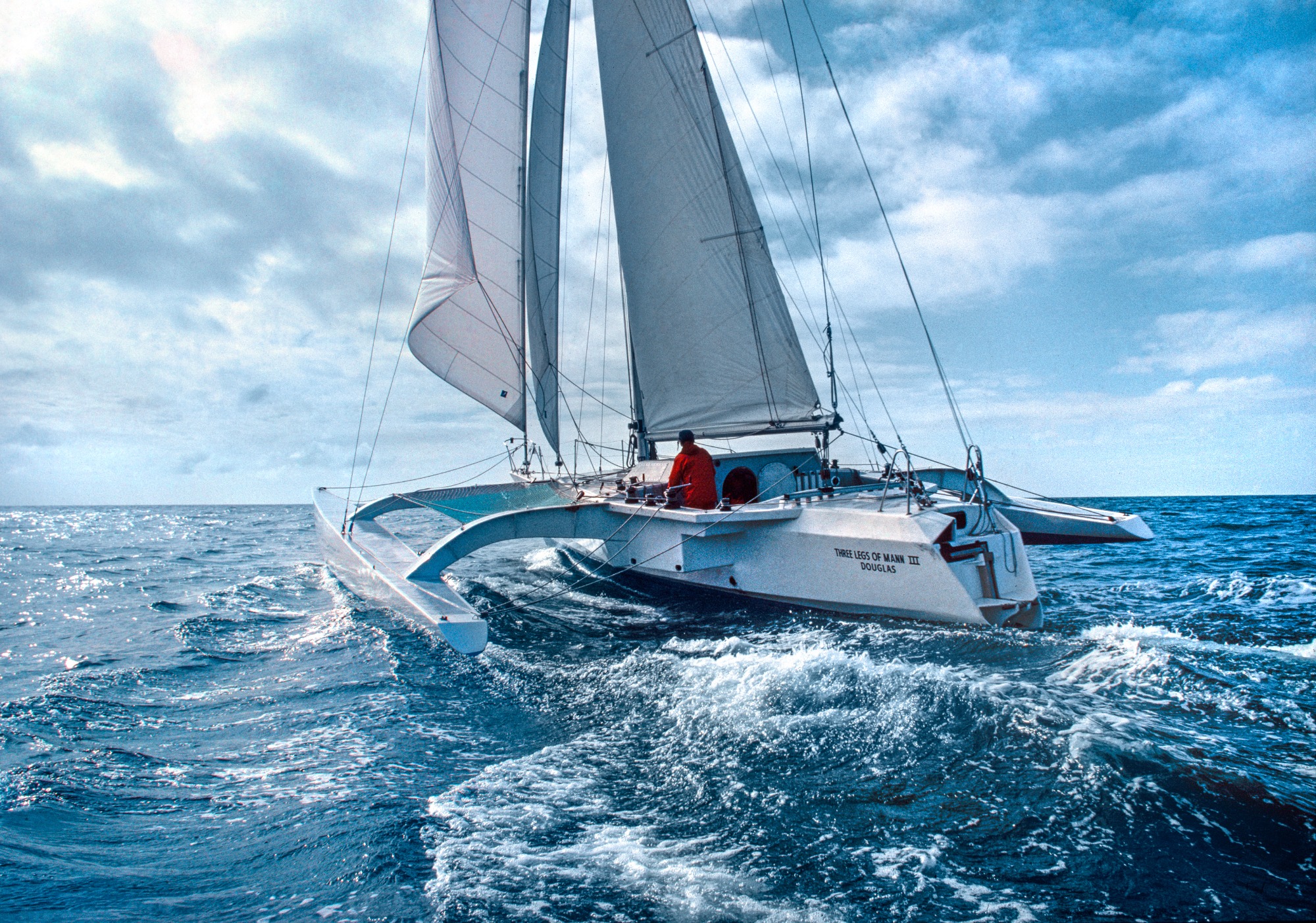
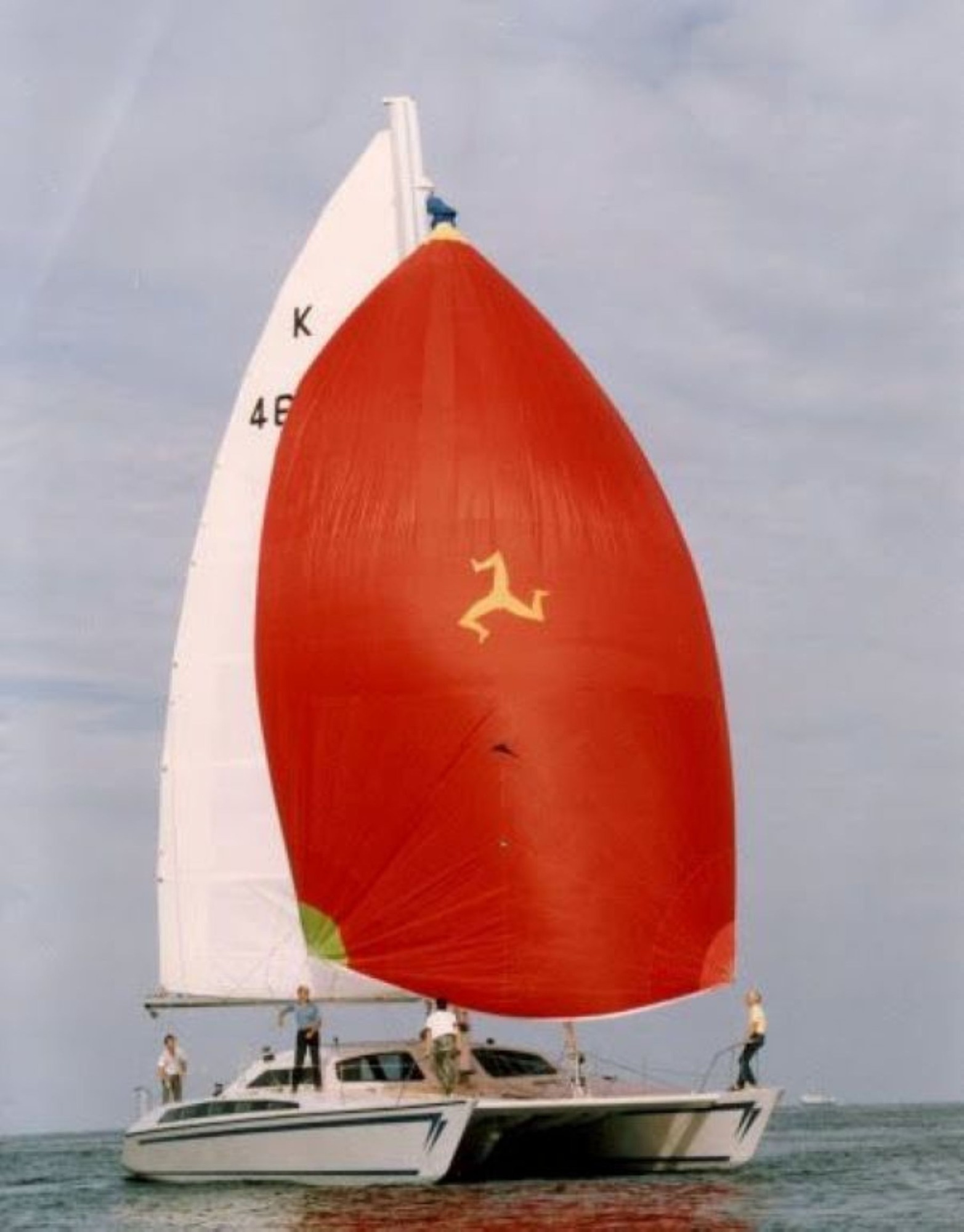
Isle of Mann sailor Nick Keig built a 37 foot trimaran to Derek's design and she was a very successful in every race entered and in 1975 Nick set a World record solo sailing 340 miles in 24 hours in her. Nick went on to build another four sucessful Kelsall multihulls. He won many races and was also second in the 1978 Round Britain Race (losing to the faster lighter GBIV also designed by Derek). In the 1980 OSTAR singlehanded transatlantic Nick's big comfortable trimaran Three Legs of Mann III was second home only seven hours behind the lightweight racer Newick racer Moxie.
In 1973 Derek designed and built FT a startling pink trimaran sponsored by the Financial Times newspaper which completed many races including the 1974 Round Britain race and the 1976 OSTAR.
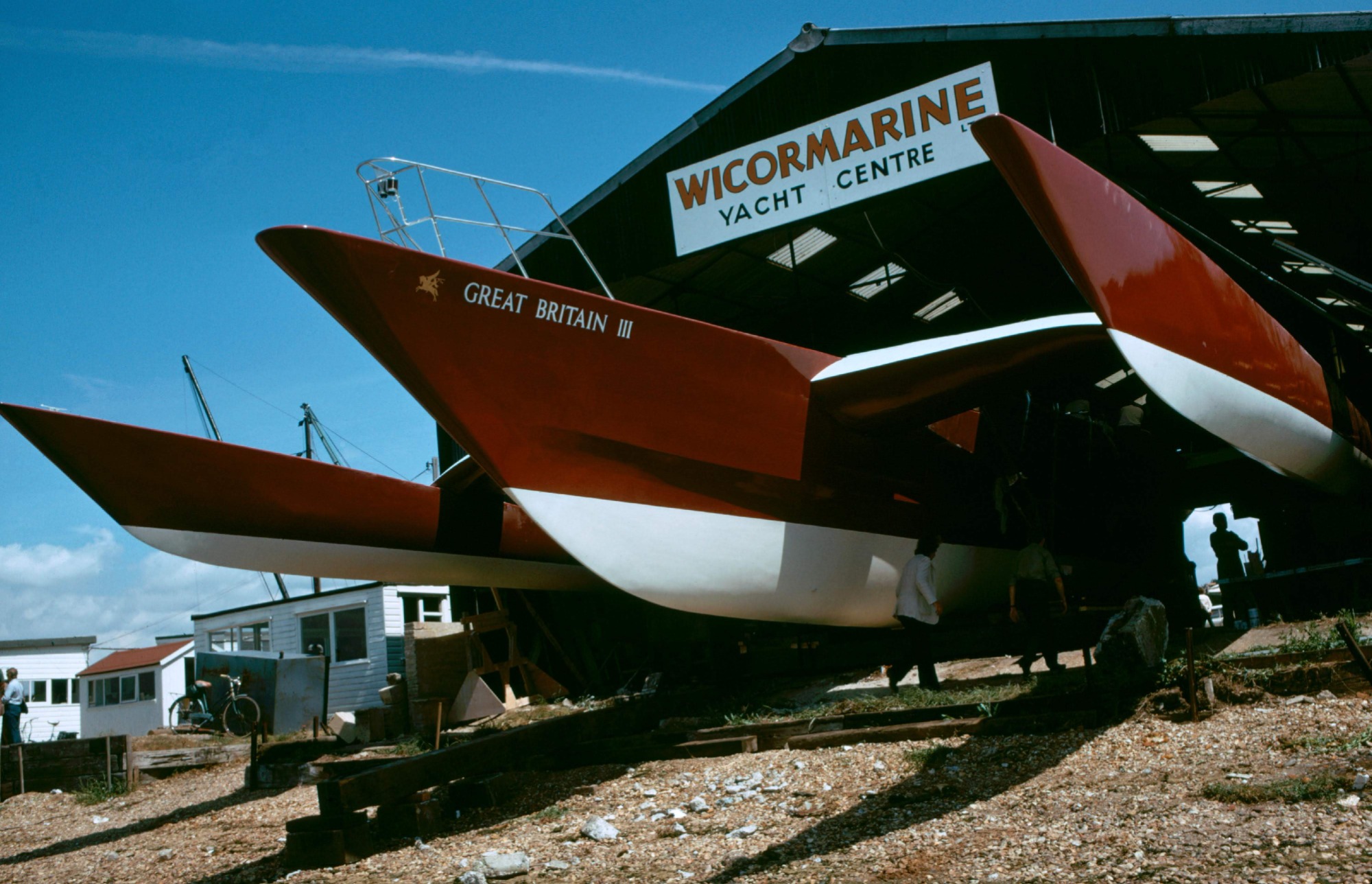
In 1975 Blyth came back to Derek for the design and build the World's largest trimaran the 80 foot long Great Britain III for a proposed Race Around the World for multihulls but in qualifying for the 1976 OSTAR he collided with a ship and the bow of the port outrigger was cut off. Blyth tried to sail on into Dartmouth but the port hull full of water caused the tri to capsize. She was a very advanced design and utilised carbon fibre in her cross beams -another advanced concept pioneered by Derek.
Derek then built Blythe a smaller 53 foot tri called GBIV and he won the 1978 Round Britain yacht race in her. It was said that she was probably the fastest yacht in the World at the time. GBIV finished just ahead of Three Legs of Mann II a fabulous 53 footer designed for Nick Keig both beating Phil Weld's big Newick tri Rogue Wave.
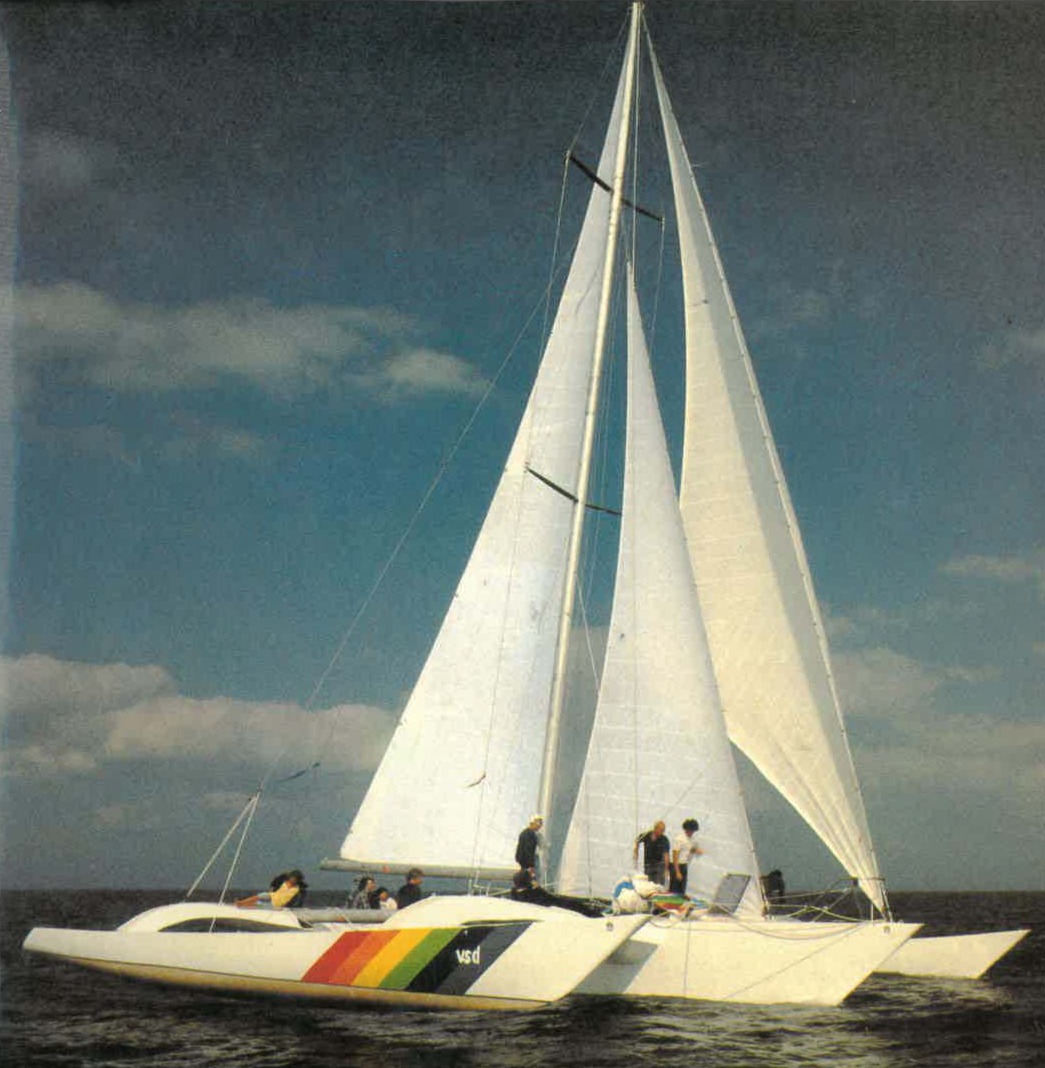
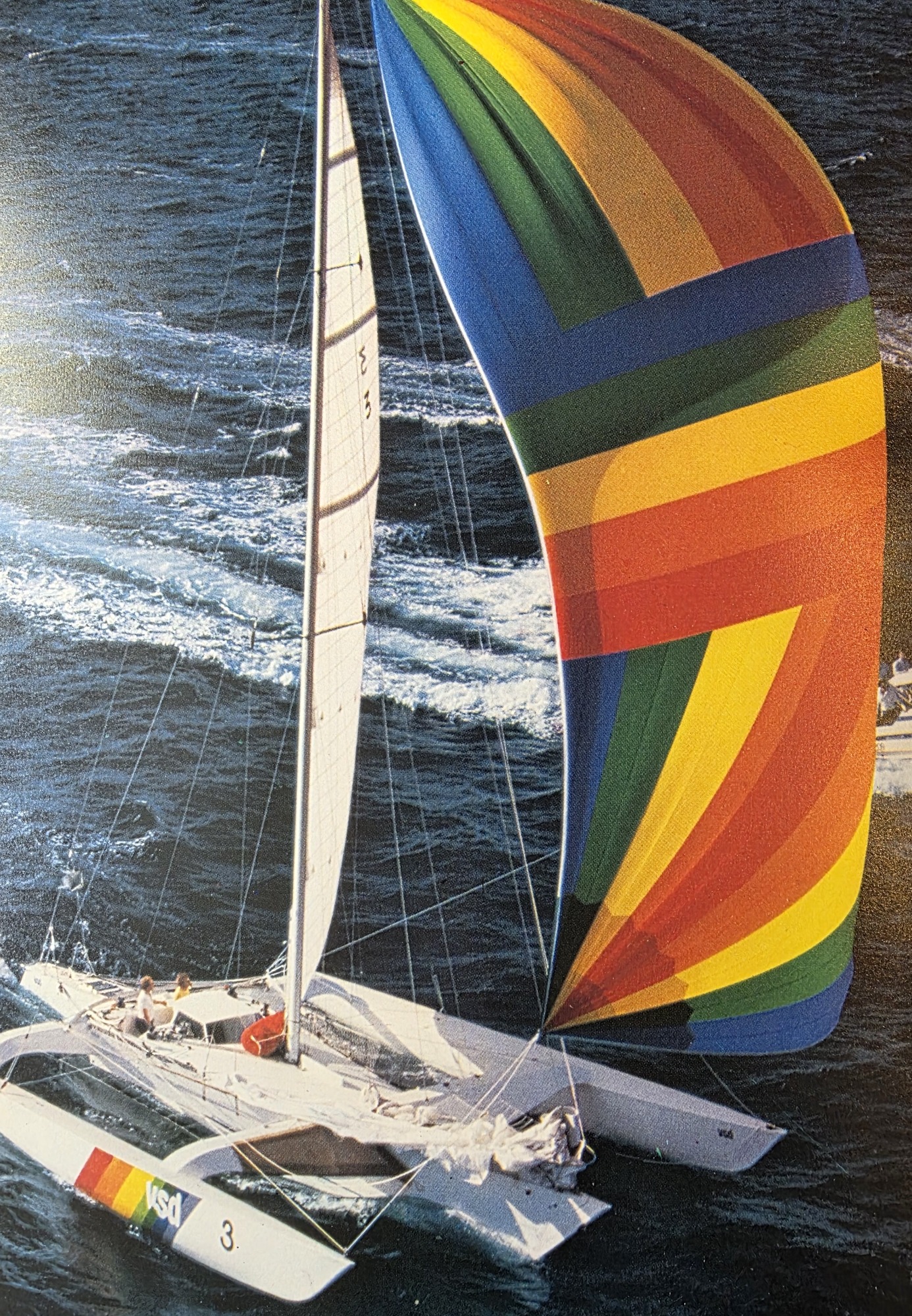
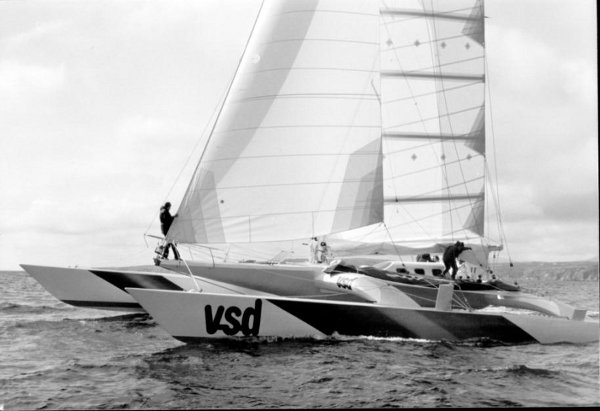
By now Derek Kelsall was recognised as a World class multihull designer and builder with his stock designs sailing all over the World. As well as his successes with FT, Chay Blyth, and Nick Keig' three trimarans, he designed three trimarans for French racer Eugene Riguidel, called VSD, VSD2 and the 88 foot William Saurin in 1983.
The original VSD was a sister ship to GBIV and crossed the Atlantic but was lost by grounding on a reef when her skipper fell asleep. Her successor was more on the lines of Three Legs of Man III but was still a stripped out racer and had hydrofoils. She survived a pitch pole capsize and then made many successful Atlantic crossings winning the 1979 French Transat Race, 8th in the TWOSTAR and was in the 1980 OSTAR where various breakages robbed her of success. She was still sailing in as a restored classic yacht in 2018 owned by an incredible sailor called Stuart Rogerson who with his son Zac sailed her transatlantic several times and did over 15000 miles with her but she was lost in an accident at Sete in 2018 where she was blown on to rocks in high winds after engine failure entering the port.
The William Saurin (again at 88 feet the World's largest trimaran in 1983) was a truly ground breaking design that surely was the predecessor of todays monster Ultime class trimarans that dominate the ocean racing, and record breaking voyages around the World and set the fastest times across any sea.
Unfortunately Riguidel was unable to retain his French transatlantic race crown with her and she was expensive to run. He did set a transatlantic record in her sailing fully crewed. She proved too expensive for Riguidel without additional sponsorship but in 1991 she was converted for cruising as a charter yacht and is still engaged as such in Antilles.
Derek's star was waning in the international racing design market in the mid 80's with other rising stars in the UK such as John Shuttleworth (who had worked with Derek but went out on his own with trimarans for Chay Blyth and Peter Phillips). Internationally Dick Newick had been a big competitor especially with his trimarans for Phil Weld but there were many others entering the fray. Internationally Derek in the UK, Newick in the USA and Rudy Choy and Lock Crowther in the Pacific were recognised leaders of multihull design in the '60's and '70's but by the mid '80's there was a new movement of racing designers in France were being commissioned with big sponsors as multihull fever swept around the racing yacht scene. Others came on the scene in Australia and New Zealand and in America. I have started to tell their stories elsewhere.
Racing trimarans and catamarans grew bigger and more extreme. Cruiser - racers like the Three legs of Man series and Weld's big Newick trimarans were supplanted by purely racing machines as Derek had pioneered with the VSD trimarans for Riguidel and the VSD catamaran for Keig. Similarly there is no doubt the William Saurin was a major step leading up to the Ultime class racer trimarans we have today. The gap between cruising and voyaging multihulls has expanded massively. Today the crusing multihull and racing craft are at opposite extremes and the quest for greatest speed seen in the development of multihulls is being surpassed by foilers and effectively a return to foil assisted mono hulls. We have seen over the past decades development of mono hulls even without foils that are faster than most multihulls too.
But Derek happily concentrated on developing advanced and easier construction methods and designing a variety of sailing and power catamarans for amateur and professional production. He moved on from trimarans to believe that a twin hulled platform with bouyancy pushed out to the extreme ends was better as in Legs of Mann IV (also called VSD designed in 1983). In the rest of his career he designed many cruising and racing catamarans as well as commercial passenger ferries and motor yachts. He built the mono racers GBII and Sir Thomas Lipton and later co -designed an all carbon maxi too.
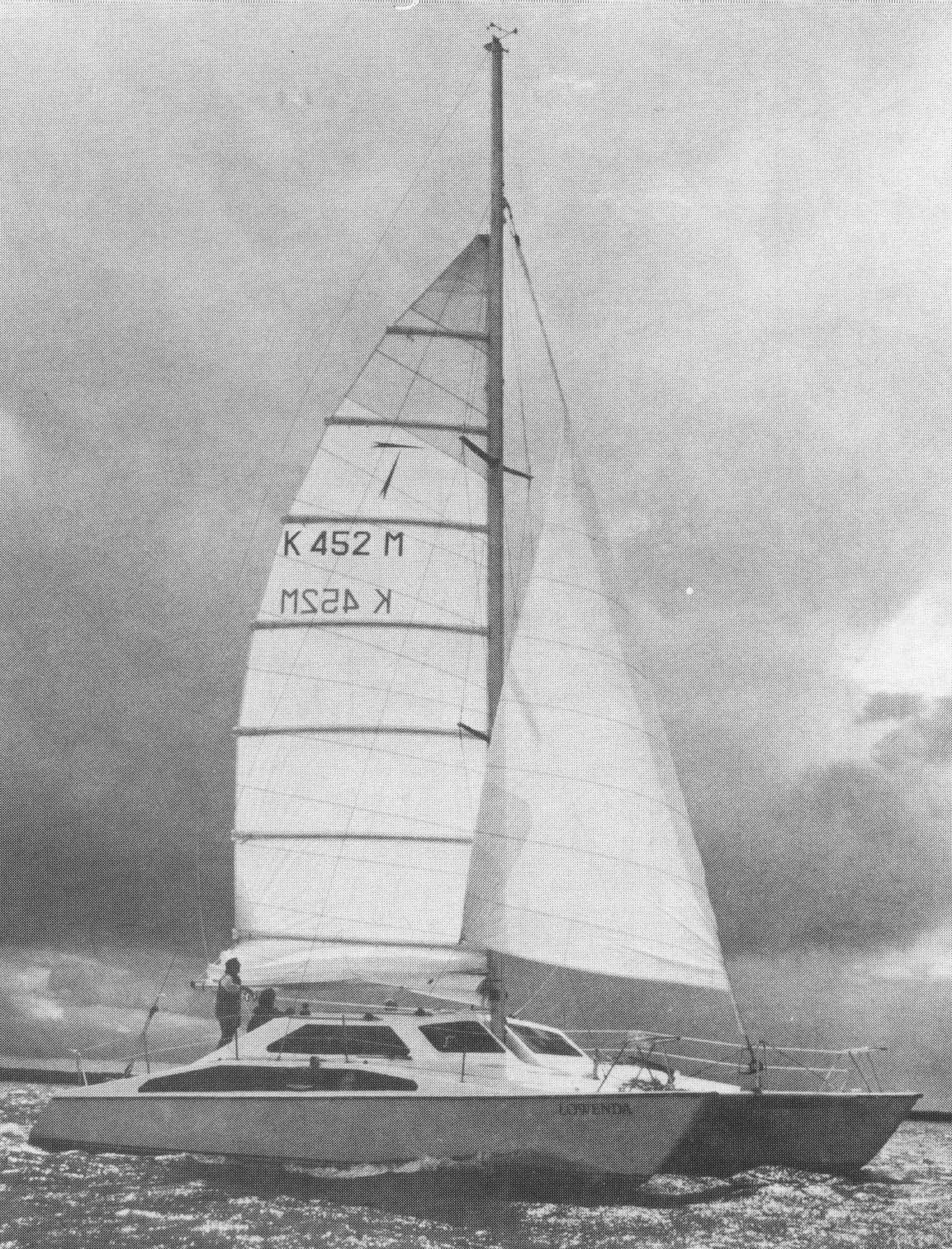
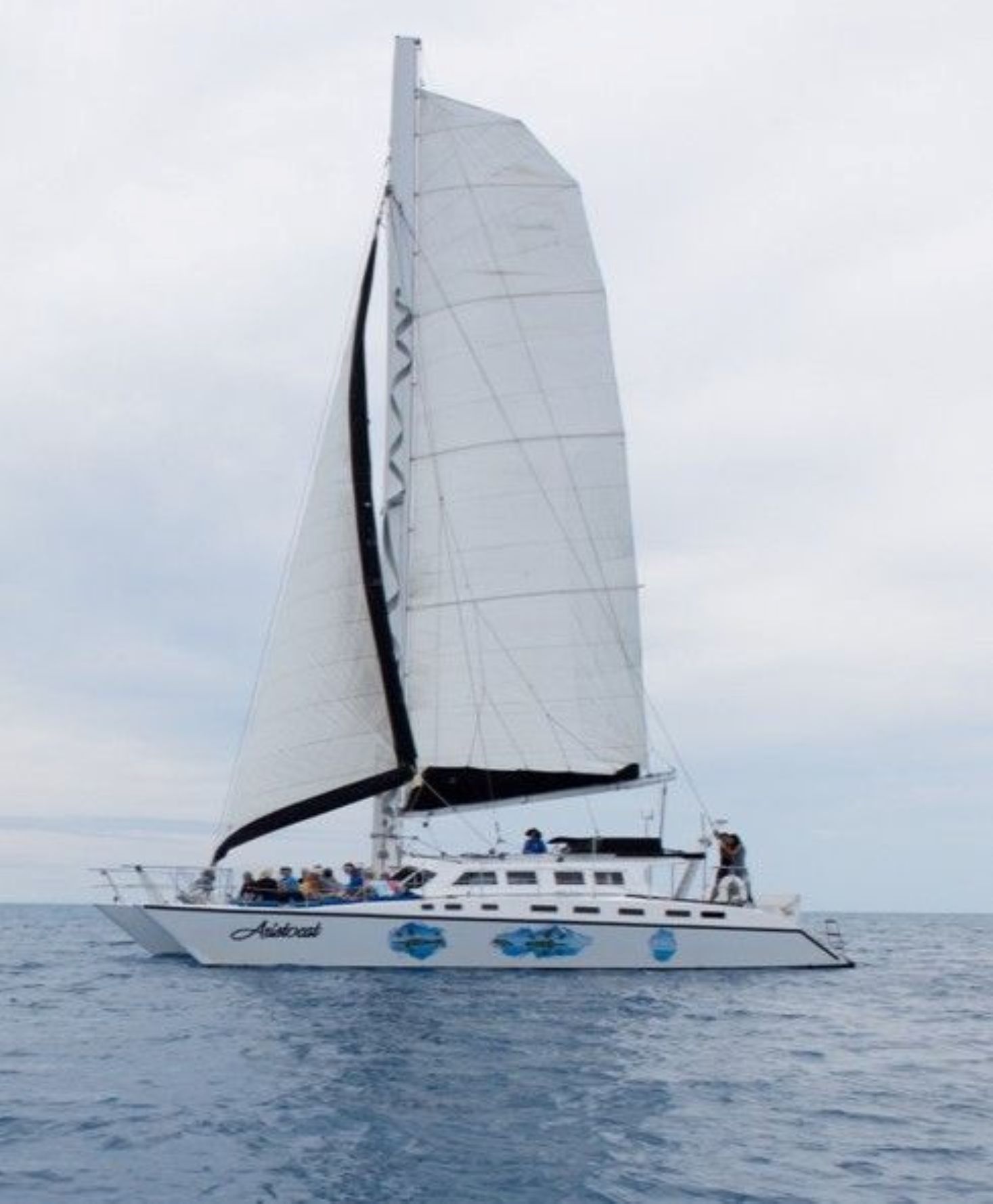
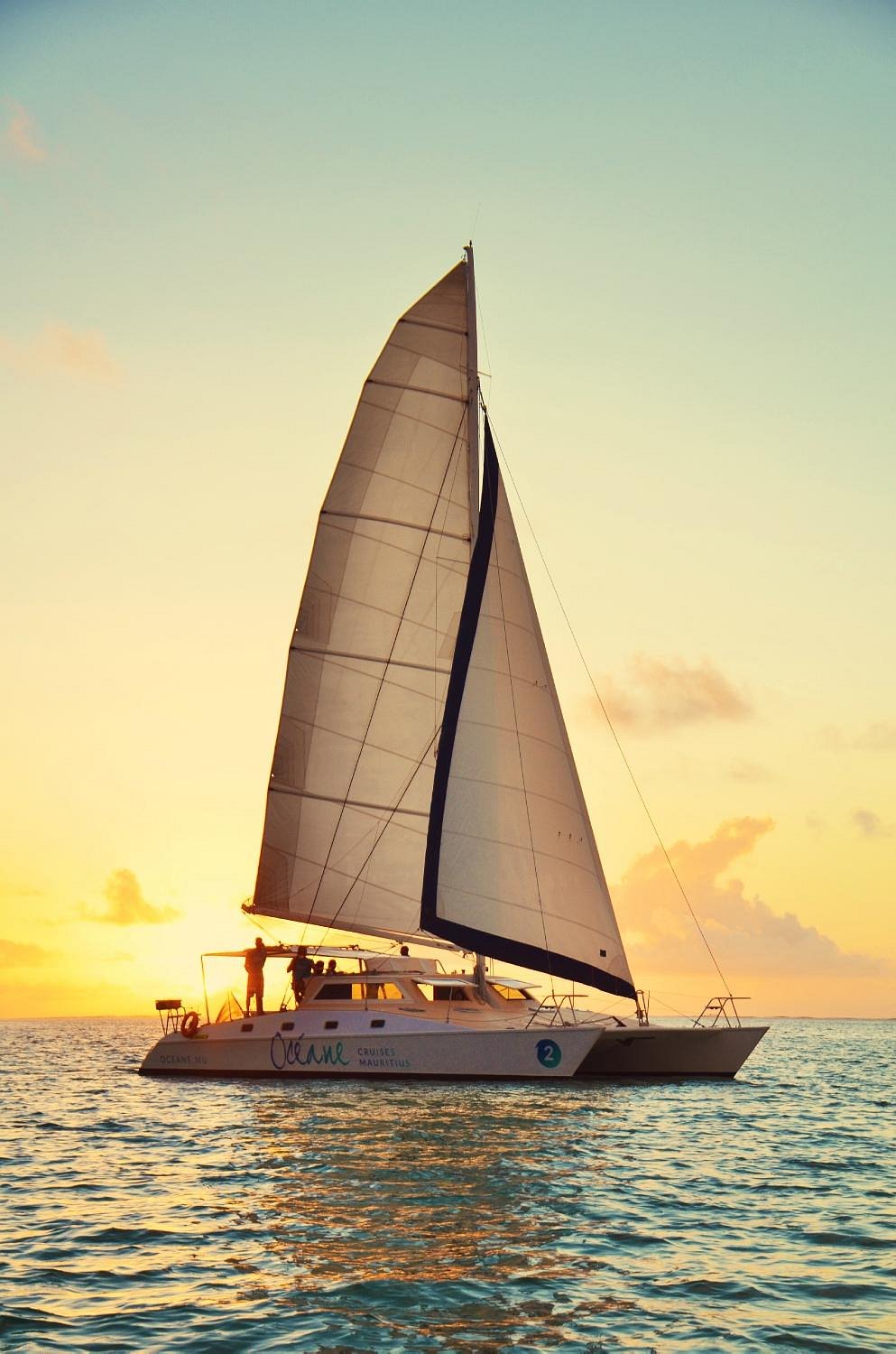
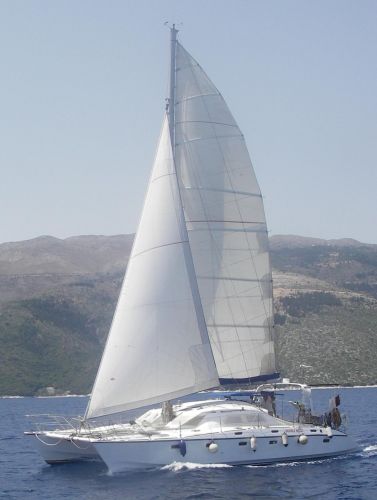
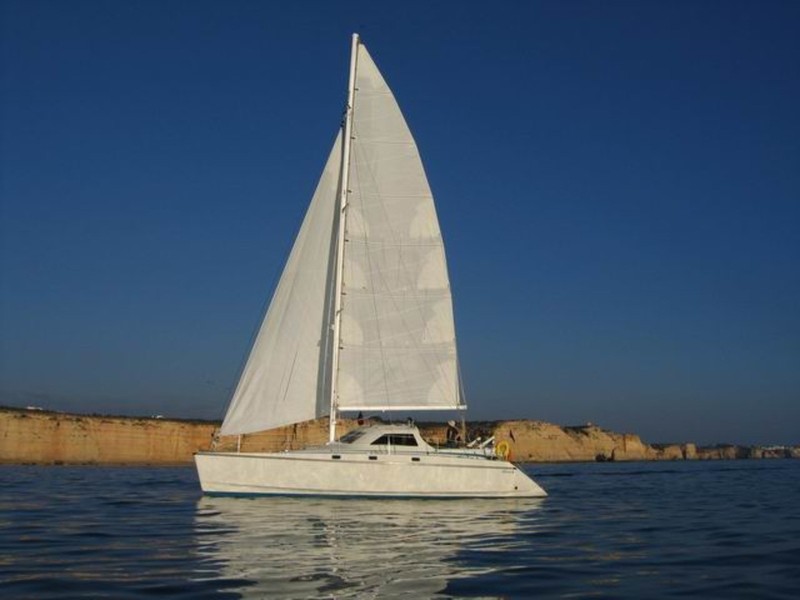
His work covered an incredible range from day racing catamarans to superyachts. The Suncat range (30 foot to 40 foot designs) in the 1990's were semi production and many circumnavigated. Derek also built a catamaran that could be self righted after a capsize using a system of flooding tanks and pumping out. He filmed the process carried out at Sandwich but ultimately prevention of capsize took more importance and people were not attracted to Derek's self righting multihulls.
Derek also designed and built several proa's which were the Atlantic type sailing with the float to leeward. In 1970 he entered Sidewinder in the round Britain Race but retired on the first leg. Another Proa to his design was called Lillian. Derek changed Sidewinder to become a Pacific Proa with the outrigger to windward. It was very fast but he capsized it sailing single handed in the North Sea and survived several hours in the overturned proa before being rescued (by the other proa!)
These experimental vessels were therefore not regarded as a complete success. One hull from Sidewinder was used in the trimaran K6 that still sails today. Lillian was lost at sea after her capsize but the crew were safely rescued. Even James Wharram's attempts to solve the proa problems failed and his proa also capsized in the late 70's. Derek did persevere and created a successful proa design launched in Peru in 2012 and was consultant on other proa projects.
He had been an early adaptor of computer design for GBIII. In the 1990's he embraced CAD and his designs continued to be built all around the World with new ideas and development of different rigs showing in some of his last designs in the first decade of the 21st Century. He experimented with folding catamarans and telescopic connecting beams. He even built a catamaran with wheels so it could be towed to the beach and launched on its own wheels. But in the main he designed sailing catamarans and powerboats built generally in GRP foam sandwich but also in ply/epoxy and in aluminium.
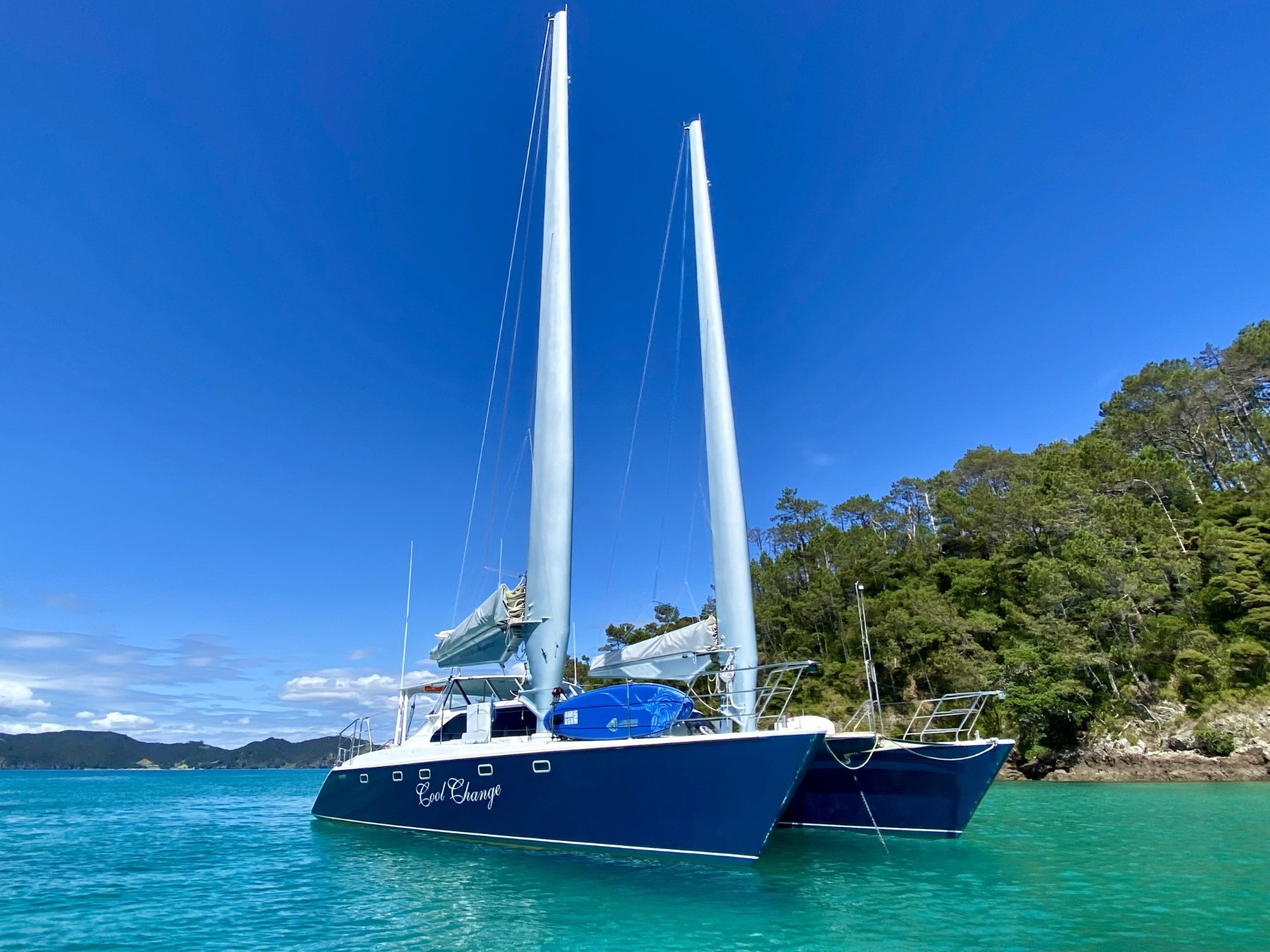
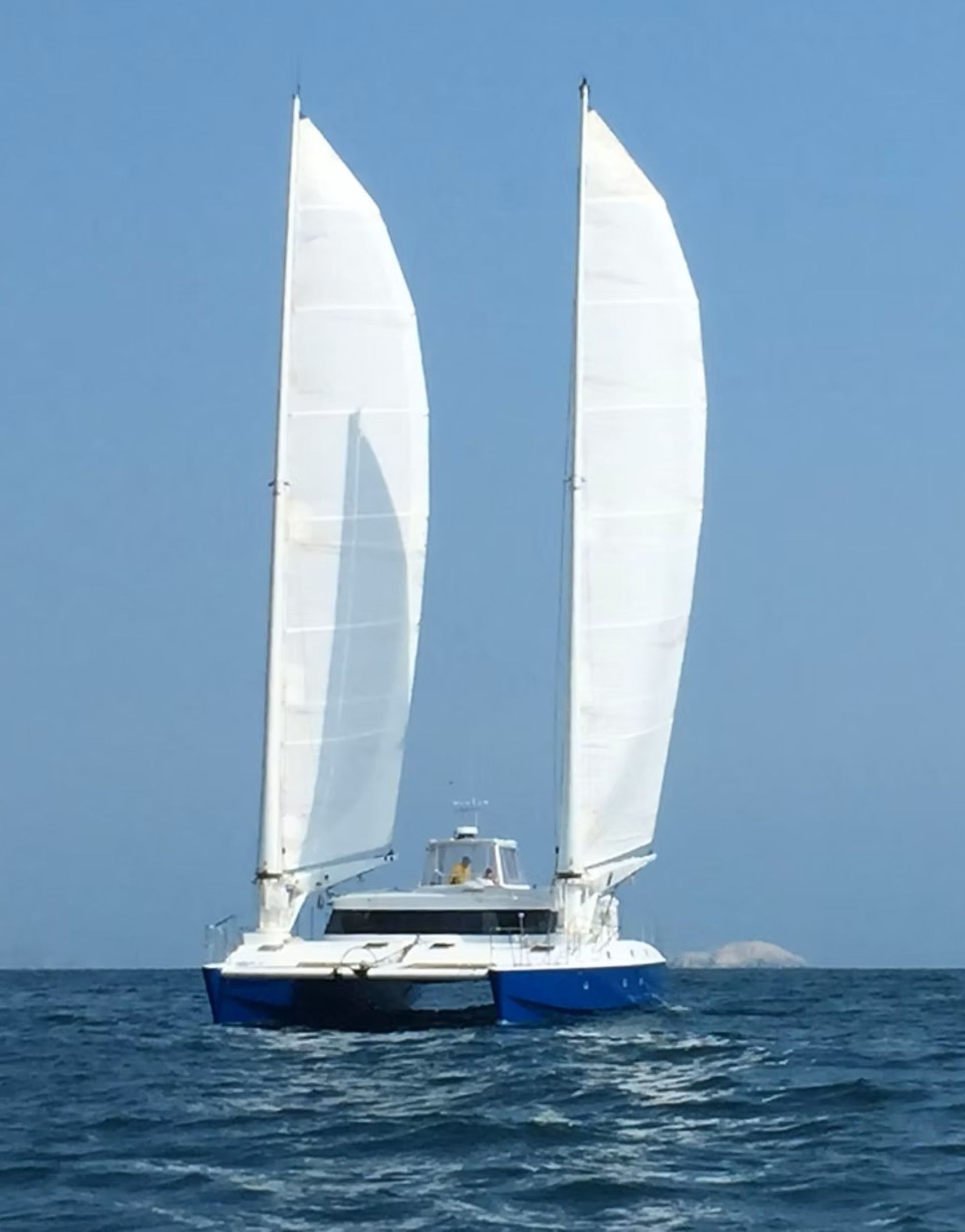
Derek had moved to New Zealand in 1998 after his wife Clare passed away and found happiness in a new partnership with Paula. He wrote an excellent book on catamarans in 2001. He remained active in design work during the last two decades of his life with design and build of the very successful large catamarans "My Way" (2003) and "Cool Change" (2015) and a 60 foot development of this design launched in Peru in 2017. In 2009 he had design projects building in Australia, the Philippines, Korea, China, US, Canada, UK and Peru. Boat builders in Russia (a 60 footer), S. Africa, Germany and Turkey were working with him. He continued to experiment with twin mast rigs as well as refining his KSS build system to enable whole hulls to be made in one large flat panel and then literally folded into shape.
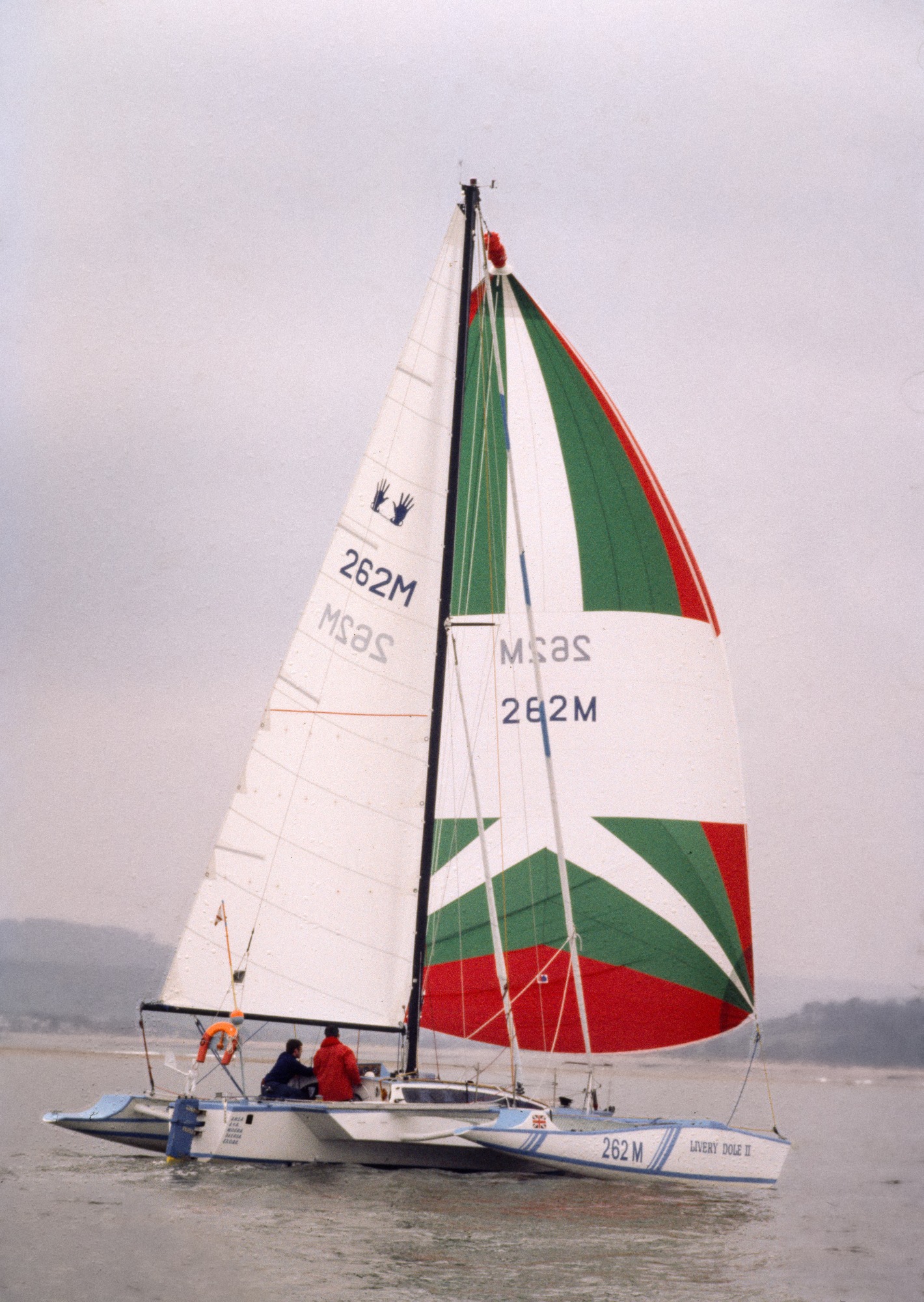
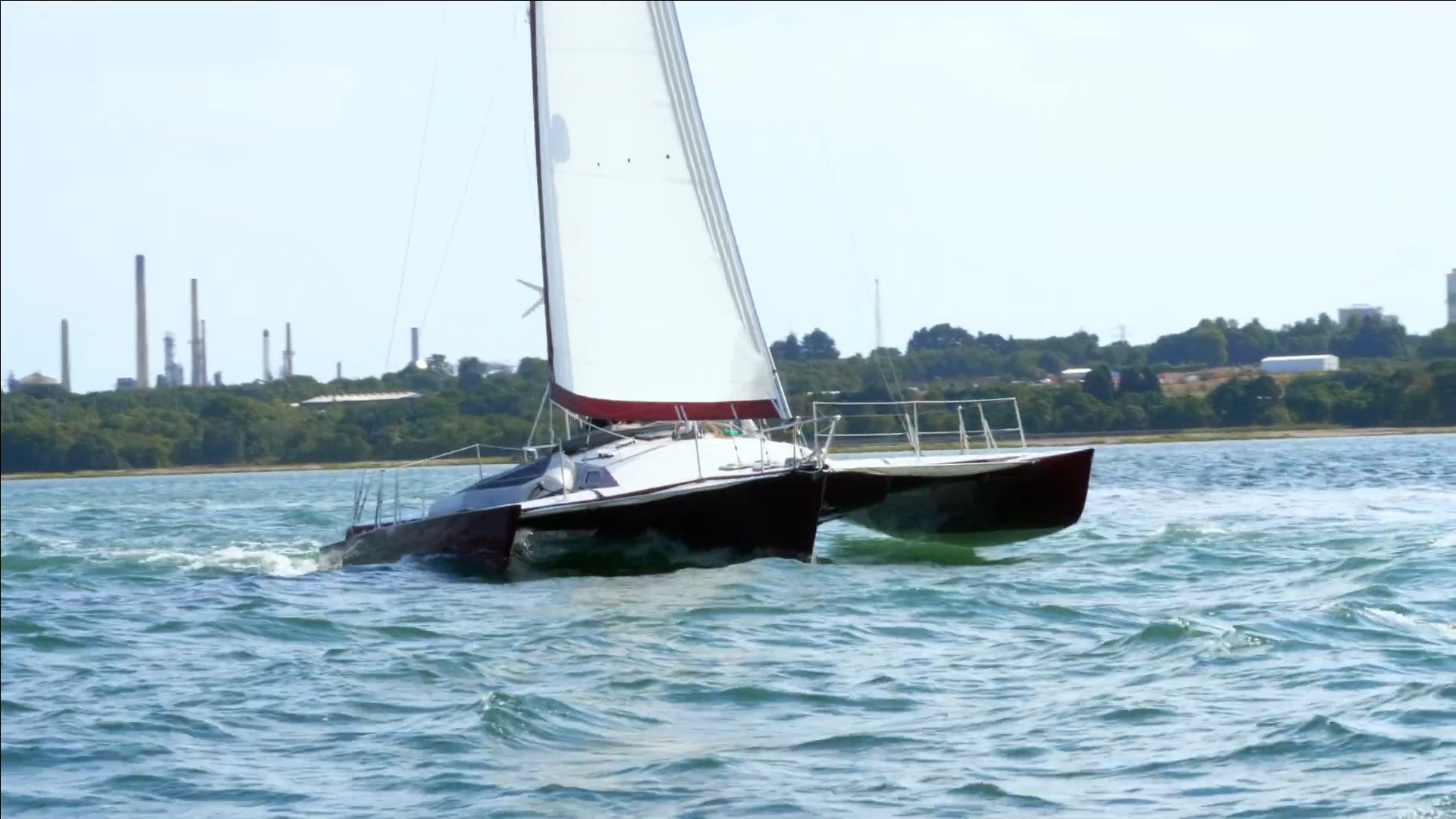
His influences can be found in the history of multihulls over the past 55 years and many of his designs remain sailing all over the World. Trilogy III and Triple jack are two fine examples of Kelsall's last trimarans designed in the early 80's with well designed 150% buoyant floats and both are excellent trimarans.
In his career Derek designed about 500 boats. His work is amazingly varied in styles and design concepts and he was someone that pushed the boundaries and experimented in many ways making him one of the most innovative of all the multihull pioneers.
On 11 December 2022, at the age of 89 he passed away but hundreds of yachts he built and designed sail onwards as his legacy.
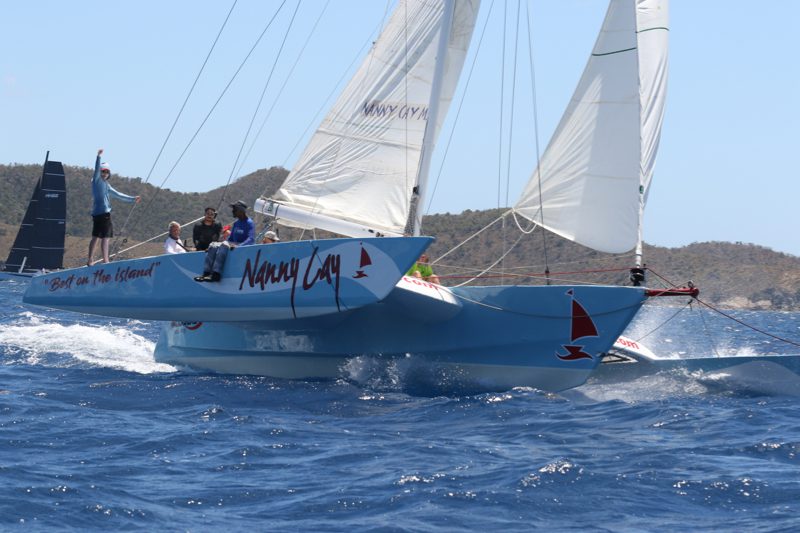
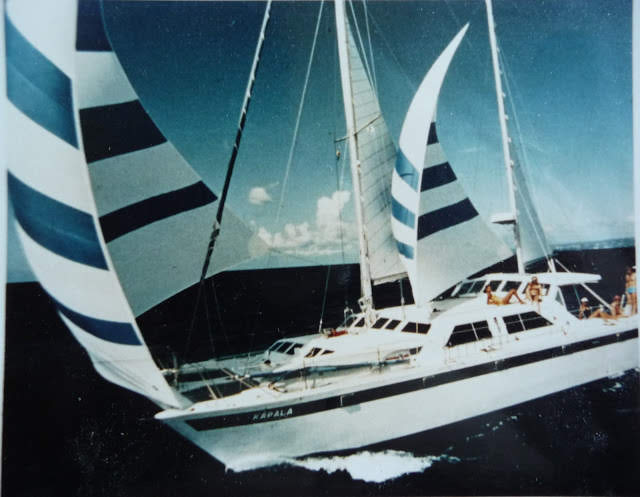
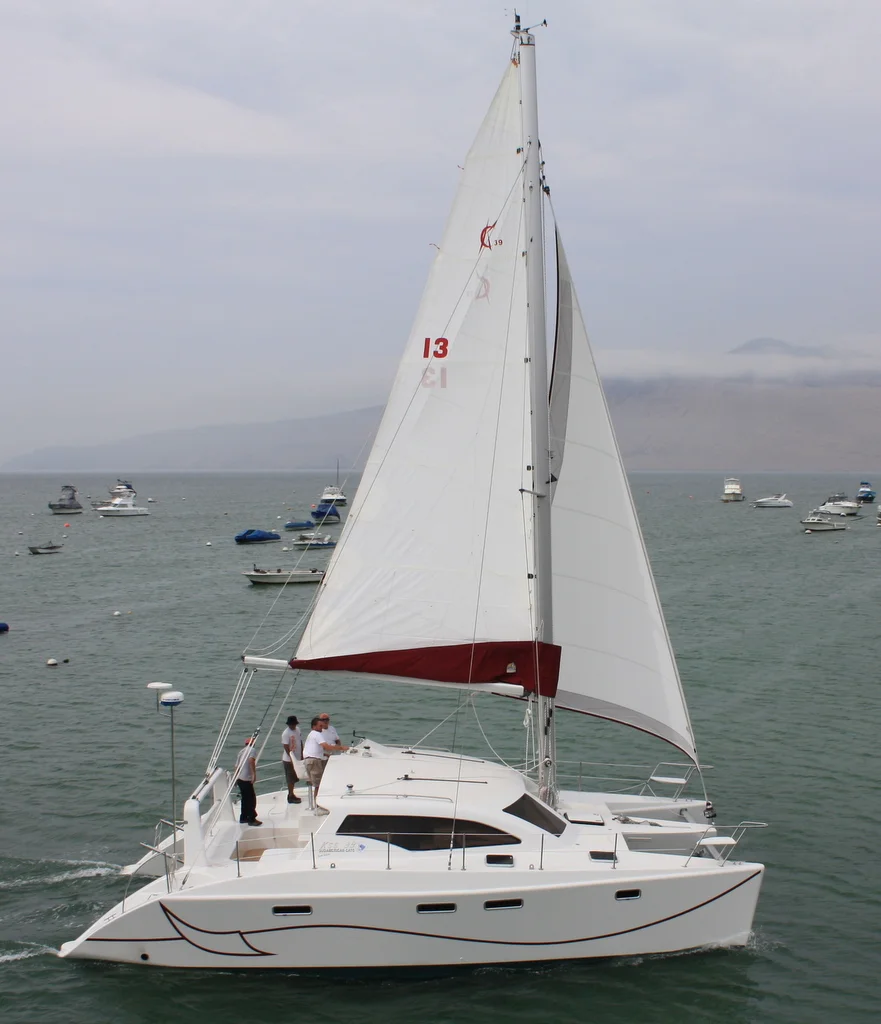
Some of his designs
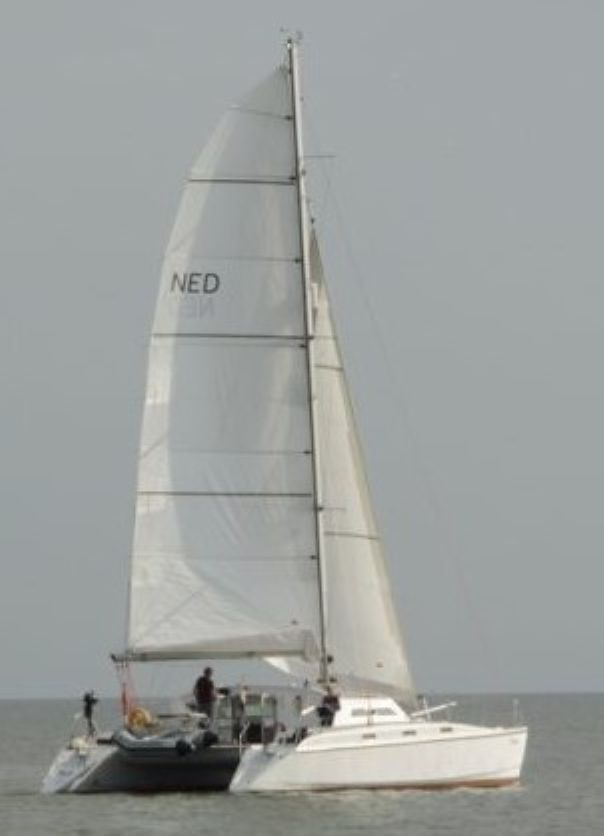
Just a few of his beautiful works of art over 50 years of yacht designs. To enlarge the images just click on them.