JAMES WHARRAM and his double canoes
James Wharram
British Catamaran Pioneer 1928 to 2021
He has often been described as the "father of the modern multihull" but actually James Wharram was not alone in pioneering multihulls and he did not create the modern multihulls we see now.
Following Woody Brown’s success with Manu Kai in Hawaii, designers such as Choy, Hugo Myers, Robert Harris, Creger, Dick Newick, Arthur Piver and the Prout brothers were developing and sailing ocean-going catamarans and trimarans throughout the 1950s and early 1960s. By the mid-1960s, multihulls were already gaining recognition through commercial operations, long-distance voyages, offshore racing, and production boatbuilding in both the UK and the USA.
By the mid-1960s, cruising multihulls were becoming established in the UK, USA and Australia.
Wharram designs are totally different to the rest of the multihull designs that dominated the market in the sixties through until now, indeed the vast majority of catamarans sold and those thousands of mainly French charter catamarans we have today, are exactly the craft that James vehemently criticised all his life.
He called them "yacht catamarans" and derided the designers as being "city men" and for equating multi hull design with aircraft design. James projected the fact that he was a self-taught man that had learned his sailing the hard way by working on fishing boats and Thames barges; he had worked in factories as well as boatbuilders and learned about boat building as a trade before testing his ideas by building boats and sailing across Oceans.
He very effectively sold the image that he was a practical man that built his own boats designed on principles he drew from his actual sailing experience on the Ocean as opposed to "city men in suits” testing theories built on the drawing board or computer screen. This was his pitch all his career and it was phenomenally successful in building the legend of Wharram and selling plans to people that believed in it.
I would argue that far from all being "city men" or lacking ocean sailing experience most of the other multihull designers in the development of the modern multihulls were also experienced sailors and technically minded, practical, boat builders. The development of modern multihulls came about because many pioneers bravely built and designed boats that they and their customers then proved on the ocean.
The technology of design and building yachts advanced beyond recognition since James Wharram built his first catamaran. No one else though, built, or designed boats like Wharram's double canoes as he later styled them.
Trading on his Atlantic voyages James was highly critical of other designers alleging that catamarans with big windows and transom sterns were unsafe at sea and criticising Piver for his claims of high speeds. The popular Sailcraft Iroquois catamarans -hundreds were sold- were castigated by him for being too easy to capsize - and he often seemed to take a moral stance that other designers traded safety for selling points -high speed performance and luxury cabins. He implied that they risked the lives of sailors to make money selling their designs.
By contrast Wharram designs until the 1990's were spartan, basic and uncomfortable with usually small rigs that limited their speed and with the overloading that he encouraged were heavy and very stable because of low centres of effort, and low sail area so that heeling forces were very low.
It was in the period 1954 to 1961 that James made his four pioneering Atlantic voyages in his self-designed and built catamarans, Tangaroa and Rongo. The first Wharram design of 1954 was the 23.5 -foot Tangaroa on which the three adventurers Jim, and his two German girlfriends, Ruth and Jutta sailed to the West Indies. Flat bottomed box section hulls resembling coffins, a slatted platform between them and held together with chains, the craft had a tiny rig and cabins like rabbit hutches and their voyage must rank as one of the bravest in the history of modern boating. Even now most people would look at the vessel and think it was insane to try and cross an ocean in it.
Inspired by Polynesian canoes and the voyages of Eric de Bisschop, Wharram set out to prove that catamarans could be safe, seaworthy, and affordable. Despite widespread scepticism, he sailed Tangaroa from Falmouth to Trinidad via Spain and the Canary Islands, demonstrating the seaworthiness of catamarans despite extreme hardship.
After reaching Trinidad, the group built a raft home and Wharram went on to design Rongo (1958), the prototype for later Wharram designs. Rongo incorporated the key features that defined his boats and completed three Atlantic crossings. Achieving first a West to East crossing of the stormy North Atlantic in Rongo was a great feat of adventure, multihull design, and seamanship.
A planned circumnavigation ended after Jame’s wife Jutta’s tragic death in Las Palmas, and James and Ruth returned to Britain in 1962 after more than 12,000 miles under sail.
After his abandoned World voyage James and Ruth lived with James' son onboard Rongo which was tied up on a beach in North Wales. It must have been an extremely hard life indeed in a cramped and spartan plywood catamaran without any modern facilities whatsoever. James had clearly been traumatised by Jutta's death. His dad encouraged him to design him a small cabin catamaran that could be towed behind a car. James had built this boat called the "Wharcat" but father and son then capsized on its first sail. He had to widen the boat to make it stable.
In 1964 James designed a 34-foot catamaran (confusingly also called Tangaroa) and it was built by the friend who commissioned it. This was followed by a 22-foot Hina, and this led him to start publishing a design brochure and advertising in Yachting Magazines. His mantra was creating easily built low-cost boats for the people who could achieve freedom by sailing them off across the seas.
He followed this with the 46-foot Oro Ocean cruiser and replaced Rongo with the 40-foot Narai. Above the Hina he designed a 27-foot two berth ocean cruiser the Tane. He published articles in yachting magazines and in the late sixties his self-build design catalogue started to achieve sales and boats were built, and people sailed the Oceans in them. Some found these designs to be slow in stays or difficult to sail to windward. The earlier primitive rigs were not optimised for performance and the V shaped hulls without any external keels or dagger or centre boards were poor performers up wind and indeed high wetted surface made them sluggish and often difficult to manoeuvre. But experienced sailors or yachtsman to whom these factors would matter much were not the buyers of Wharram plans.
In 1965 James had built a trimaran called "Tiki Roa" and entered the 1966 Round Britain Race with another German girl as crew. Writing to AYRS and Multihull International, his ambitions for the double outrigger were optimistic to the point that reading them now seem delusional- he was very carried away by his own ideas and boasted that the boat would be competitive against the new Iroquois production catamaran. He wrote that only the sponsored 40-foot racer called ‘Mirrorcat’ entered by Rod McAlpine Downie would be faster. Of course, Derek Kelsall's new 42-foot racer Toria was victorious in the Race setting the style for most future trimarans.
Reality was that the small spritsail ketch rig and V shaped hulls meant Tiki Roa was never going to succeed as a racer nor did it have any basic qualities to make it a good cruising boat. A commentator in the press likened it to a fishing boat and noted how poorly it pointed compared with the sophisticated and well rigged yachts it was racing. The boat had arrived at the start on the back of a lorry unprepared and untested. For James the race was over quickly when the daggerboard broke.
He did concede in an article for the AYRS in 1966 that Derek Kelsall had "done a better job" with Toria's design than he had with his trimaran but then given that Tiki Roa retired and limped home to ignominy after being last in the fleet on the first leg and Toria romped home a day ahead of the fleet, is rather an understatement.
Post race James abandoned the trimaran or double outrigger concept and indeed became very much against them as designed by Kelsall, Crowther and Newick in particular. James simplistically argued that wave capsizes only happened to what he called double outrigger trimarans.
It was Derek Kelsall who sarcastically told the audience at the 1976 Multihull Conference* in Toronto, Canada that the Tiki Roa trimaran had established that James was definitely NOT a trimaran designer. Looking at it objectively it was a poor design, but James used his terrible experience with it to be critical of double outrigger trimarans in general. By this he meant those built in the new Toria style of open decks and outrigger floats riding high sailing on only the main hull and the lee outrigger.
It shows his arrogance at that time (1966 to 1977) that he cited the defects in his own design as being characteristics of the type rather than simply the result of his bad design.
James had developed a simple building method. The boats had nothing difficult to build such as a sheer line or complex hull shapes. The pretty sheer shown in the catalogues was created by tacking on plywood bulwarks over a horizontal deck line. They were aimed at being built by people without any training or skills in boatbuilding or sailing.
The building of a 51-foot Tehini in 1968 to 1969 appealed to a lot of people's imagination. The film of this enterprise made by Ruth Wharram is now available on You Tube (link below). Establishing a commune like existence of men and women around him was an alternative lifestyle which is now branded as being a hippy one and certainly the image of Wharram catamarans was one of hippy boats for alternative people and lifestyles. Even before it was built James was advertising in 1969 that he and his "staff" were going to sail Tehini around the World.
Originally Tehini featured a Chinese junk rig - not a recipe for good racing performance and after James had written in Yachting Monthly of how brilliantly it performed and was so easy to handle it was, he abandoned use of it on Tehini for a more conventional Bermudan schooner and later a cutter/ketch rig.
The entry of Tehini in the 1970 Round Britain Race revealed that the boat was not capable of racing to windward in gale force winds - James had concluded after the race that the Junk rig was unsuited to the fast hull forms. He wrote of being unable to slow the boat down in the race and he only recommended the junk rig for the slower designs. Tehini was not able to sail well to windward with such a rig although later with the Bermudan cutter /ketch she sailed well and tacked positively.
It took four years for James and his crew to set off around the World again in 1973. James wrote to Multihull International magazine saying that Tehini was going to be following the Whitbread Round the World Race fleet of big crewed mono hulls. He wanted to experience a family cruise against the racers and said, "I suspect that there may not be so great a difference between the average times". Once again as with his ambitions for Tiki Roa in the RBR he seemed to be fantasising, given that the fully crewed 80-foot mono hulls were twice Tehini’ s 40-foot waterline and were professionally designed and equipped racing machines with trained, experienced and very competitive racing yachtsmen on board. A simple plywood catamaran with a family crew had no chance whatsoever of achieving similar average speeds to the racing yachts and the idea was clearly ridiculous!
Then, unfortunately Tehini was soon out of any attempt to keep up with the racers anyway because unforeseen design and construction faults in Tehini sent then running for shelter in Spain and hastily improving the design building in stronger supports for the beam fastenings that were loose and installing supporting shelves for the hull sides that were flexing.
The circumnavigation was again abandoned with Tehini sailing to the West Indies reliving the successful voyages of the Rongo. In 1975 they were back in Wales although Tehini was to sail across the Atlantic twice more while James and his women embarked on another naïve and idealistic scheme to create a land base in Ireland. It was a venture that would fail.
Between the 70's and 80's the Pahi range was evolved with hull shapes chosen to resemble genuine Polynesian concepts something they took further in the voyaging canoes they built for the 2008 Lapita voyage which was the antithesis of Heyerdahl's Kon Tiki expedition and proved the viability of double canoes with hulls based on examples of native canoes with traditional Polynesian style sails migrating East to West to Polynesia.
James, Ruth, Hanneke, Jamie and others sailed around the World in the 63-foot Spirit of Gaia between 1994 and 1998. They attended a Polynesian voyaging rally of canoe replicas in 1995. They were not made as welcome as they would have wished. Manchester's own Polynesian had called his business "Polynesian Catamarans" for many years (until he decided to call his boats "double canoes" rejecting the western term "catamaran") but a white Englishman was not as recognised as the great pioneer as he would have expected even after sailing halfway round the World at the invitation of the organisers.
Wharram lived his entire life fighting the "establishment" on behalf of ancient Polynesian peoples and their sailing boat concepts and to suffer exclusion by those same people was an awful experience for such an enlightened man. It was a reaction to colonialism that the reawakened sense of their history, cultural and traditional skills were celebrated by the Polynesians and that the intervention of Westerners like Ben Finney and Dr David Lewis in the formation of the Polynesian Voyaging Society and its replica canoe Hōkūleʻa was resented by some of the people rediscovering their navigational skills and their history who wanted the voyages to be carried out by genuine Polynesians and not Westerners. That they did not appreciate James Wharram's contribution to proving that the double canoe concept was seaworthy was ironic given how James had lived his life dedicated to reviving this traditional form of vessel.
There is a lot of written material available now about the sea people of the pacific and their double canoes and navigation revival in Polynesia. This and the work of the Polynesian Voyaging Society is wonderful to see but it is a travesty that they fail to credit James Wharram's early voyages with the efforts he made to establish the seaworthiness of double canoes.
However James' work as a historian and pioneer of craft related to native craft and their evolution was recognised by other marine historians and those who study ancient seagoing history. He was a speaker at many conferences and contributed articles to debates about the development of ancient boats and the evolution of seaworthy modern multihulls from their native origins. He coined the phrase "appropriate technology" for his designs. by the 1980's and since people have finally started to appreciate Wharram and acknowledge his achievements.
James moved to Cornwall for the last 40 years of his life and designed a range of small day sailing catamarans starting with the Tiki 21 in 1982. He marketed them as car trailable to be able to give people holiday escapes and weekend sailing. They were for people who did not reject land-based lives with jobs. They could trail and sail at weekends and James entered this market by designing the Tiki 26, and Tik 30, and started producing the Tiki 28 and 36 from his boatbuilding business in Cornwall in the 1990's.
When other designer's craft met with disaster by capsize or breakup, James was there, writing letters to the yachting press and attending RYA and AYRS meetings commenting that because he had designed his boats among the huge grey seas of the Atlantic he had developed the answers for safety, structural integrity and seaworthiness. He would say that he had already solved the design problems that afflicted other designer's work. He claimed never to have lifted a hull on his catamarans (although omitted to mention the fact he had capsized his 1962 Wharcat design) and was insistent he designed catamarans that did not capsize.
James argued that his V hulls were more stable because of the flared sides and built in flexibility was intended to take the force out of gusts and his boats and their rigs all flexed like trees. He designed low height rigs with small sail areas to resist the likelihood of capsize because he said the boat could safely carry full sail in a Force 7 wind.
In 1970 he published an article in Yachting Monthly in the UK that was also re-printed in other multihull magazines and he explained about his 1968 design Tehini (although all his designs of that period were variations on the same theme) and extolled the virtues and seaworthiness of his low-cost designs against the expensive "yacht catamarans" of Choy and most catamaran designers in the mainstream design world. He was not a trimaran fan either and appeared to detest Piver because of his flashy salesmanship and exaggerated claims of speed.
Two and a half decades later James' article Nomads of the Wind in 1994 set out an idyllic picture of his new ship, a 63-foot voyaging double canoe named Spirit of Gaia as a fantastically seaworthy ship and the free and happy lifestyle of her crew wandering the Ocean just as the ancient Polynesians voyaged to their Islands in the Pacific. But James did not just defend the thinking behind his ship's unique "double canoe" form but went out of his way to condemn modern catamarans at the same time. He could not resist boasting about his sex life too!
The Wharram website at https://www.wharram.com/articles/how-we-design has a range of interesting articles brilliantly illustrating the Wharram design philosophy. In one called "Thoughts on Multihull design" is a typically prickly response in 2017 to Multihulls Quarterly which had in James' opinion defamed his designs! James delivered a broadside against the modern catamarans featured in the magazine!
"They are catering for the large charter market, where cabin luxury is put well before seaworthiness. The expansive cockpits and large salons with all-round large windows are great in harbour, but in a serious ocean gale they are the last thing you want. Many now have double berths with a walk-space all round (like in a hotel room), great for the not-so-agile city dwelling owners when the boat is in harbour, but in large seas these berths are unsuitable. Though it is perhaps good that multihulls are being more generally accepted, those people who want to do serious blue water cruising should be careful in the choice of boat they make."
Today the majority of modern multihull yachts sail in safety and comfort. Designs are praised for their speed and sailing qualities and their comfort. They now dominate the World charter market and are an equally popular choice for people going ocean cruising. Many of the same catamarans that feature in charter work are also good blue water cruisers as evidenced by reading the reports of the ARC for example. There are a multitude of published written accounts and video accounts of people sailing across the oceans and weathering storms in their catamarans designed with all the features that James derided as unsafe or unseaworthy.
The commercially successful multihull yachts that are dominant in the World of yachts today follow different design principles and styles to the Wharram designs which even today are unique.
James consistently criticised the design concepts that today dominate the multihull scene; these are mainly the big roomy cruising catamarans with amazing bedrooms with ensuite showers and bathrooms, large windows, and palatial saloons (or 'deck cabins' as he called them) with patio doors (See the MOCRA article I have included below in the gallery).
According to James most catamarans were based on Western design concepts which are intrinsically bad, whereas he advocated entirely different types of boat with low "V" shaped canoe hulls, bolted or lashed to beams flexibly mounted, with minimal accommodation that was contained in the hulls or in little deck "pods" the crew could crawl into, lashed to the beams and with low aspect gaff rigs.
This was claimed to give his designs a "holistic" purity so that in their construction from renewable woods and in their design philosophy they are craft that “live" with the sea rather than fighting it because of their ancient origins and flexibility.
But Wharram catamarans also lacked all the modern comforts found in most yacht design such as secure dry cockpits and standing headroom below. The crew were very exposed to wind, rain and sea, living on a slatted wooden deck with wide gaps so the water passed through the decks from both above as waves and spray broke over the boat and also the seas came up through the decks too.
It was the constant theme of James's articles and his sales material throughout his life that his design principles and his "philosophy" produced a more seaworthy, safer and capable vessel than the Western World concepts of "yacht catamarans". He based his designs on studies of books on Polynesian canoes and his experiences sailing across the Atlantic (six times by 1975) in his own designs.
In the 70 years since James designed his first catamaran millions of sea miles have been sailed by modern multihulls and thousands of sailors built a vast amount of multihull sailing experience cruising and racing in seas around the World.
I am not of course suggesting that there are not good and bad catamaran designs, and some production boats have shown terrible design flaws. For example, terribly low bridge decks that pounded and structural failures with break ups and disasters. However, I do think it’s been proven now that contrary to the opinions espoused by James, a design that he classified as a "yacht catamaran" with a comfortable saloon between the hulls and big windows and roomy cabins and ensuites, is in most cases a great safe blue water vehicle. Their crews enjoy great protection from the elements, stability, and comfort below whether while sailing or at anchor or alongside in a harbour.
Of course, new catamarans and trimarans are expensive boats. So are new yachts of any kind. But there are many used examples that make perfectly seaworthy purchases and are not that expensive compared with the cost of building or having built a new Tiki 38 or 46.
I would suggest that the basic premise of the Wharram legend is the superiority of the Wharram design concept over that of other modern multihull designers. Unfortunately this simply does not entirely stand up to objective examination.
Buying or building a Wharram catamaran is a personal value judgement or choice. His boats are quite different and encompass an entirely alternative approach to the multihull concept that is also a minority one. But as in all designs there have to be compromises. The choice to sail a Wharram design will be made on many criteria but the evidence that they necessarily achieve superior structural integrity, sail better or are safer or more comfortable than other "yacht" designs is not supported by the objective evidence.
What will attract you will be simplicity, a belief that the use of sustainable wood to build them is better ethically than buying a grp boat or simply that their shapes and style that are so different are more attractive to you than modern multihulls.
Far from inventing the modern multihull James created his own unique type of multihull that looked to the historic origins of native craft and interpreted those characteristics into a easily built low-cost modern craft different from most modern multihulls. They owe nothing to fashion or convention and are very much admired and liked by those to whom they appeal while derided by others!
The Wharram wing sail rig is a very alternative and effective rig that is the opposite of common yacht rigs and a sensible cruising choice. And everything about Wharram catamarans is based on a keep it simple approach. There are many films of sailing on Wharram catamarans particularly patching up old wooden examples (see Women and the Wind).
Since the 70's James gained a wide personal recognition for his designs and voyages; but he was equally recognised because of his unconventional lifestyle, and outspoken opinions as for the particular qualities of his designs.
James frequently expressed his view that the modern consumer society was doomed and that modern life would destroy the Planet. His basic philosophy was that people could escape the "rat race" of life on land and live on a boat forming sea communities fitted into the whole self-sufficiency movement of the 70's. He quoted French maverick sailor Bernard Moitessier's saying that there were "land bastards" and "sea people". In the real World though ultimately, I have to say James was unable to escape the rat race and the problems of modern life either.
James was still preaching the pleasures of free love, multiple relationships, sexual freedom and nudity throughout the 60's and 70's and beyond into the 21st century. Tom Cunliffe (actually a friend of James') wrote a piece in a magazine about him under the headline "Crackpot or Philosopher" which sums up well the different reactions he provoked.
In 1996 a reader asked Charles Chiodi editor of Multihulls Magazine why he did not publish more about Wharram and responded: "I believe the reason why some of the news media is ignoring him .. his unusual lifestyle which I am not going to describe here.” Chiodi found James' living with a commune of younger women that he enjoyed intimate relationships with, morally repugnant.
He also said, "why they don't publicise his designs is because they think it doesn't fit the description of 'yacht' ". He likened Wharram to Arthur Piver who "..was quite vocal and proud of himself ... (and is dead...). "Wharram is quite vocal and proud of himself- and alive. His principle is similar to Piver’s; design a simple multihull that can be built easily with few tools and little practice. Then go sailing".. He went on to say that a Wharram catamaran "...as a status symbol is near the bottom of the pile..".
Inadvertently Chiodi defined the very attraction of Wharram designs perfectly when he said that, because I doubt if anyone ever bought or built a Wharram catamaran because they cared remotely about whether their boat was viewed by others as a "status symbol".
To Chiodi it was an intentional insult but while Wharram builders and owners may well care about the workmanship and quality of their boat and its seaworthiness the question of their status is unlikely to enter their thoughts. These are the people that James saw as his type of people. The thousands of folk that bought Wharram included some whose achievements and lives were amazing! Spending many years building a Wharram catamaran in your back yard and sailing it halfway around the World as Heather and Tim Whelan did; or sailing a Tiki 21 around the World like Rory McDougall is a classic example of people who would not care anything about owning status symbols!
It is interesting that Chiodi did later carry articles in "Multihulls" about Wharram catamarans and voyages in them. He also featured articles praising Wharram and his designs and achievements too.
James called himself a philosopher designer. The philosophy was enabled by his low cost easy to build catamarans so he said anyone minded doing so could build a catamaran and sail to "freedom" rejecting the normal life of Western Society.
A wit once wrote that instead of winches, James just had "wenches" on his boats and people that met him of Spirit of Gaia in the 90's and since referred to him and his wenches and their uninhibited behaviour. One guy posted in an online forum discussion about Wharram Catamarans of James telling him about his "latest" girlfriend when they met him on his catamaran Spirit of Gaia in the late 90's (James would have been in his 70's by then).
When he first published a book it was a now long forgotten work with an obscure publisher of naturist books and magazines featuring naked photos of the girls and James.
Editing and self-publishing his magazine Sea People in the 1980's he even introduced a Nudist/Naturists column with a full-frontal nude picture of one of his female friends and wrote about his nudist holidays in Europe. Apart from nudity he preached green politics, was involved with interlocking (swimming) with dolphins and the self-sufficiency movement as well as designing basic boats based on his interpretation of historic Polynesian canoes.
After Jutta died James and Ruth lived on Rongo on a beach in Deganwy, North Wales and brought up James and Jutta's son Hannes (later known as Jonathan and a GP in Manchester). James then attracted other young women to join his life (including Maggie, Leslie and Nula) and by 1968 when Tehini was built there was a large commune of men and women around him.
After completing Tehini James lived on her with his group of women and Hannes. They moved from Deganwy to Milford Haven where they established an office ashore.
In 1976 James bought a plot of land with a rundown cottage and a quay in Killowen Ireland. James wrote of his idealistic vision for a base with builders and enthusiasts gathering to celebrate and build multihulls to the Wharram designs and build a seagoing community. They built a grp foam sandwich prototype for the new Pahi range and built a Proa for racing.
The Pahi range was launched with the Pahi 31 based on the 35-foot prototype and the forty-two foot "Captain Cook" 8 berth ocean cruiser. From these later the 26-foot Pahi and the 63-foot Spirit of Gaia were created plus a professionally built 52 foot charter version. With rounded V hulls and shapes close to real Polynesian designs they were successful but eccentric craft quite different from anything that was designed by anyone else other than those trying to replicate original voyaging canoes as indeed James and Hanneke were later to do successfully.
Unfortunately, an Irish postal strike isolated them as did the distance so that the predicted visitors attached by the growing Wharram legend did not come and their mail order catalogues and plan business almost died.
Sadly, the relationships between James and three of his women, Maggie, Leslie, and Nula also broke up; James telling his friend Jim Brown that three of his five "wives" had divorced him.
The loving and loyal Ruth and Hanneke stayed with him to the end. Ruth died in 2013 and it is clear that she was very much a powerful influence behind James and that it was she that held the plan business together for many years. Hanneke is also the artistic and designing talent that took Wharram designs on to success of the Tiki range and many more imaginative designs. She has drawn plans that are a course in boatbuilding and still sell today.
Even after James had moved ashore to his home in Cornwall there were stories of visitors to James' home being shocked to discover the man himself and various women "staff" wandering around naked or semi naked!
James was a friend of John Seymour the BBC journalist, self-sufficiency "Guru", philosopher, political activist, artist, folk musician, sailor and larger than life author of 40 books who had a tempestuous personal life with a number of marriages and relationships and children with different partners.
In the 60's and 70's John was living on a farm in Pembrokeshire (where James was also based at Milford Haven) where he had created a 'Centre for Living' and gathered a commune of people around him practicing self-sufficient farming and an unconventional lifestyle separate from the values of mainstream society.
Clearly life was quite complex (John was not adept financially running the farm and nor was he a faithful husband) leading to his long-suffering wife and co-writer Sally, leaving him. John then decided at the age of 70, in 1984 to leave his family and their life on the farm and make a fresh start in Ireland with his much younger companion Angela who had come to live on the farm aged 14.
John's biographer* wrote that James Wharram was an "eccentric" friend of John's who was a "serious drinker”; the biography was written after meeting James to gather material about John - who died in 2004. The book says that James' own life in Ireland ended when another man took away "one or two" of James' women.
We also know from this book that James took John and Angela to Ireland to show them his cottage and John and Angela then rented the cottage from James before buying it. John's 20 years in Ireland are the subject of one of his books "Blessed Isle". John who was without doubt an eccentric himself also refers to James as being his "somewhat eccentric" friend. John was also a serious drinker spending a lot of time in pubs and was a gregarious and larger than life character. He was a radical thinker, studied Marx and Lenin and was against consumerism and the loss of rural traditions. He was no supporter of authority or the English state, so he really felt at home among the Irish people who had suffered so much at the hands of the English State, and the English ruling class.
John campaigned on green issues and was prosecuted in Ireland for political activism that caused criminal damage to GM crops.
An interesting picture of James' character emerges. He was a man who went to college after school but chose to quit his further education and go travelling -an early backpacker. He worked in manual jobs on building sites, deckhand on fishing boats, Thames barges, and labourer in boatbuilding factories.
Yet he is also an impractical dreamer that relied on his women to deal with everyday life practicalities like his clothes, paying the bills and providing food. It was Ruth who ran the plan selling business and stayed connected with the builders. He never learned to drive. He was on the one hand a friendly, gregarious and sociable man who loved to drink and dance; he certainly was a storyteller; a man with a twinkle in his eye for pretty girls although one female Wharram builder (Heather Whelan in her book "The Voyage of Iki Roa") described him as an "unlikely Cazenove" and thought it was a mystery how he attracted so many women. She describes staying at Devoran and James' habit of answering the door wearing only a sarong unnerved her visiting parents who thought he had just got out of bed until they went in and found a house full of almost undressed people.
She describes James as regaling them with stories while it was Ruth and Hanneke that were being helpful and useful in a practical sense. She refers to James' "harem" being "continuously full". And "there never seemed to be a shortage of beautiful young women building James' latest boat..". She thought he genuinely liked women and his charisma attracted acolytes..".
But reading James' articles and correspondence with the AYRS and in Multihull International Magazine he also came across as someone that was arrogant and critical of others, writing in a way that showed his belief that he was right and other designers were wrong on stability, hull shape and indeed the entire philosophy of catamaran design. James' massive ego shines through it all -a man who seems confident in his own ability and determined to prove that he was right and that the others would soon find out they were wrong!
His superior stance against others multihull designers and builders was not something likely to endear him to them. Equally his claims for the qualities of his designs sometime verge into the delusional - for example the outrageous assertions that Tiki Roa would be competitive in the 1966 RBR or that Tehini would keep close behind the Whitbread Race fleet in 1973.
James claimed in his books that it was his Northern accent and working-class background that caused the "establishment" to shun him. However, it is worth pointing out that Derek Kelsall also came for a poor background in Wales brought up in a home without modern amenities yet he was widely recognised and part of the establishment in his adult life one of the "establishment" designers that earned James' ire and there are many examples of people with working class accents from the North or the South that become establishment figures and enjoy great success. Indeed, in the mid-sixties when James was emerging as a designer and started selling designs the British Prime Minister from 1964 to 1970 (and 1974 to 1976) was the socialist Harold Wilson, a working-class man from Yorkshire with a strong Yorkshire accent!
In the music world of the "swinging sixties" everyone was enthralled by four working class British lads from Liverpool with strong accents which did not prevent them becoming the biggest band of all time!
What was so different about James was that his starting point was his rejection of the establishment in the yachting world and in every other aspect of life. His ego and his criticism of others were unattractive. By so aggressively rejecting the establishment he ensured it in turn rejected him.
But underneath this he also desperately sought recognition and approbation too! A complex character on many levels.
He entered the Round Britain Race, wrote letters to the yachting press and published articles all seeking to position himself as the leading multihull designer. Supported by having sold so many plans to people many of whom built his designs he claimed that his way was the best and most successful. He appealed to those who could not afford expensive production boats until the eighties when he set up his own boatbuilding business and collaborated with other professional builders.
James denied that he intended to become the "great James Wharram" or the “Living Legend” but this seemed disingenuous because throughout his life James adopted the position of being a "philosopher" designer and adopted an alternative culture rejecting the establishment and convention both in his personal life and views and in his approach to multihulls.
He manifested a very distinct personality and ego. Just as Arthur Piver was seen as a man who claimed attention but was jealous of others trying to follow the same path (he saw the likes of Jim Brown who started with a Piver and then developed his own designs as copying him) James too was ego-centric and saw other designers as enemies trying to challenge his work. His Design Book for example implies that his work created the standard for catamarans and other designers had imitated it and he goes out of his way to criticise their efforts to improve it. In fact, the others were creating their own designs and very few were copying what James did with the exception of early V hulled catamarans from Richard Woods.
In Two Girls, Two Catamarans it is clear that Ruth did the maths of the design and was pleased that Rongo floated to her marks as she had calculated. James says that he designed Rongo, but the building plans were drawn retrospectively by Jutta. James said that he was not a draftsman, so I can only assume others drew the plans after Jutta died until Hanneke joined the family. It was Hanneke that he relied upon to draw the designs thereafter. Even in the plan catalogues and study plans her influence is clear.
So today it is actually Hanneke that is an experienced designer and has emerged as the architect of the building plans, design book and study plans behind the last 50 years of Wharram Designs. Her books of building plans comprise an illustrated course in boat building.
I have read an account online by Peter J Marsh of his visit to the Wharram group at Deganwy when he bought the floats from Tiki Roa and built an unsuccessful catamaran from them. Peter knew Derek Kelsall and helped build Toria and his blog has a fascinating account of meeting him at the 1964 RBR. He also knew Bill Tillman and sailed with him. Then he wrote that he followed James Wharram to Deganwy after meeting him at an AYRS meeting in London. He commented: "Tilman and Wharram are both men with a larger-than-life reputation. In reality, things weren’t quite as romantic or functional as you might expect."
James claimed the distinction of selling more than 10,000 sets of catamaran plans for home construction. This is certainly more than any other home build multihull plans seller has achieved.
Some say that James sold more than boat plans and his buyers instead bought into his entire philosophy rejecting "land" values of Western society. He cultivated his role as the great, wise man, Jim, leading his tribe of Sea People to a better place than suffering in consumption driven wage slavery of western society that was also destroying the Planet. He believed in the 70's that modern society was doomed and that people could form homesteading self-sufficient communities living on their boats - he was a survivalist in today's terms.
Today Hanneke runs the business with their son Jamie, and I imagine the Wharram name and his designs will live on, but such is the way the boating market has changed since the Wharram heydays of the 60's and 70's the market for self-build has declined. If you want to go cruising the second-hand market is awash with used production boats of all kinds. No longer is buying a pile of plywood and a set of plans the primary route to ocean cruising. Now that journey begins with advertisements and brokerage websites or bidding on E-Bay.
The self-build market is more sophisticated now than in the 70's as are the way multihulls are designed and built. The levels of technology and construction have moved on a long way even since the latest Ocean Cruising Wharram catamarans (Tiki 38 and Tiki 46) were designed some 30 years ago let alone the sheathed plywood Wharrams of the 60's and 70's.
Even 25 years ago many home builders or as is often the case, owner managed building projects with additional or contracted specialists, were building some very sophisticated craft.
A good example is to compare self-built Kelsall Suncat 40 Tootega (ex-Lady Jane III) with a self-built Wharram catamarans illustrated in the gallery below.
A choice to buy Wharram plans to build your own boat is now therefore, more than ever, a lifestyle choice. It will be based on sustainability and green belief systems and attract those who are either short of money or unattracted to modern "plastic" boats because of aesthetics or these days on green moral/philosophical/political grounds.
James wrote a seminal article published in the UK and possibly other yachting magazines in 1977 arguing the case for stable multihulls and on wind stability where he distinguished between static and dynamic stability. By the latter he meant that the calculated wind speed that would capsize a multihull had to allow for gusts. Effectively for example a catamaran that was calculated to be stable up to a tipping point of 30 knots should be treated as being only stable up to 20 knots because a 20-knot wind could contain 30 knot gusts.
His thesis was always that a safe multihull must be stable to a Force 7 wind (ie 28-33 knots). Using his dynamic theory this mean the boat would have to be stable to over 42 knots of wind. It is possible to summarise this by the idea that a multihull reefs for the gusts whereas a monohull reefs for the average windspeed.
Even that is too simplistic really because good seamanship and sailing skill involves feathering the sails in gusts if hard on the wind or if as most of us prefer you are not hard on the wind bearing away free in the gusts and enjoying a multihull's speed and acceleration.
Add to that the fact that the formula's for stability do not in many people's opinions represent the Real-World stability of a yacht very well.
But in the article he (and Hanneke who co-authored it) then attacked double outrigger trimarans that sailed on the main and the lee hull saying they were dangerously prone to wave induced capsize because of the way they heeled more than a catamaran. He suggested that the greater width between the two catamaran hulls and the narrower width between main and lee hulls of a trimaran made the latter less stable causing them to capsize. The argument was that the catamaran sat wider and raft like on the wave and was thus more stable than the main hull and outrigger of a trimaran sitting on a wave (ignoring the windward hull).
That analysis appeared to be flawed (and Derek Kelsall publicly pointed this out also saying he had tried to explain it to Hanneke) in the sense that the righting arm only takes into account less than half the overall width of a catamaran (being measured from the centre of the craft to the centre of the lee hull) and a similar length trimaran will thus usually have a wider righting arm (between the centre of the main hull and centre of buoyancy which is usually the centre of the lee float) than a similar length catamaran as long as the floats have high enough buoyancy to support more than the total displacement of the boat.
The main problem causing the large number of trimaran capsizes in the late 70's and early 80's that James referred to was almost certainly the trend toward lower buoyancy outriggers at that time. As the lee hull submerges the centre of buoyancy will move towards the main hull shortening the righting arm as happens when a catamaran lifts the windward hull. This has been demonstrated by tank testing and mathematical analysis. James and Hanneke were right that some trimarans with low buoyancy floats (like Tiki Roa) were less stable in waves, but the causes of the problem were not correctly analysed in the article. Interestingly based upon his empirical experience crossing the Atlantic and the Pacific in his trimarans Arthur Piver was very much against low buoyancy floats in the 60's before the issue was raised by James or anyone else while Derek Kelsall, Dick Newick and Lock Crowther embraced the concept.
However, James and Hanneke did observe correctly that the added heel angle of a trimaran can be detrimental; and the fact that this causes an added rotational moment has been identified as a very good reason not to lie a hull or broadside on to breaking waves in a trimaran especially if it had low buoyancy floats (favoured for a while by Dick Newick, Lock Crowther and for a while by Derek Kelsall). Many years later in the Wharram Design Book James and Hanneke wrote that it was a buoyancy issue that caused some trimarans to be capsized by waves which is I think correct and the size of the rig, shape of the floats and their positioning had a lot to do with it.
Now however it is accepted that in any multihull it is wise not to lie ahull or side on to breaking waves of any size greater than the beam of the boat because that seems to be the wisdom of the accumulated experience of many very experienced sailors and also the results of the Wolfson Centre's tanks tests and scientific analysis adopted by the MCA and other agencies around the World since.
There are cases of catamarans looking after themselves in severe storms - Richard Woods abandoned his 32-foot Eclipse in the Pacific and the yacht survived as other buoyant catamarans have too. A Roger Simpson design catamaran did the same after the crew got taken off in a gale off New Zealand, but the fact remains that all craft can capsize and large breaking waves can be fatal for all craft. There are examples of safe solid cruising catamarans (eg the Catalac 9 meter, a Prout Ranger 27) and others more recently being rolled over by breaking seas in shallow waters. Analysis of capsizes shows that they can be a combination of wind and waves.
The argument expressed by James that catamarans are wave stable like rafts and only "spidery" double outrigger trimarans get rolled over by waves is not necessarily correct. It seems more likely that that there are seas in storms or the aftermath of storms that can overwhelm any vessel.
But equally I think a low hulled, wide beam Wharram catamaran with little or no superstructure and low masts will have a very good chance of survival in severe storms and waves as James intended and there are many accounts of them doing so as there are of many other designer's catamarans and trimarans weathering terrible conditions.
The Wharram tenets were still flexibly connected V shaped hulls, open decks made of wooden slats between the hulls, and low multi masted rig (most were ketches or schooners) and often gaff rigged or at times junk rigged or using a version of a Polynesian sprit sail (and in his earlier designs using the spritsail itself).
Wharram never changed his opinion that multihulls had to be sold as safe family boats and freedom from capsize was an essential starting point of his marketing.
He always claimed that his designs were free from capsize indeed his Design Book still appears to make this claim and it is often repeated by Wharram enthusiasts. But it is not entirely true! There was also a reported case in New Zealand that a Tane 27 - a larger version of the Hina, had a bigger rig designed by Grainger and that capsized in a squall too. Another Tane capsized because the lee hull filled with water and a Tiki 21 and a 26 and a Pahi 26 are all known to have capsized. In a 1980's article James was quoted as conceding that he knew of six capsizes of his designs.
James blamed the capsizes of his later Tiki 21 and 26 designs on his competitors saying he had to design lighter faster boats to be competitive and wrote that his older versions like the Hina did not capsize. However, this was only the case when they were modestly rigged. This limited performance and some owners looked for more speed and windward ability, so they added more sail.
One owner of a 22-foot Hina and sailed it in very rough weather to France. He was enthusiastic about the design but capsized it in sheltered waters.
The story is online*:
" 'Twinstar’ was a James Wharram 22’ Hina catamaran. She was designed for fast coastal and estuary cruising with a crew of two. The original Bermudan sloop sail plan showed a box mast constructed with plywood supported by an internal framework. After the mast was shattered when I was racing the catamaran, I replaced it with a Bowman kit metal spar. Likewise I exchanged the wooden boom for a metal one. Instead of using lanyards to set up the rig I fitted bottle screws. Back in the 70s James Wharram preferred the use of low-tech materials that could be found locally; this philosophy came about as a result of his study of native Polynesian multihulls. Therefore the wisdom of me ignoring his rigging plan for the Hina was open to question. In 1972 when I owned ‘Twinstar’, I didn’t give it a thought. I believed I was right, and that the boat would perform better, particularly to windward. I had not appreciated the inbuilt flexibility of the original rig. I was always looking for adventure, therefore I cruised my Hina from Burnham-on-Crouch to Calais and Boulogne. I remember one hair-raising moment when I was rounding Cap Gris Nez. The wind was about force 6, and breaking waves covered the whole boat, including my trusty Seagull outboard motor! I’m convinced the weight of the water trapped on the decks between the raised bulwarks stabilized the vessel, making her less likely to capsize. The fact that she was fully loaded with cruising gear could also have played a part, but the situation was entirely different when I raced her a few weeks later on the River Crouch. I stripped her of unnecessary gear to make her light for the race, but that may have been my undoing, because she turned turtle during a squall. The story is best told by the following excerpt taken from an article written by me for one of the Up River Yacht Club’s quarterly bulletins. "Once clear of the Fambridge trots we settled down to what we thought would be a hard beat in a steady force 3, but by the eight knot buoy it all happened. She was on the starboard tack, lee-bowing the fast-flowing ebb, when the fatal coup de grace occurred. A very strong squall hit us fair and square on the beam as the sails were pinned in tightly for windward sailing. We had no time to ease the sheets, and she was over in a flash! Well, in fact the flip took about 2 to 3 seconds.
“I was sat to leeward, so that I was gently tipped into the cold water, but my brother on the windward hull flew over my head and he was unceremoniously thrown into the water. A sense of self-preservation soon had me sat on the upturned hull from where I anxiously scanned the surface for signs of my brother. Moments passed and I was just contemplating diving in to look for him, when he bobbed up, complete with specs in place and his woollen hat perched on the top of his head. Thereupon he started swimming around the boat in an effort to retrieve paddles, hatches, cushions and other bits and pieces that had been jettisoned. I persuaded him that his life was more important than saving flotsam and that he should immediately climb aboard the inverted catamaran.
Well, ‘Twinstar’ was not entirely inverted, because the mast was stuck in mud, so that one hull was raised from the water. Eventually we were rescued by members of the Club who thought it would be a good thing to do. I’m grateful they did, but by that time we were suffering from hypothermia. The following day at high water, with the help of the Fambridge boatman I managed to right the boat. The only damage she had sustained was a nick in the bulwark where a rope sliced into it when the launch hauled her upright.
Of the boats that I’ve owned, ‘Twinstar’ was the only multihull, but I must say I was impressed with her performance when reaching and running. There were times when she would achieve twelve knots on a broad reach. Advantages over a monohull with a deep keel were several: she could sail in shoal water, sail upright, had a very spacious deck and she could take the ground without fear of toppling over. Her disadvantages were: restricted accommodation, lack of headroom, wet in a seaway and her crew was exposed to the elements. Additionally, instead of one hull to maintain, she had two."
In literature of the AYRS, the PCA and articles and letters he wrote to the yachting press in the 70's, and 80's James shines out as a very opinionated character who seemed to be determined to pitch himself against convention at every level in his designs, his personal life and his confrontational approach to the establishment and yachting scene in general.
James dismissed the arguments by designers such as Crowther, Kelsall and Shuttleworth that multihull development was to be found in test tanks and computer programs and that racing improved the designs. James preferred to look to principles he derived from study of the major book on Polynesian Canoes and his own empirical sailing experience with the pioneering Atlantic voyages for all the answers and not scientific analysis and conventional naval architecture.
Relying upon his own experience and voyages he claimed to know what made multihulls seaworthy because of his sailing - a view which of course did not give credit to the experience and ocean voyaging of other designers many of whom had a great deal of sailing experience, and had also done trans-Atlantic's and had other sailing experience that distinguished them as men whose designs reflected their own views gained in learning how to sail a multihull in a range of conditions.
James always established his credentials based on talking about his Atlantic crossings and his "sales pitch" implied he had more Ocean experience than others. His 1986 "design book" sets out his history in a way that suggests that some other designers (I think he was aiming at Roger Simpson and Richard Woods in particular) were copying him and failing to improve on his work.
However, James was not the only experienced sailor designing multihulls. For example, in 1966 Derek Kelsall had not only crossed the Atlantic in a multihull three times (compared to James' four at that time) but also won the 2000-mile RBR; arguably a race requiring exceptional skills of seamanship in the treacherous waters around the course.
Piver, the Prout brothers, Crowther, Newick, Choy, Patterson, Shuttleworth, Richard Woods, Roger and Andrew Simpson, Nigel Irens, Ian Farrier, Tony Granger, and many, many others who were building and designing multihulls in the 60's, 70's and 80's were also experienced sailors who navigated storms and learned a lot about the design and handling of multihulls that they incorporated in their own approach to design. Many of multihull designers experienced sailing other designer's designs too before developing their own ideas. Many had a wide experience of different conditions in places all over the World and were skilled racing and cruising sailors who carried that into their designs.
As with James' designs many pioneering successful Ocean voyages were made in other designers' multihulls in the 60's and 70's building the modern knowledgebase that supports multihull seamanship today.
Perhaps other experienced multihull designers chose to be more modest about their seagoing experience because they were also aware that multihull design was very much an evolving experimental process and that their "State of the Art" designs would be evolved and greatly improved in the future and they knew that they were at the Dawn of a new age in terms of developing multihulls.
Pat Patterson for example was famous for his bestselling Heavenly Twins family cruising catamarans, but he had sailed multihulls extensively in coastal waters and also achieved two circumnavigations and had several Atlantic crossings to his credit in his own designs. When I met him I found a quiet man that was incredibly modest. This was both apparent in his book and in person.
Jeff Schionning is also a designer who is credited with 100,000 rough water miles sailing that forged the basis of his design work. His catamarans are quite different from the Wharram concepts.
That said, James’ sales success, the number of boats built to his plans and above all the number of voyages made in his designs are his epitaph. Many people empathised with James' values and his political, philosophical and lifestyle ideas teamed with his devotion to Nature and learning lessons from Stone Age sailors to build boats that owed nothing to modern mainstream yacht design.
The early journals of the Polynesian Catamaran Association that James had created around his designs and the people that built and sailed them are available online and are an interesting read. They tell the story of how James gathered many aspiring catamaran sailors and builders to his designs. He had a vision of a great body of people all over the World sharing their experiences and building catamarans, voyaging, and sharing the results. James believed that he was leading the biggest multihull user group in the World.
Sadly, it did not work as he so inspirationally wrote. Some sailors of his designs lacked skills and experience. Unlike many designers he encouraged his early builders to be "creative" with the designs too which produced some odd interpretations of the plans -some more successful that others which caused breakups at worst and ugly aberrations of the designs.
The film about the building of Tehini (see link below) shows that the craft was rather roughly built with tar over the hulls and roofing felt and tar used on the decks -not something you would see at Camper & Nicolson! The strange triangular cabin tops made her look very homemade (in my opinion) and it seems that she was indeed built to a very tight budget using exterior grade rather than marine plywood. It is no surprise that the vessel was very short lived. Launched in 1969 she was deemed too rotten and unsafe to sail by 1985 and in about 1990 she was burned before James sailed off around the World on Spirit of Gaia.
Wharram's Rongo had been built in 1957 and was effectively a houseboat on a beach ten years later. In 1969 when he moved on to Tehini she too was rotten and James gave her away to the Sea Scouts to use as a shore base however they tried to take her to sea and she sank. But many builders assembled beautiful craft to his plans and the Wharrams' own Spirit of Gaia was built to professional standards in 1994 and sails in Portugal today under Hanneke's command. Her maintenance is chronicled on the Wharram website, and the story demonstrates how a well-built, high-quality ply/epoxy vessel can succeed and achieve longevity.
The PCA eventually came a stage where it was not functioning well and there was a big disagreement between James and the association because of its committee starting to align with other Multihull Interest groups and other designers.
After the collapse of "James Wharram Associates" in Ireland James, Ruth and Hanneke went back to Cornwall and had to start out again to rebuild their lives and the design business. By the time he wrote his final book in 2020 he or Hanneke who co-wrote it, was able to see where a lot of the blame lay in James himself and the breakup was a consequence of his arrogance. Yet also it is clear that behind his conceit he had a deep desire to win the credibility and recognition of the yachting establishment and it was his mistaken belief that taking part in the Round Britain Race courting publicity (in 1966, 70, 74 and 78) would give him that. It certainly kept him in the public eye but did not really enhance his reputation.
One sarcastic press story in 1970 reported that he was walking round the docks hand in hand with Maggie while others were frantically working on the yacht!
It was reported that Tehini crossed the start line at 2 knots in last place and she finished last but one at the first stop over in Ireland. She started the next leg but retired immediately and went home while the rest of the fleet battled on in gales. A famous yachting correspondent questioned just how seaworthy the great Ocean sailor's Tehini was if it could not beat to windward in a gale (the reason James gave for retirement from the 1970 RBR). In the context of James' bullish article in Yachting Monthly and similar magazines describing the superiority of Tehini over "yacht" catamarans this was quite unfortunate. I suspect James saw such criticism as the "establishment" having a go at him because of his Northern background and unconventional approach but objectively he had exposed himself to ridicule on the one hand, writing of the seaworthiness of his ocean-going designs and his Atlantic voyages but on the other demonstrating the shortcomings of the Wharram designs. The disastrous trimaran in 1966; Tehini would not go to windward with her junk rig in 1970 and abandoned the race again on the first stage; in 1978 Maggie Oliver one of his closest female companions sailed her with his friend Bob Evans and again retired early from the race.
The reason for retirement was at the time said to be blown out sails; the 2020 book revealed the truth 40 years later that that Tehini had suffered structural failure of the main beams. No wonder they kept that quiet given the marketing of Wharram designs as having "revolutionised" boat building. Also, in 1978 a grp foam sandwich Tane Nui started to fall apart with major structural problems (blamed by James on the professional builder’s poor work, not his design) and the 35-foot Pahi prototype proved wet and exposed. In fact, her crew had a very wet uncomfortable race and in spite of some great speeds finished well down the fleet.
My analysis is that racing was an anathema to Wharram's designs and most of the people that built them and sailed them. Most owners either accepted the lack of luxury and high performance and loved the boats because they were so different to others. It was part of the appeal that these were not racing boats beloved of associations and yacht clubs and the "establishment". Wharrams owed nothing to fashion, or trends or ratings. Serious racing sailors were simply not going to go to James for their designs.
It is interesting that writing about Tehini’ s retirement from the 1970 RBR James explained that he was doing 14 knots and the problem was that when he reduced sail the Junk rig would then not sail to windward and that he wanted to sail at a "workmanlike" 6 knots rather than 14!
This suggests to me that he simply was simply not a racer at all as no one racing a boat would rather do 6 knots than 14. Racers are extremely competitive by nature and sail boats often to destruction. As we now see the racing multihulls are not cruising yachts but racing machines that are sailed on the edge. In racing the last knot of speed must be extracted from the boat. Racing necessarily means sailing recklessly and structural failures, capsizes or loss of sails and masts are necessary disadvantages of trying to win. Sometime ocean racing leads to death or injury.
However, lots of sailors did not want to race or have anything to do with the yacht clubs that organise racing and were attracted to his designs because they were simple. easy to build and thus easy to repair and not "high tech" lacking the winches and expensive equipment that racing yachts have. You could make your own sails, use grown wooden poles for masts or laminate them or just buy metal extrusions rather than go to expensive yacht mast makers. The later Wharram wing sails have a zipped sleeve that attaches the sail around the mast, so you do not need mast tracks and all the expensive fittings that go with them.
The cost of your whole Wharram catamaran might be less than the mast, sails and equipment of a high-tech yacht from other multihull designers and it is this and the fact they were a combination of prehistoric design principles and old tech trad-boat technology that attracts people to buy or build a Wharram design. The rigs incorporate lots of pulleys and blocks to minimise load and the sails are boomless.
Wharram's designs are for cruising sailors not racers.
The PCA was revived in 1982 as James and Hanneke took over editing the magazine "Sea People" before they encouraged more like minded people to take over but certainly for a few years the strong influence of James in the magazine was apparent and articles published followed the views that James had on boats, the interaction of people and Dolphins and water birth (yes, his son with Hanneke) and it was apparent that James and Hanneke and their young son were enjoying a great life together while Ruth co parented and kept the Worldwide group of Wharram friends focussed. The magazines are still available on a website: http://pca.colegarner.com/sea.people.html.
Well worth reading to understand the Wharram phenomenon and the character of the man.
James became very busy throughout the 1980's and 90's both designing, running his own professional boatbuilding business, building his 63 foot flagship "Spirit of Gaia" and sailing her around the World in stages, while also developing new building methods using epoxy ply sandwich construction, and the Tiki range of designs which were much more sophisticated than his older designs.
The original designs are now referred to as "classic designs" by James and Hanneke. Most are still available in plan form. However, it has to be said that they were often reported to be rather poor to sail, slow due to the high wetted area, prone to pitching because of the hull shapes, very wet due to waves washing up through the open slatted decks, as well as spray; not always easy to tack or manoeuvre, very basic and uncomfortable in their accommodation and with open unprotected decks and no shelter for the crew. Although James designed for survival in storms and gales out on the ocean his designs prior to the Tiki 38 has the crew clinging to a slatted deck washed over by the waves with at a minimum seating behind the central cabin tops all exposed to the weather whereas Pat Patterson wrote of lying a hull or hove to in his designs he could keep watch from the cabin with all round vision; the deck cabin so hated by James was actually a huge safety factor giving protection and safety from exposure for the crew.
Wharram's early wooden catamarans suffered extensively from rot due to what was with metal fittings and bolts being breeding points for water ingress and rot. Later designs particularly the Pahi range and later the Tiki 38 and 46 tried to address this recommending careful epoxy sealing of all the holes and using lashings to attach the beams to avoid the metal fittings and the bolts that allowed water in and led to rot.
By no means were they the only plywood multihulls to suffer rot because this type of construction especially back in the 70's before epoxy resin took over, is afflicted with rot when water ingress occurs. But also, the primitive low aspect ratio rigs and lack of keels meant that close winded sailing and powerful windward ability were never really attainable by Wharram catamarans.
The designs were basic and James encouraged builders to find their own creativity in much of the detail this was not a great idea and many people's ideas resulted in craft that were ugly or unsafe. Not only did builders change the designs and fail to follow the plans but they often restyled the boat, expanded the accommodation to improve perceived comfort, changed the rig, built solid decks and cabins and new structures so much so that the resulting vessel was a long way from what the designer intended. Sometimes failure to build specified beams and fastenings resulted in boats that broke up because the fittings holding the beams to the hulls broke or even the beams themselves failed.
A well-known UK yachting journalist Geoff Pack and his wife went voyaging in a 34-foot Tangaroa writing about their adventures and also writing a book about cruising and voyaging. Unfortunately, the boat started to fall apart in mid-Atlantic, and they survived because they had enough spare cordage on board to lash the beams to the hulls.
The Ariki that circumnavigated suffered a similar issue.
A Tehini broke up in mid Atlantic due to rotten beams I believe, another disappeared without trace. An Oro was found capsized and broken up with broken beams too although James claimed it must have collided with a Whale. I believe a Pahi 63 was abandoned at sea too although James attributed this more to crew failure than the boat.
There a was unwelcome publicity such as the well circulated pictures of a New Zealand Wharram breaking in two on its maiden voyage (see the photo section on this website) because it’s beams were not built to the plans.
As with other self-built boats there were builders that lacked the experience to sail and immediately piled the vessel up on a sand or rocks resulting in disaster or break up.
But hundreds of Wharram catamarans have been built successfully sailed all over the World making safe ocean voyages.
The PCA flourished and with the arrival of the Internet went online as well as publishing a magazine.
However, James concluded that others in the PCA had started to build their online own brokerage and design business about the Sea People community of the PCA and also "improved" the designs creating their own rigidly monocoque versions some with the deck cabins he so loathed.
One of the officers elected to run the PCA because he was an experienced sailor and skipper of Wharram catamarans gave the Association a terrific web presence by creating a "World of Wharram Catamarans" website with lots of pages about the PCA but also he included his own business of a specialist Wharram catamaran brokerage (which he still runs to this day but entirely separate to the Wharram brand) and so James took action to protect his own business identity and his intellectual property rights to 'Wharram Catamarans' as a brand.
The basic issue was that having a voluntary association independent from James Wharram created a conflict between the interests of the Association and the opinions of its members and James' business interests, opinions and the intellectual property rights to his own brand and use of his name.
Wharram Catamarans were not an independent generic type of boats (like multihulls in general) -they were the creation of James and his business associates and lately the team of James and his two wives, Ruth and Hanneke.
The naïve and idealistic concept of an association of owners and builders of those designs building a data base of collective experience and collectively creating developments and improvements of those designs while it seemed an ideal dream the way James had promoted it in the 60's and 70's did not work once others were seeing the designs in a different way to the designer or worse still (from James' viewpoint) the members or officers of the PCA became interested in other multihull designs and concepts or working with other multihull organisations whose views were an anathema to James. For example, in the late 80's and in the 90's MOCRA and others decided to promote a design class of Micro Multihulls for cruising and racing. They also wanted to try and set up ratings and new racing Rules for different multihulls. James was not in favour of the Micro Multihulls and other multihull organisations encouraging racing and design rules that he though prioritised racing speed over freedom from capsize and was a vehement critic of this development.
This dispute that then arose between James and his former friends in the PCA was very unpleasant and bitter on both sides and it effectively killed off the PCA as an organisation. What happened was really a collision between the idealistic dreamer community concept that James had championed for so long and the hard reality of business and commercial rights. It was terrible that it all erupted in public as it did.
As a professional boatbuilder and professional designer, marketing his personal name and brand James was suddenly no longer the hippy outside the conventional restraints of Society but a businessman protecting his livelihood. Some might say he was now protecting the Western society "land" values he had preached against all his life! Maybe it’s true that James had now joined the mainstream-wearing a suit, appearing at Boat Shows and as a respected and valued speaker at events but in the new millennium he was at his peak in terms of designs and accomplishments and he was now well recognised for what he had achieved.
The relationship between James and other professional builders that franchised his designs was not always as smooth running as they and James would have hoped either and one well known franchise arrangement ended in tears even though the builder had completed some very nice examples of the Wharram designs which really showed them off - a far cry from some of the worst aberrations of home building that were sometimes seen originating from a set of Wharram plans.
What has grown up in place of the PCA over the past 25 years is a big community of people sharing stories of their Wharram Catamarans, their experiences building them and sailing them, on several social media and websites. It seems that the spirit of what James intended when he formed the PCA in the 60's is alive and well in a thriving Wharram interest community like nothing else in the multihull world. James and Hanneke built a fantastic web presence of their own that she continues now in 2025.
On Facebook wonderful groups are dedicated to Wharram Catamarans containing a mine of information and an incredible photo archive from which many of the pictures on this website are drawn.
James authored copious articles and papers with the help of his associates which with his books leaves a great record of his ideas. By the mid 1990's he and Hanneke produced their best designs after the Pahi 63; the home build Tiki 30, Tiki 38 and 46 and the Islander professional designs.
These featured comfortable sheltered cockpits and crew cabin "pods" on the slatted decks and superior accommodation lay outs in the hulls that were designed to be comfortable and even had showers and toilets in the cabins rather than the "bucket and chuck it" approach of past Wharram designs that had a bucket in a rather grim locker in the end of the hulls as the toilets.
The imaginative features of the Tiki 38 and 46 designs in particular really show the limitations of the original classic designs. But they are also complex and relatively expensive to build but are still not either luxurious or high performance in the way that this is defined in the wider World of yacht design.
To the end James and Hanneke drew a huge distinction between wasteful Western design and basic "keep it simple" double canoes.
Later they developed especially "ethnic" designs like the Wanderer and Mana 24 a kit boat. They developed a new concept of a gaff wing sail that was more effective to windward. Their boats had shallow keels for improved windward ability. The hulls were sharper and faster because of the development of their shapes.
His final book People of the Sea is a fabulously produced gallop through his eventful life which encompassed great self-belief, courage, and the consequences of his very human flaws too.
Sadly, as old age limited his life -he was pictured using a mobility scooter and conscious that Alzheimer's disease was destroying his intellect, he took his own life.
Hanneke posted on the Wharram website:
"We are very sad to announce that on the 14th December James Wharram left this earthly world, joining Ruth, Jutta and his many close friends that departed before him. At 93 years old his spirit has set out on the voyage to sail the oceans of heaven.
James was a trailblazer, a fighter with great determination and vision. From a young age he followed his passions – to roam the hills – for fair politics – for intelligent women – to sail the seas – to prove the Polynesian double canoe an ocean worthy craft – to become a Man of the Sea.
These passions made him into a pioneer of catamaran sailing and a world-renowned designer of unique double-canoe catamarans that now sail the oceans. He designed for people who wanted to break out of mundane lives, gave them boats they could build at an affordable cost and gave them the opportunity to become People of the Sea like himself."
While James did not invent the modern catamaran his story is a heroic and unique one in history of World multihull development. What he achieved was to build his own concept and vision and to sell plans and have boats built in large numbers and great success for all kinds of pleasure sailing. His (and Hanneke's) personal design concepts that are still unlike any others. Their work is a standalone so there is no need to pretend that they are responsible for the modern popularity of catamarans- what they have achieved is entirely worthy in its own unique way.
Apart from his books and articles I have referred to Hanneke and James published a celebratory photo-book and plan set of Rongo on the 60th anniversary of her 1959 Atlantic voyage. Sold with a set of plans it contains some fascinating photographs and Newspaper articles. It was wonderfully evocative of the age and really brings home the pioneering spirit of the Rongo's adventures and would be well worth selling to enthusiast on its own.
James was a complex character that personified the spirit of adventure, self-sufficiency, and striving to live the life you desire unfettered by conventions of society.
His individuality made him stand out as a "one-off" and without doubt the fact that he was quite different to everyone else on the multihull scene (let alone the world of yachting generally) clearly struck a note that many people were attracted to. He was without doubt a most influential and inspiring character. He inspired as many dreams as people actually following his path by building his catamarans but there were a lot of those too. Hundreds of his designs were built and went ocean voyaging. Many people did follow his path and used his designs to become "Sea People" and that is the Wharram legacy that exists now as a fascinating concept of lifestyle, catamaran design, seaworthiness and voyaging to sea. Many other people reading the history of his voyages also happily sail the seas in other catamarans, impressed by the initial efforts by James to prove their seaworthiness.
Below I have assembled a gallery of some photos of James and his companions and their personal boats: Tangaroa, Rongo, Tehini and Spirit of Gaia. I have added stills taken from the Tehini Building/Sailing films on You Tube and from the Dolphin research film made by Dr Horace Dobbs in 1983 when he sailed with James and Hanneke to Western France that was recently shared online by Hanneke. The following sections are a vast array of Wharram catamaran photographs I have collected over many years. Then there are drawings of the boats from Wharram design brochures I collected or found published online or in articles.
Click on the images to enlarge them in all galleries on this website.
* see "The Symposium Book" by Charles Chiodi June 1976 is a transcript of the Symposium attended by James together with Derek Kelsall, Jim Brown, Rudy Choy, Dick Newick, Norman Cross and many others. A fascinating insight!
*Paul Peacock; 'A Good Life'
*https://bills-log.blogspot.com/2010/03/twinstar.html?m=1
J
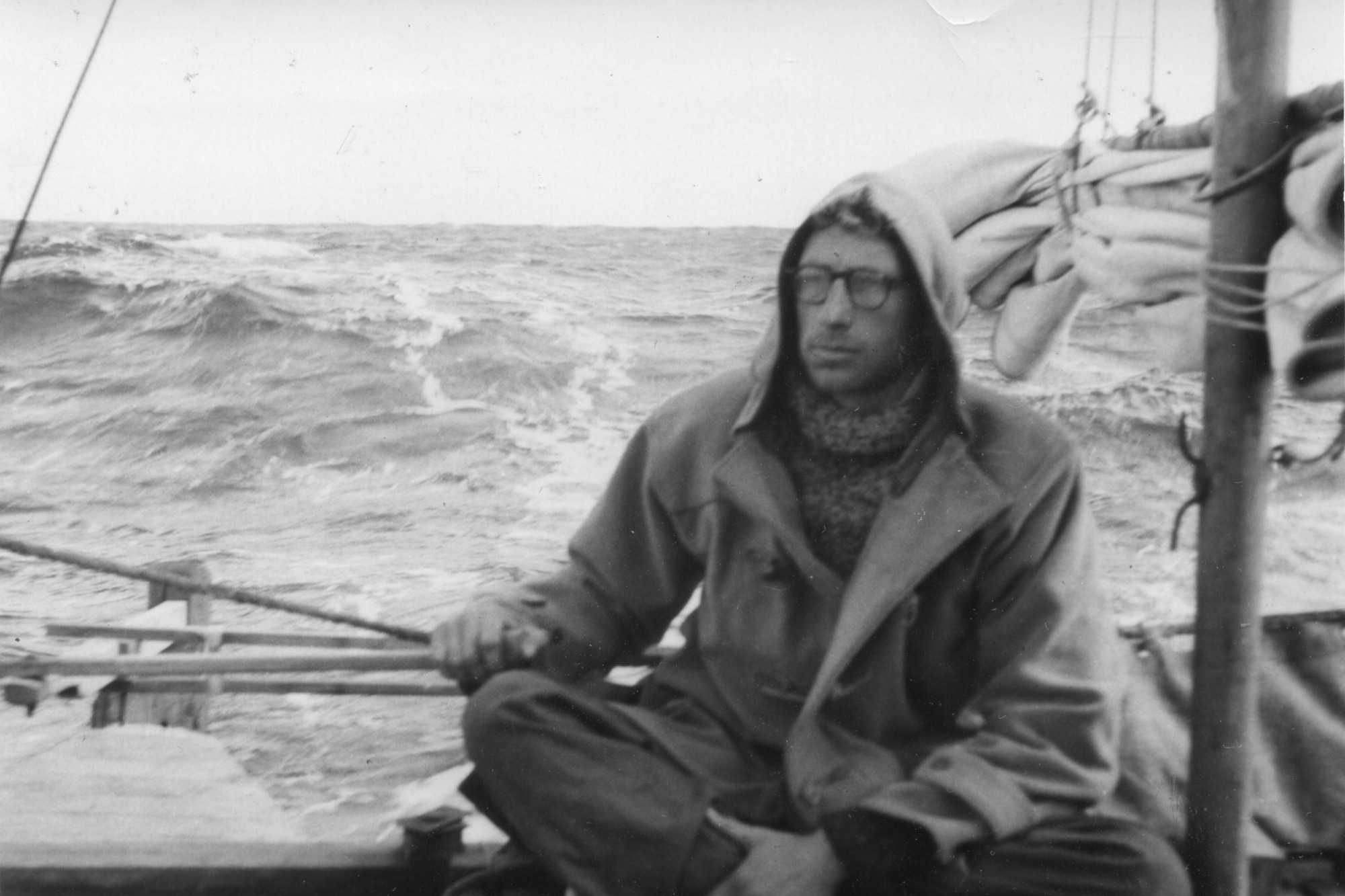

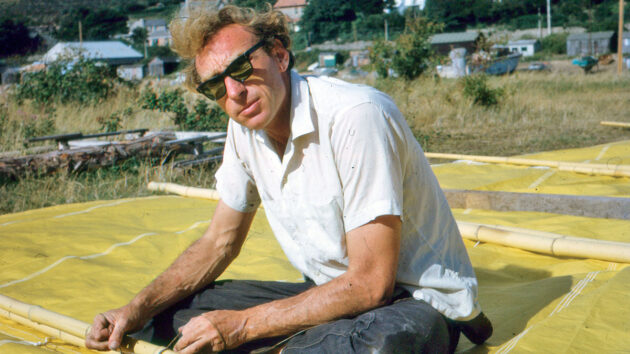
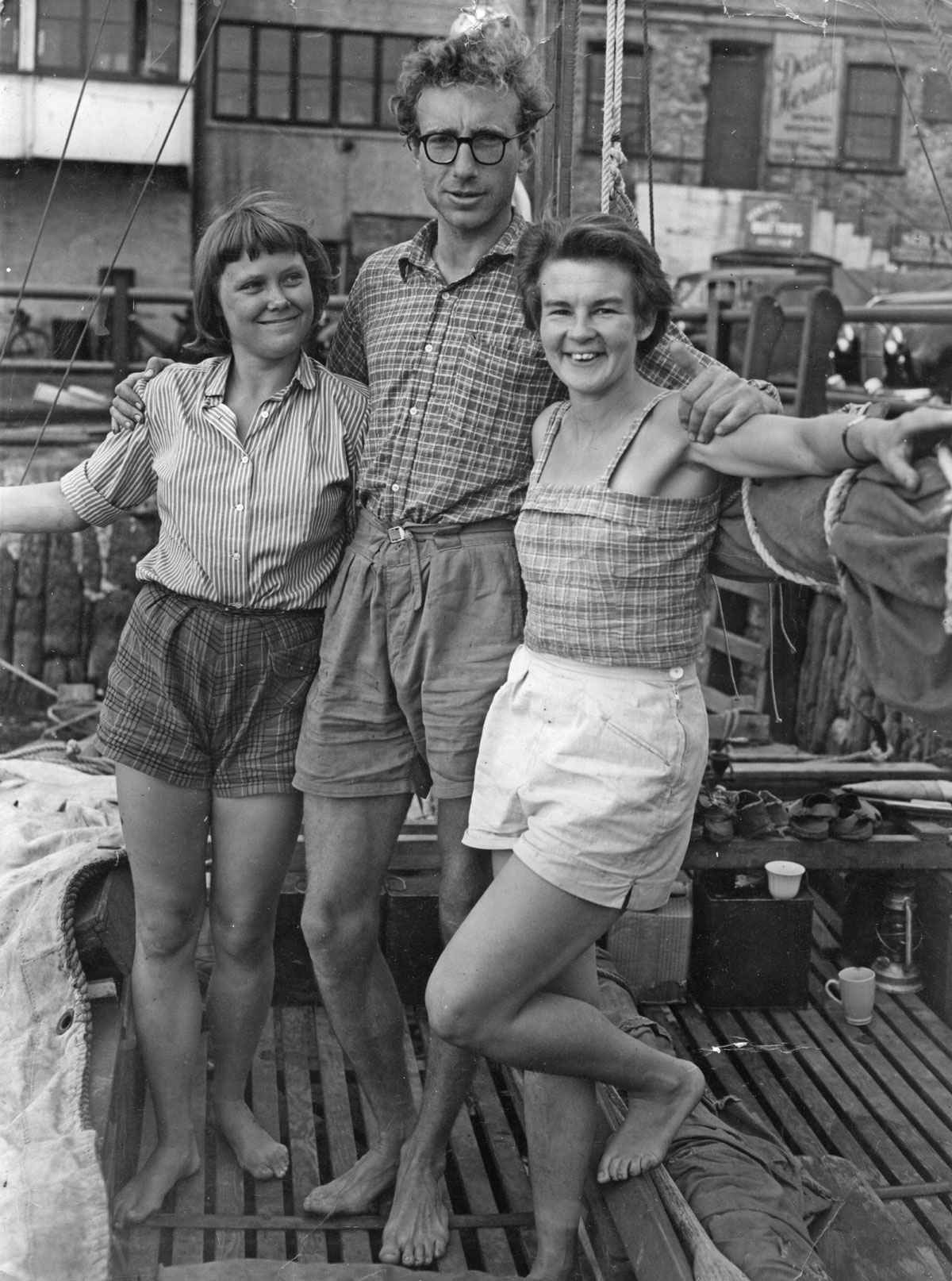
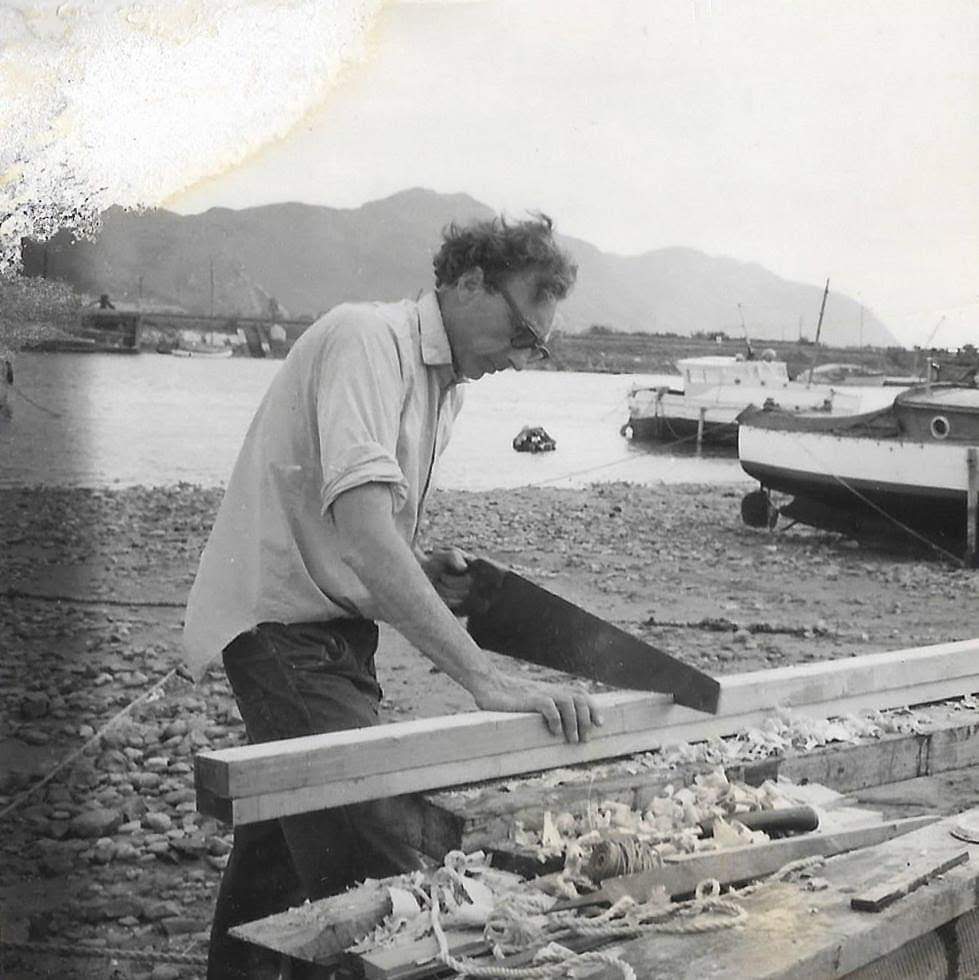
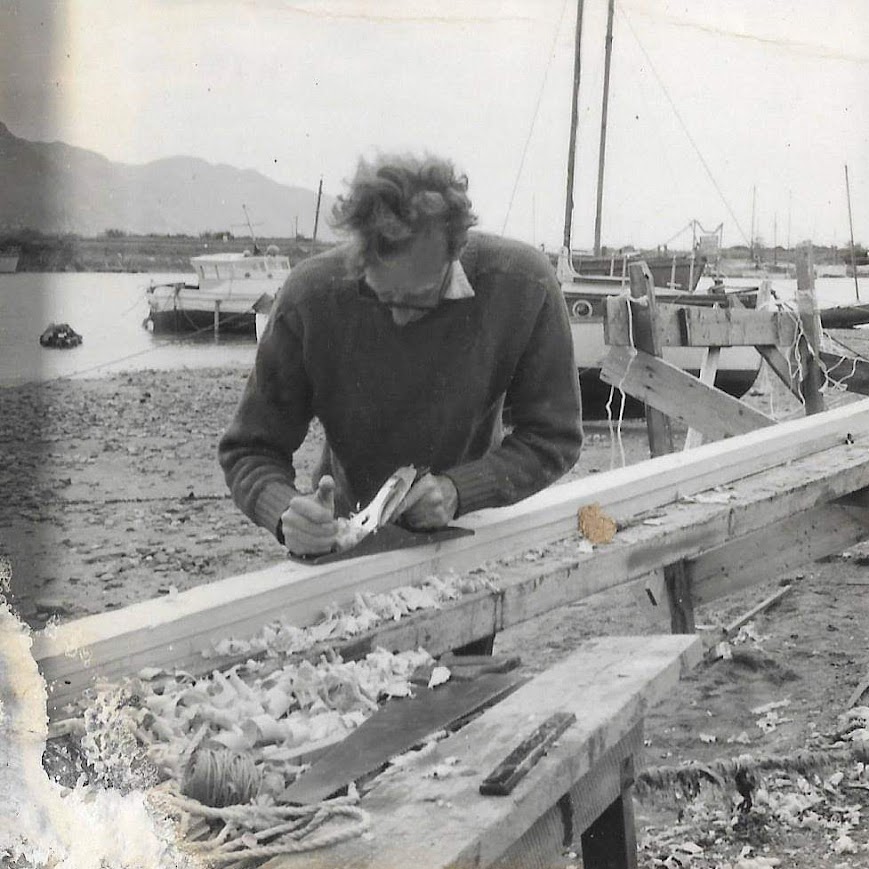
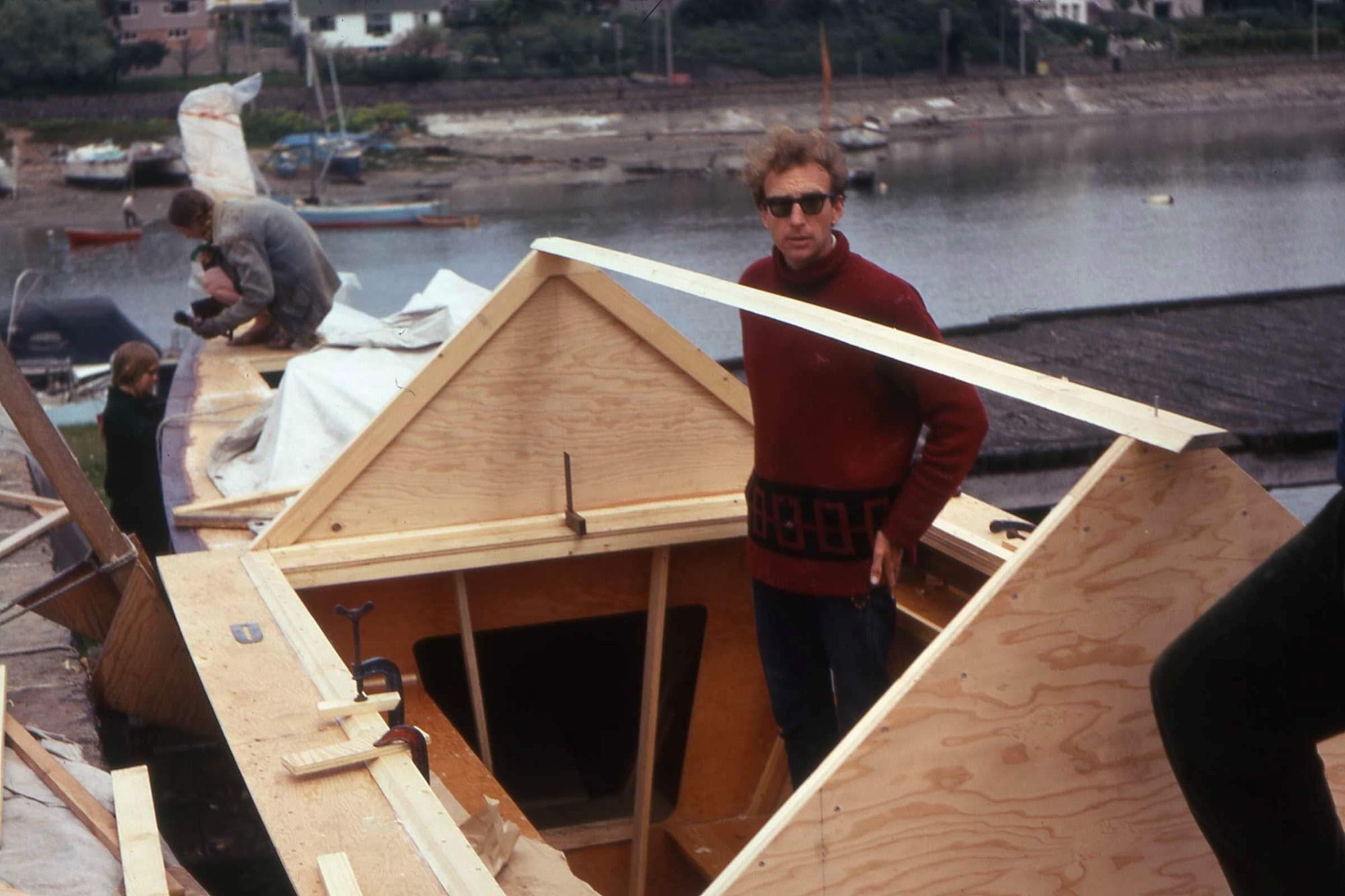
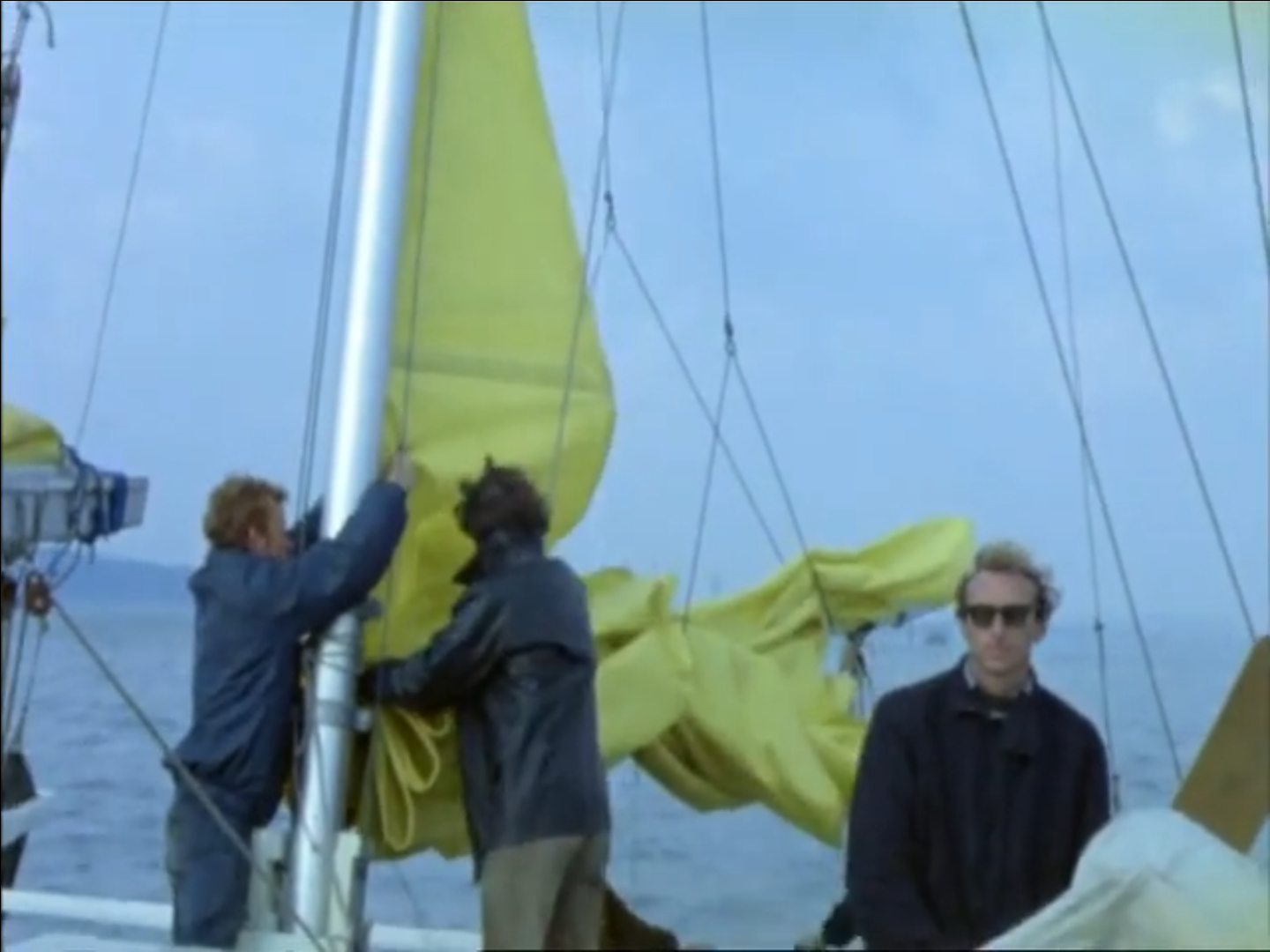
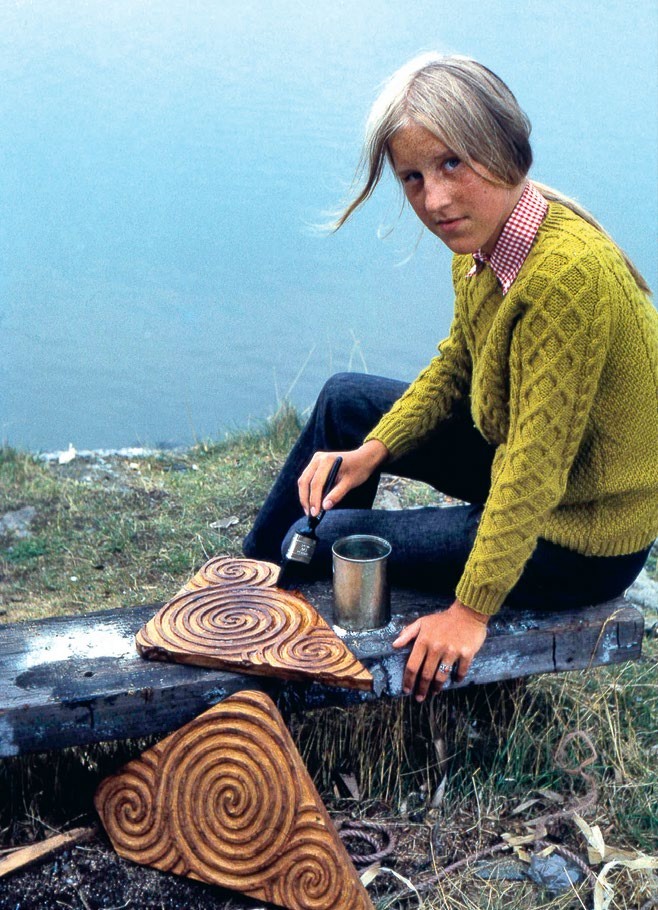
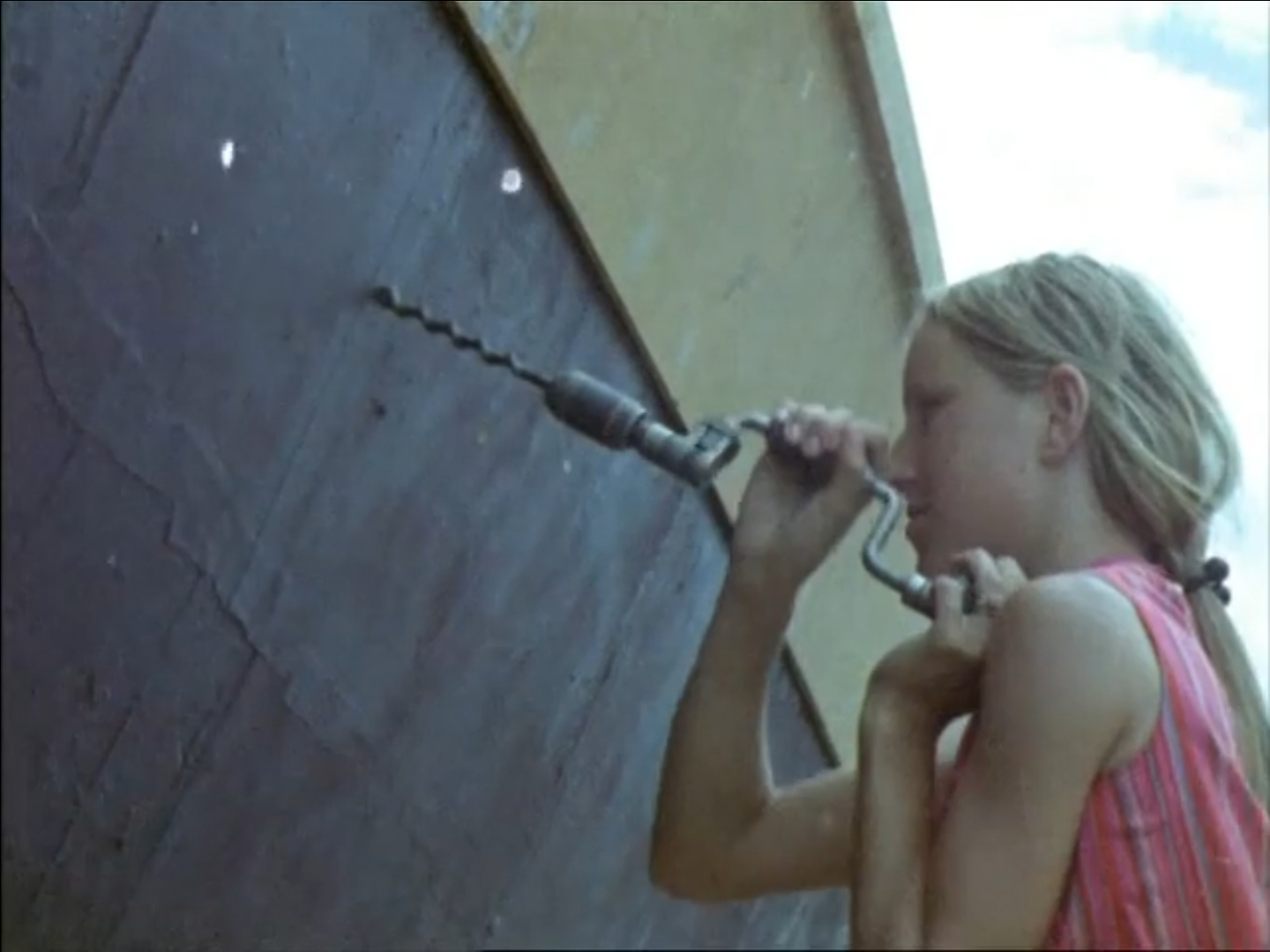
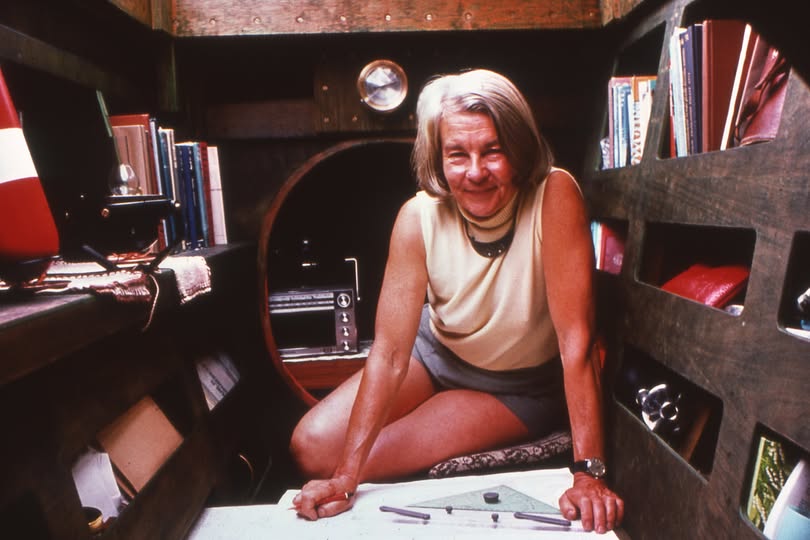
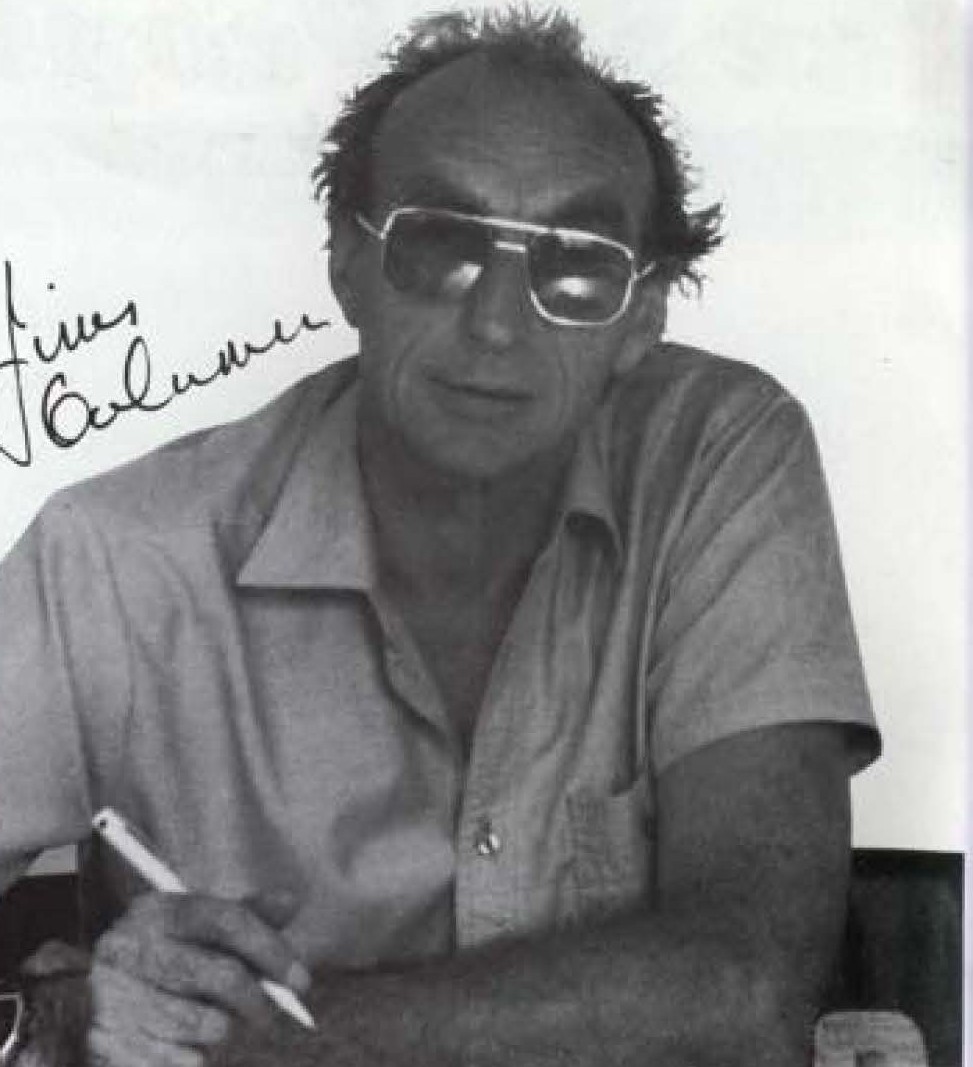
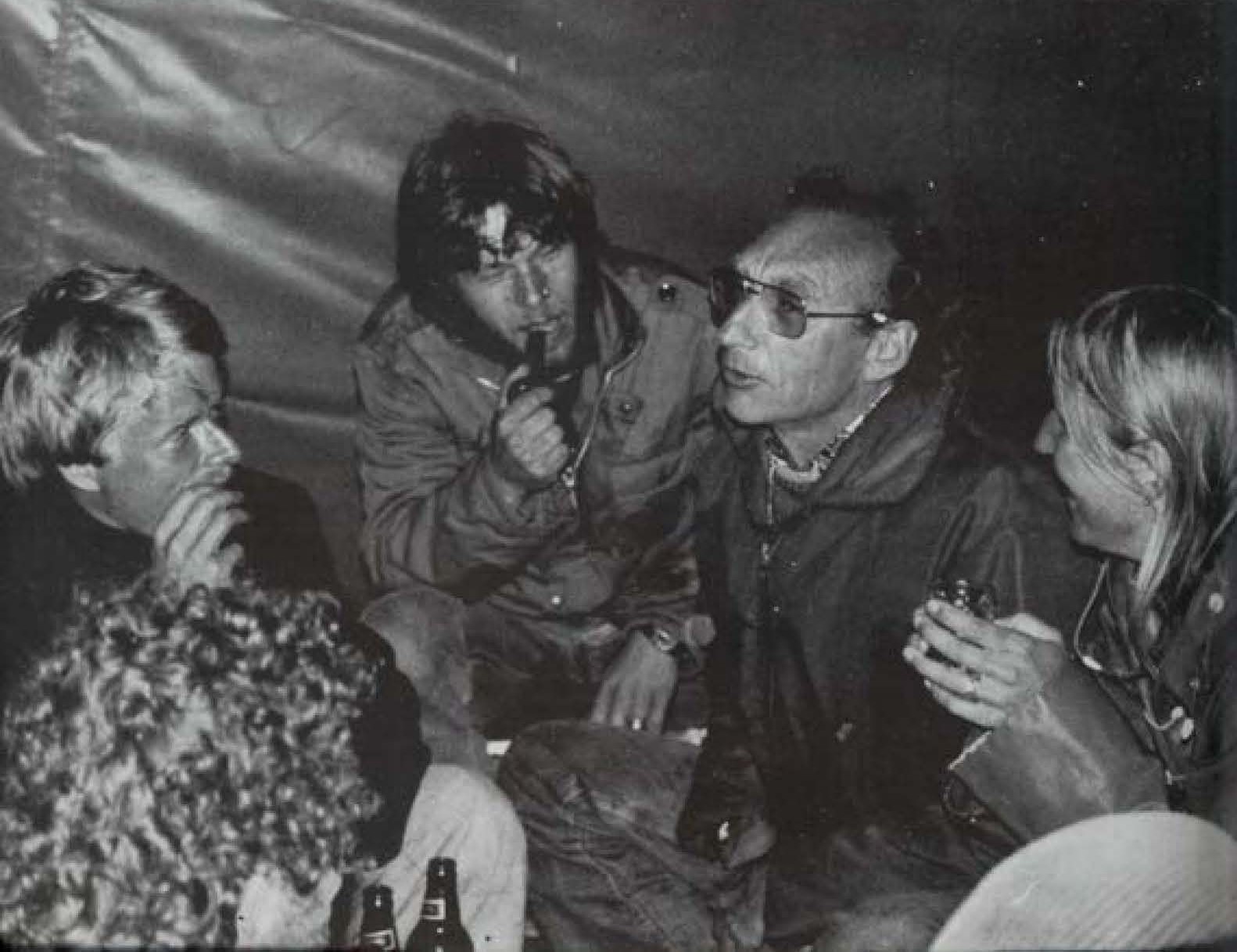
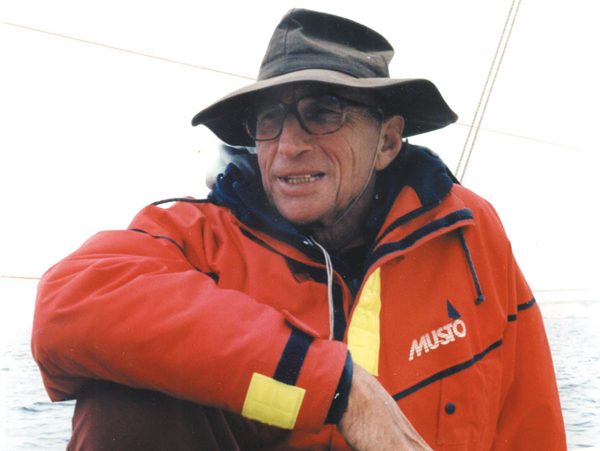
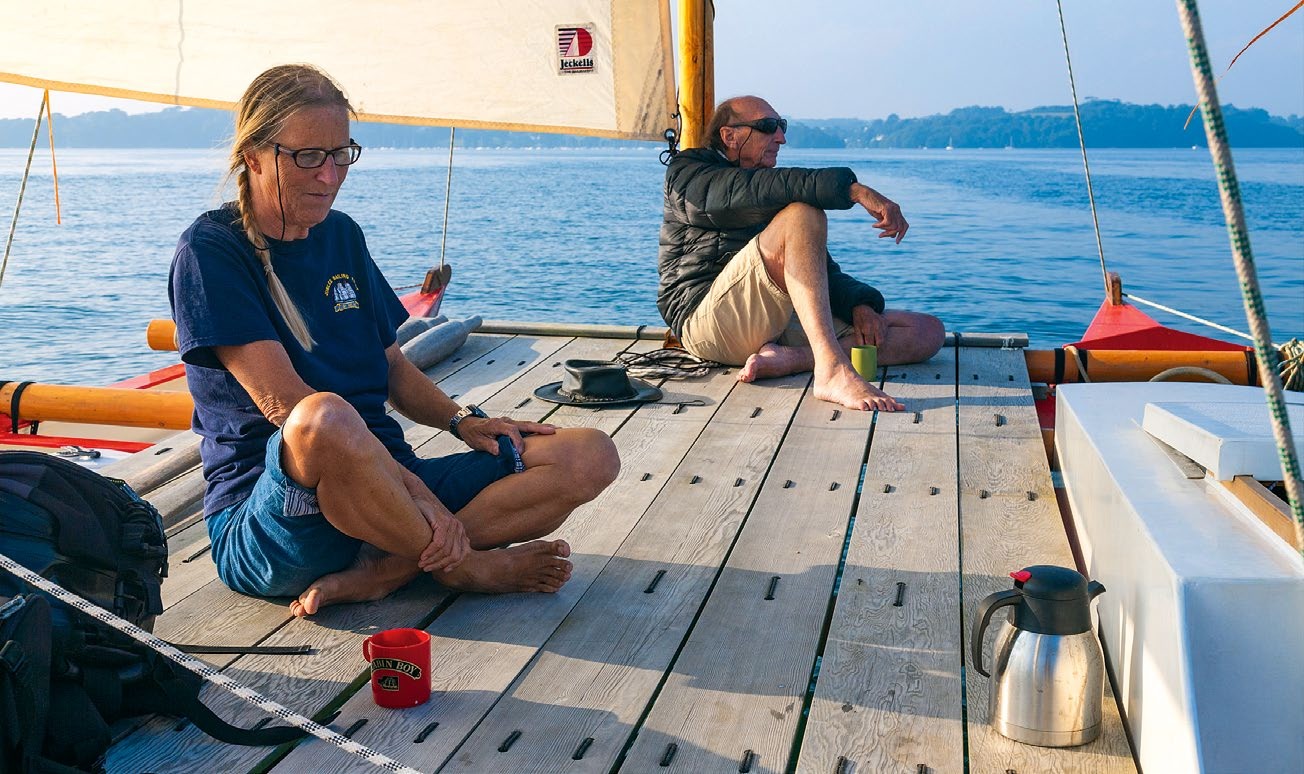

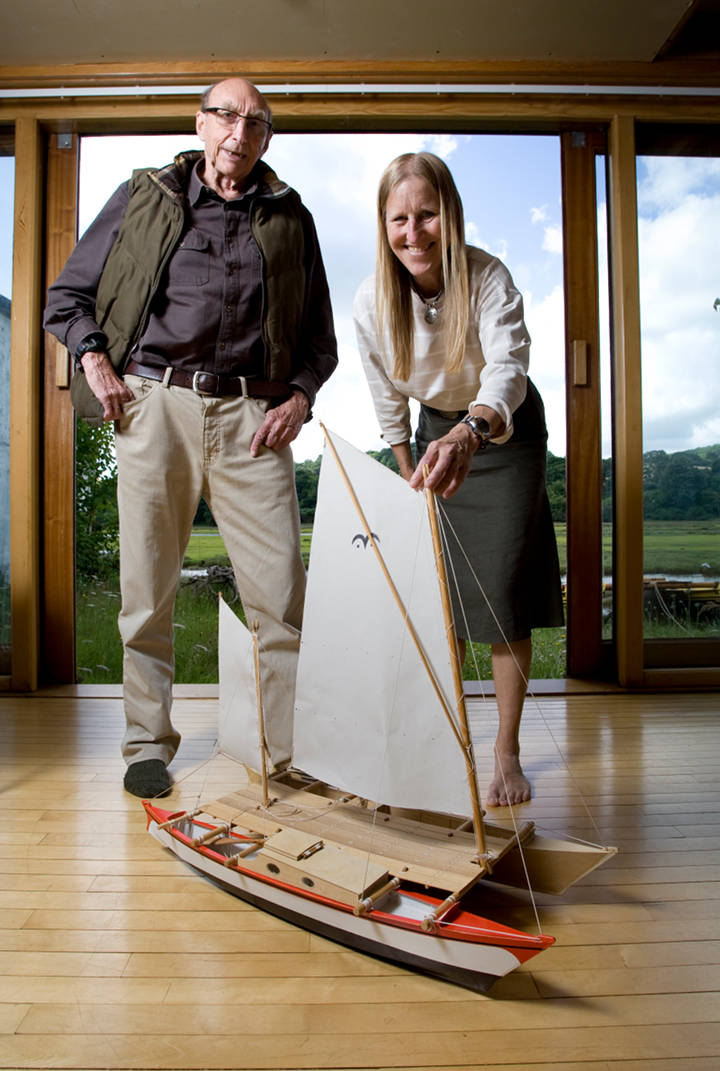
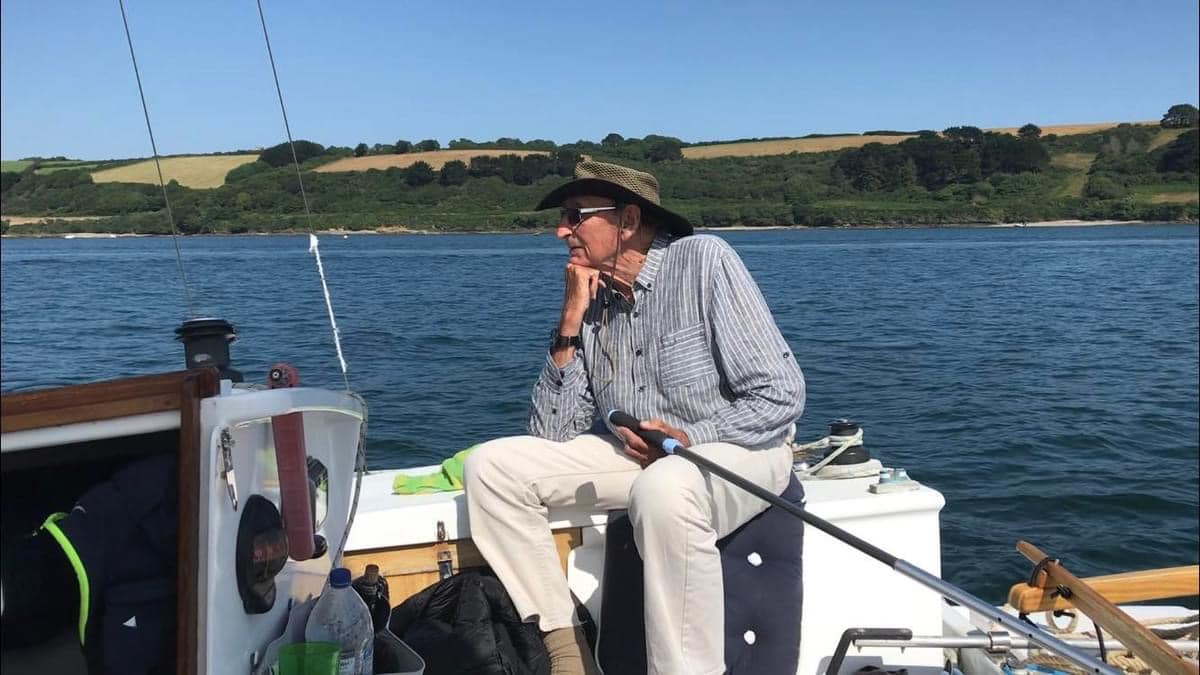
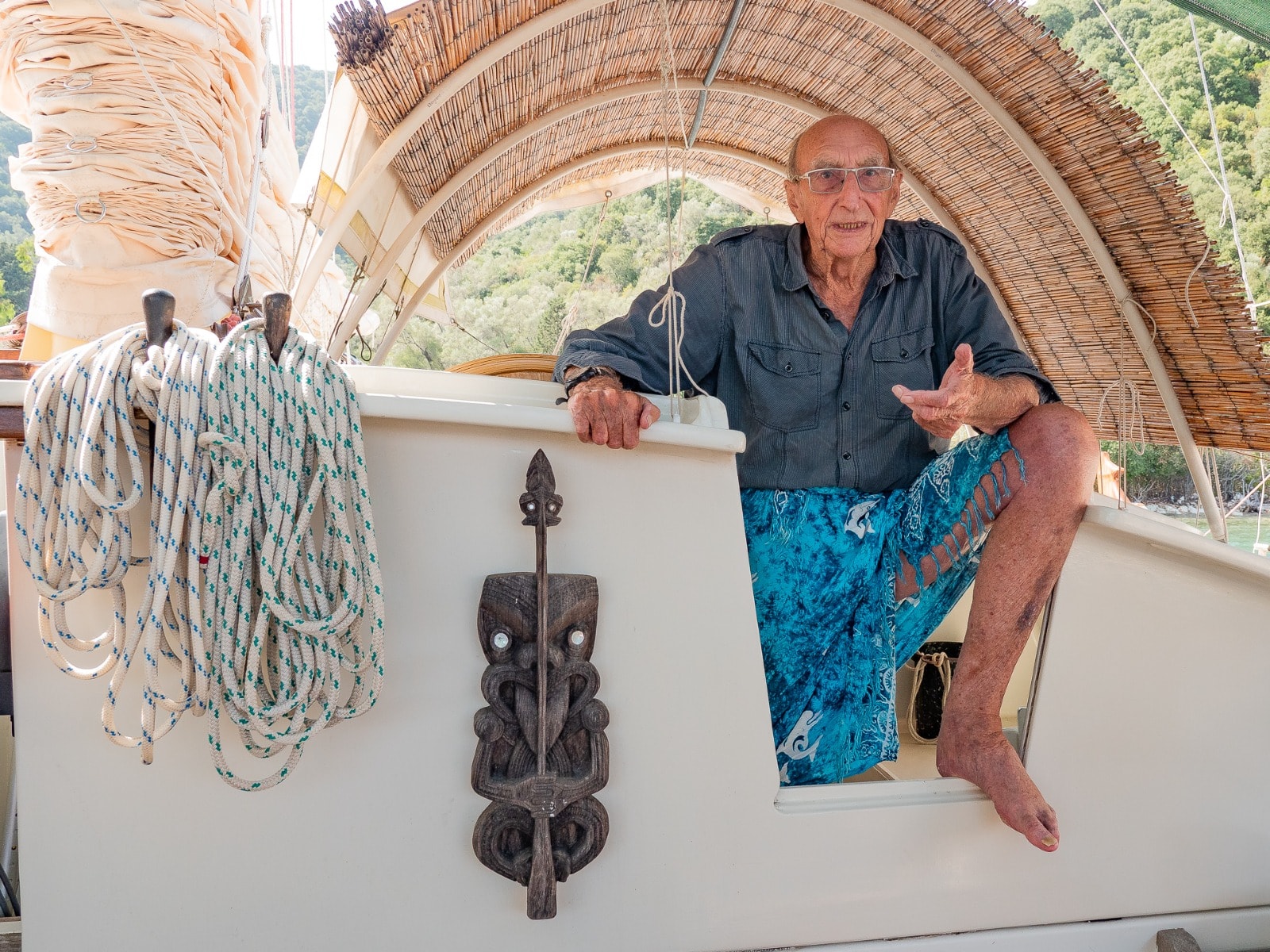
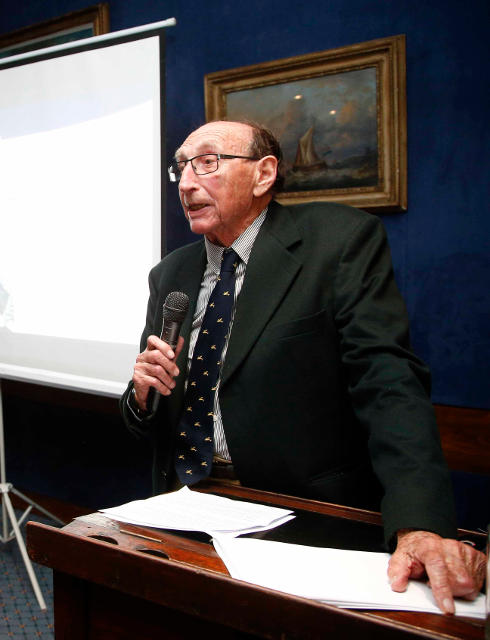

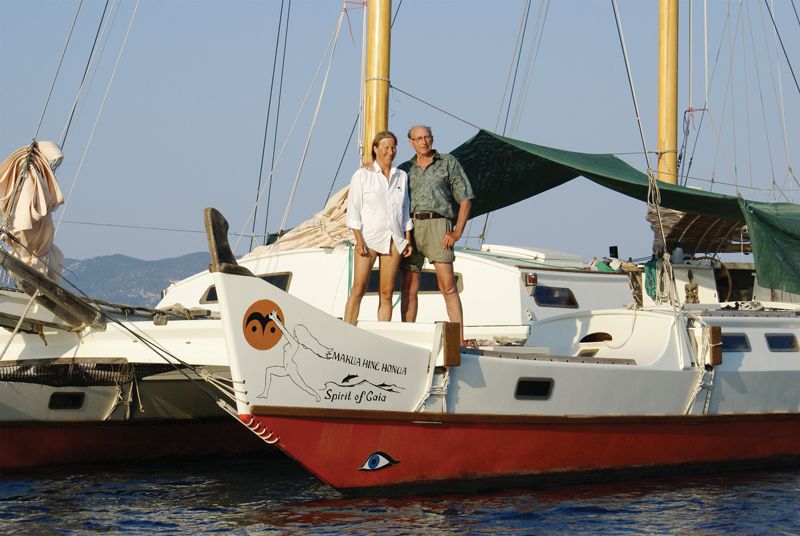
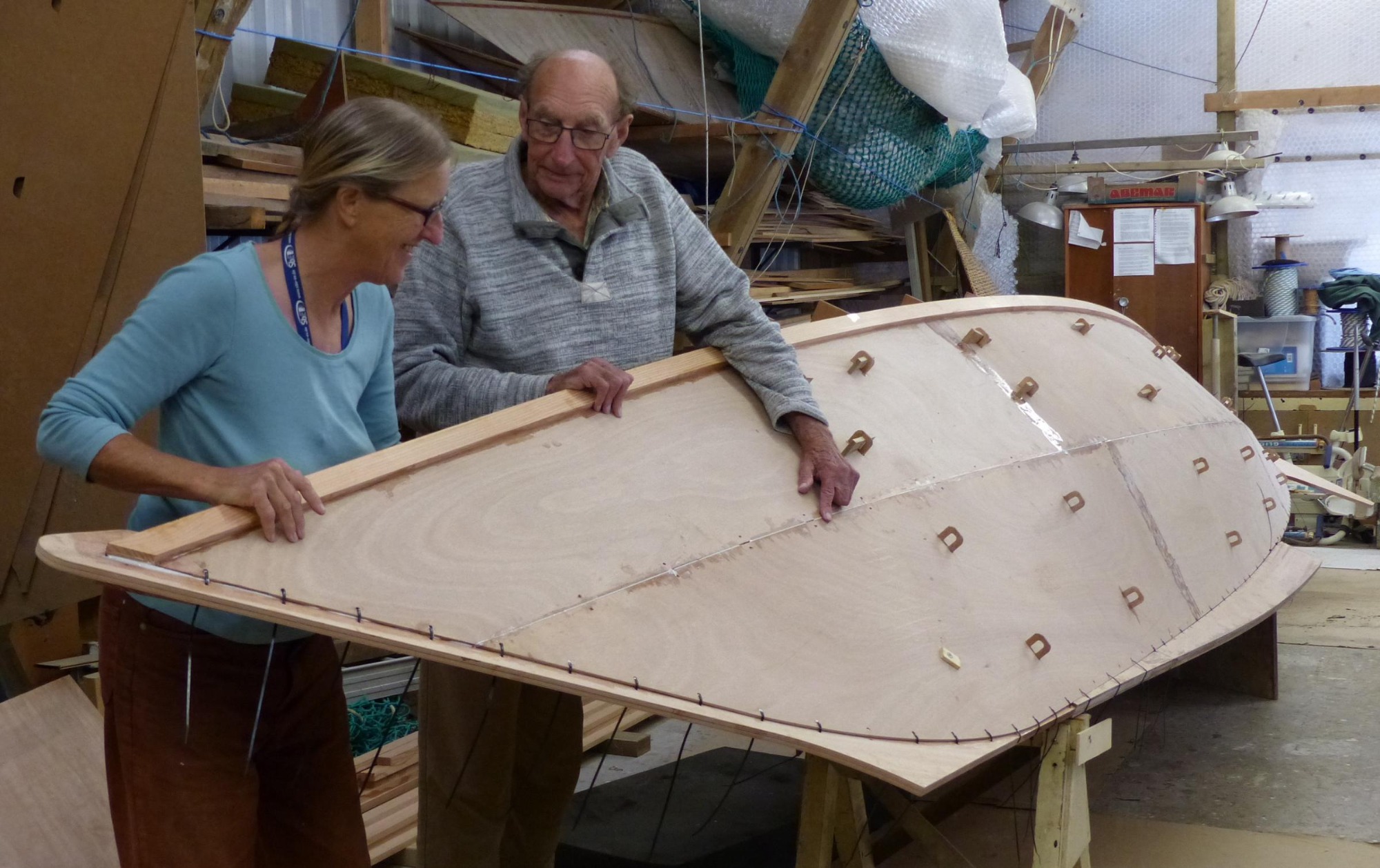
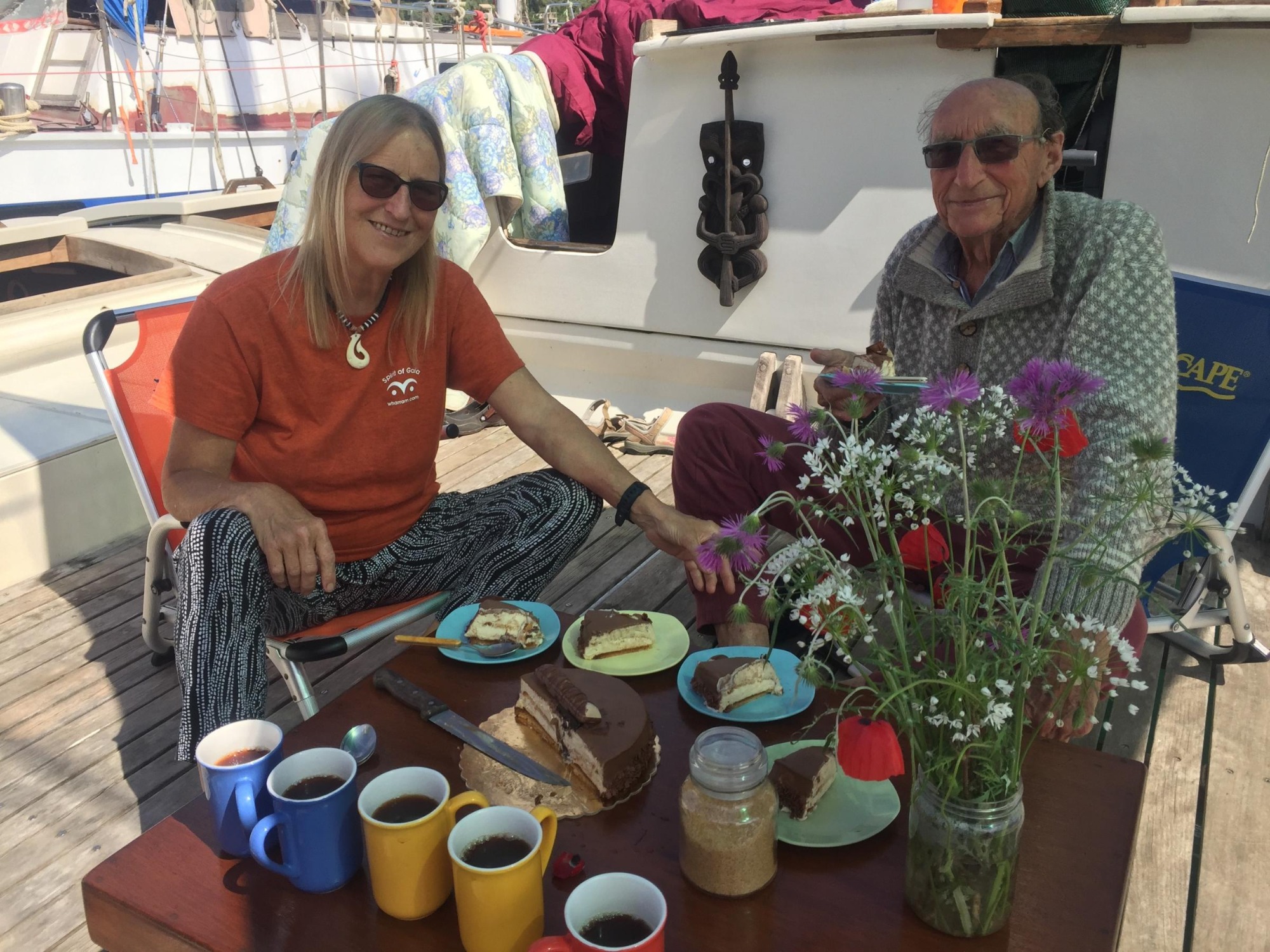
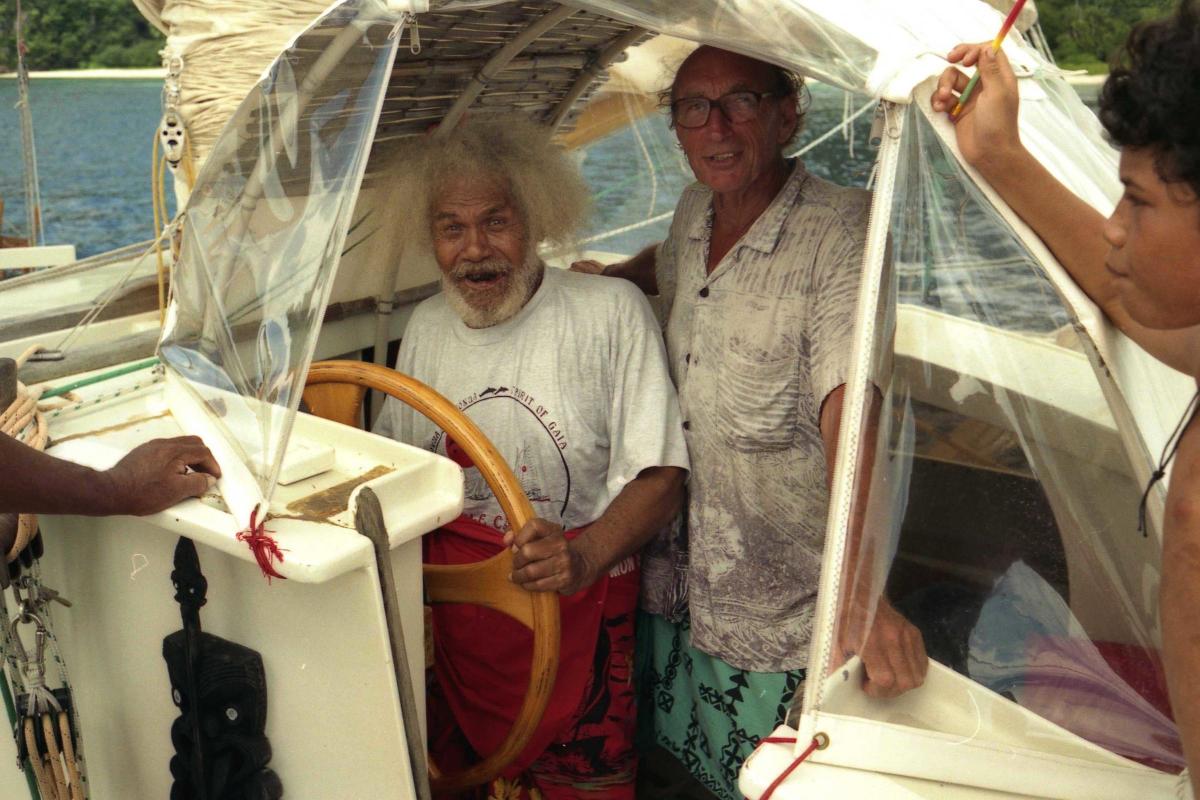
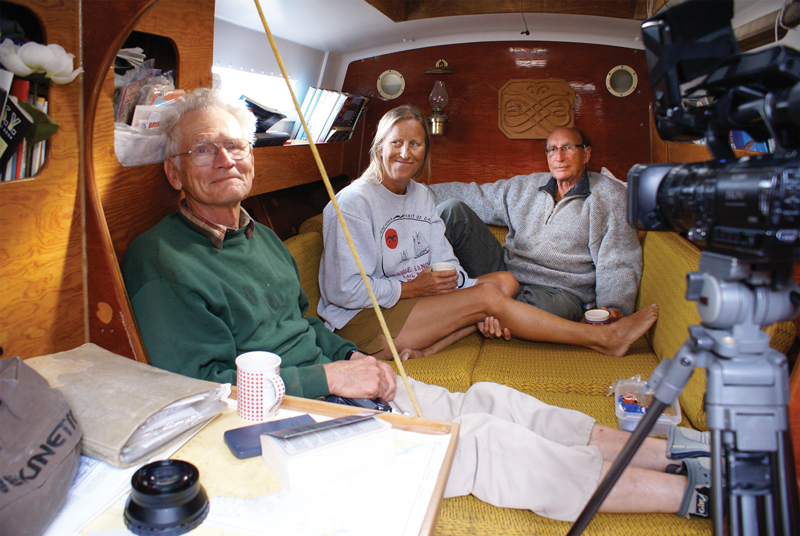
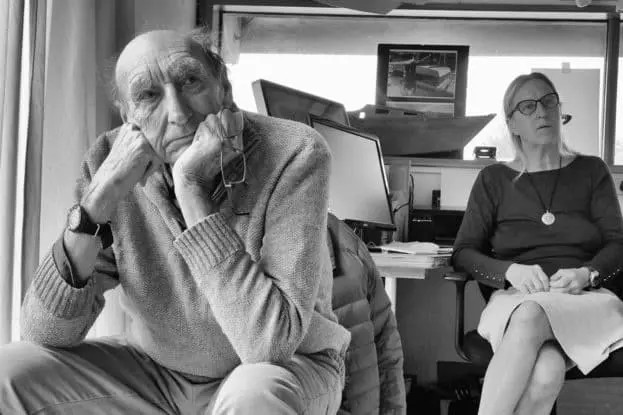
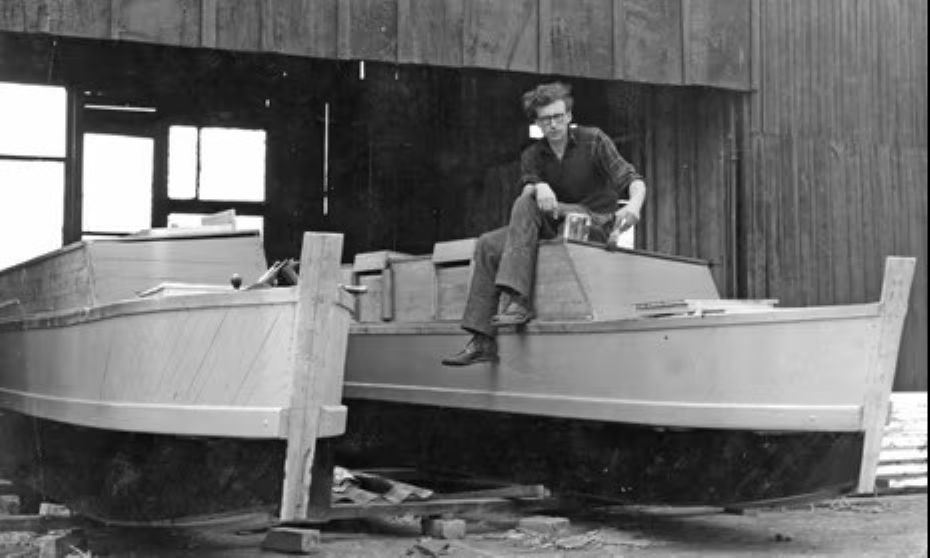
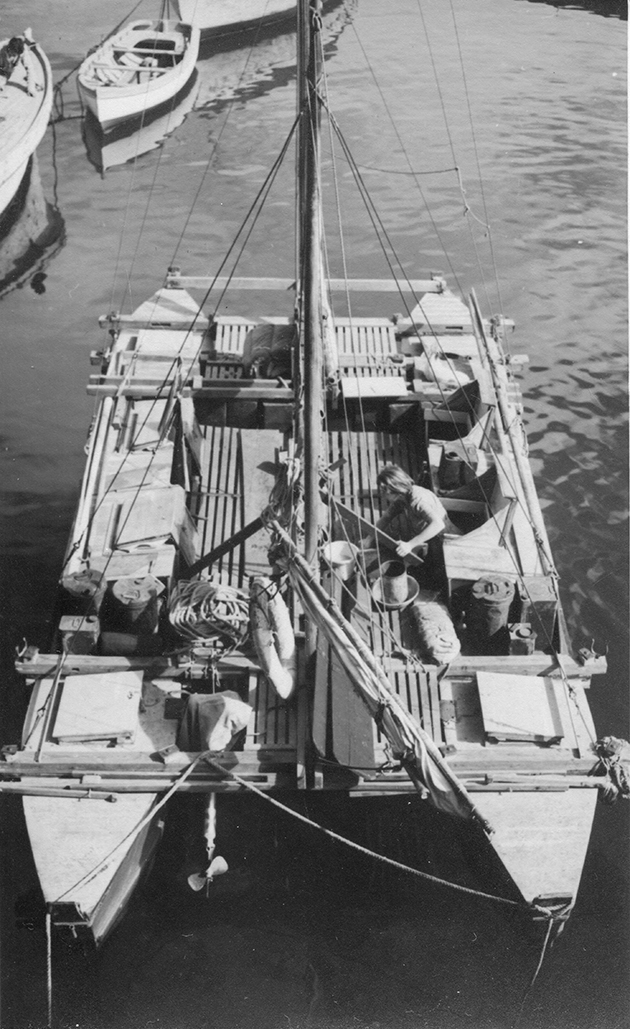
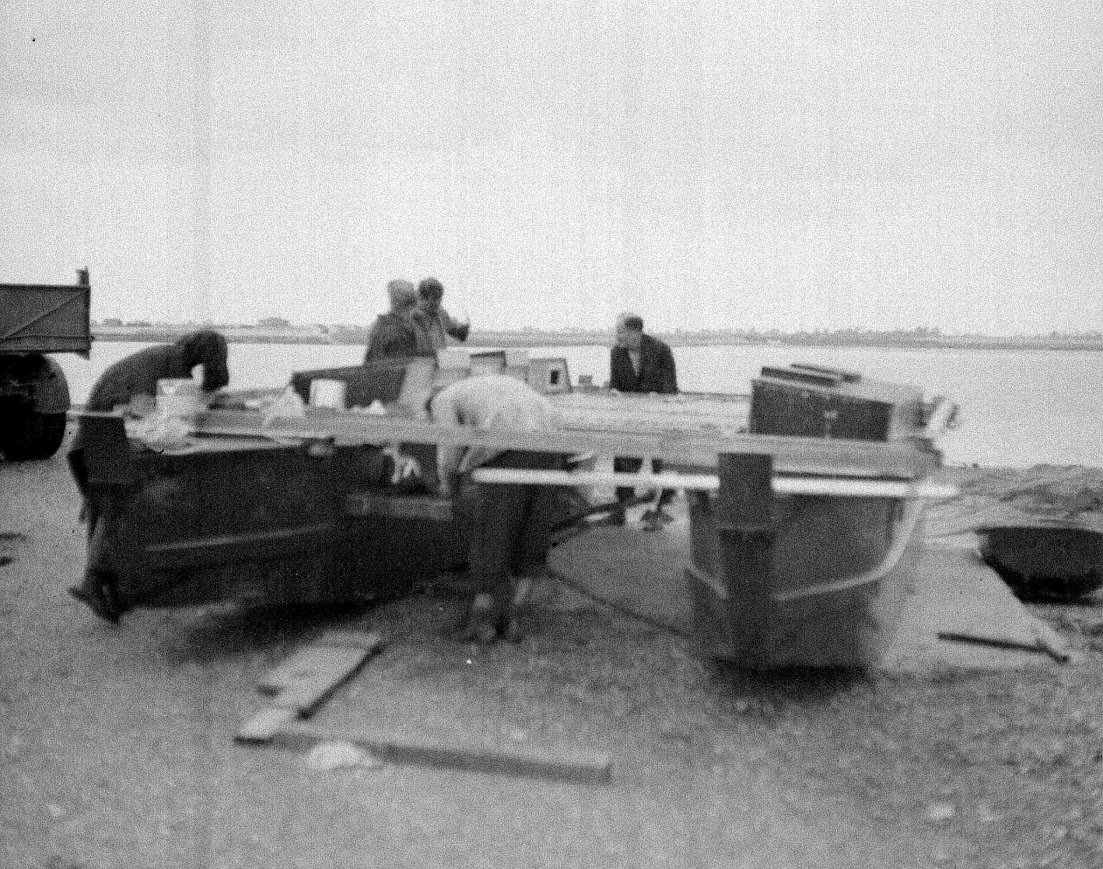
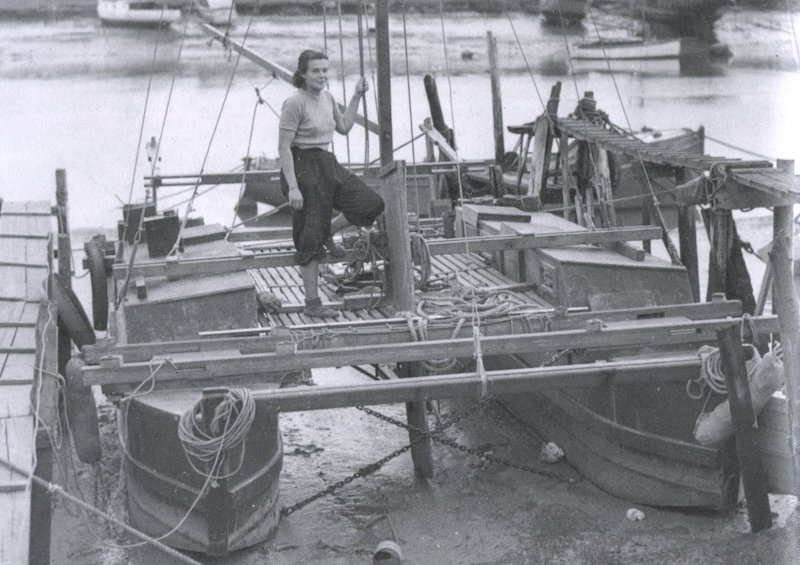
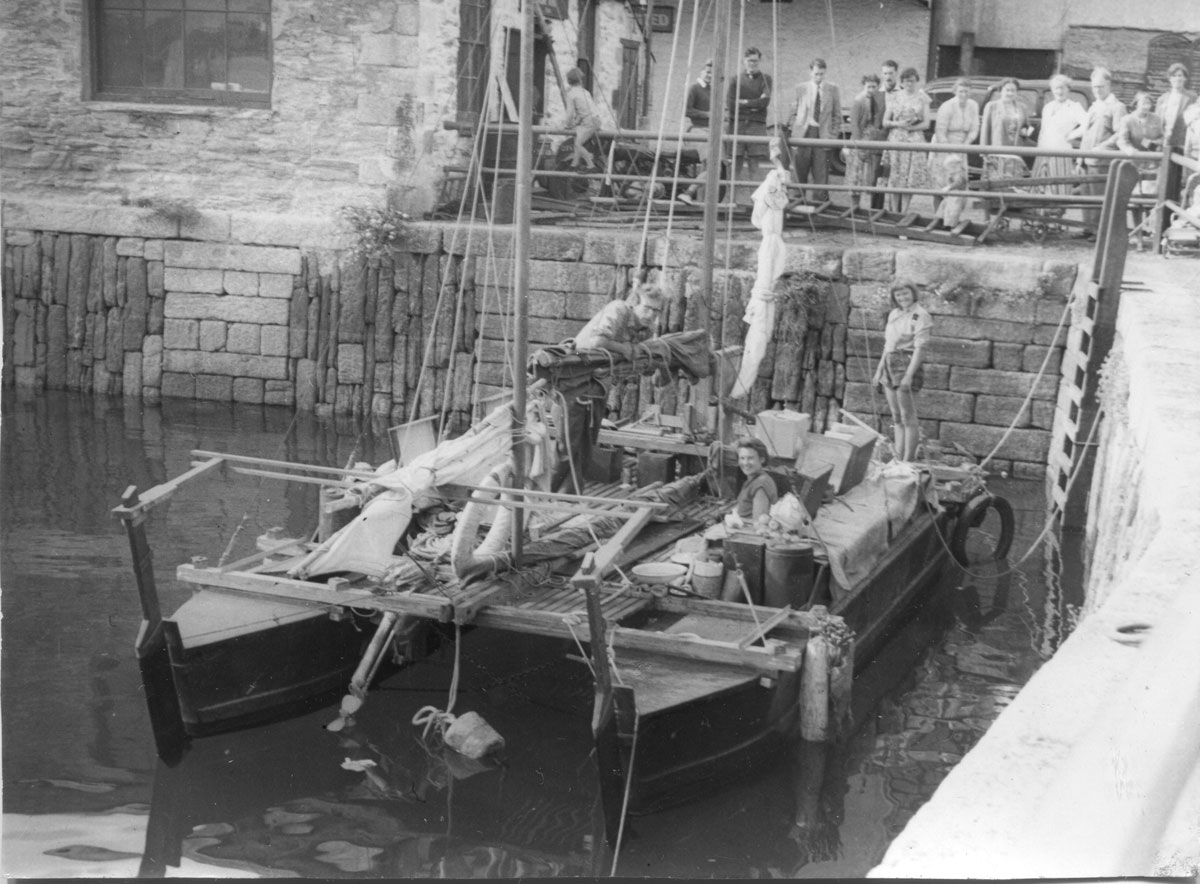
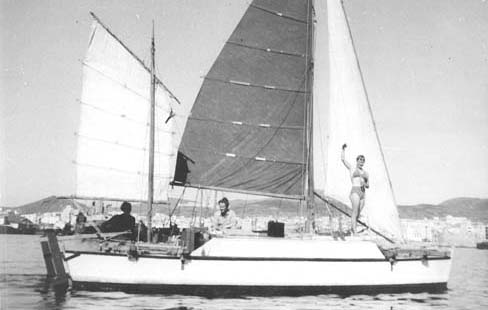
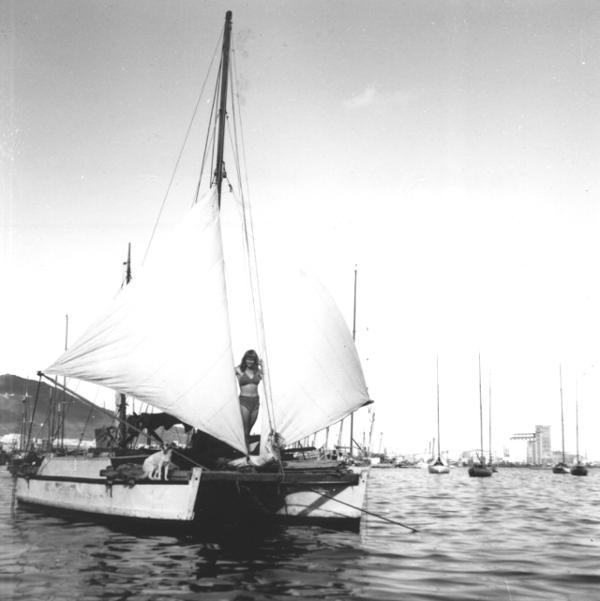
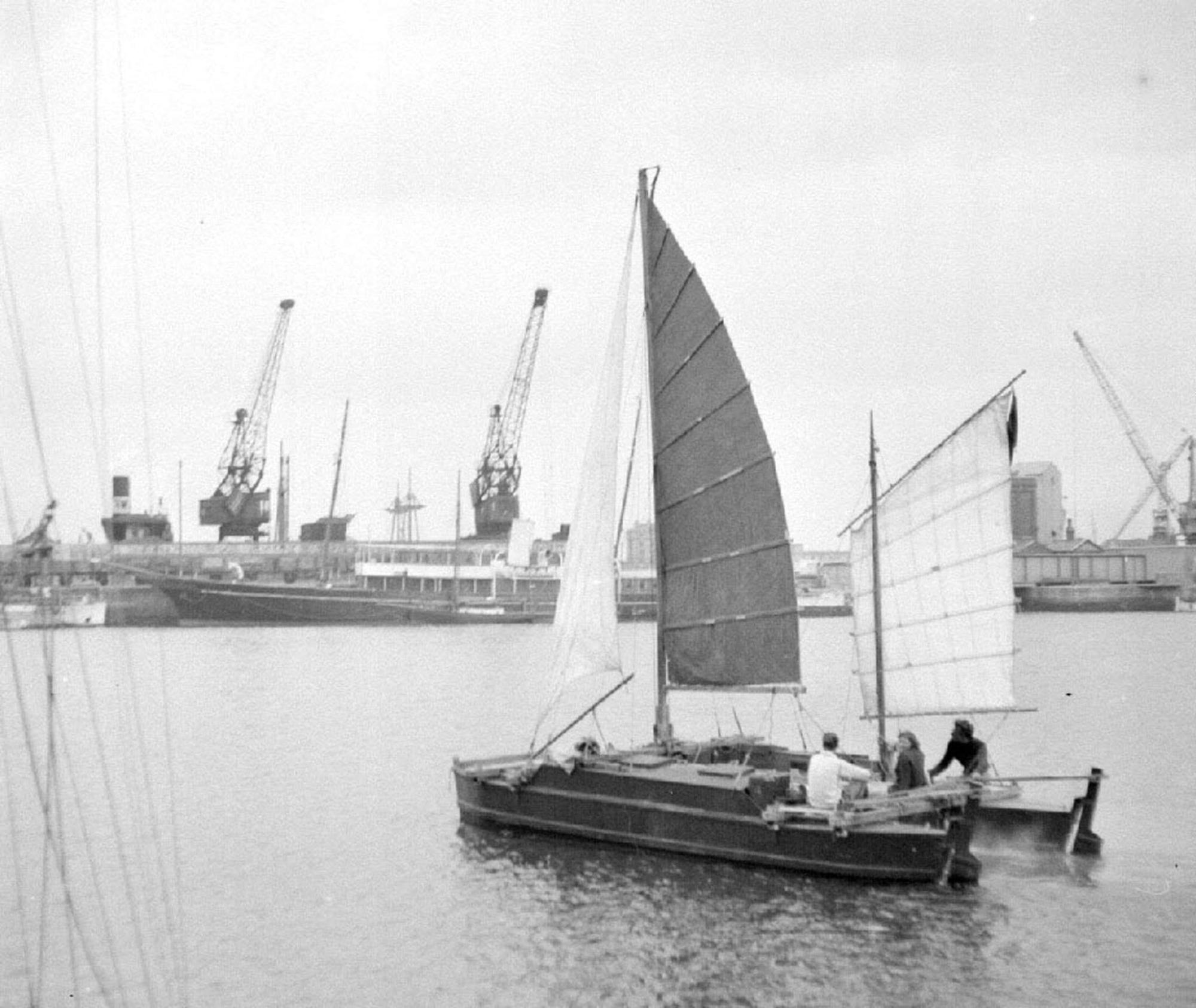
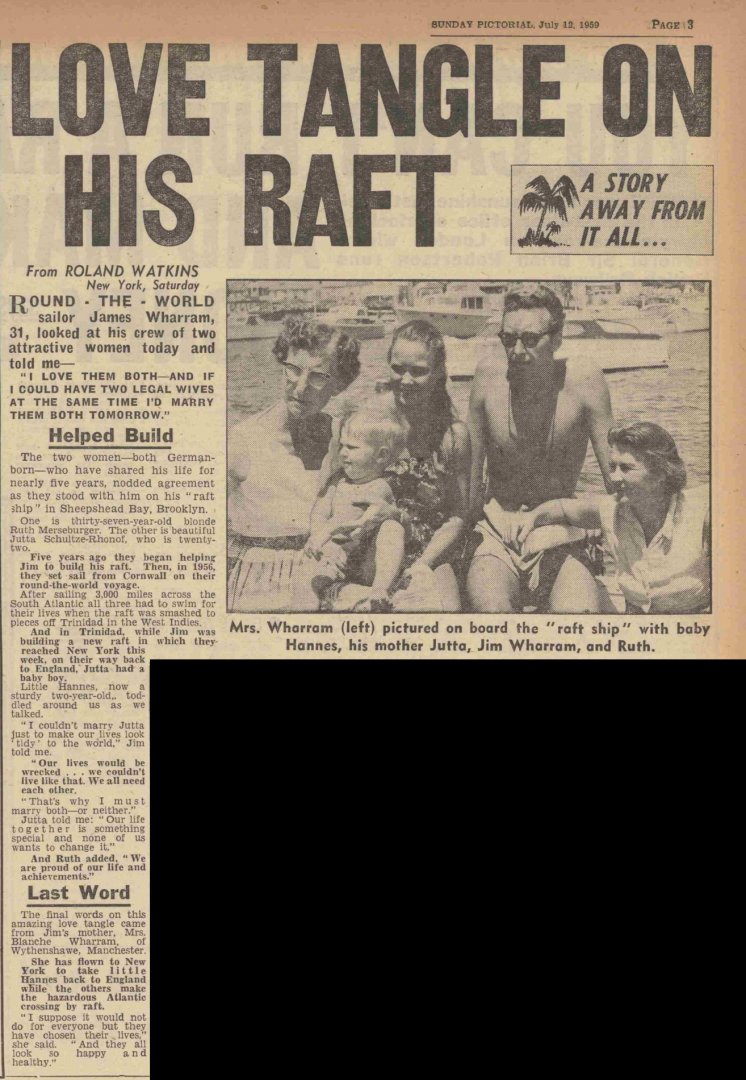
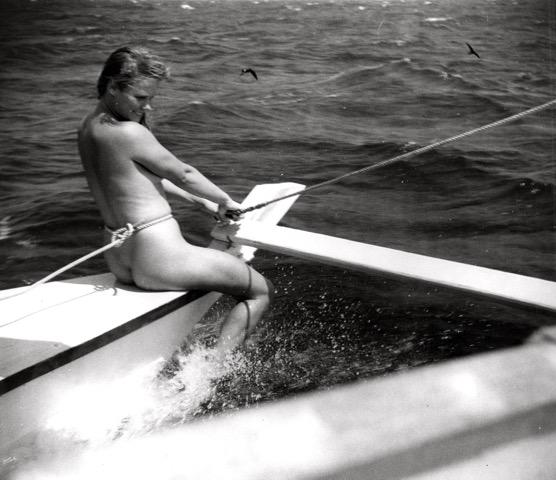
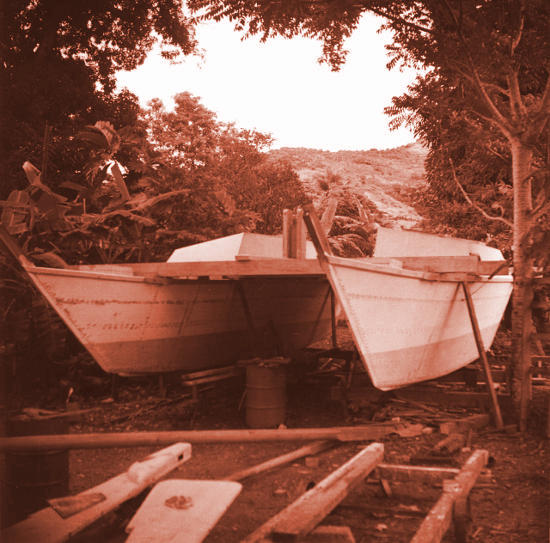
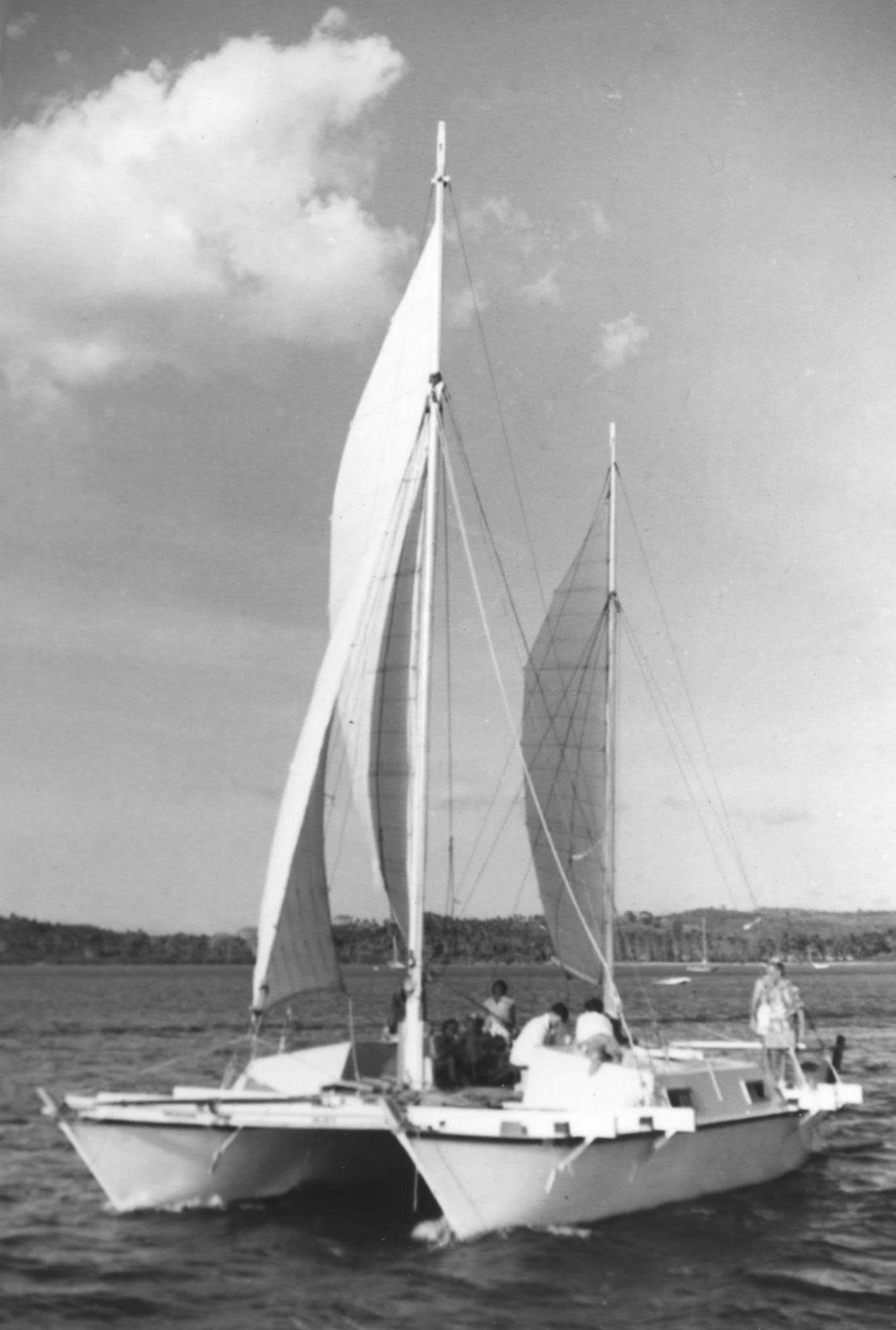
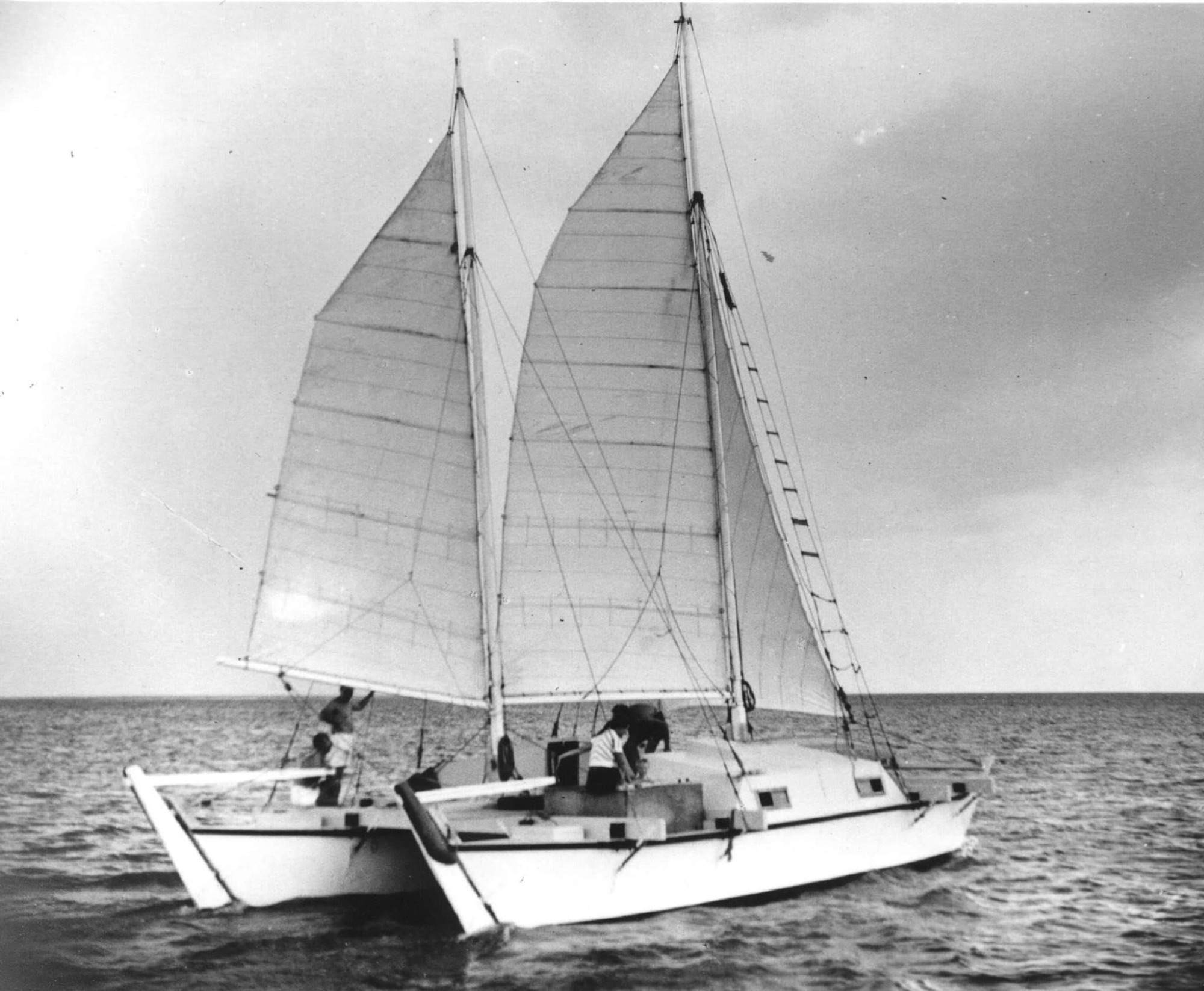
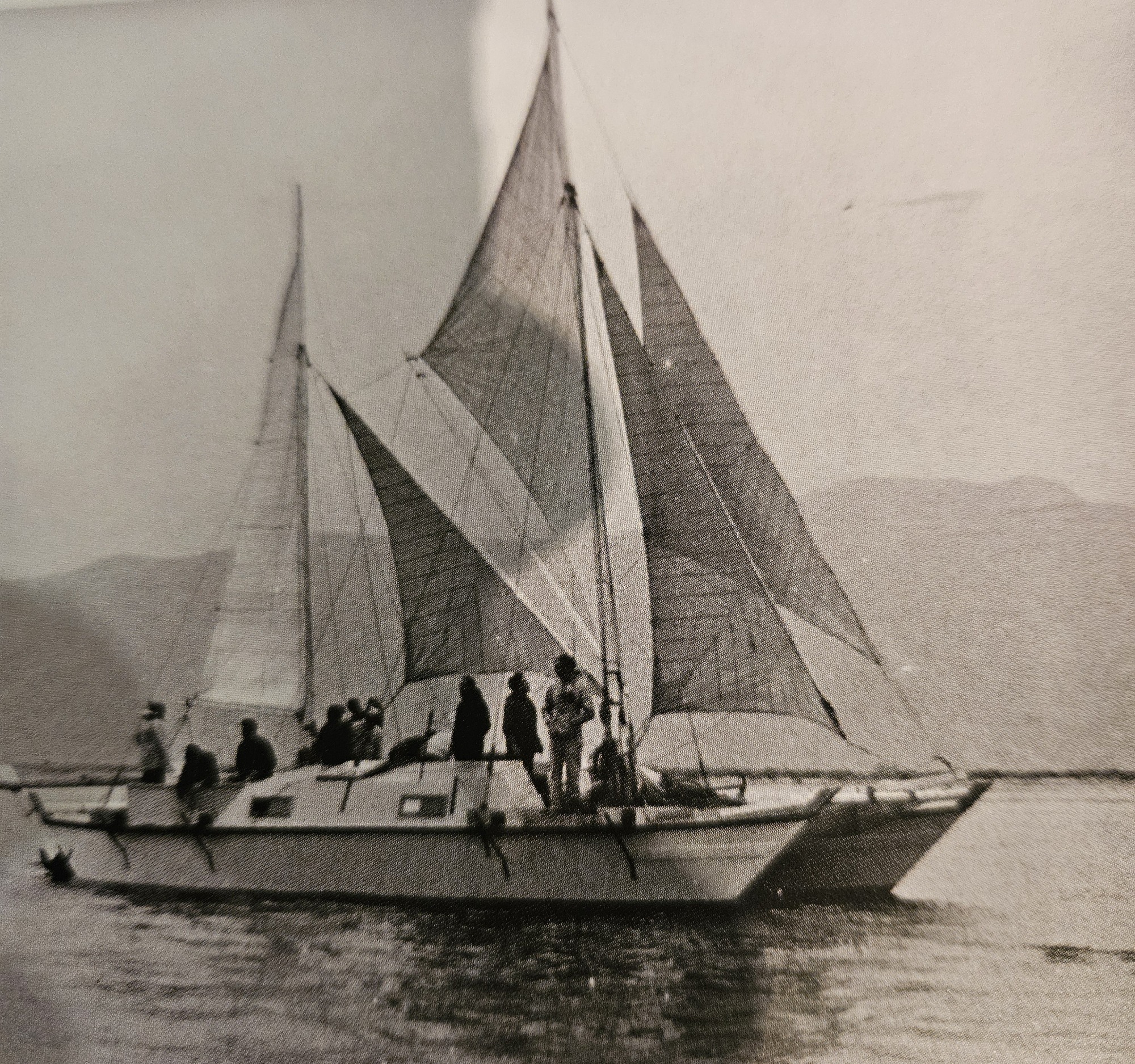
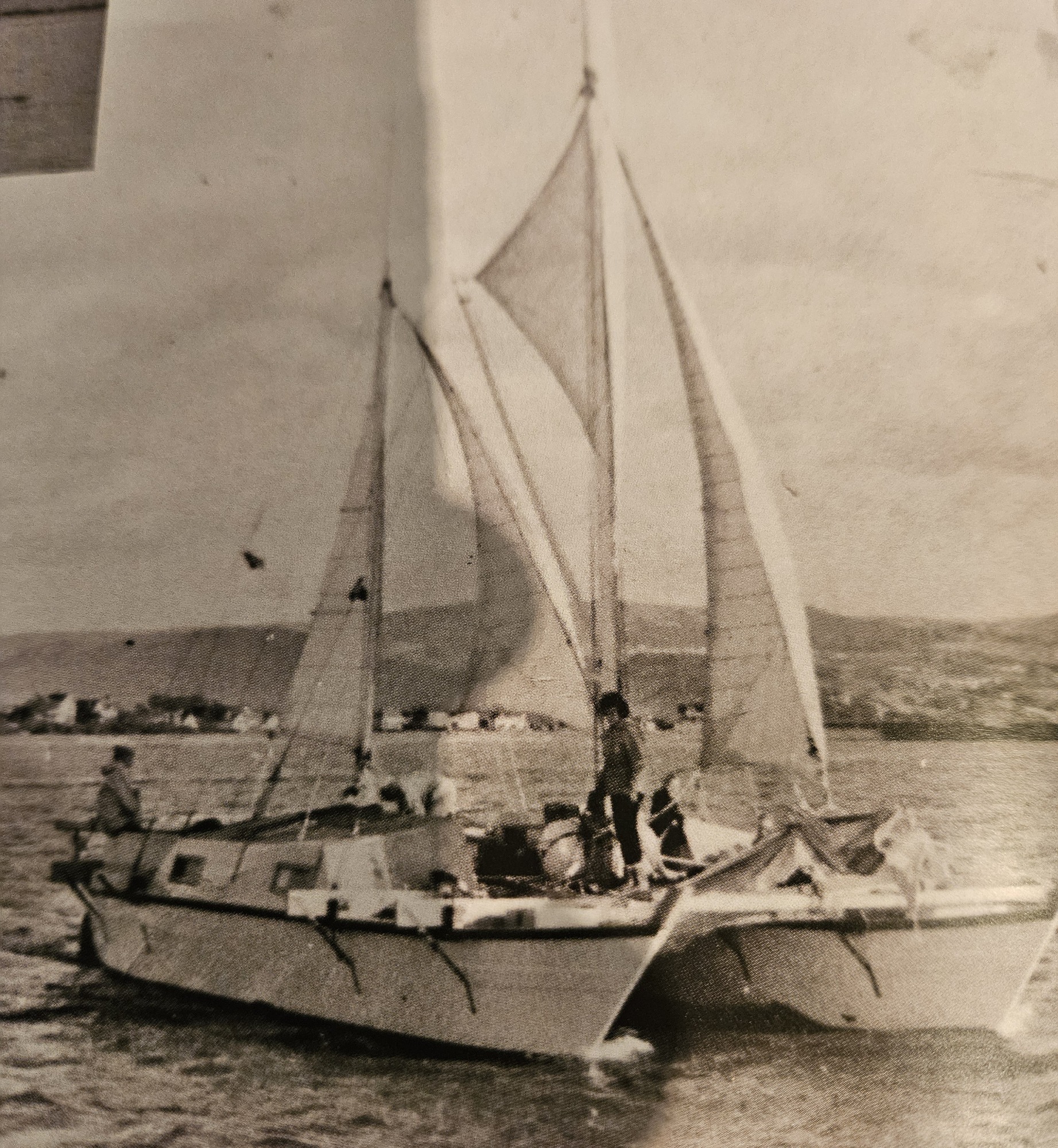
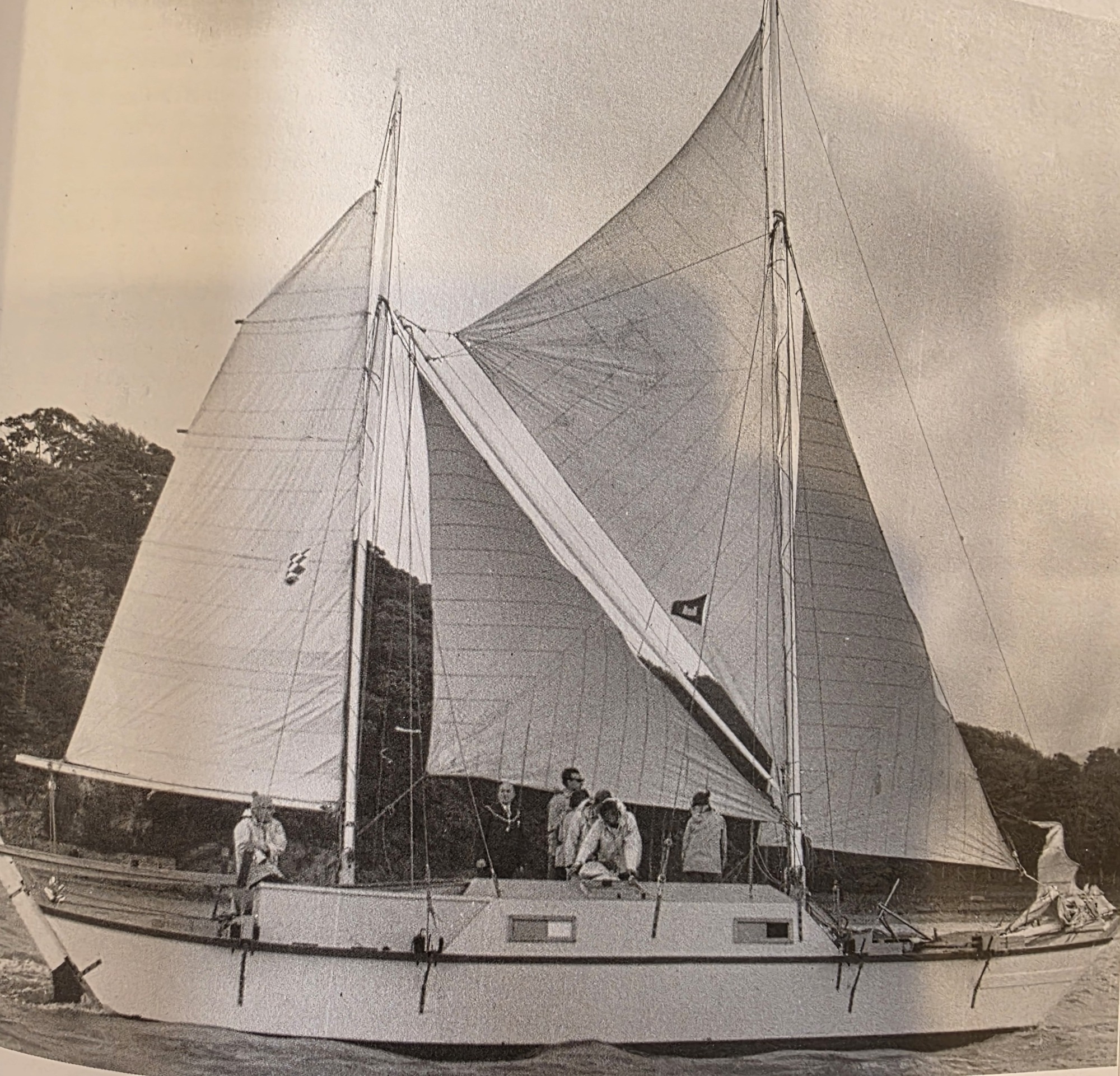
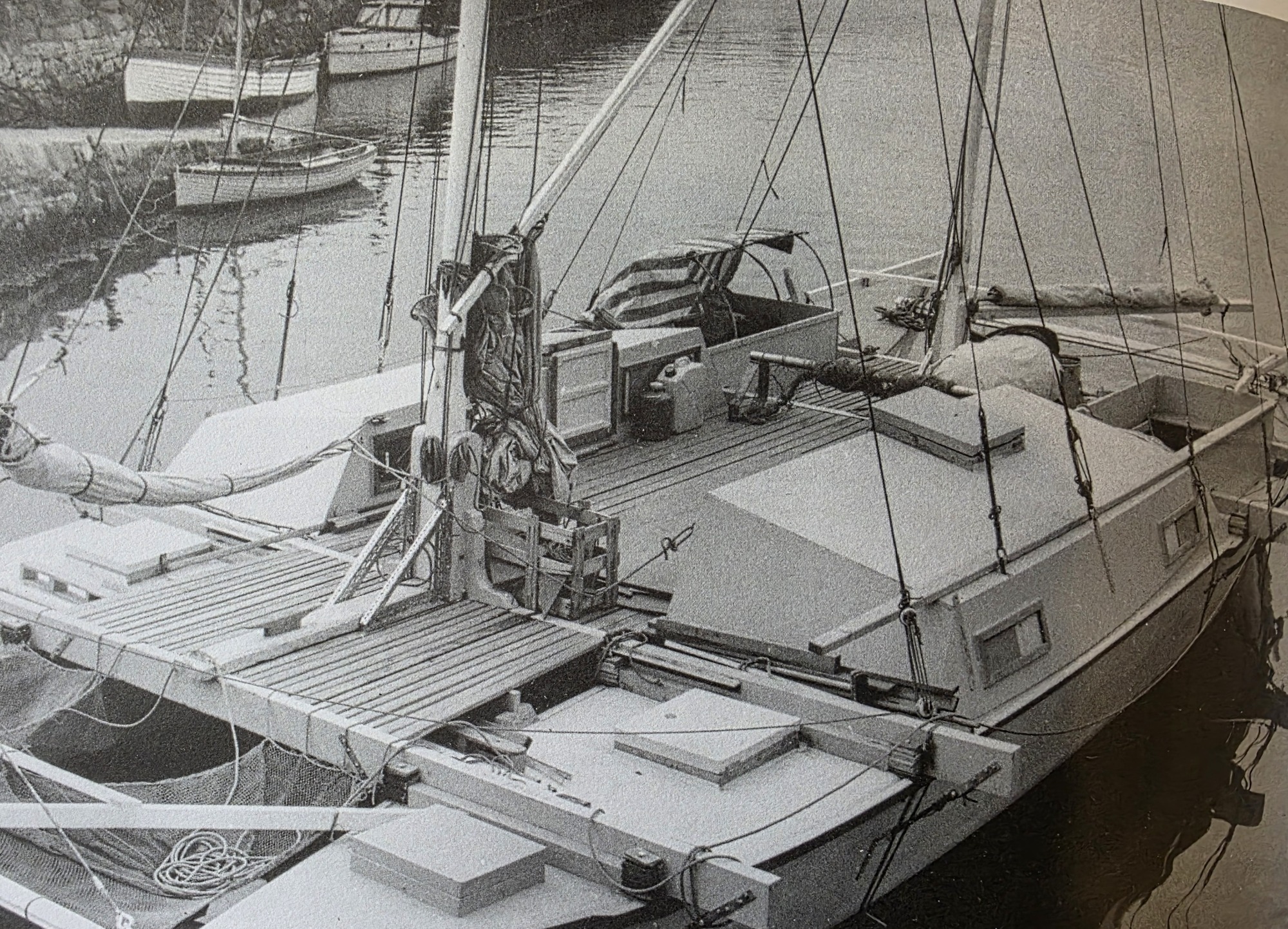
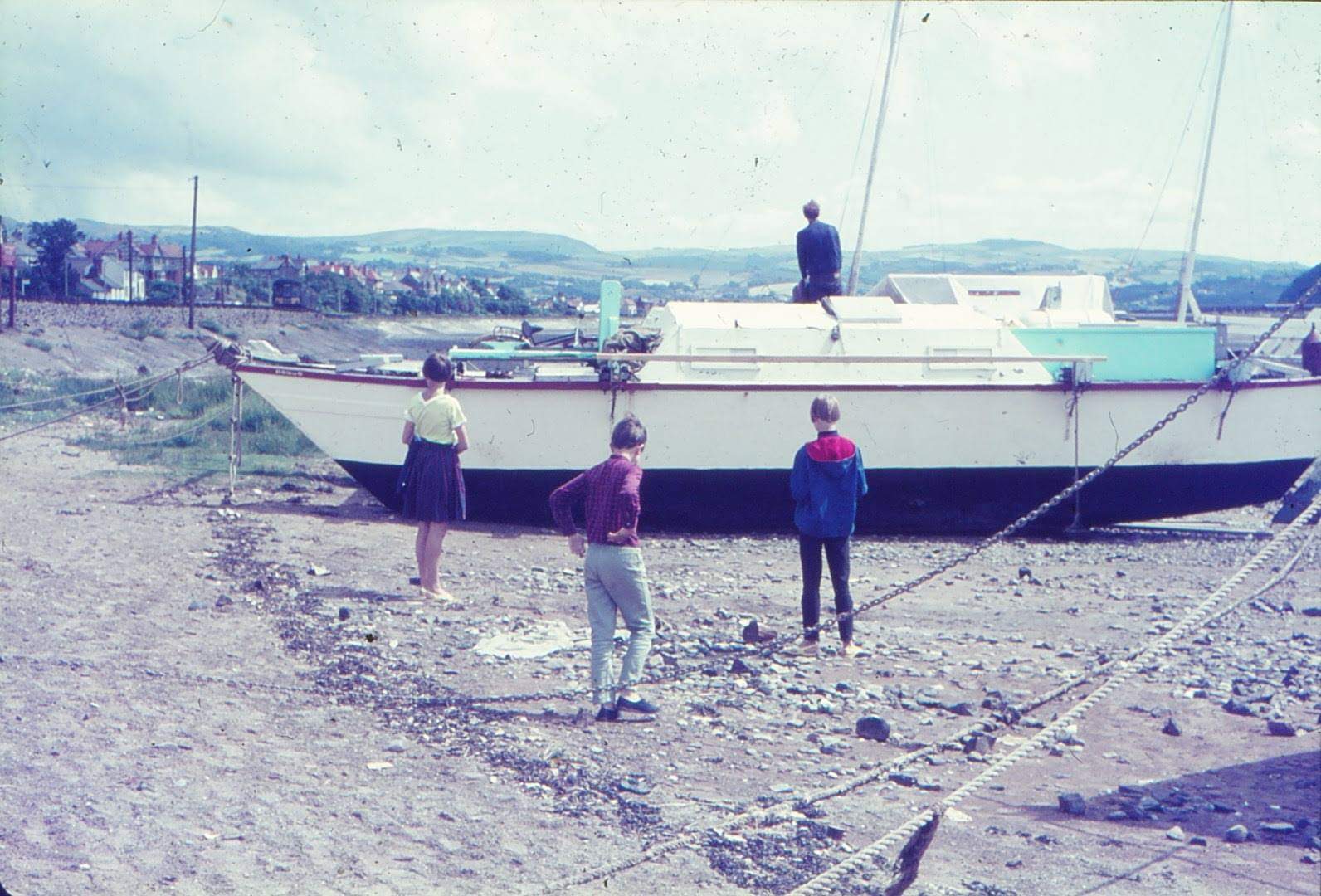
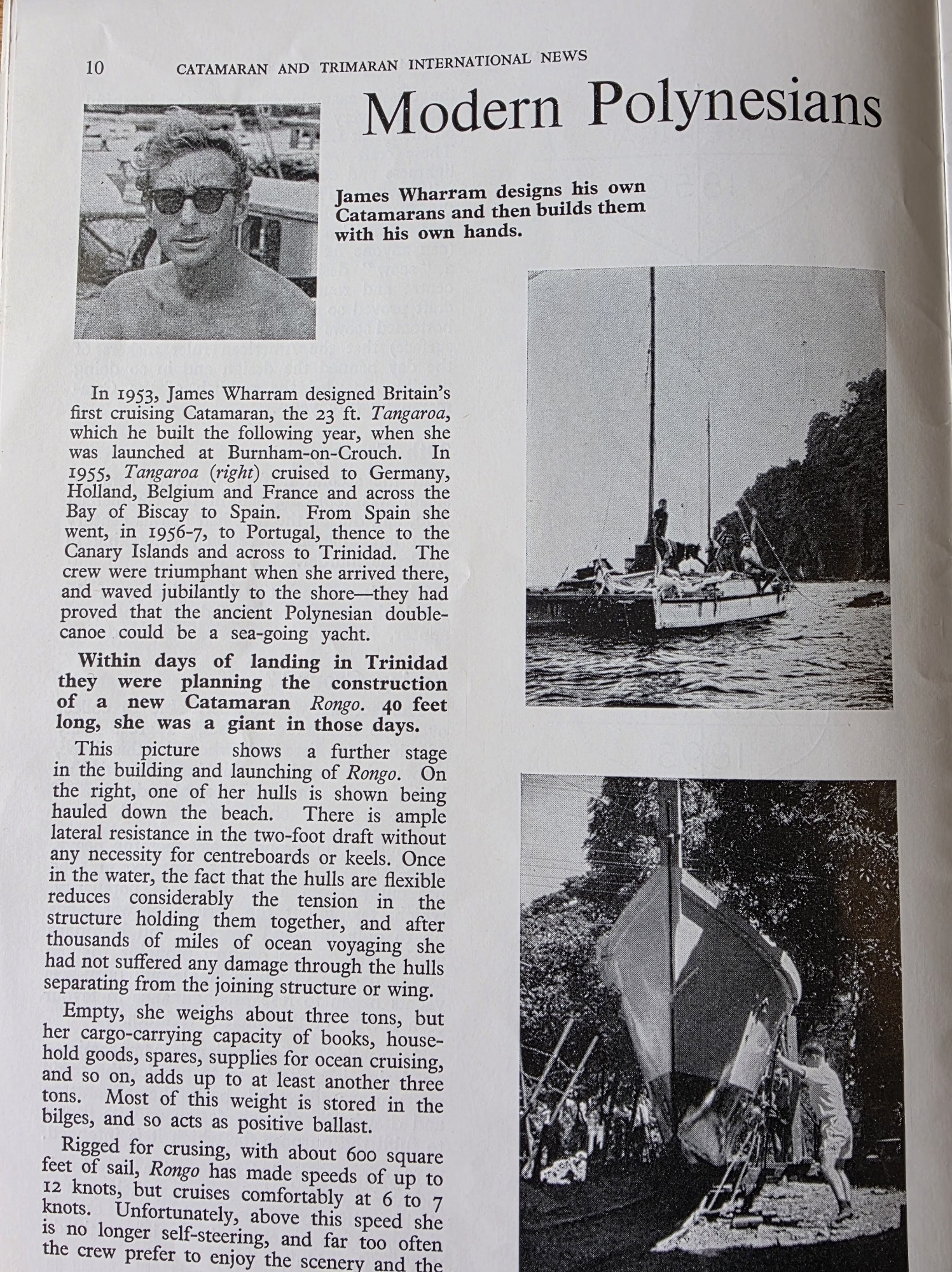
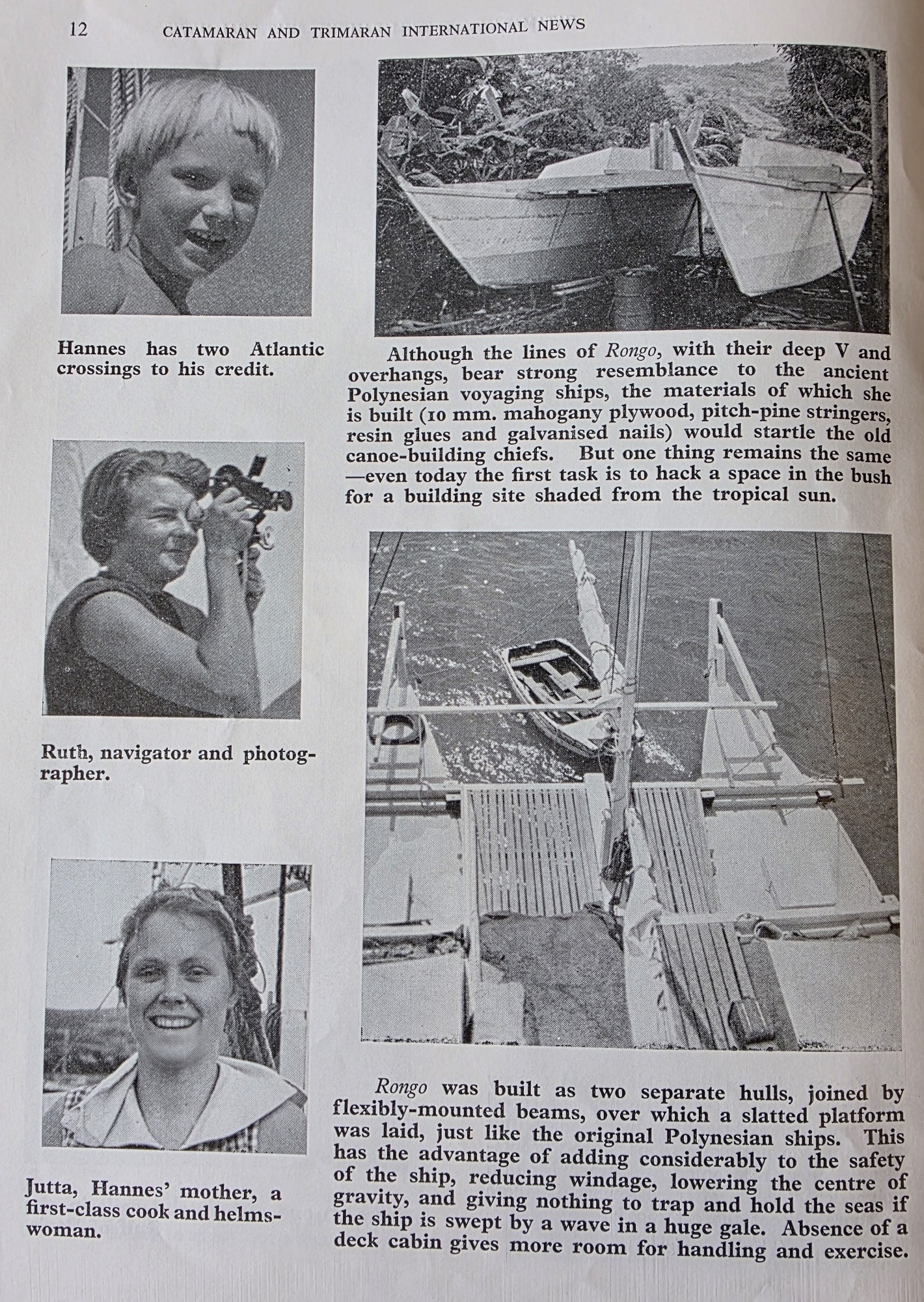
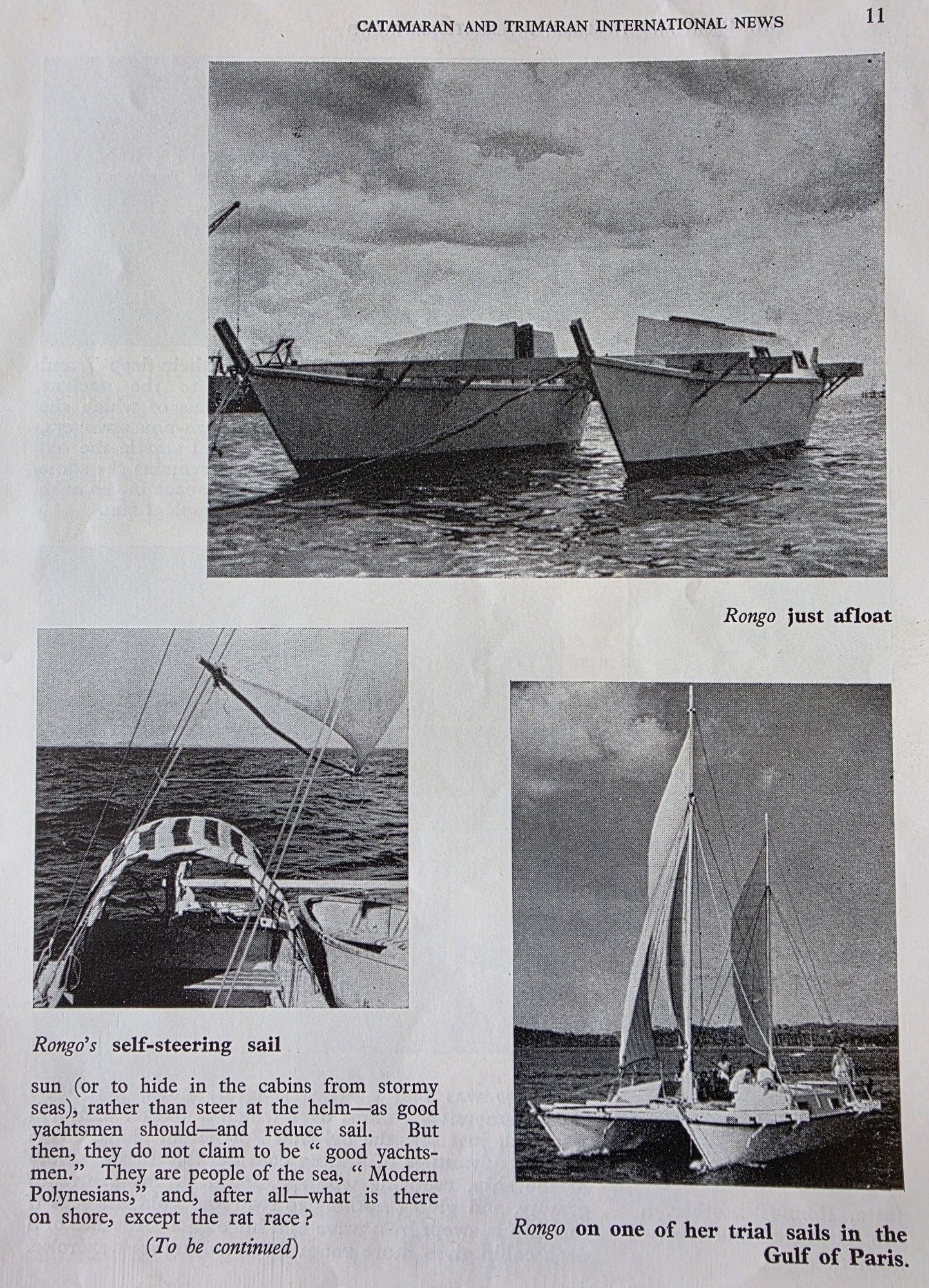

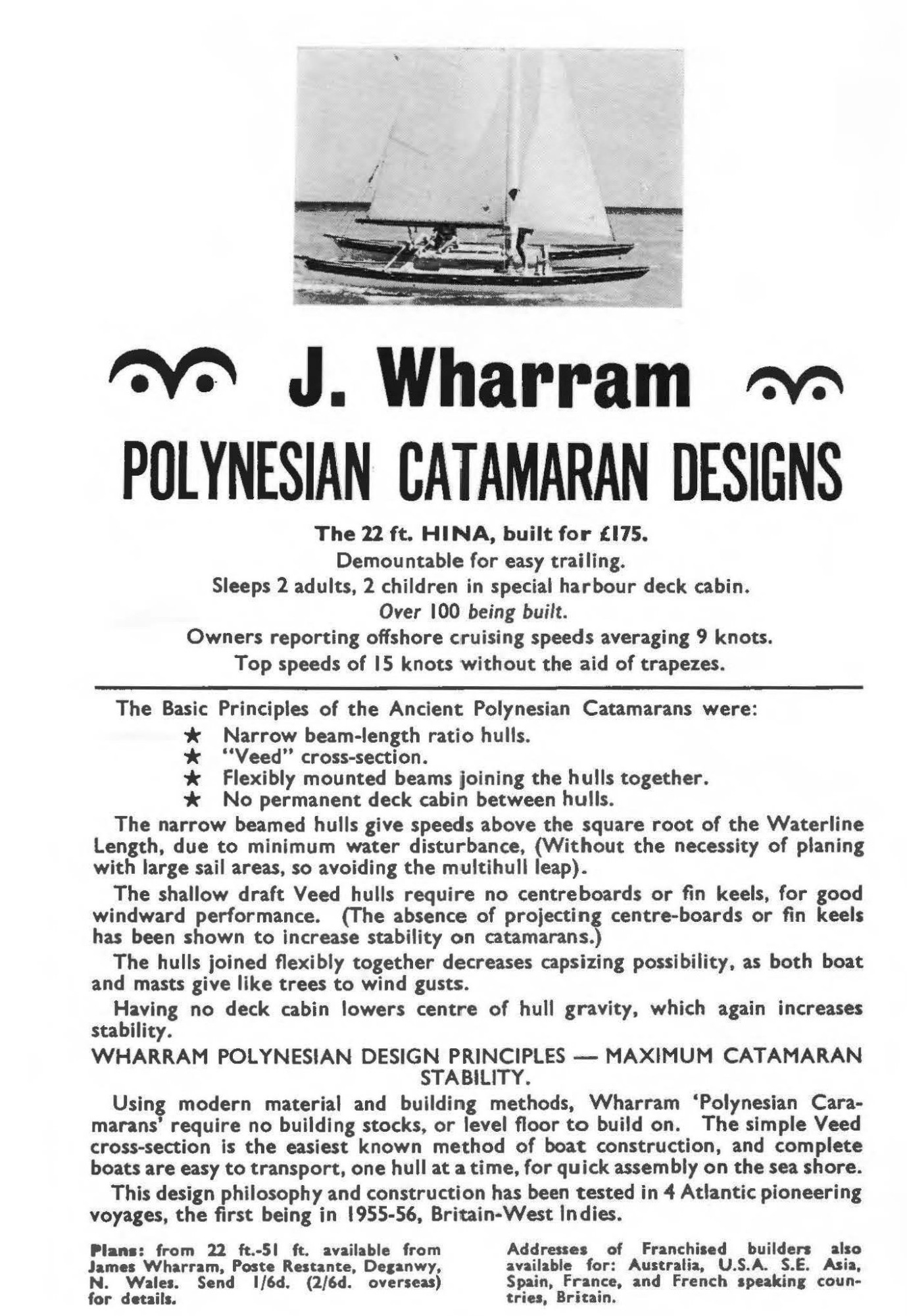
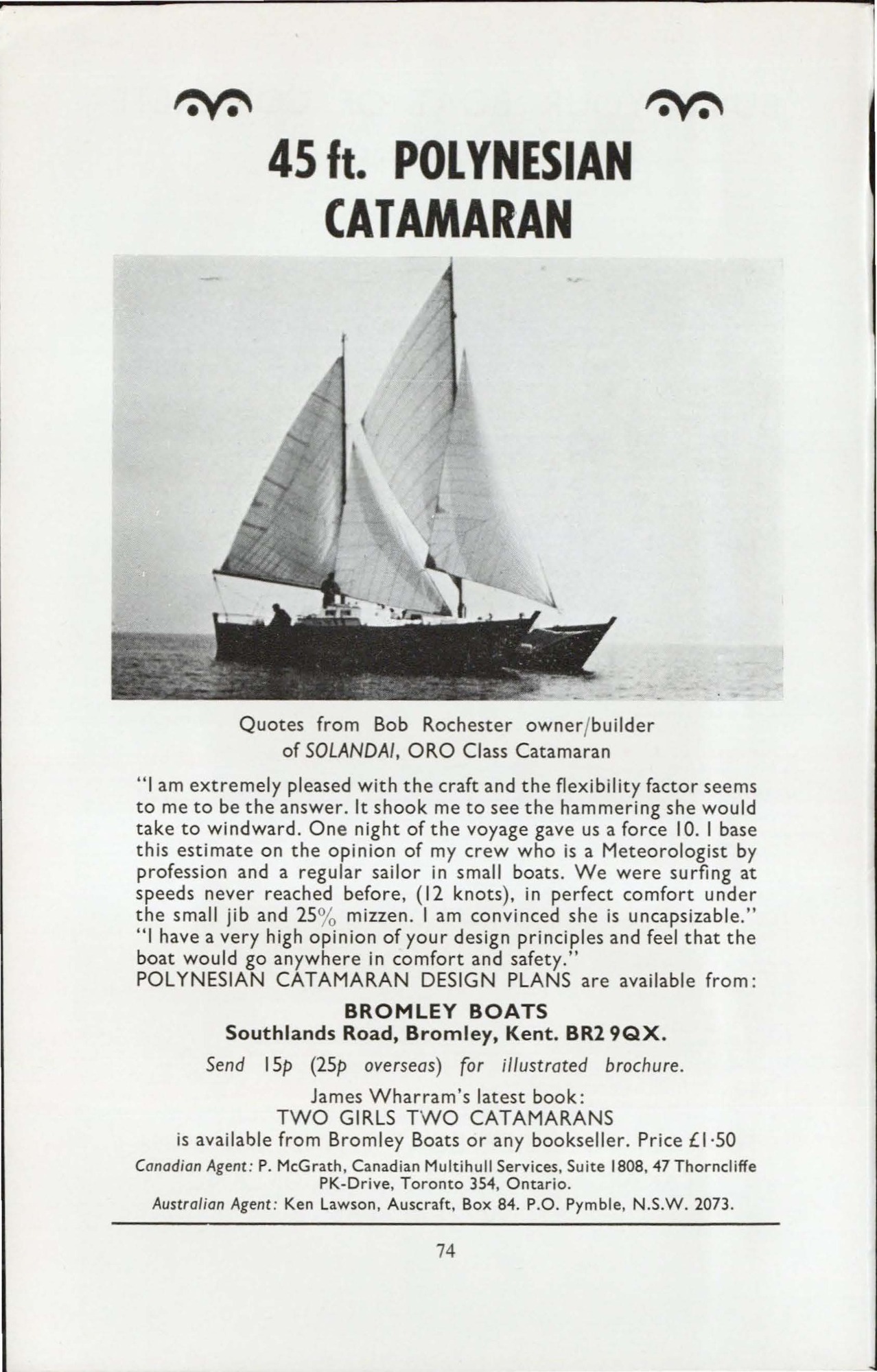
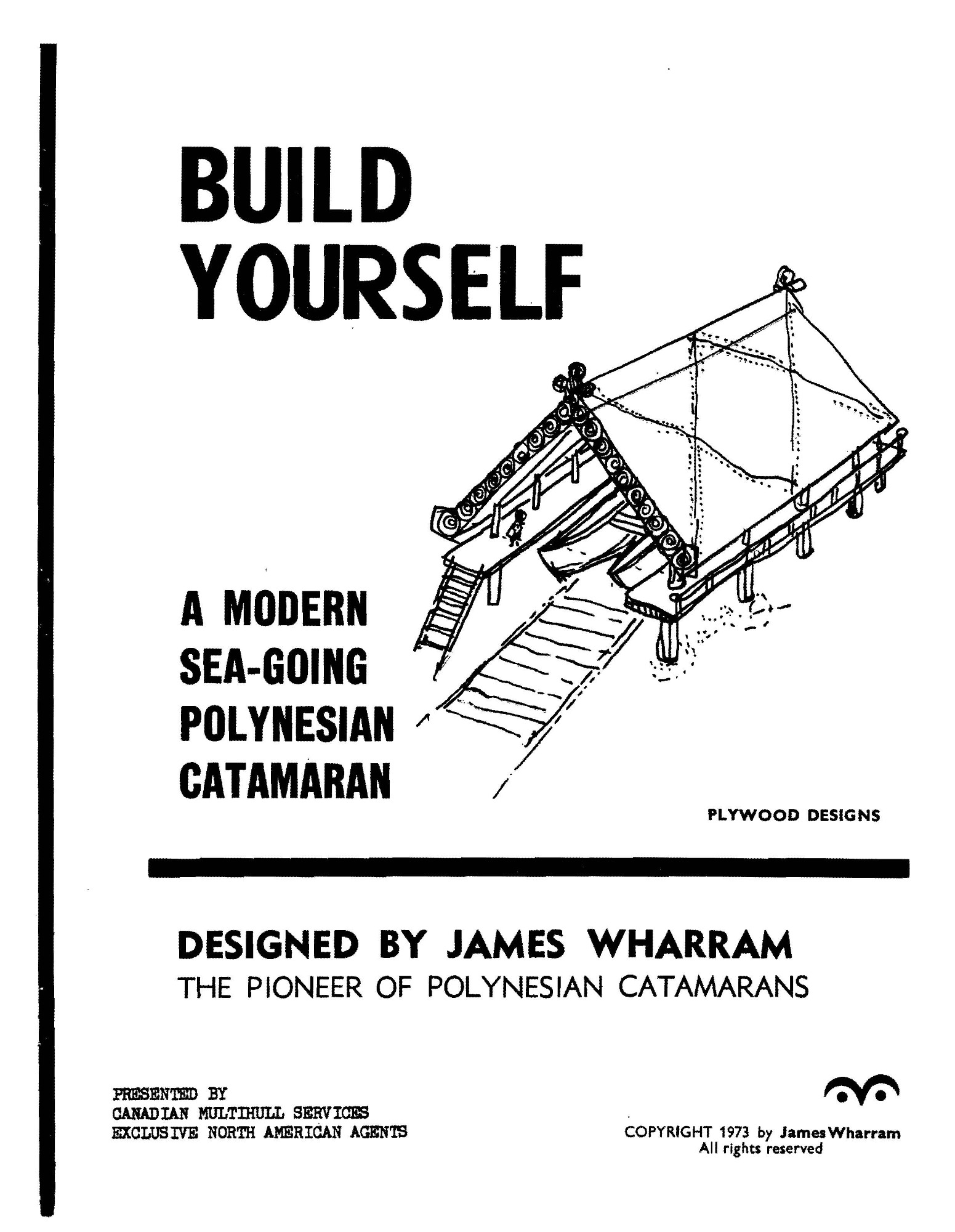
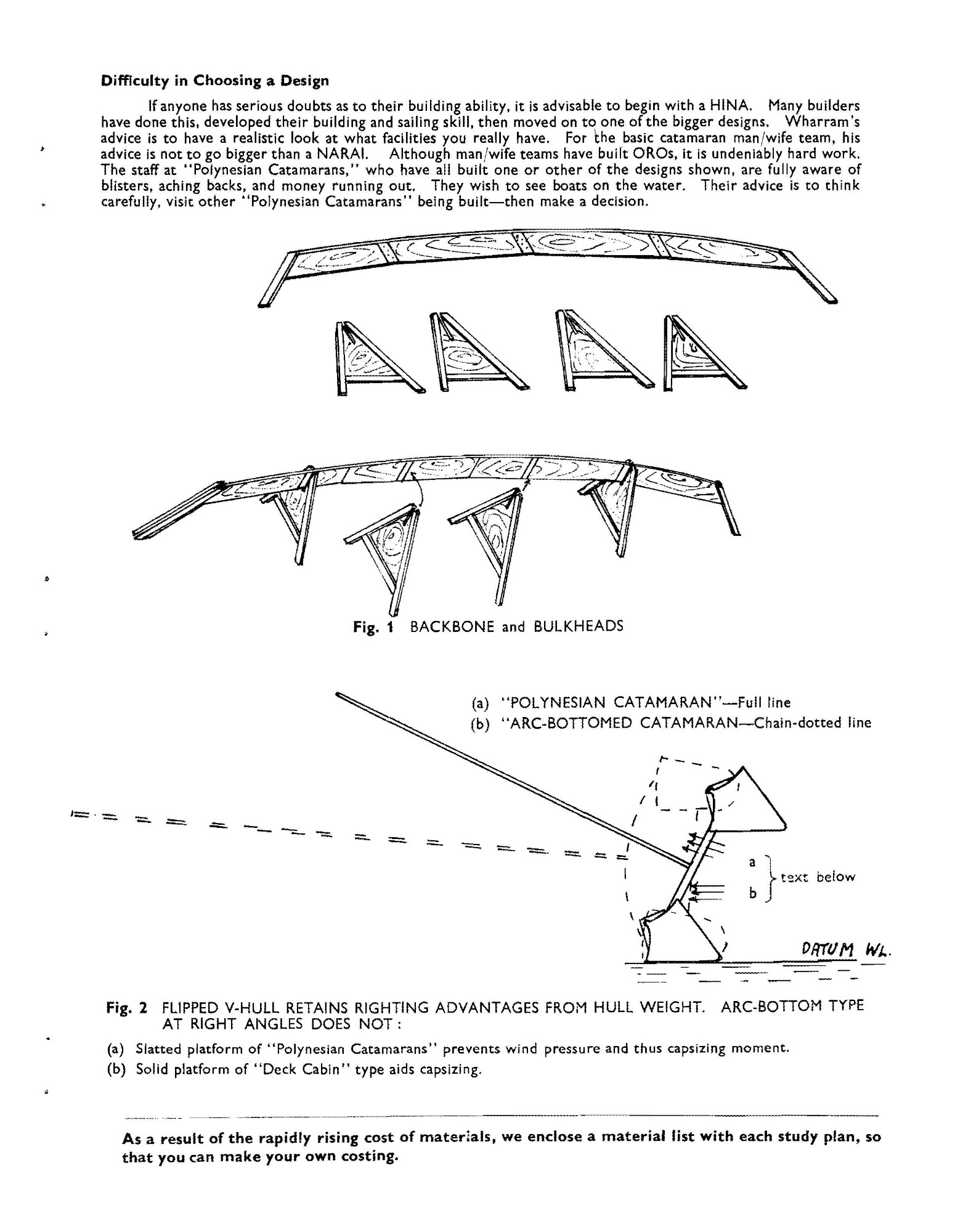
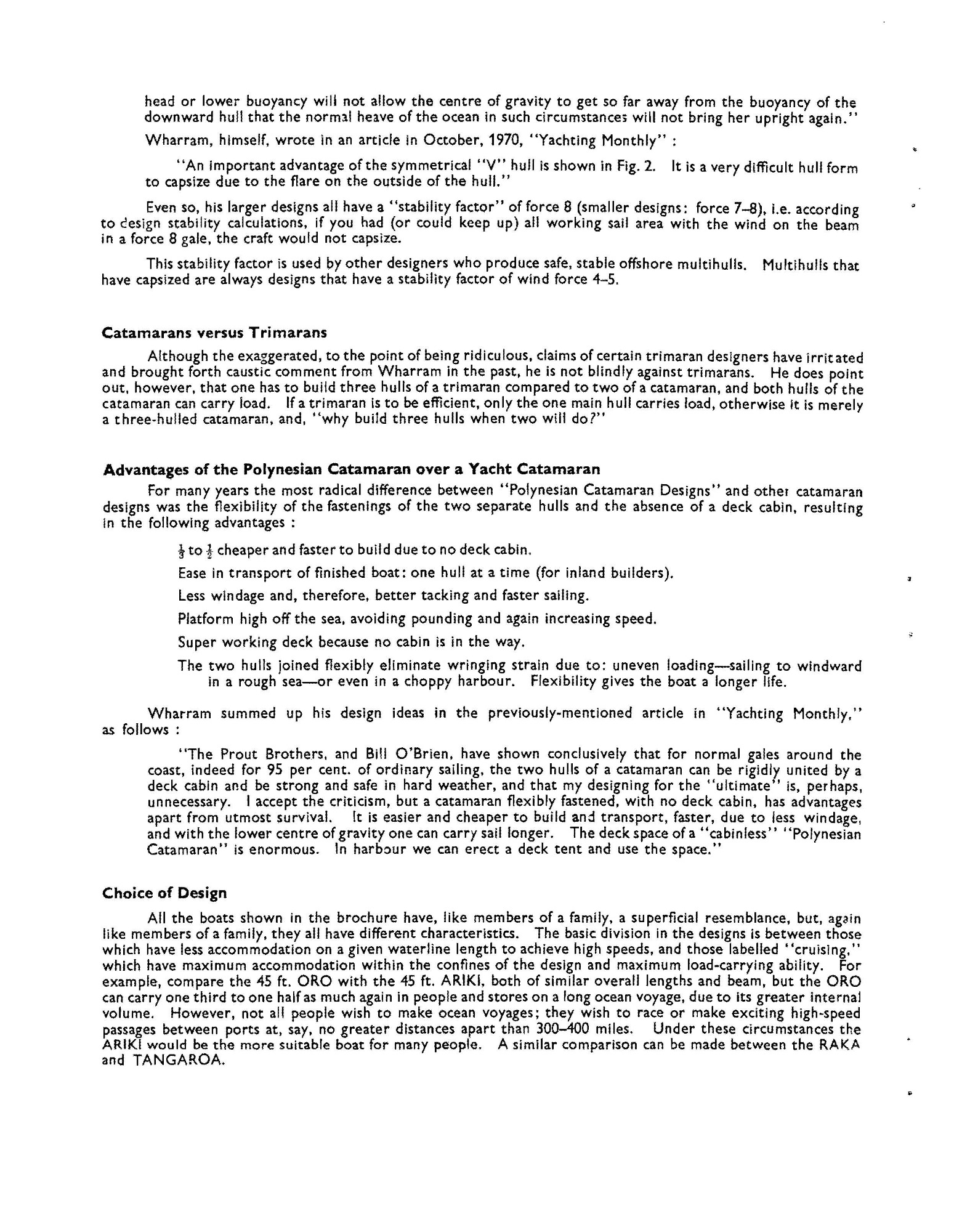
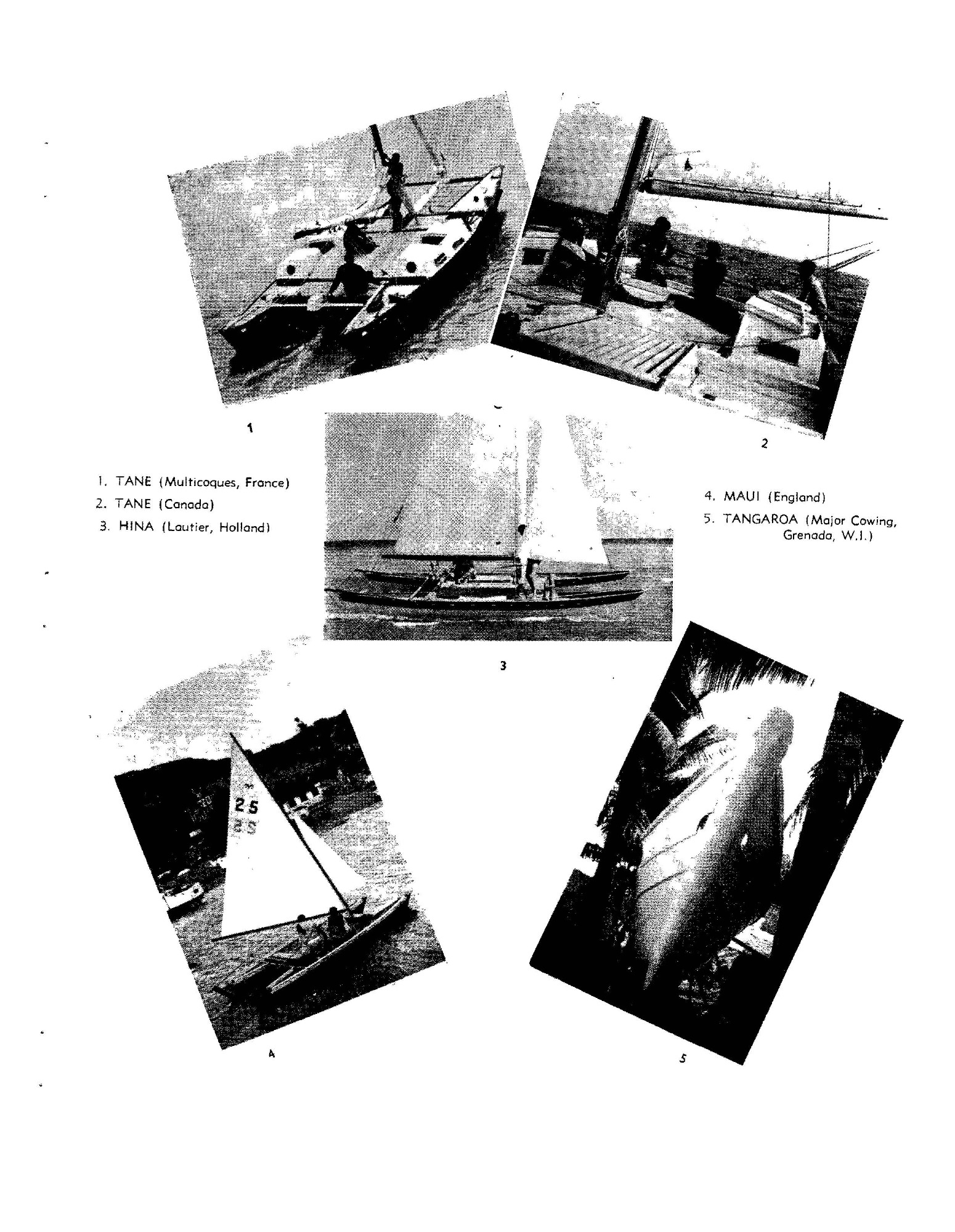
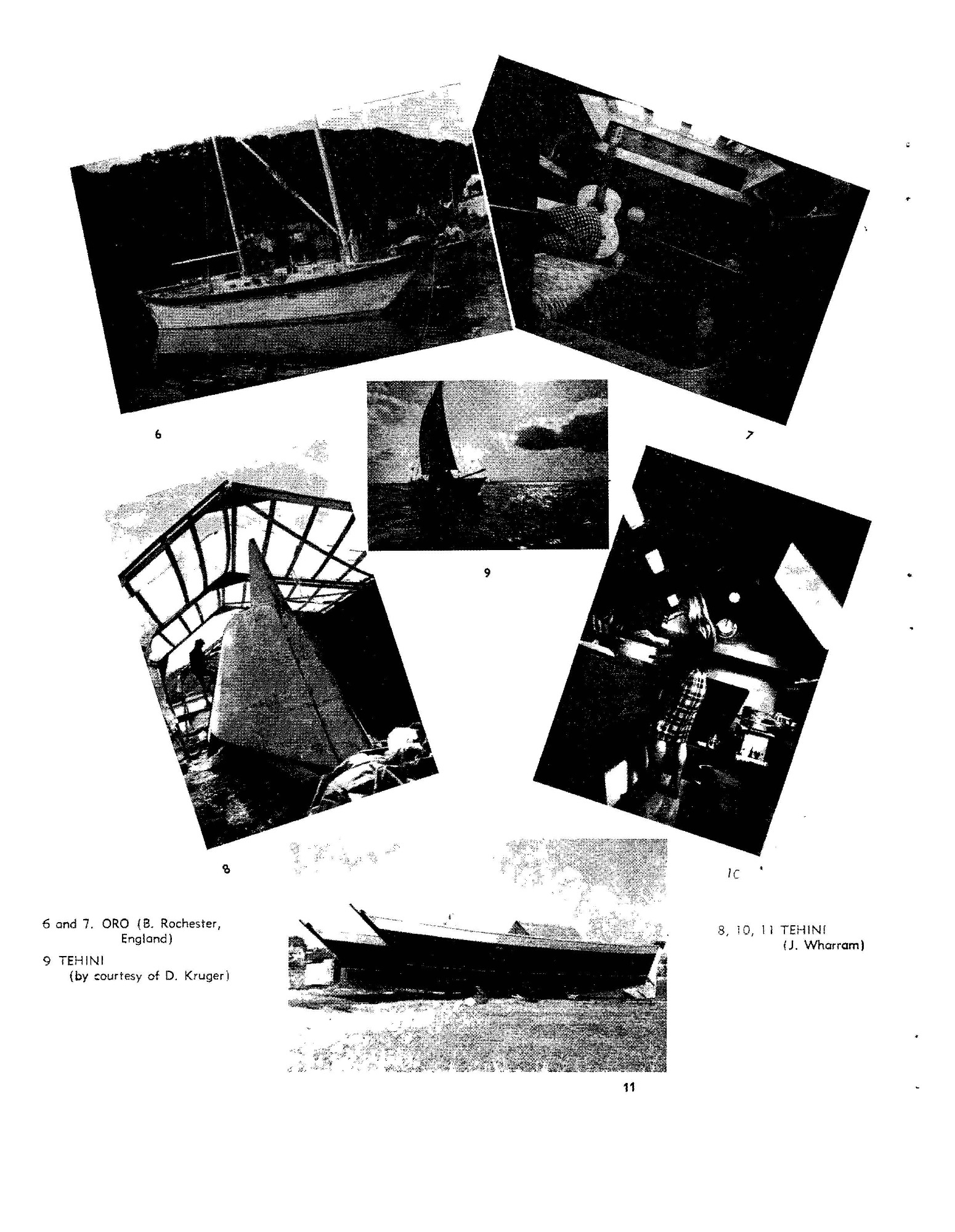
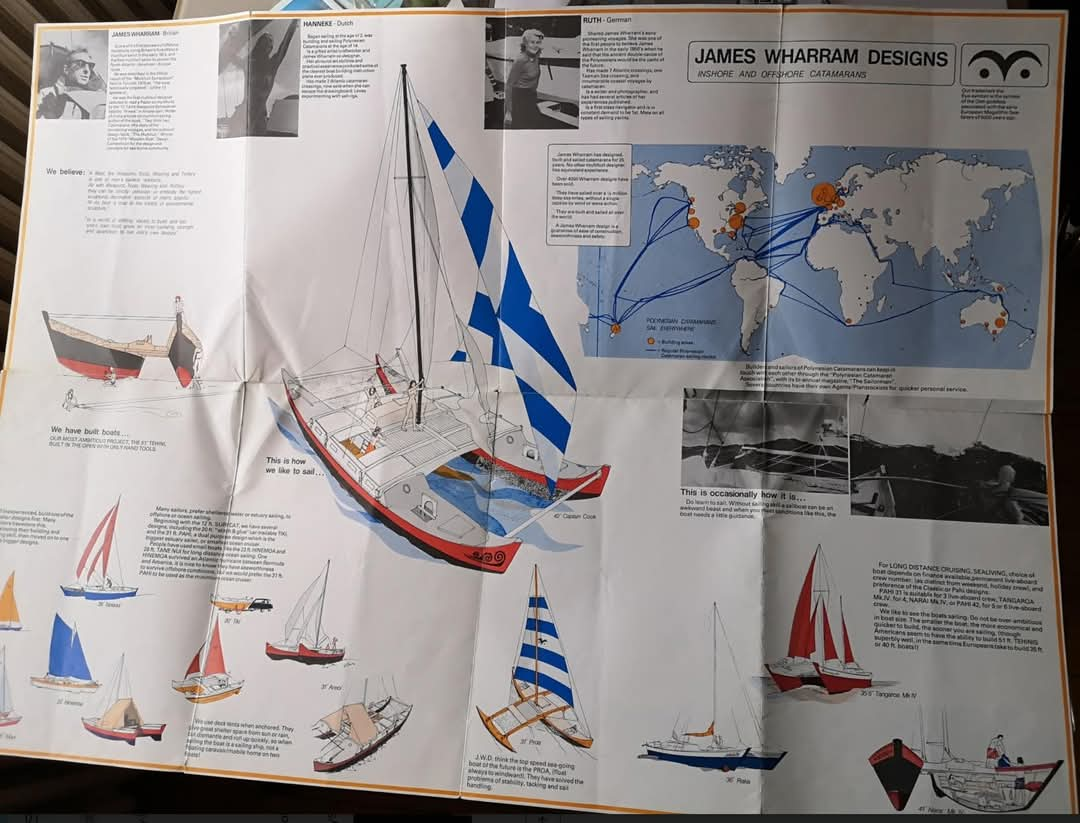
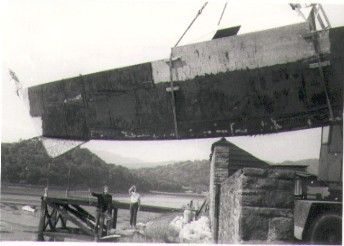
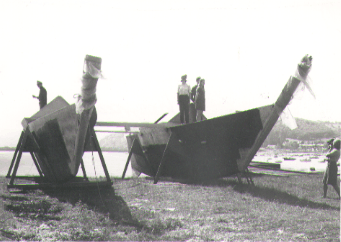
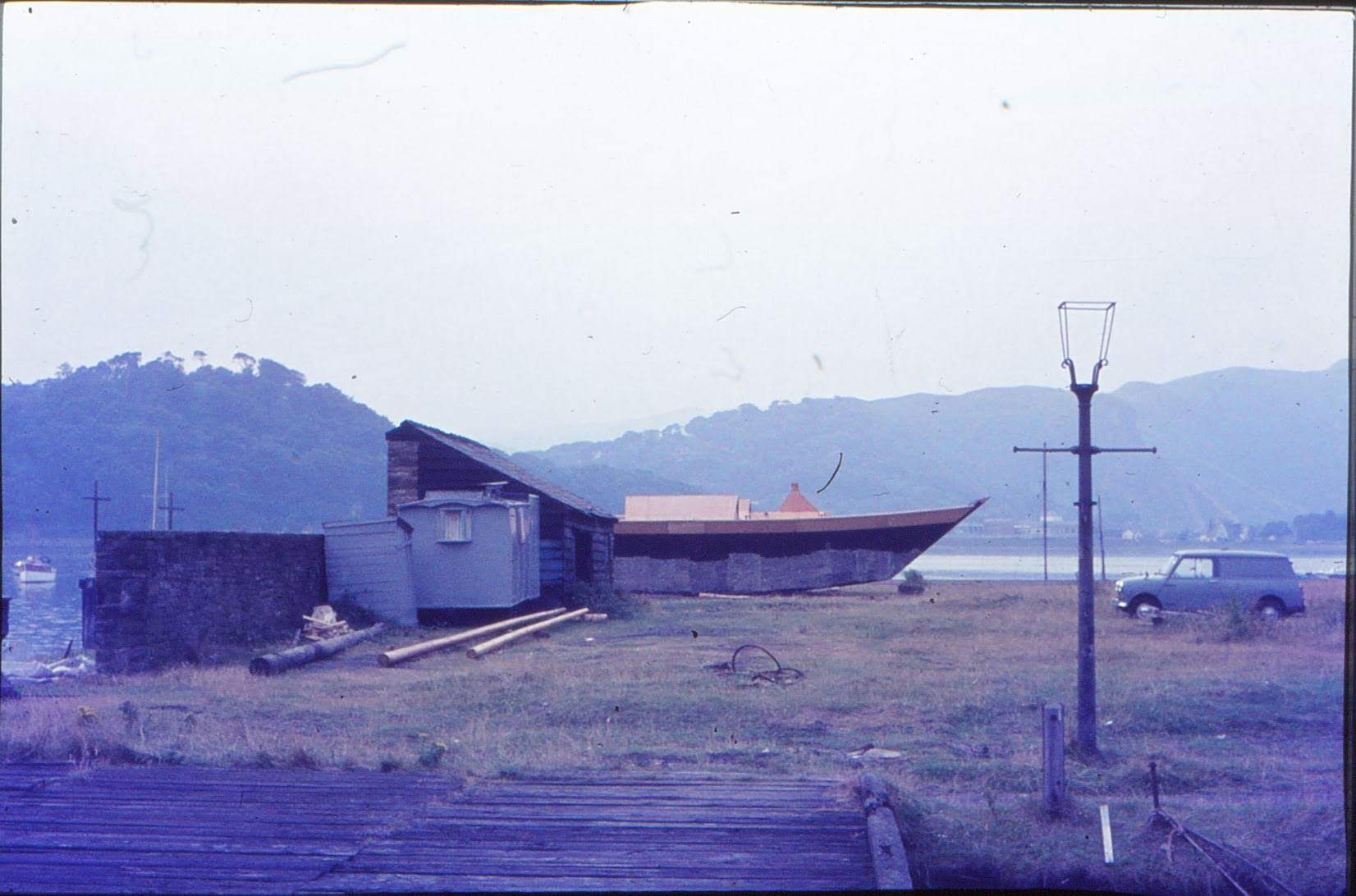
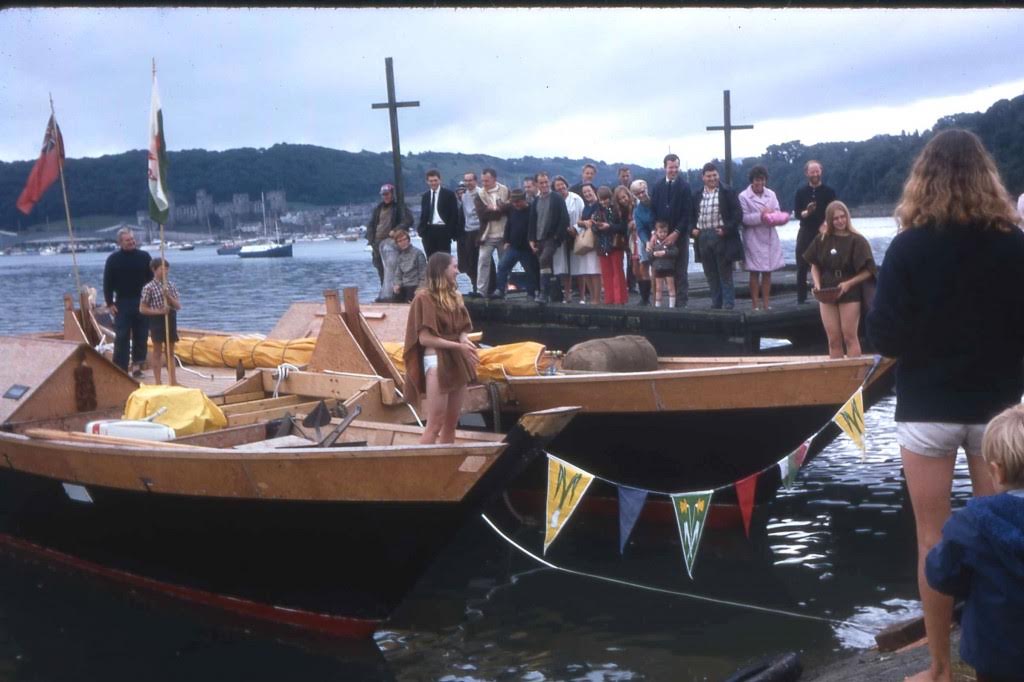
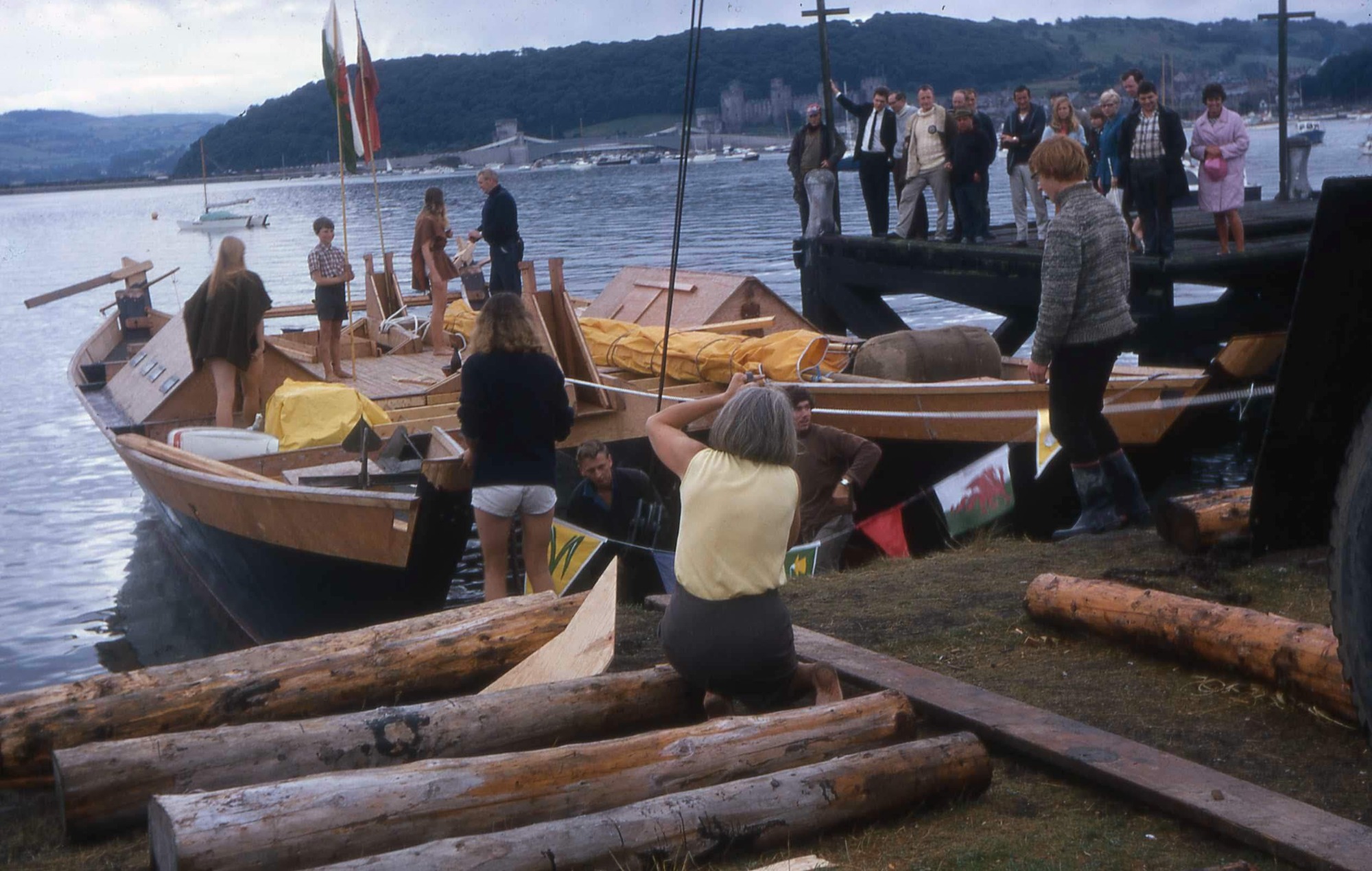
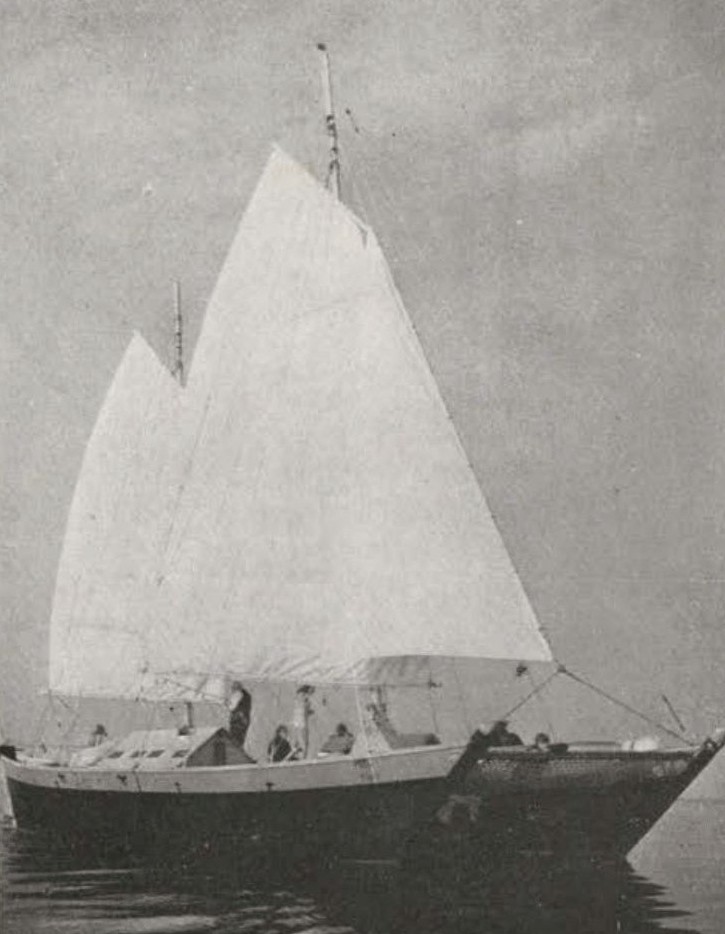
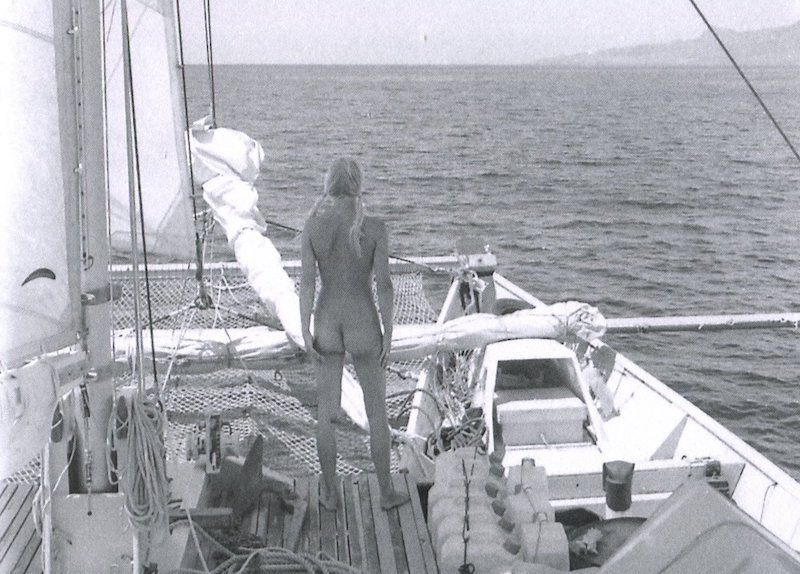
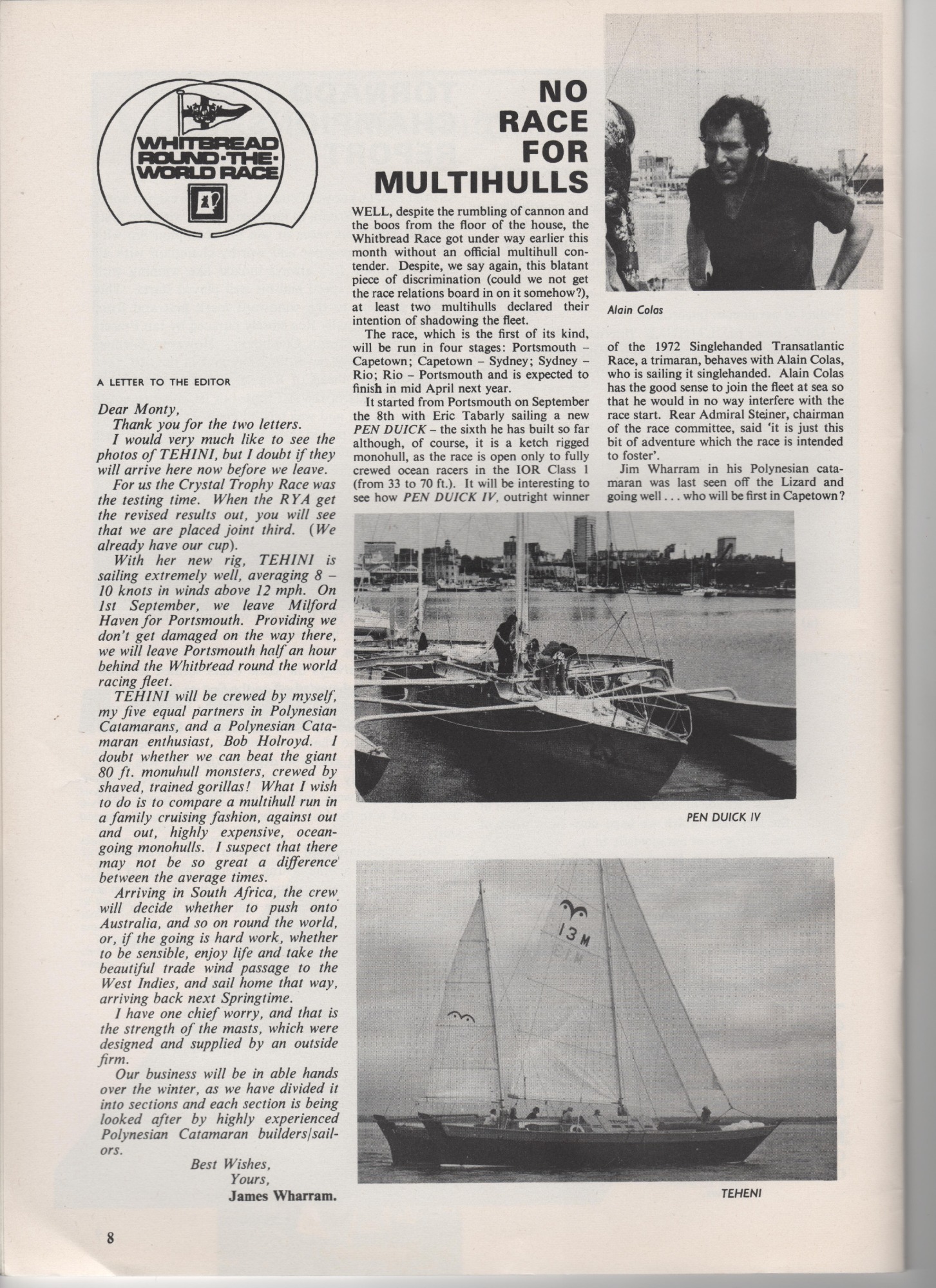
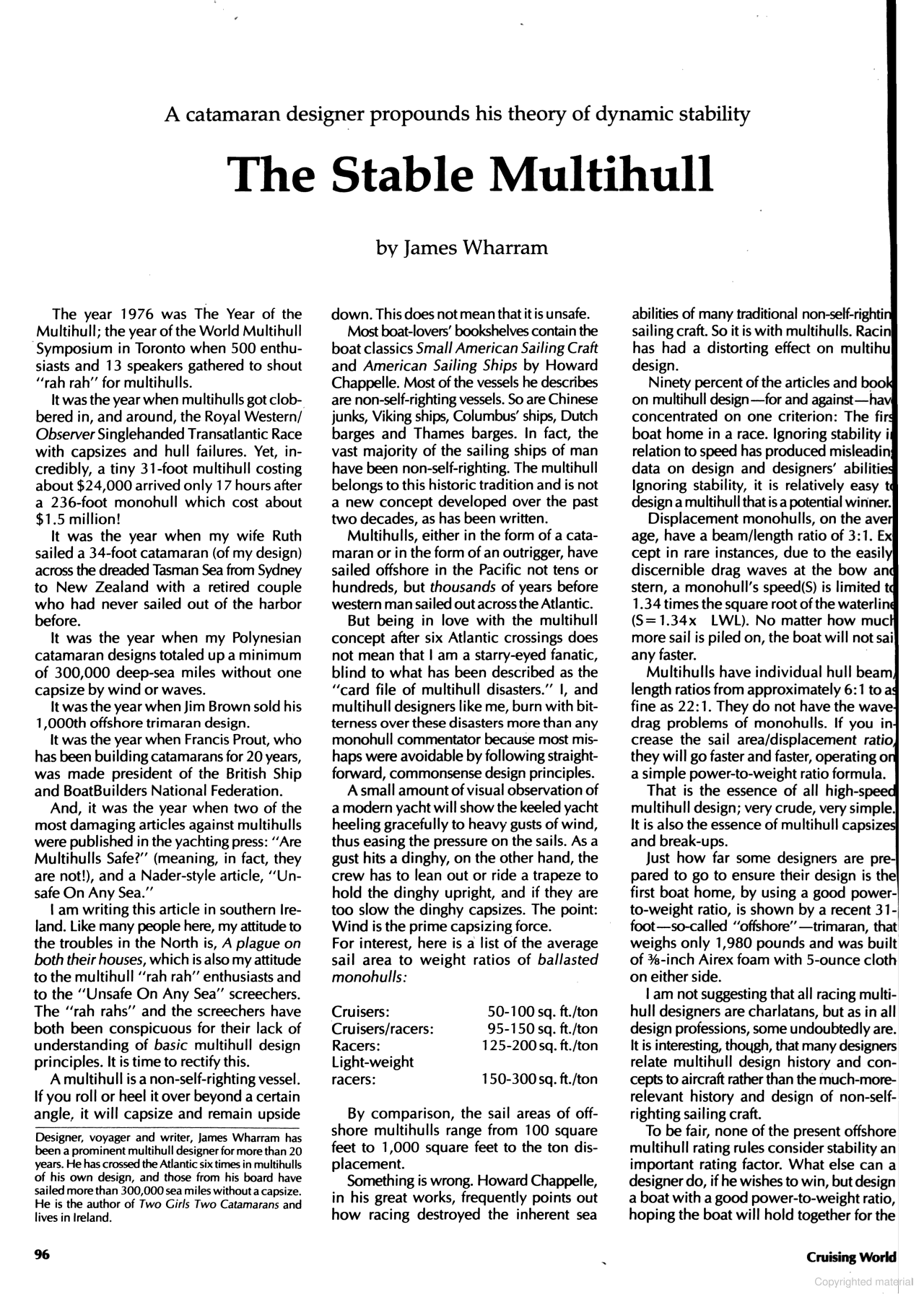
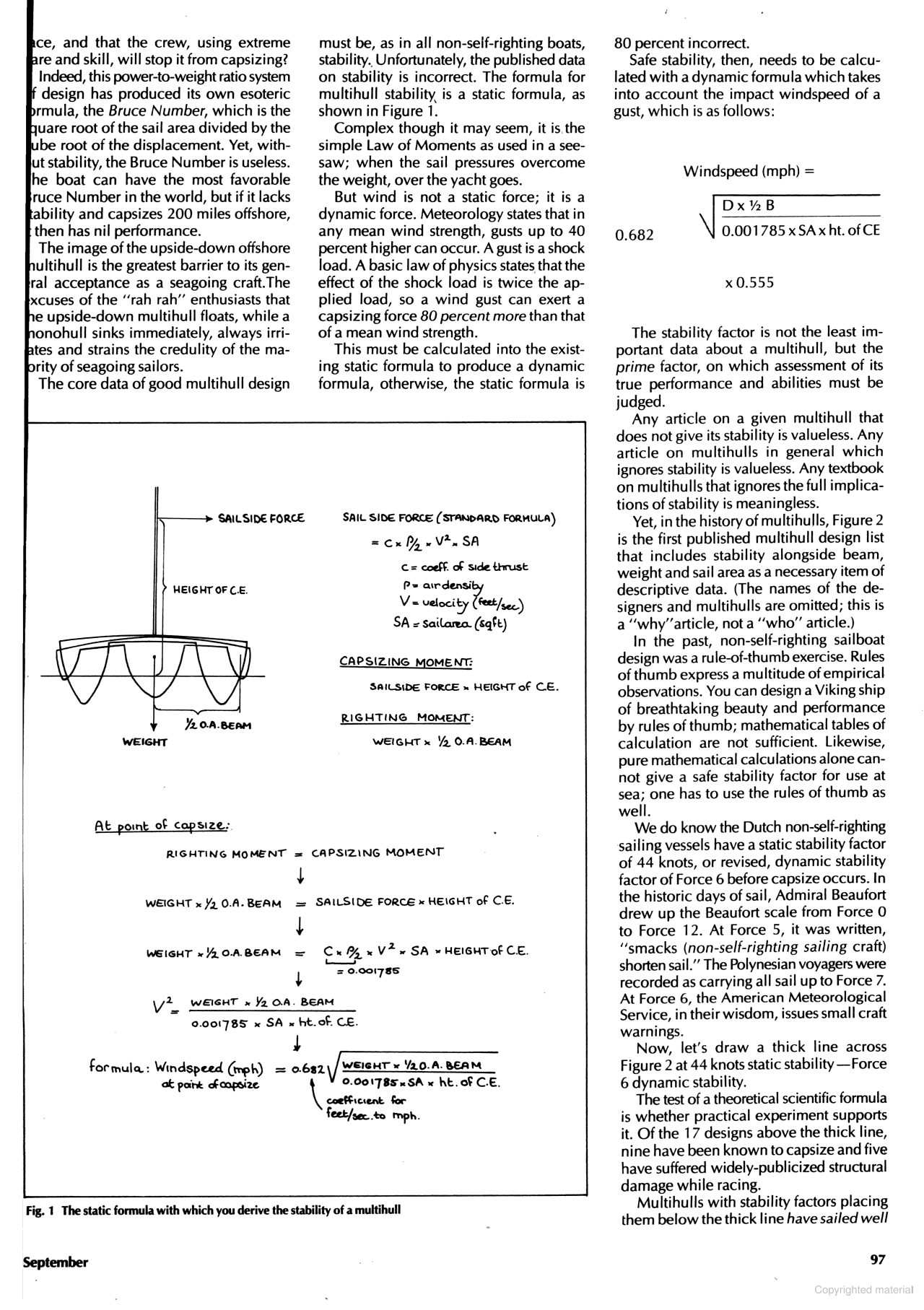
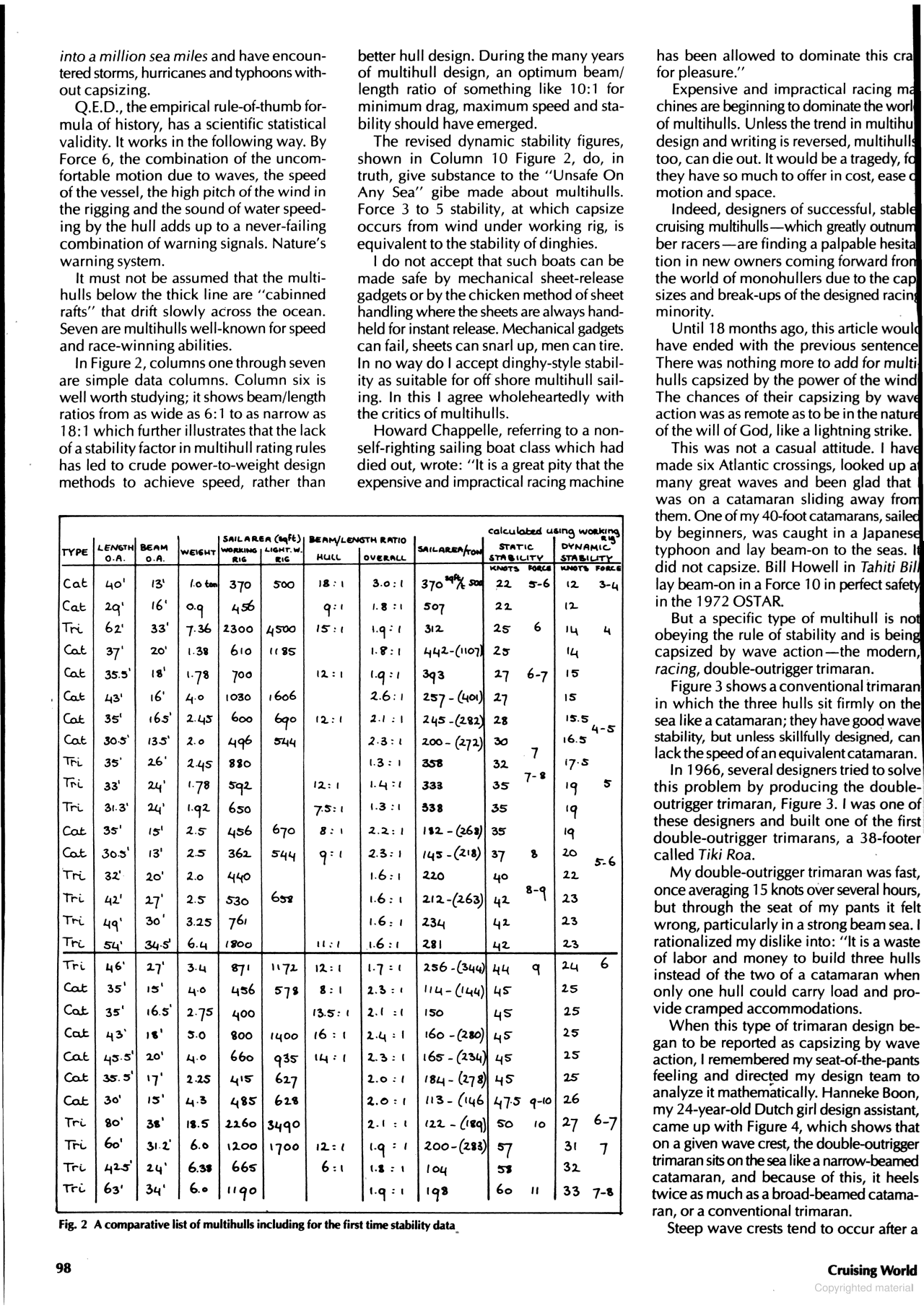
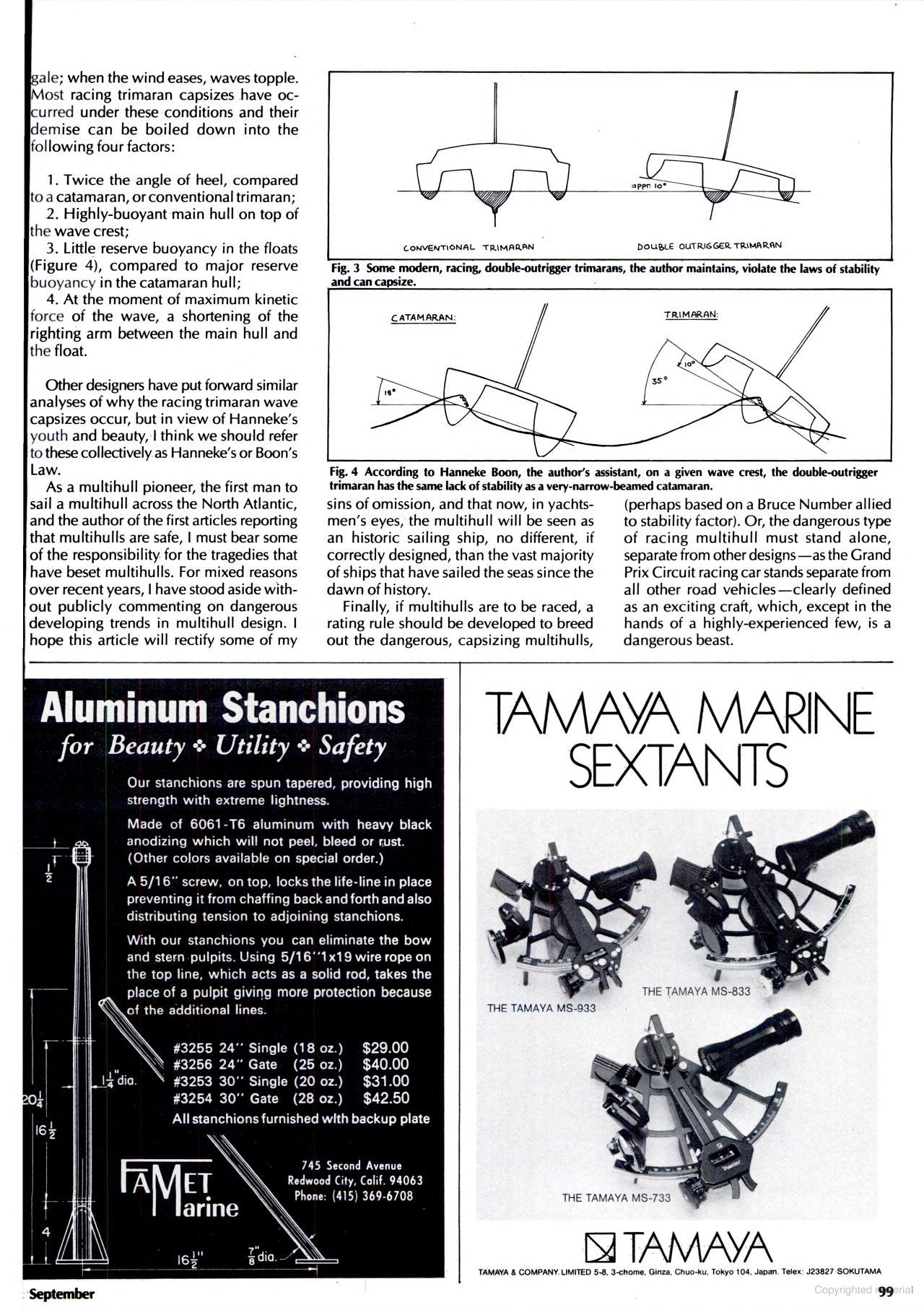
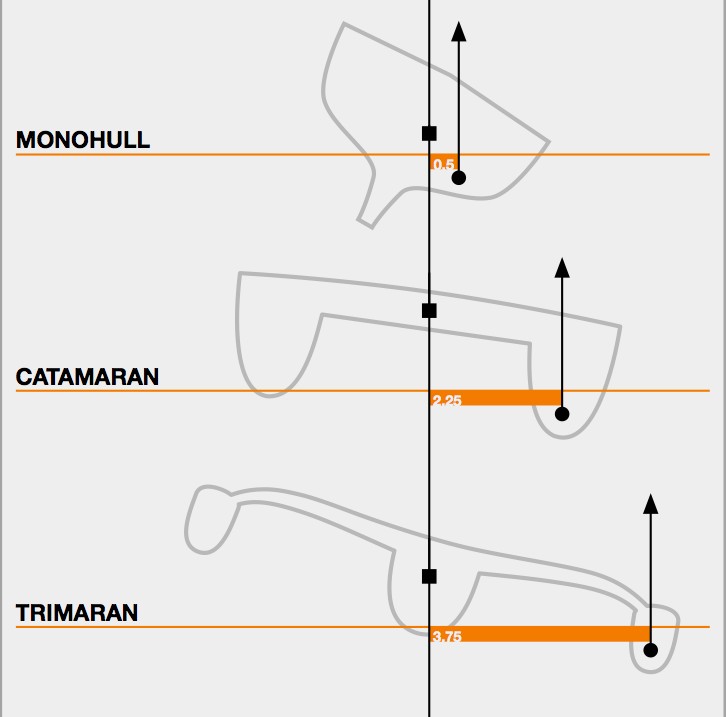
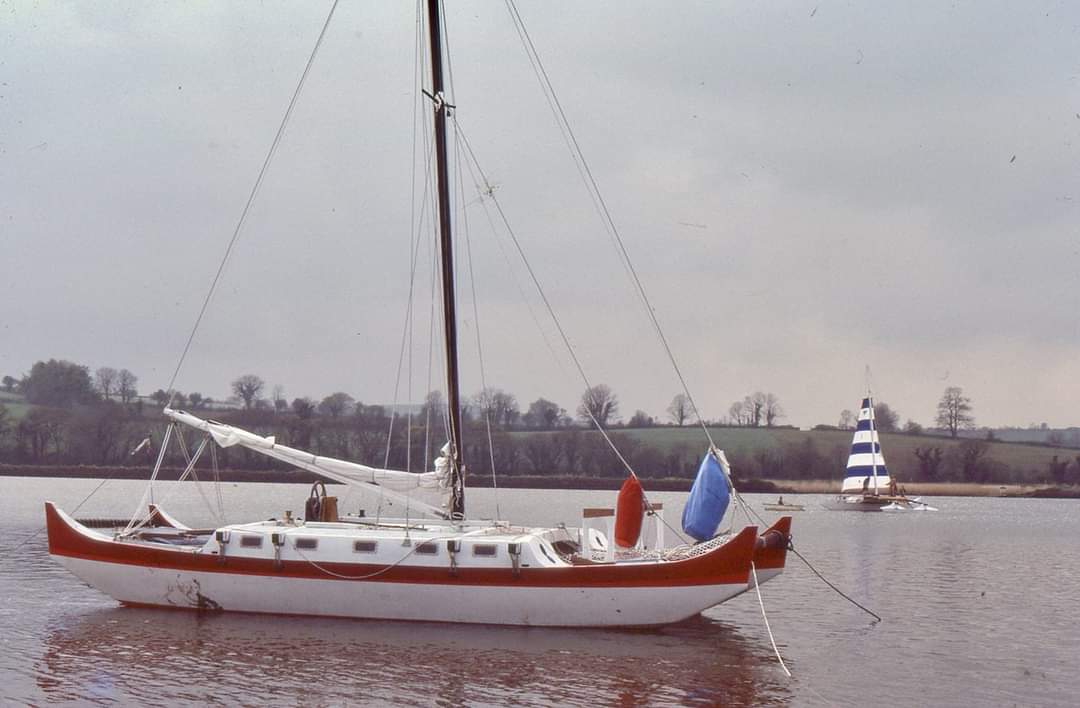
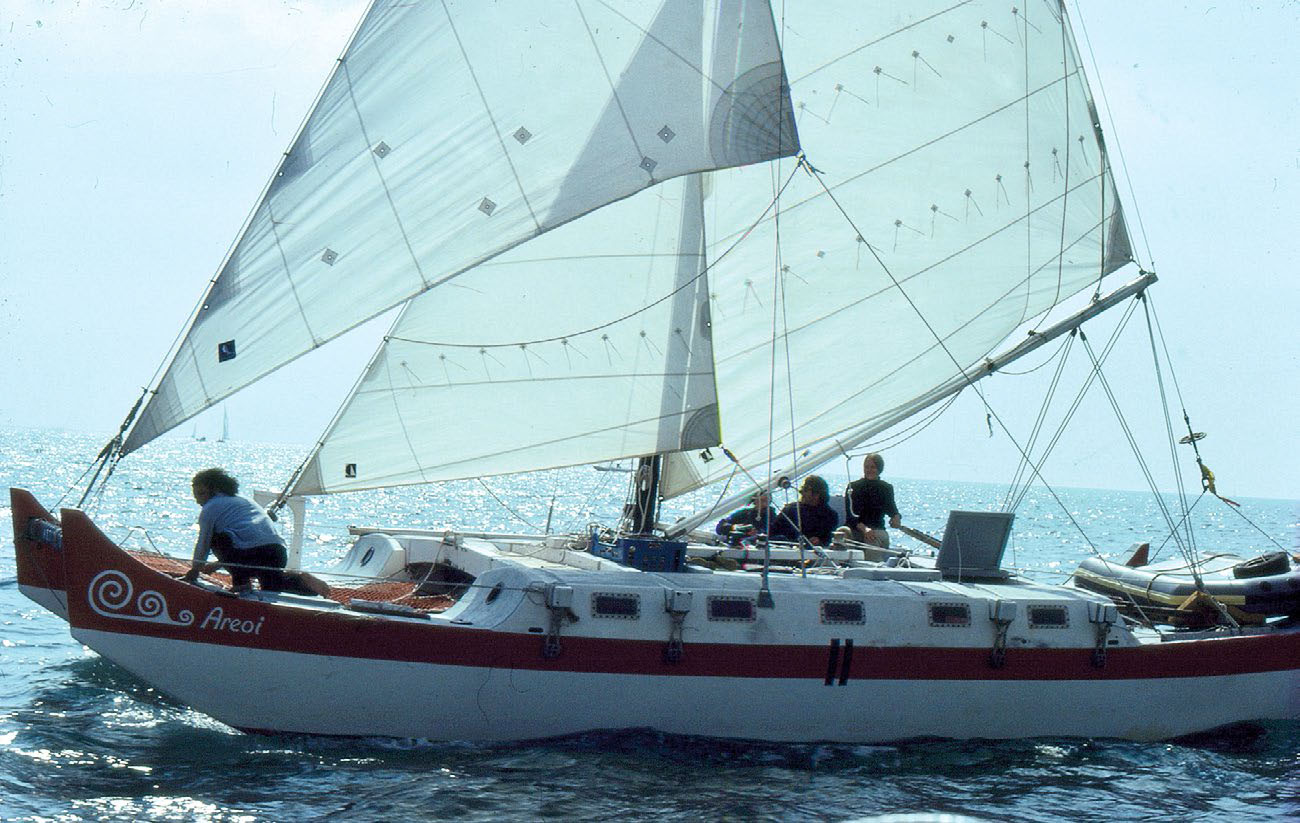
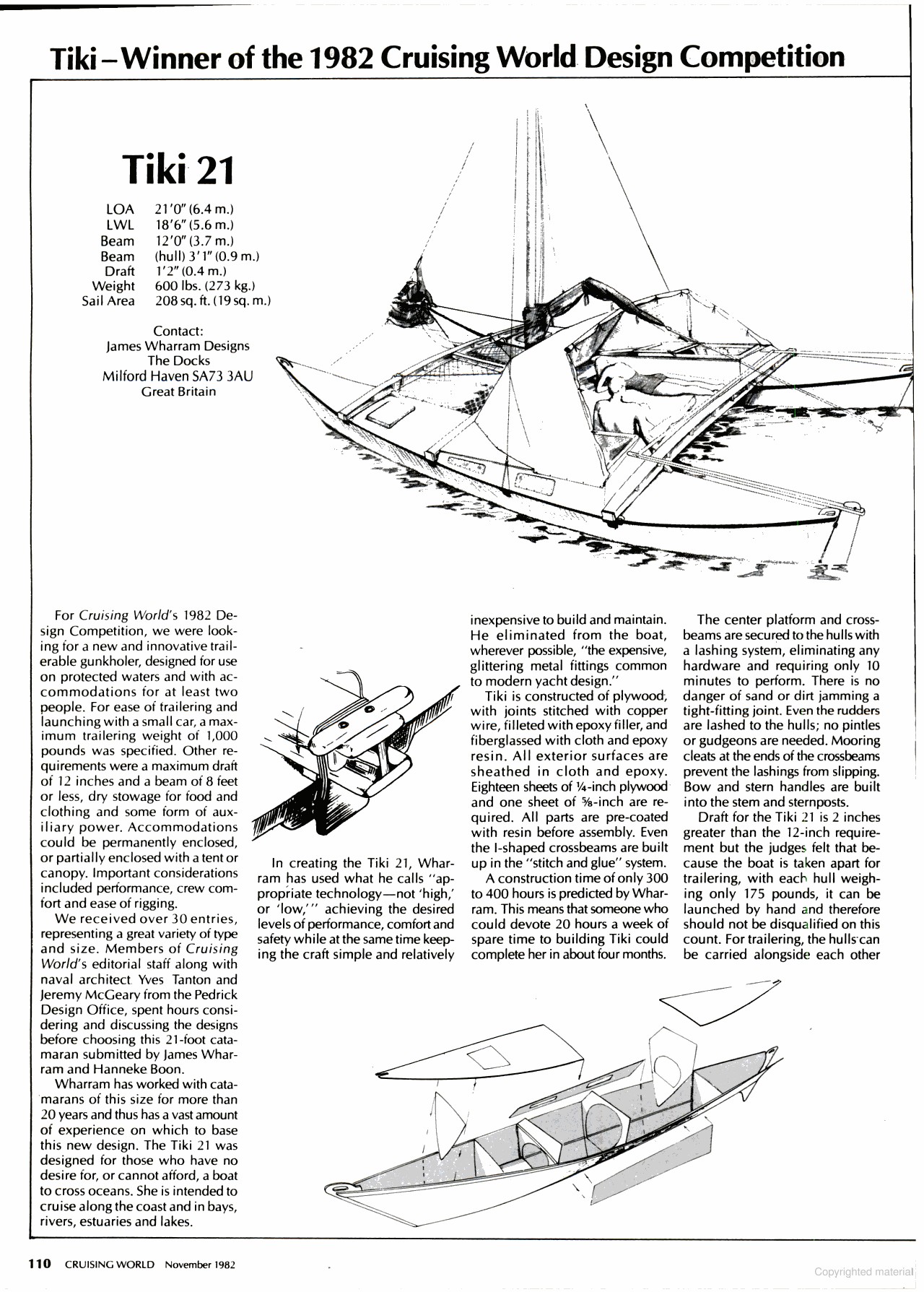
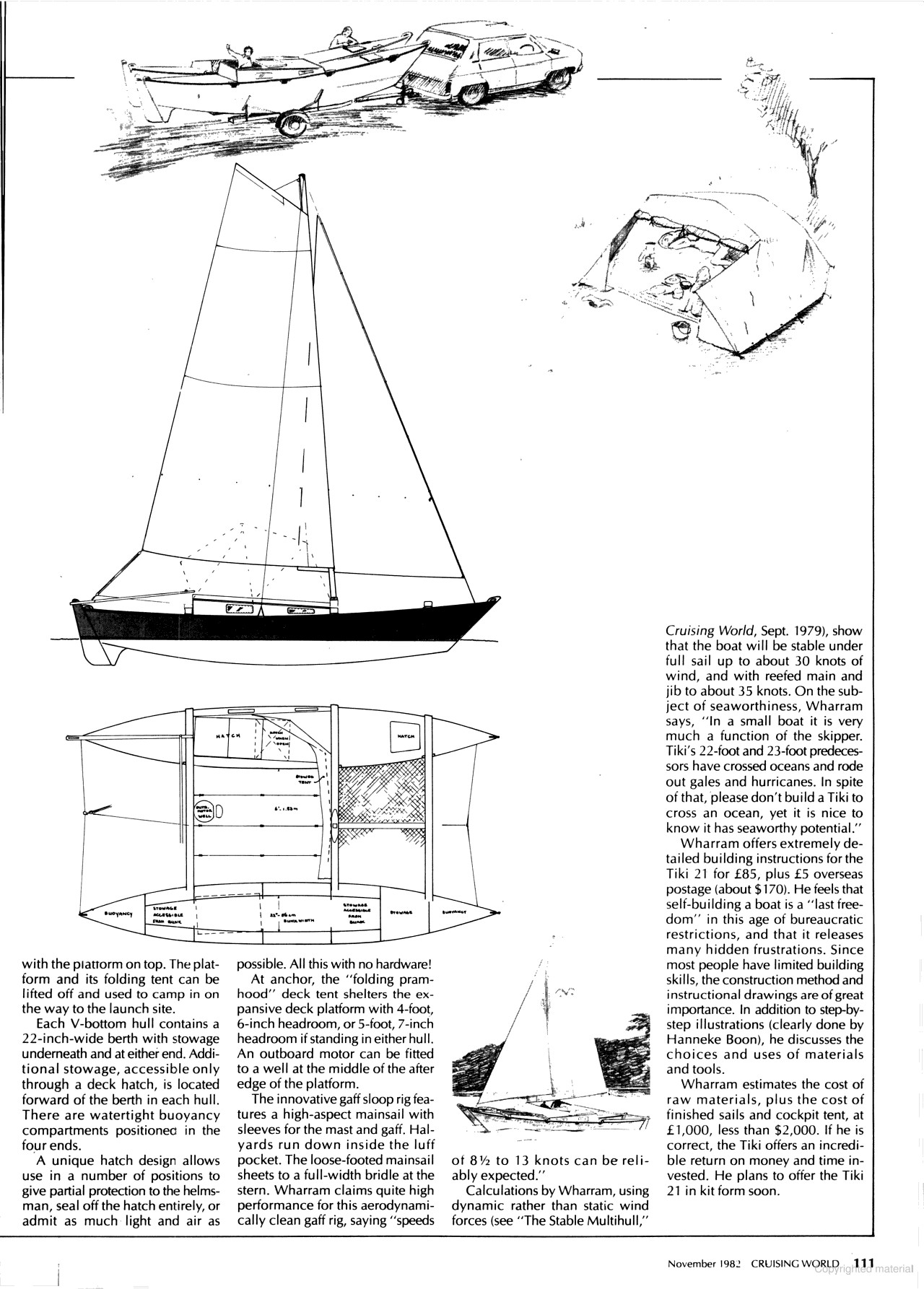
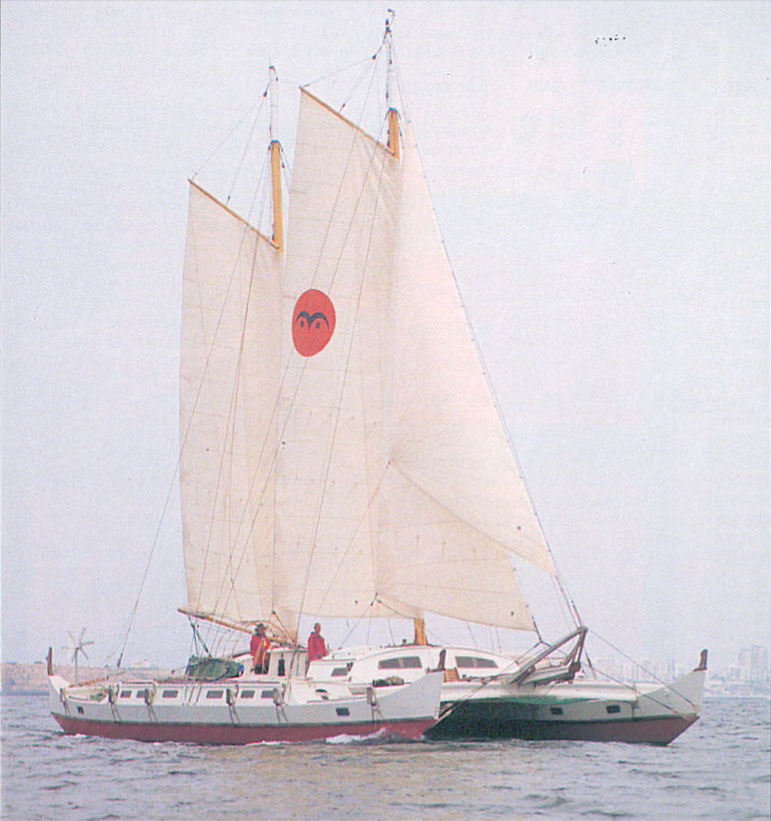
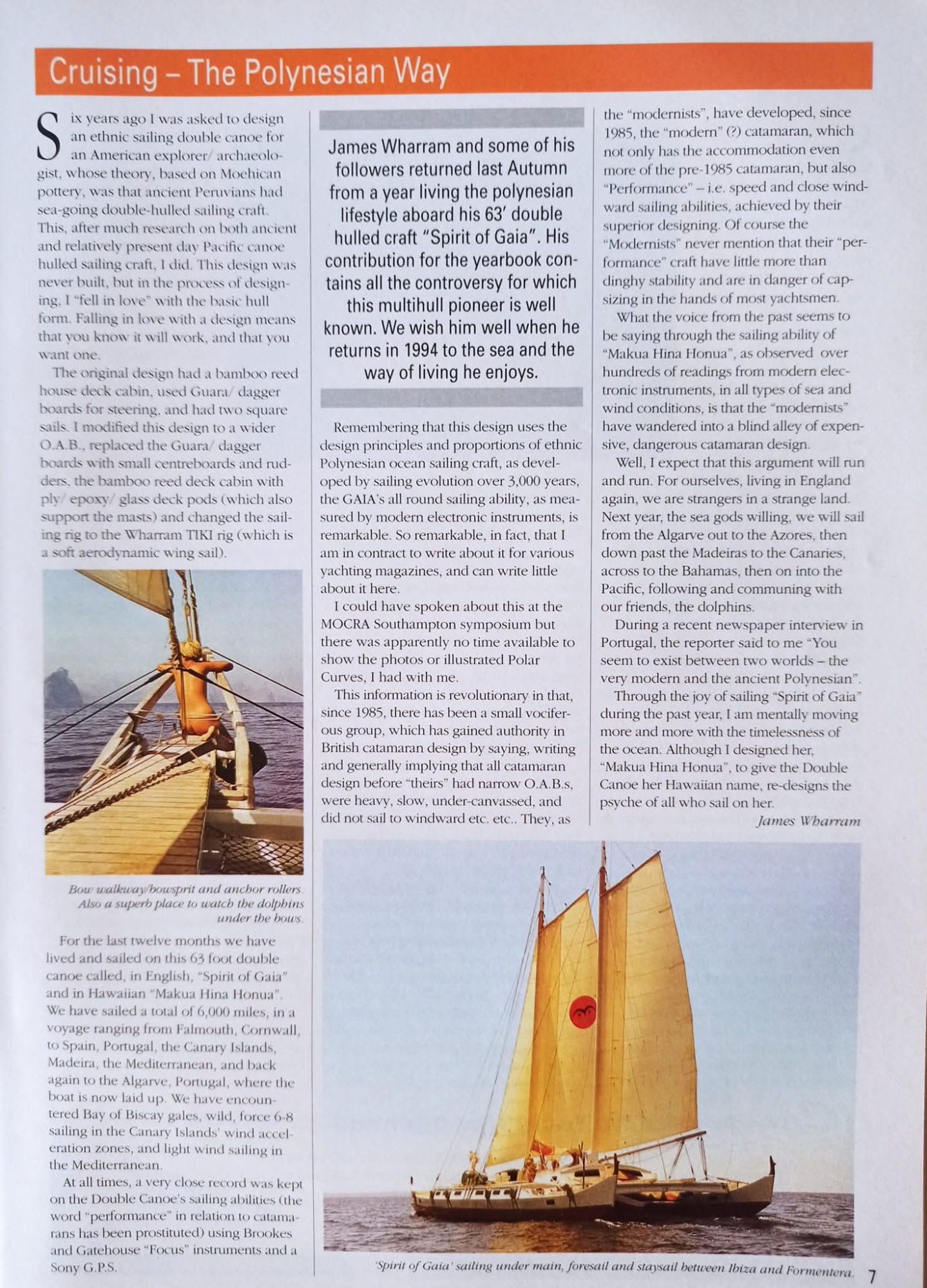
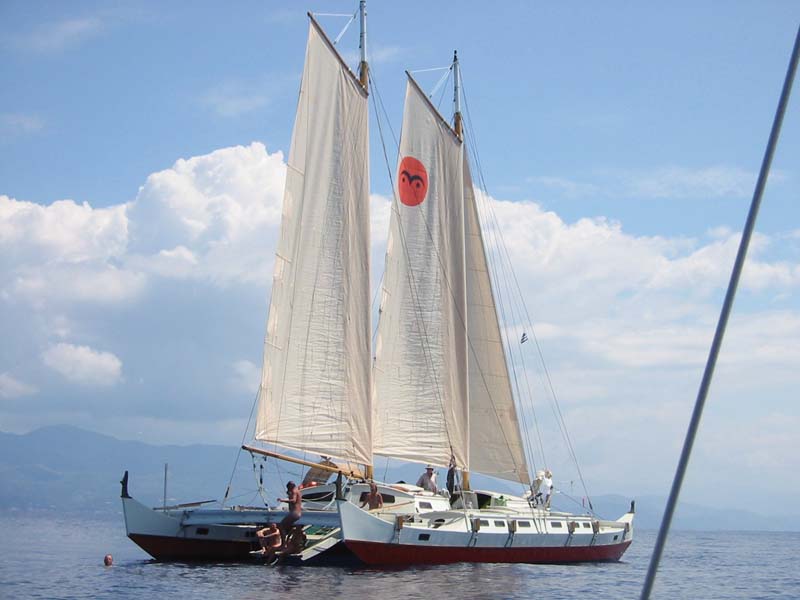
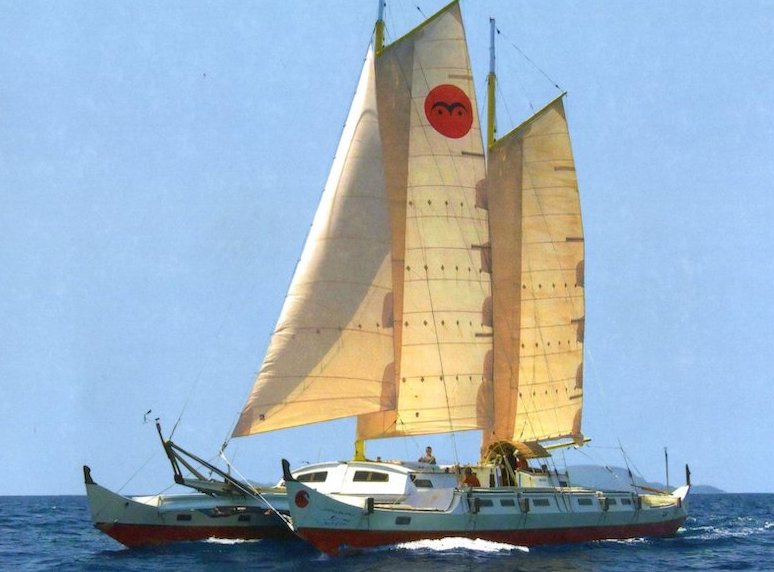
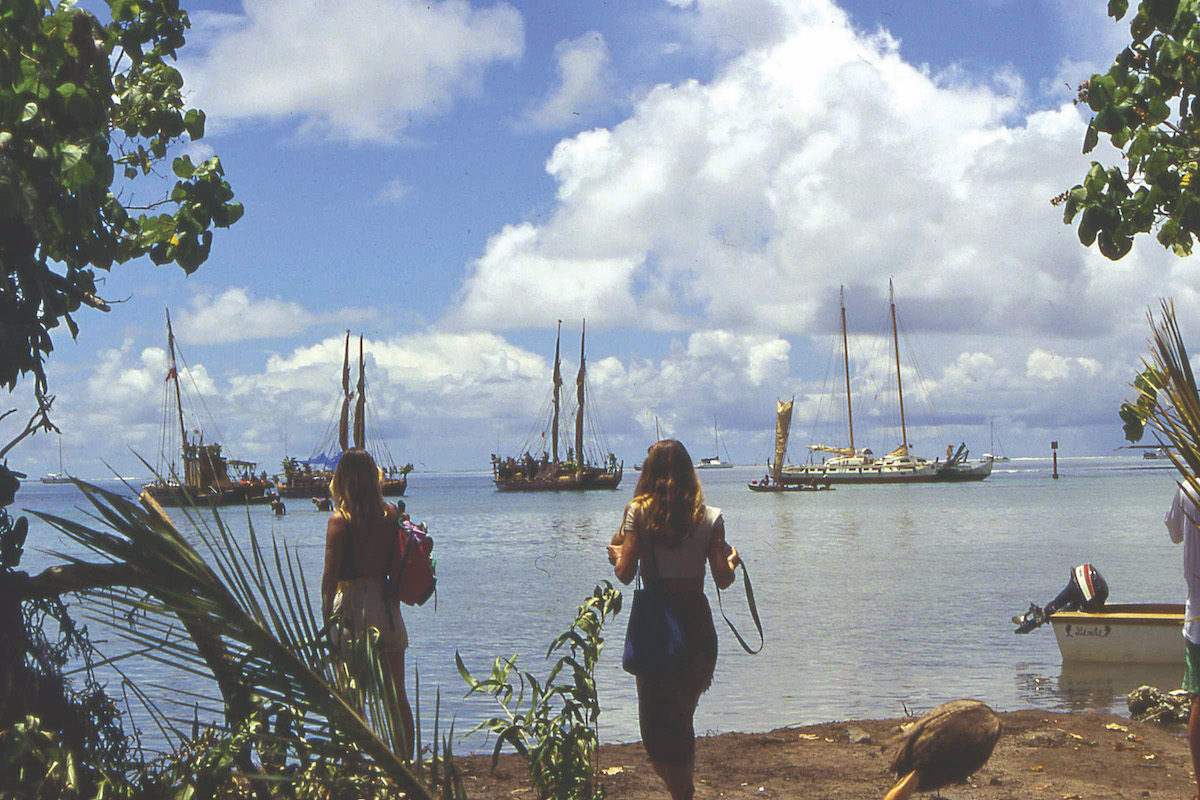
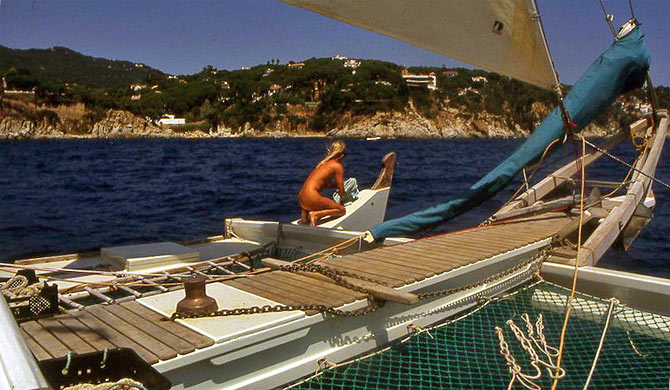
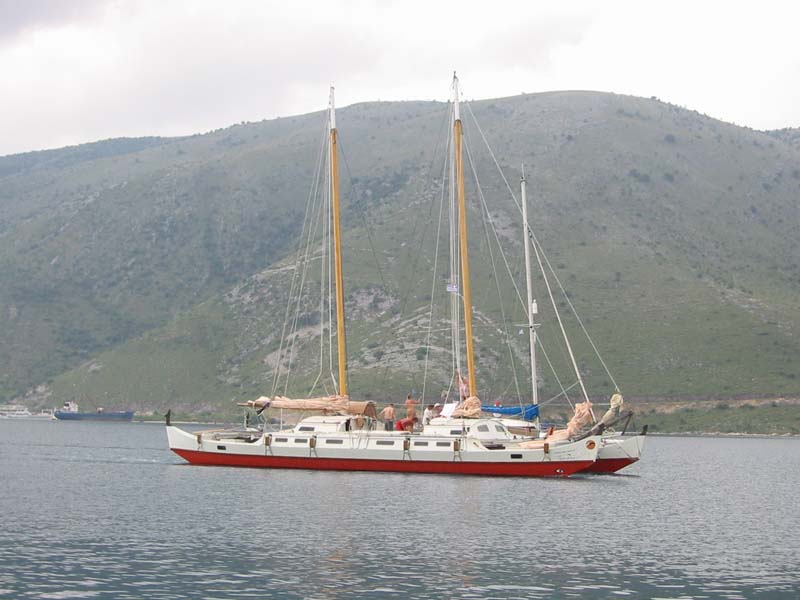
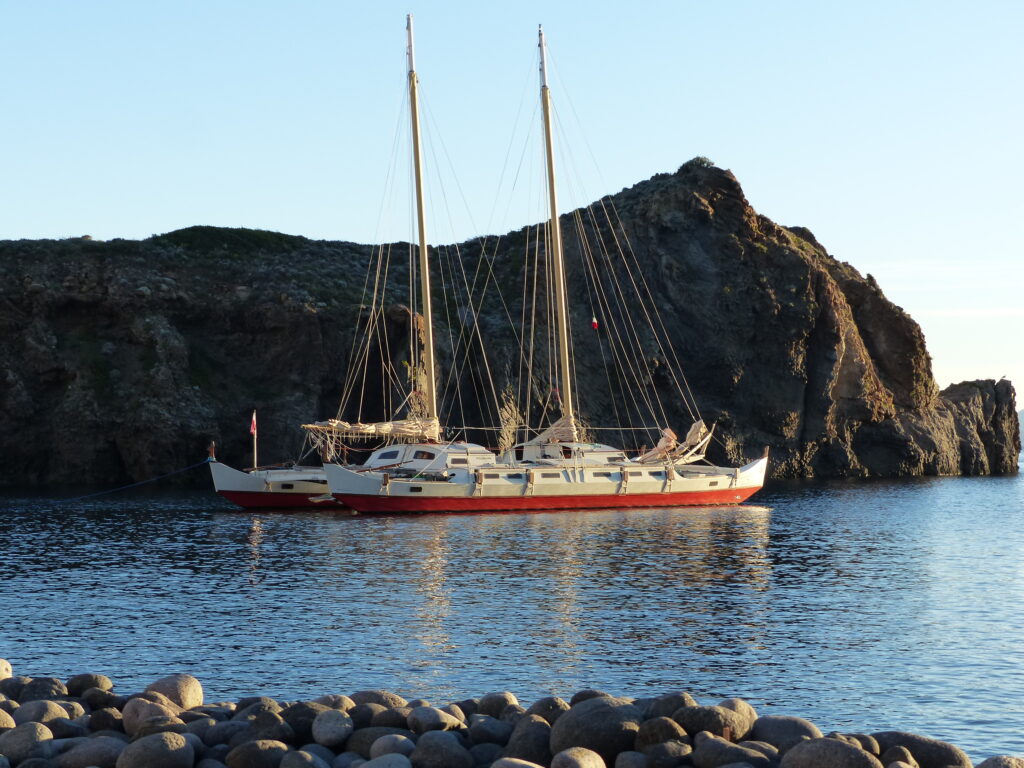
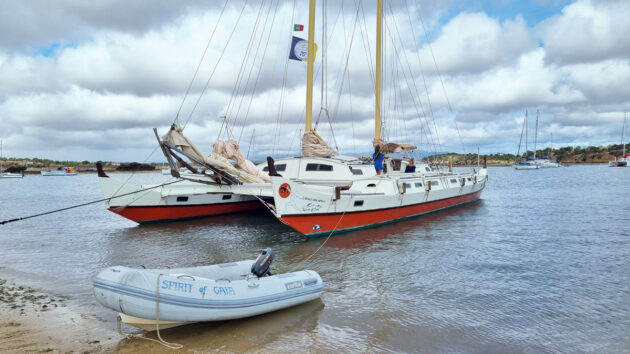
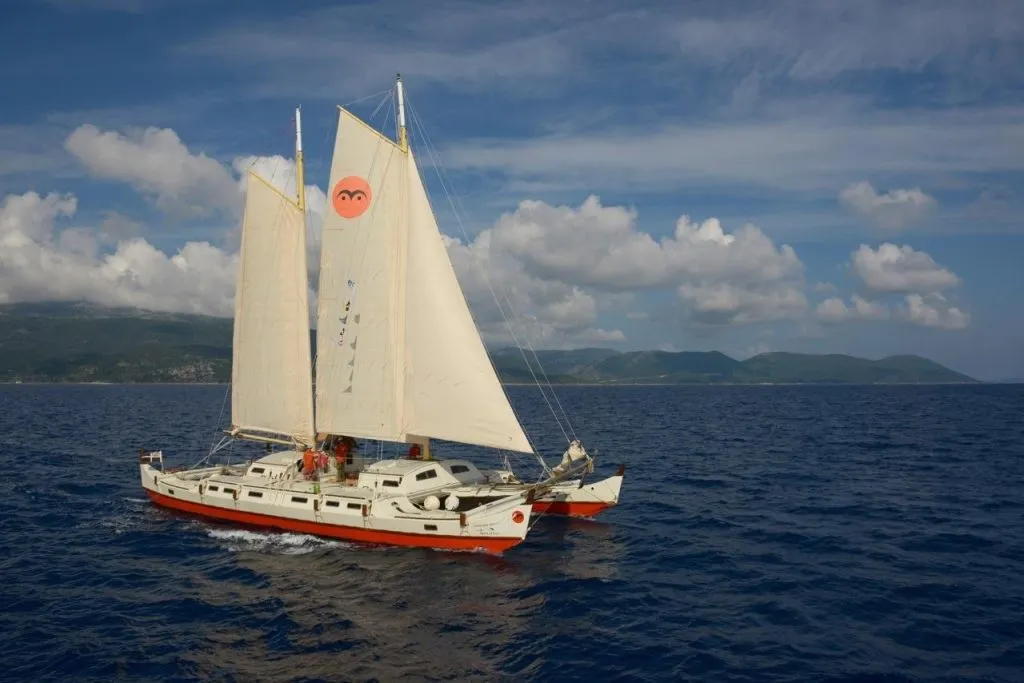
A difference in self build style and design
Lady Jane 111 is a Kelsall self build 40 foot catamaran that sailed around the World in 2005
Compare her with typical self build 40 foot Narai Wharram and this shows the difference because the Suncat looks like a professional production boat and the Wharram's look home made.
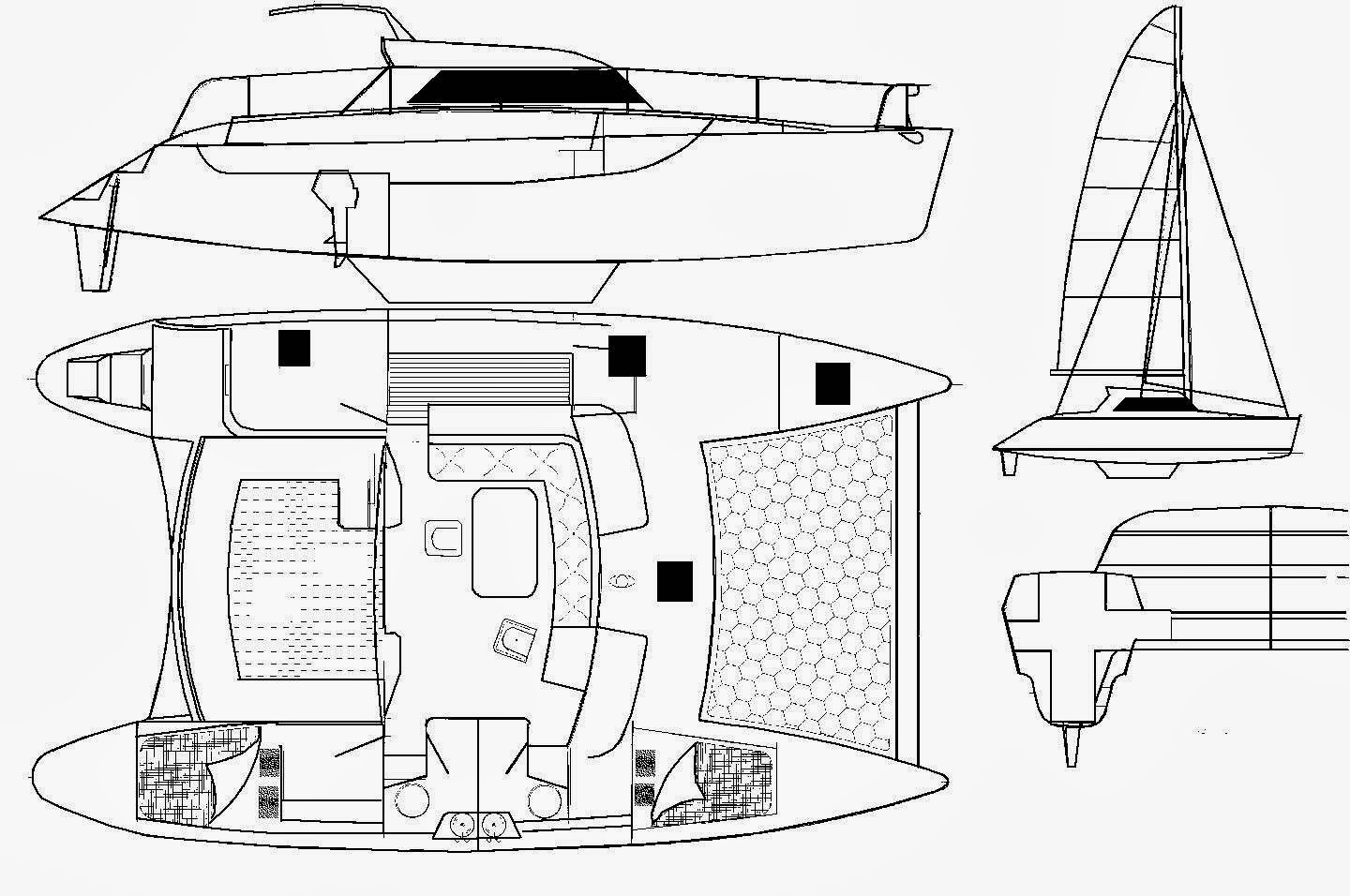
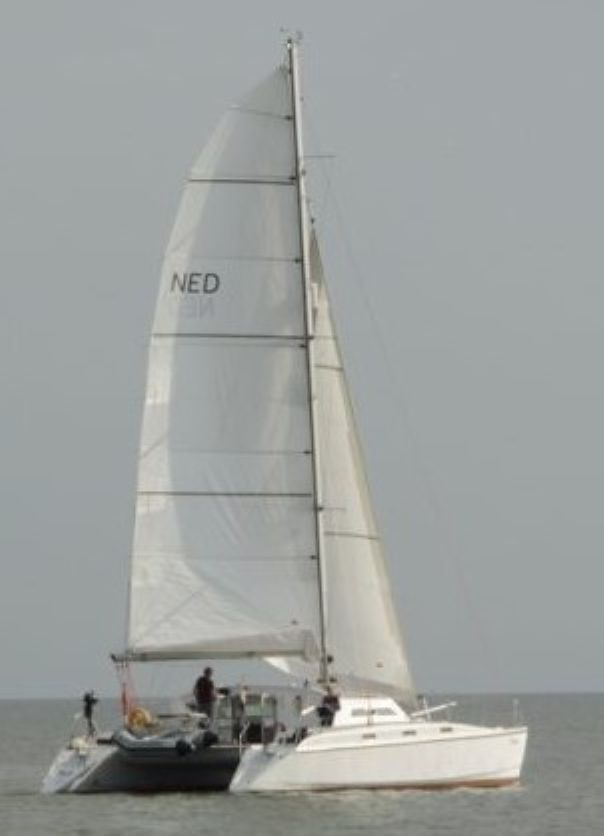
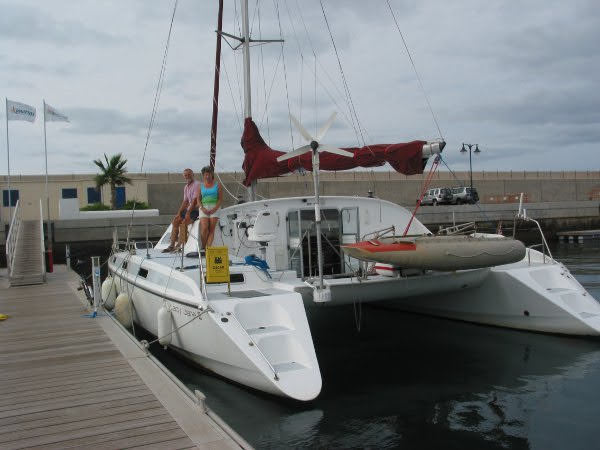
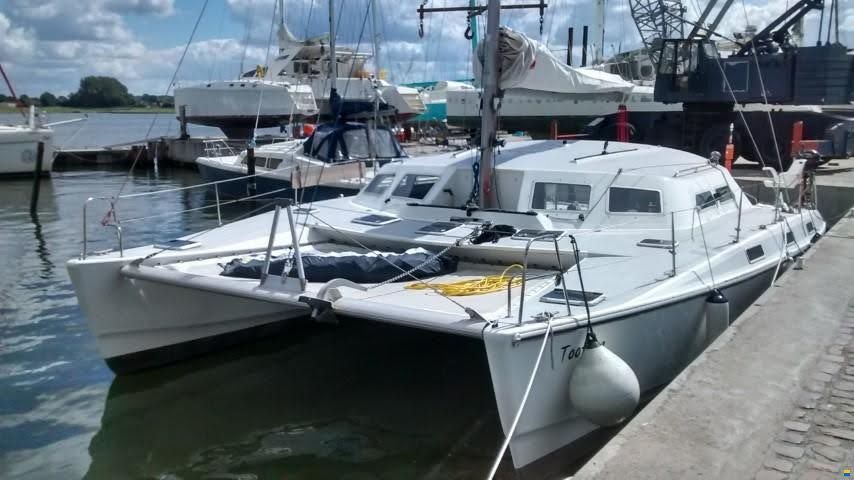
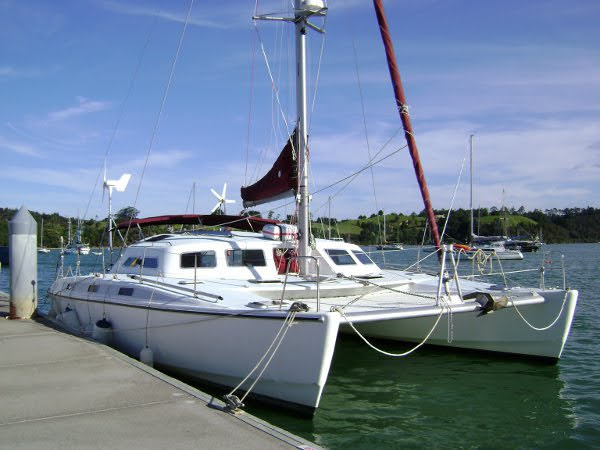
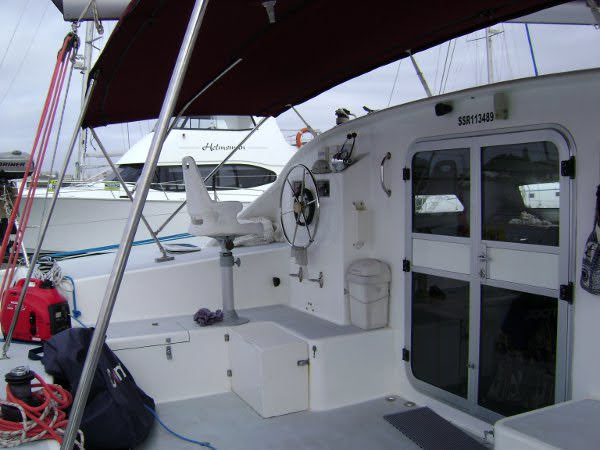
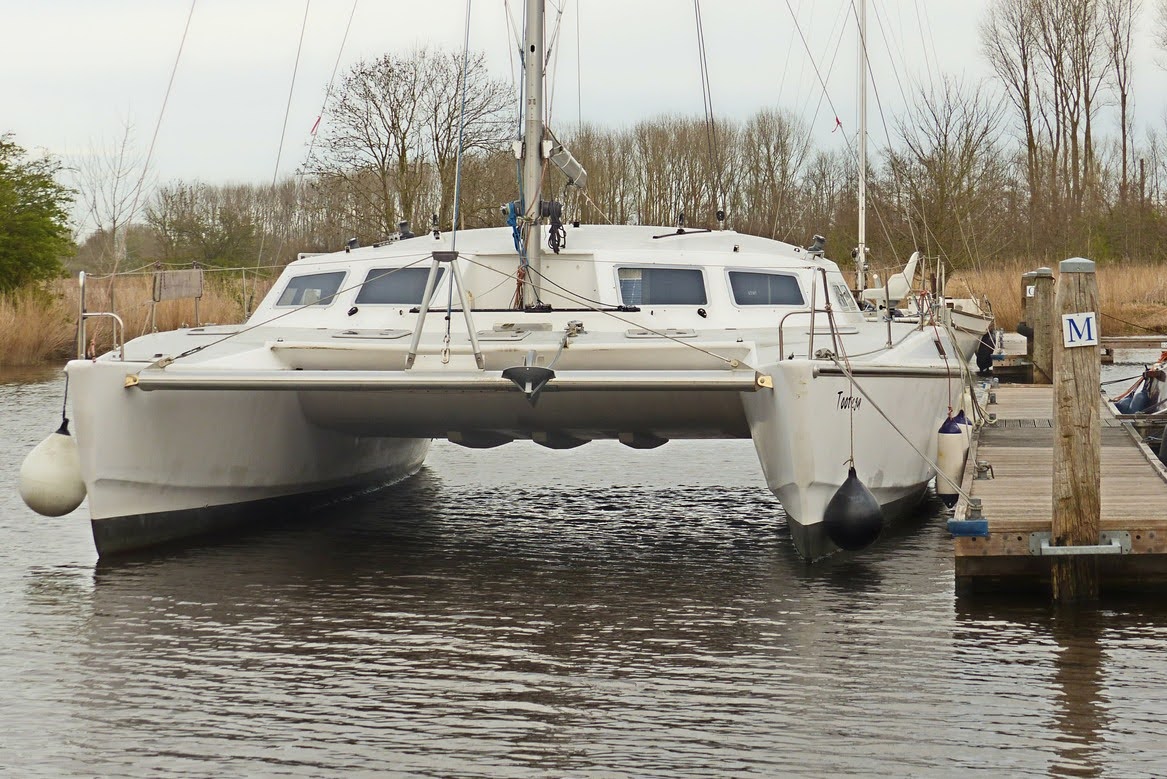
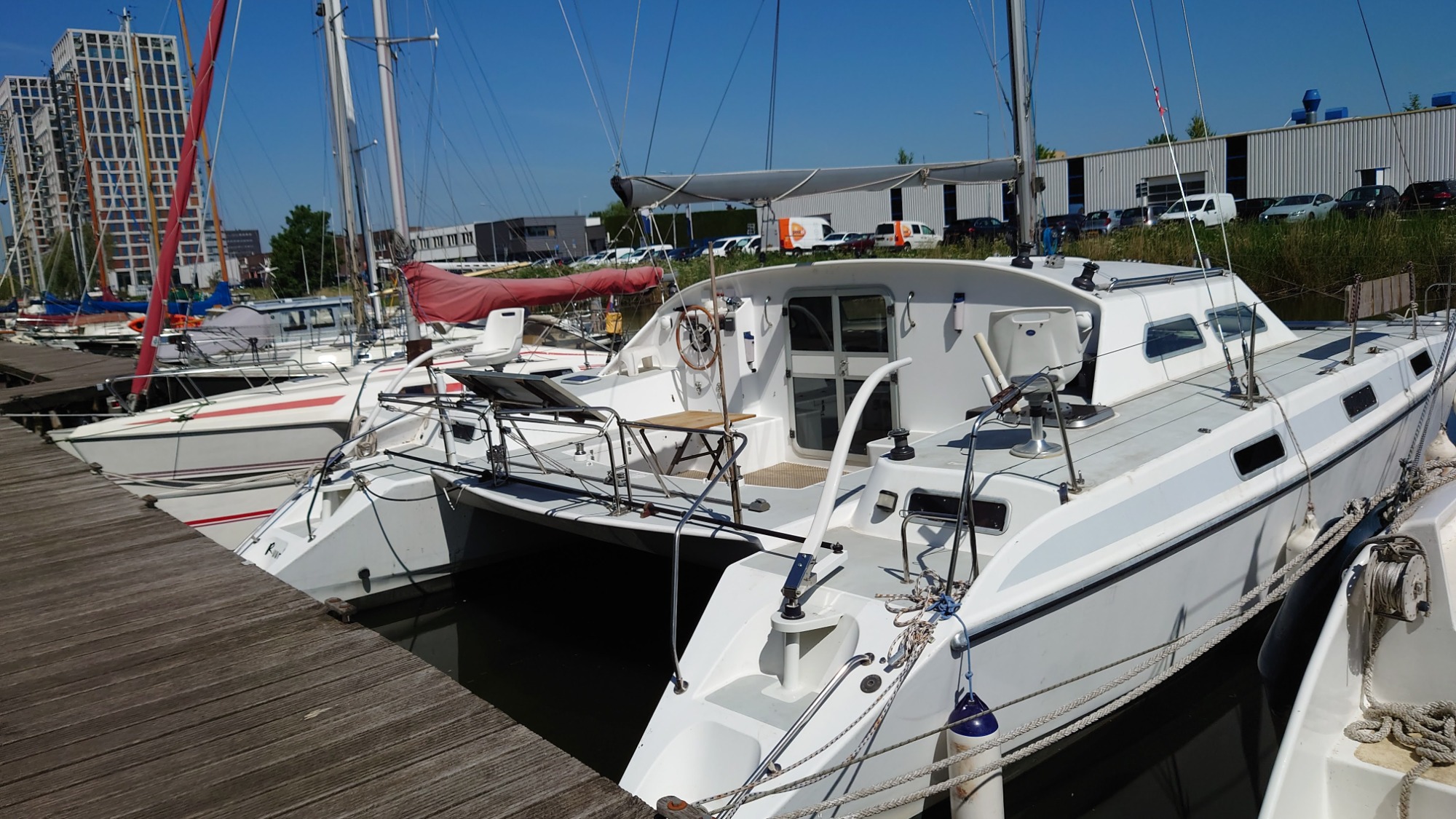
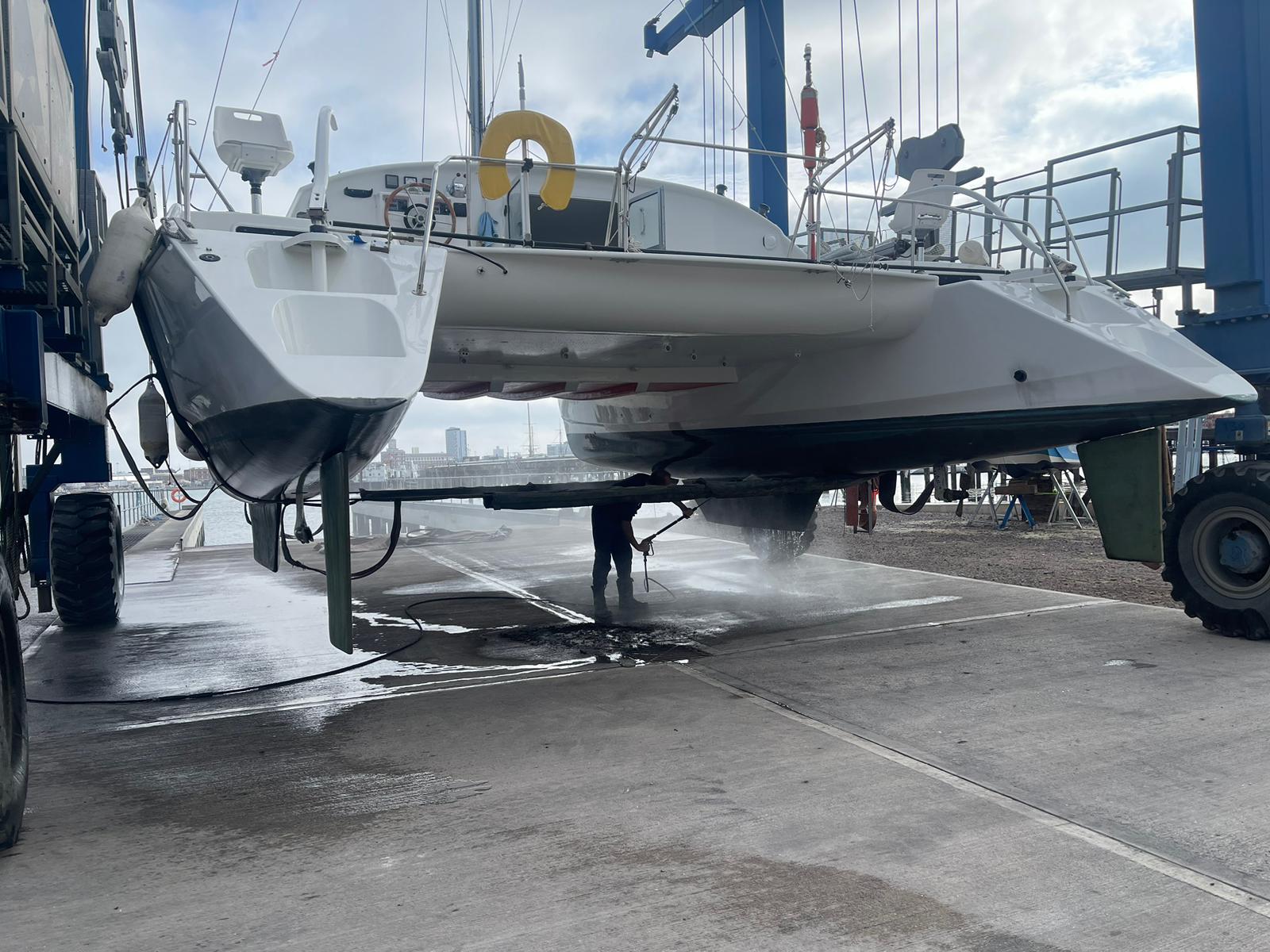
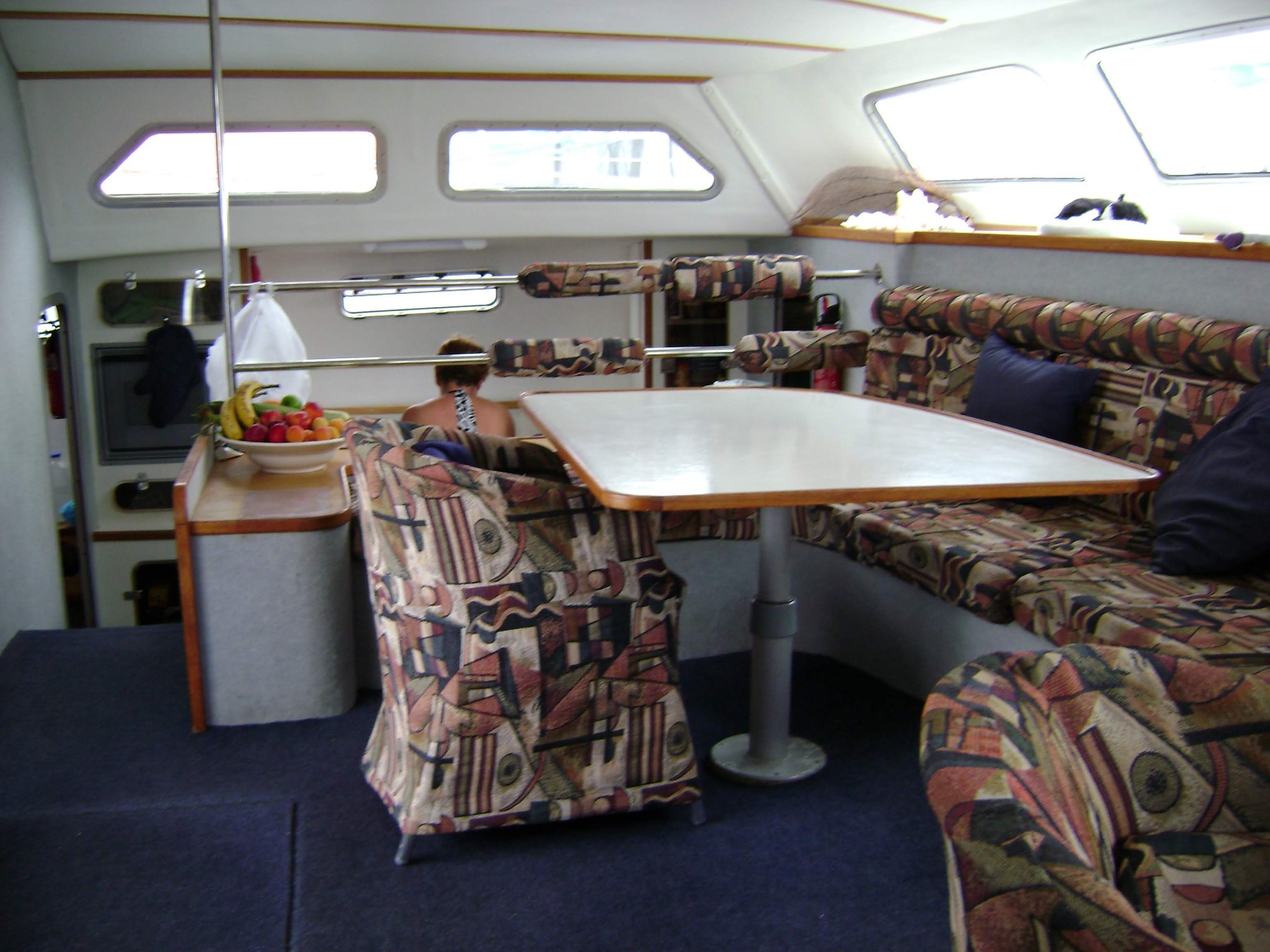
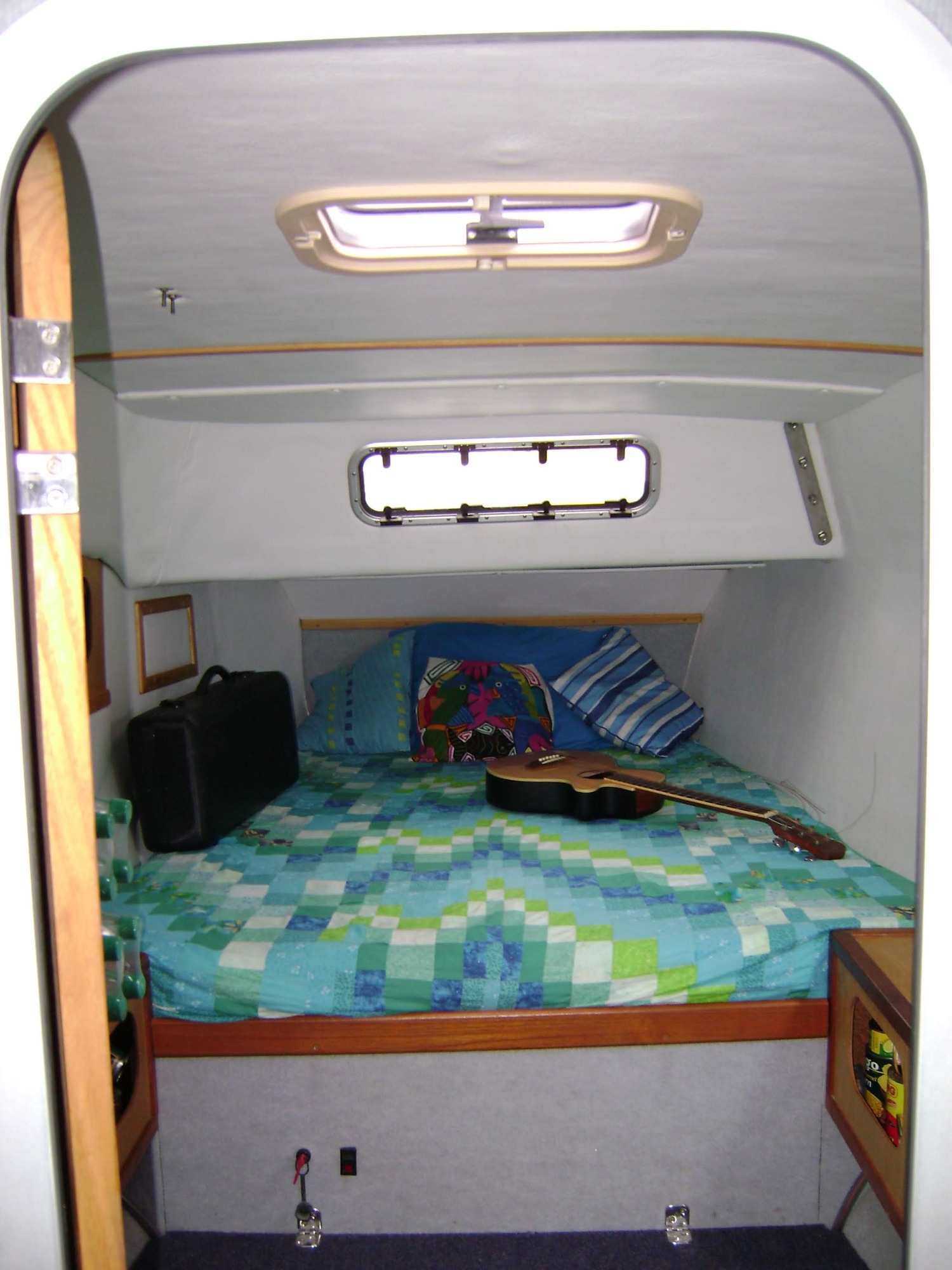
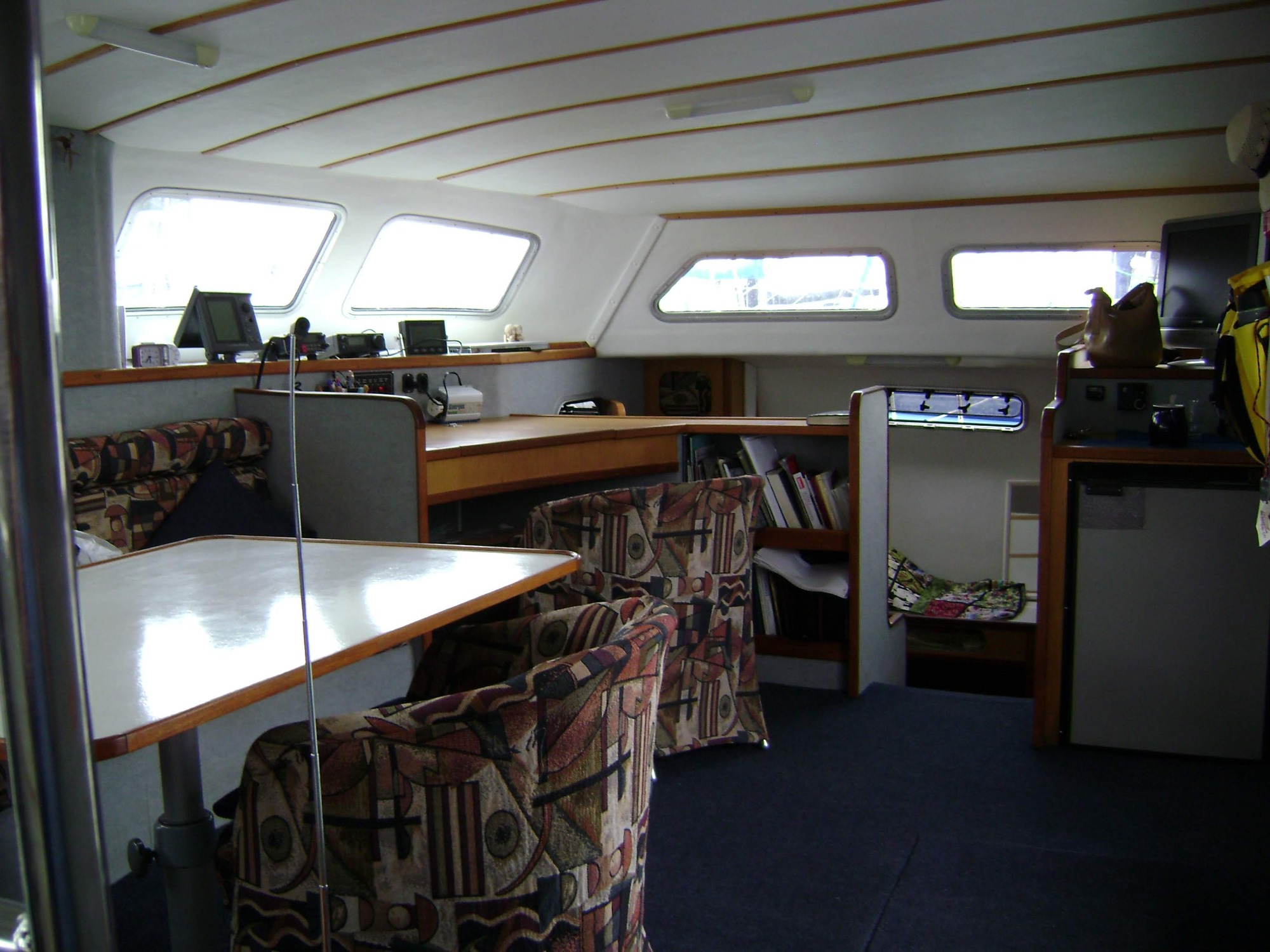
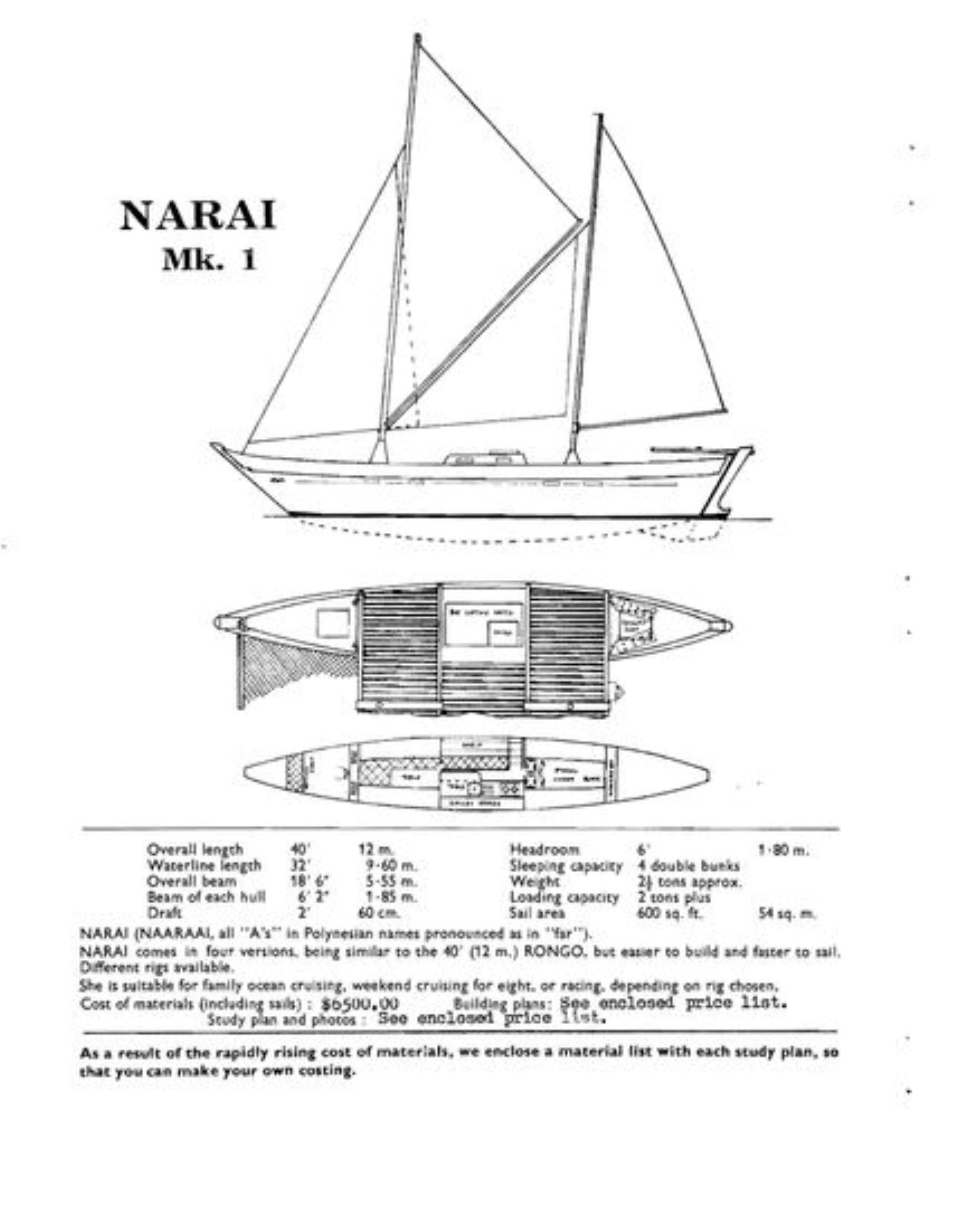
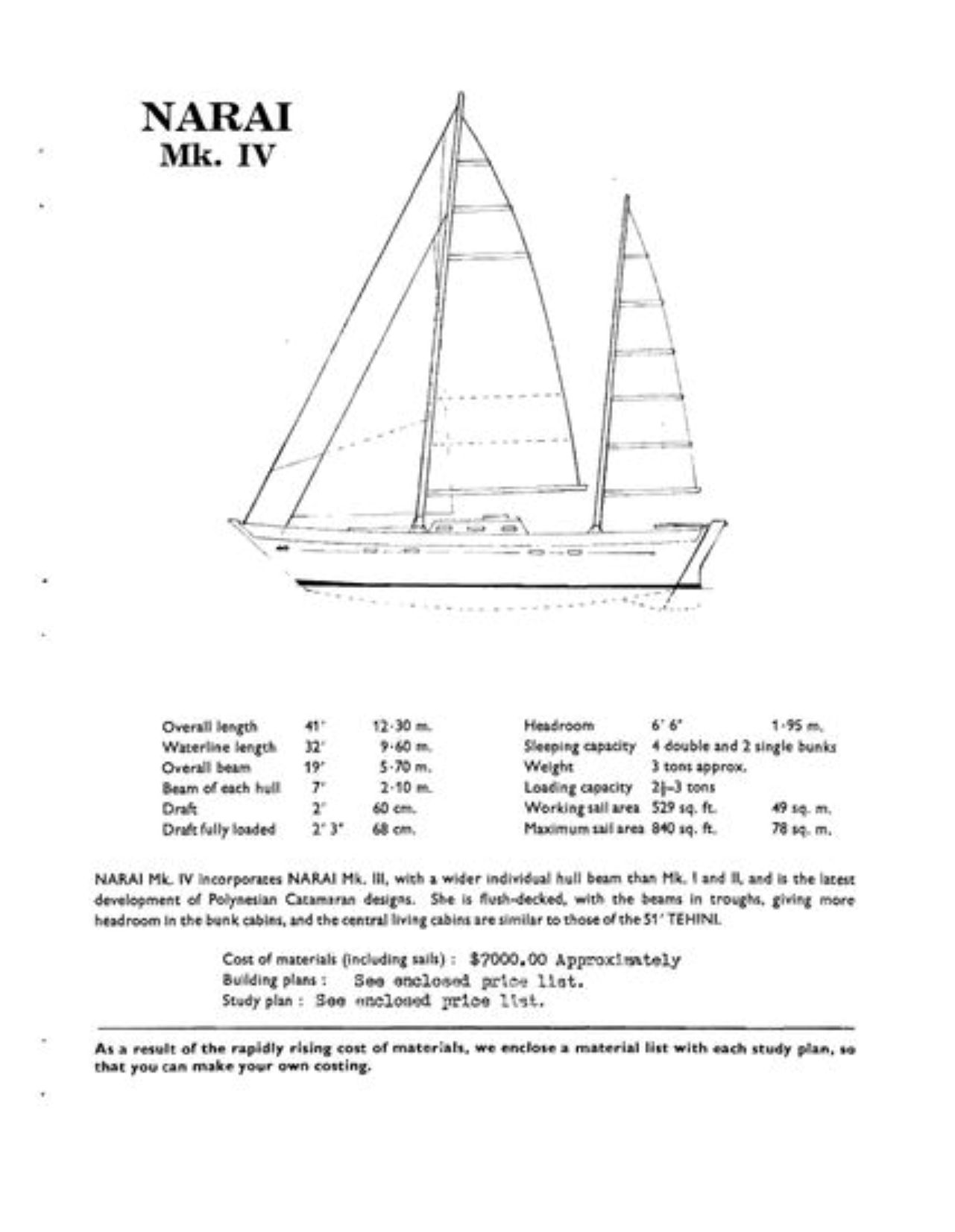
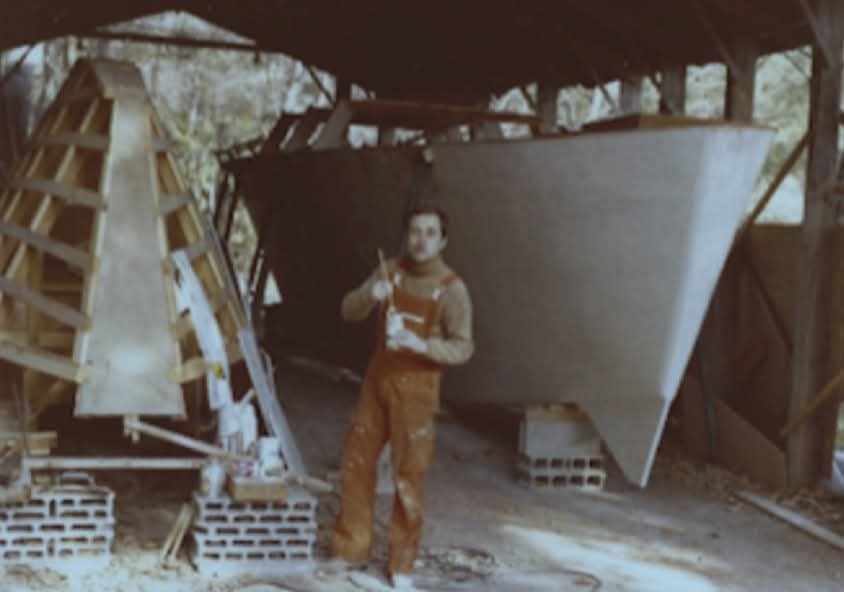
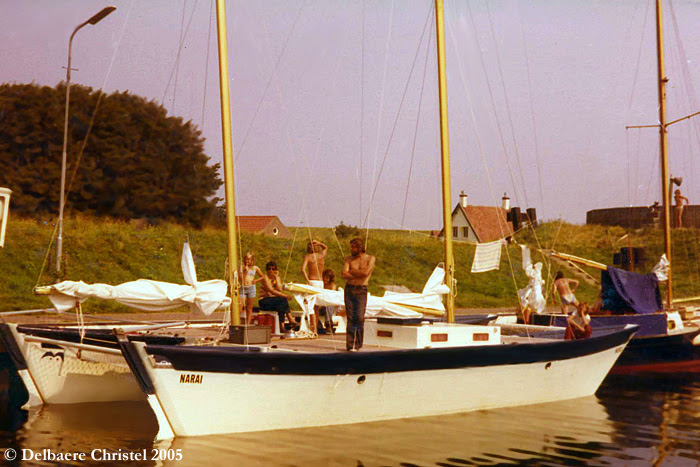
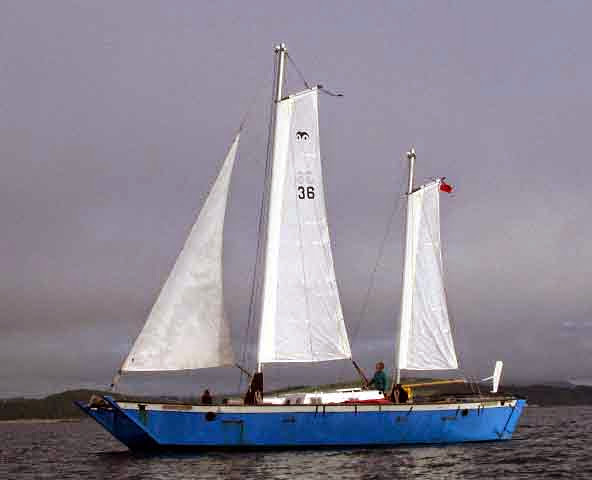
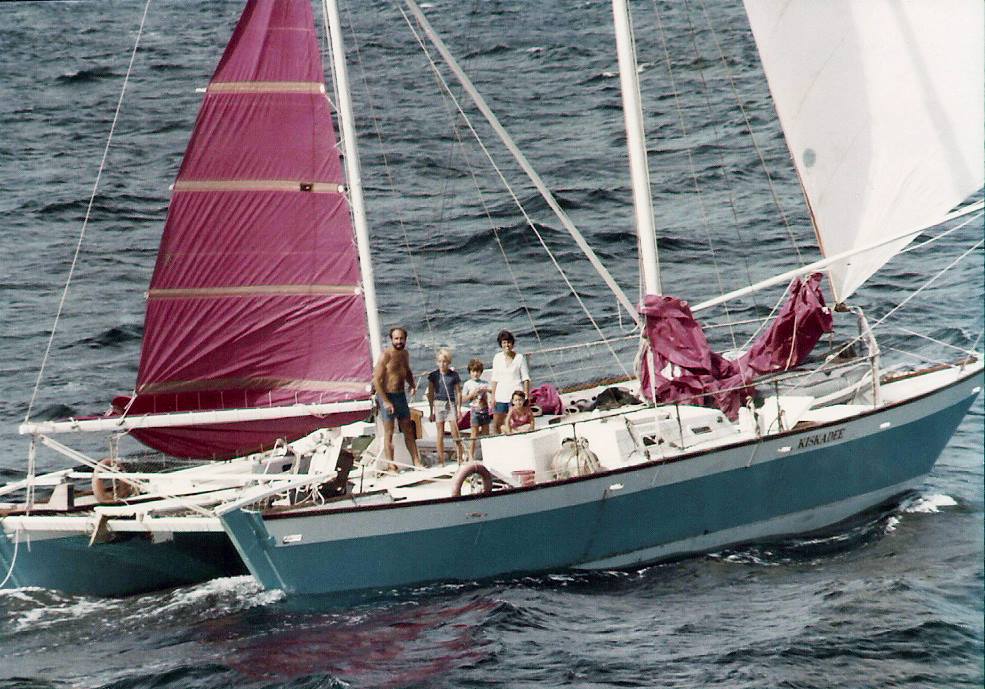
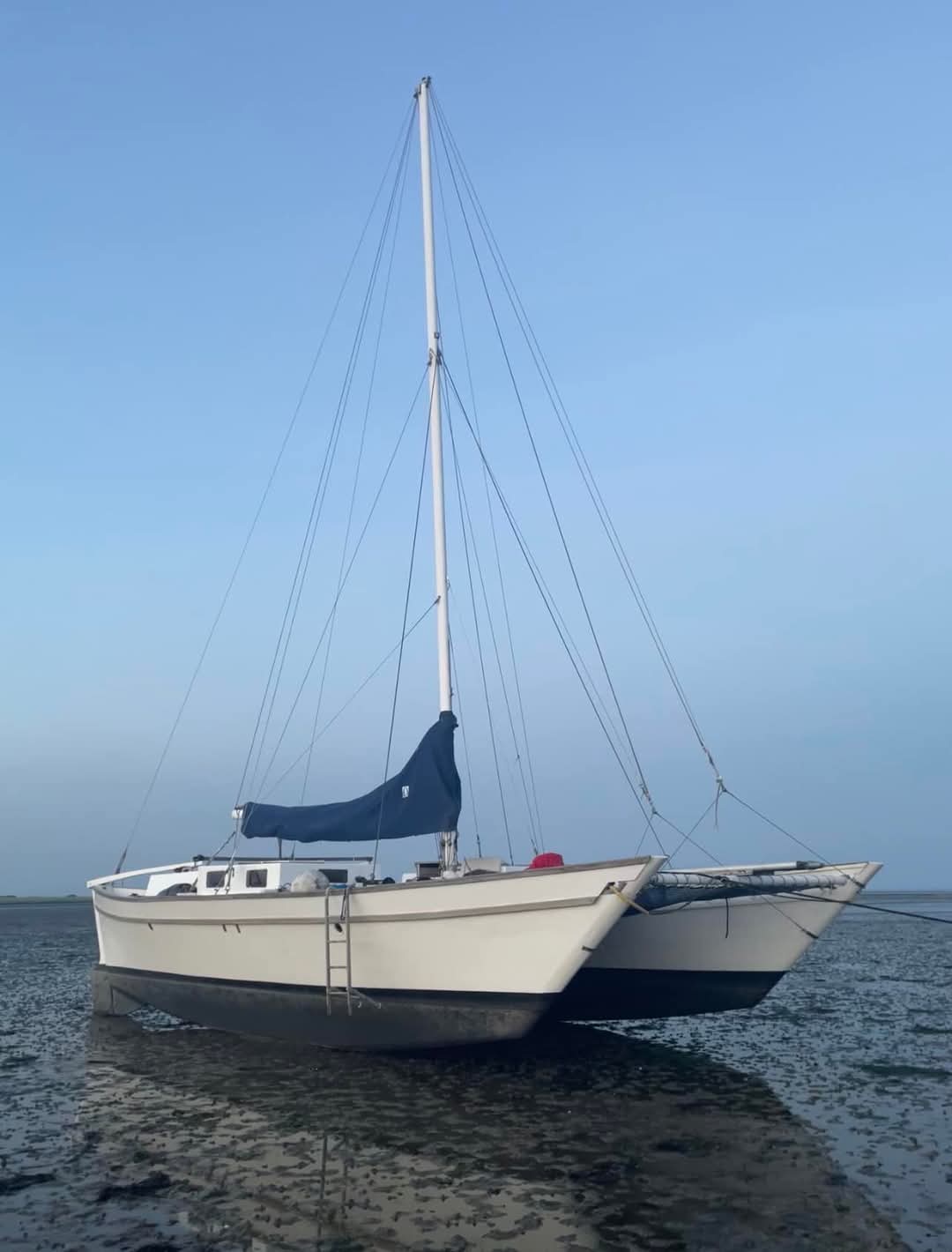
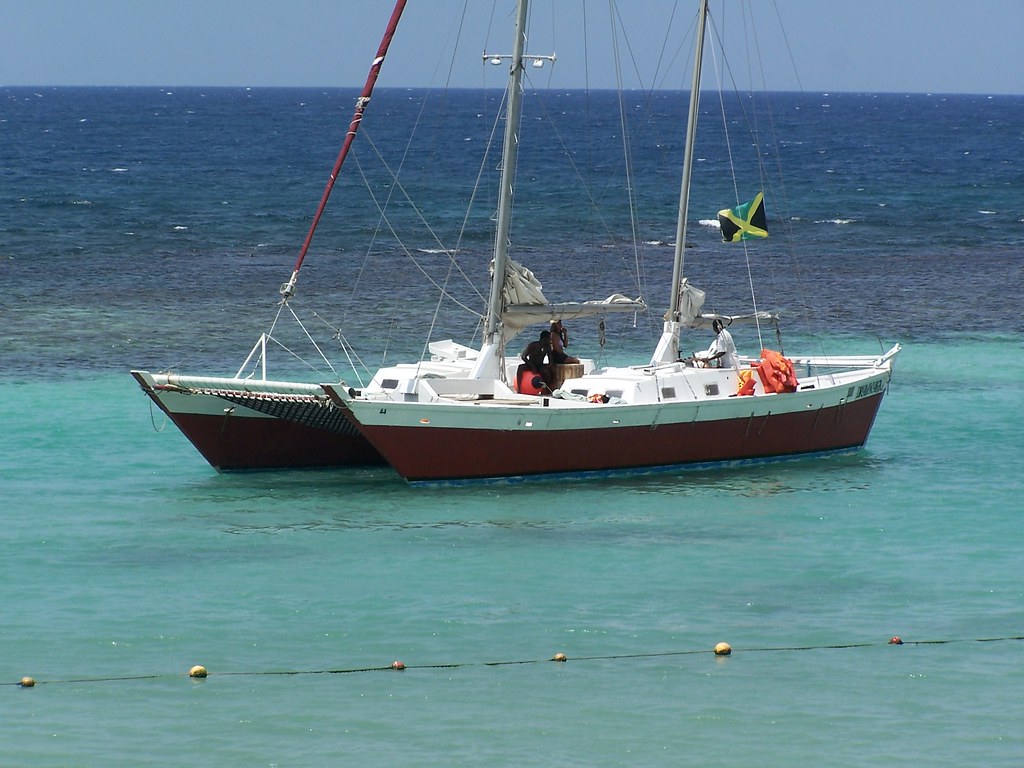
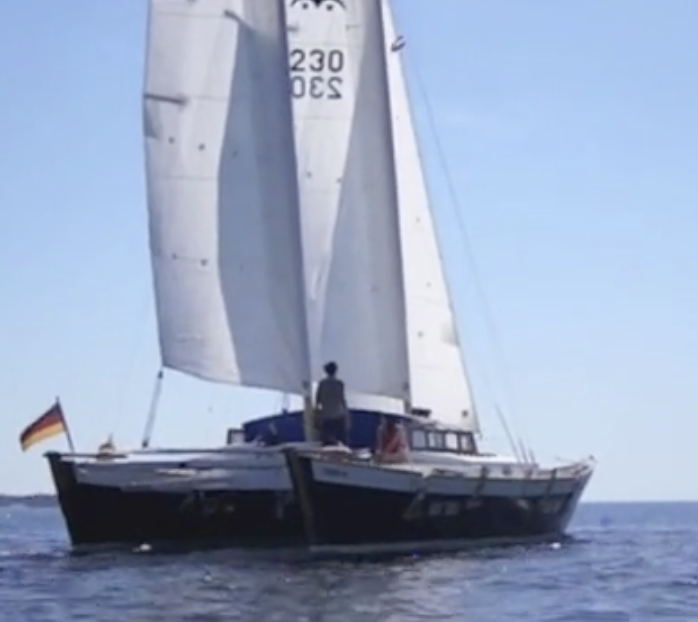
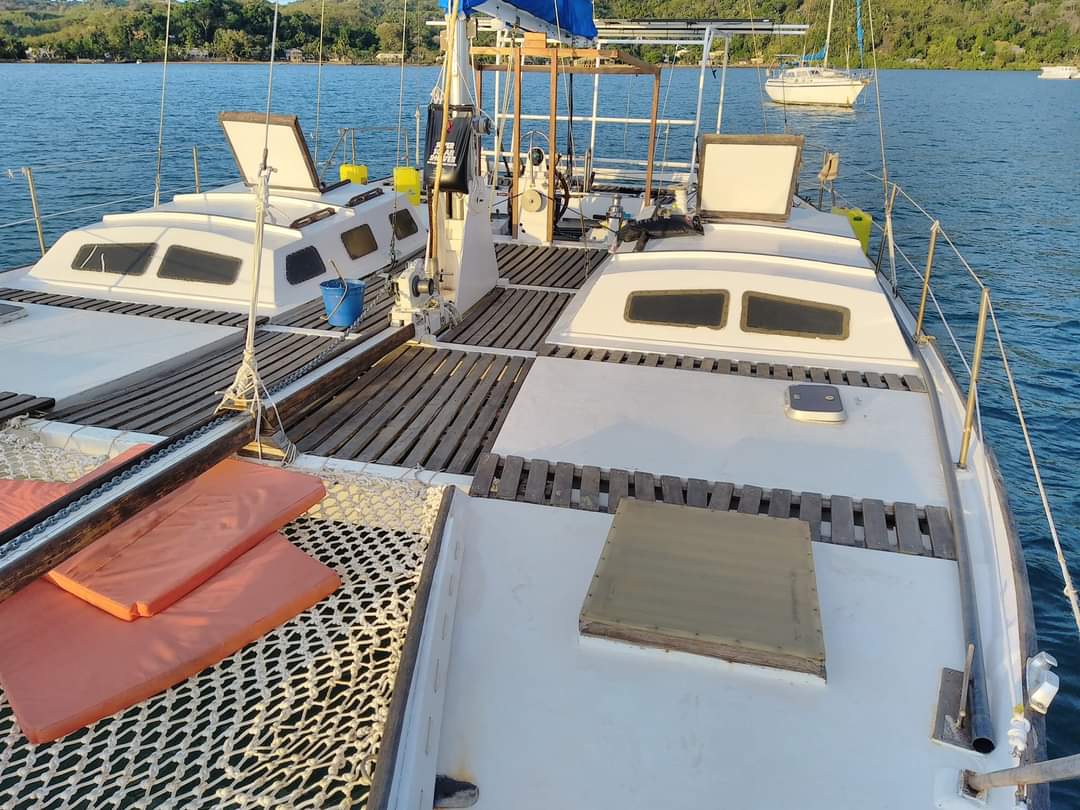
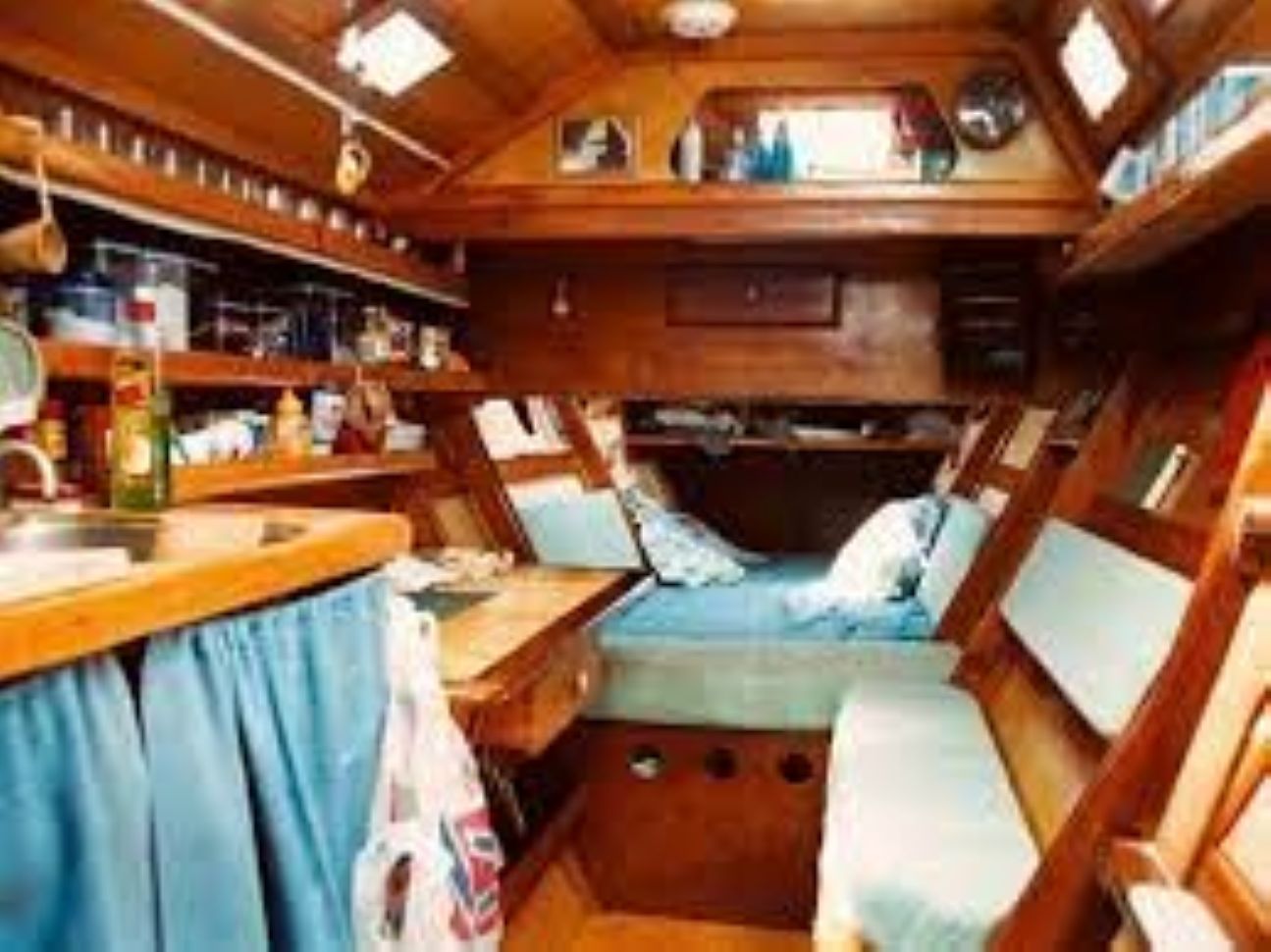
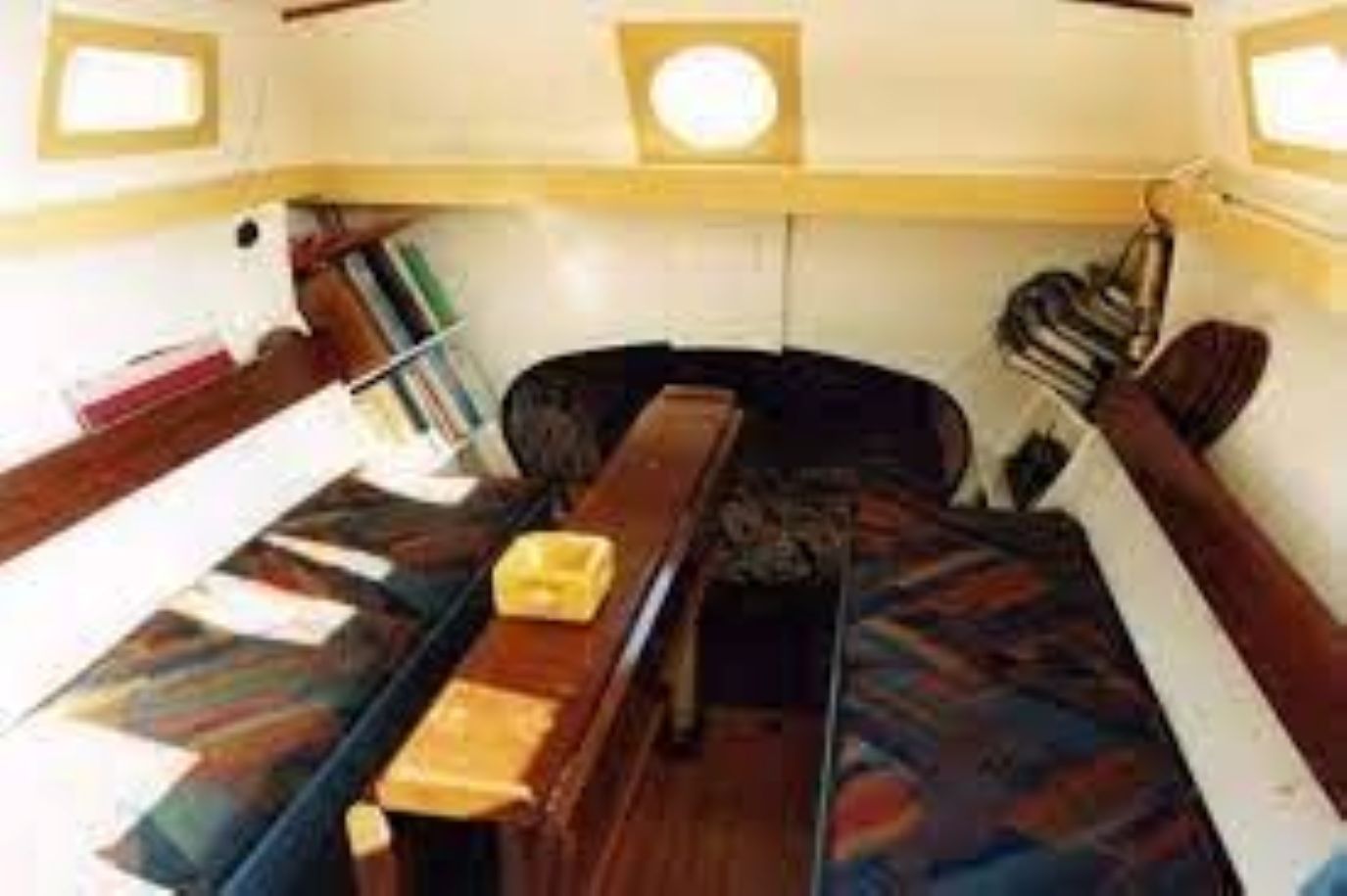
The Building of Tehini
This is the Wharram's film of the Tehini build in 1968-69.
Building and sailing of Pilgrim a Tiki 38
The Sea People - living the Wharram dream -building and sailing transatlantic.