WOODY BROWN AND CSK
CSK designs and the Hawaiian catamarans
CSK and Hawaiian Catamarans
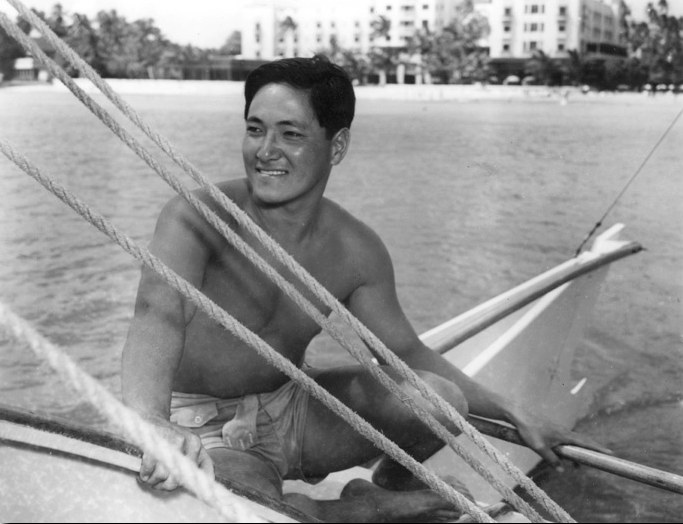
American Woodbridge Parker Brown (aka Woody Brown) was born in 1912 to a wealthy American family. Rejecting his family wall Street business, he became an original “surfer dude” but first started flying gliders with considerable success. In 1936 he stared surfing in California. In 1940 triggered by his wife’s death in childbirth Woody had a breakdown and walked out on his new-born son and his stepdaughter not seeing them again for many years. He headed for Tahiti but was held in Hawaii due to WWII. A conscientious objector and vegetarian he became one of Hawaii’s big wave surfers and designer of surf boards.
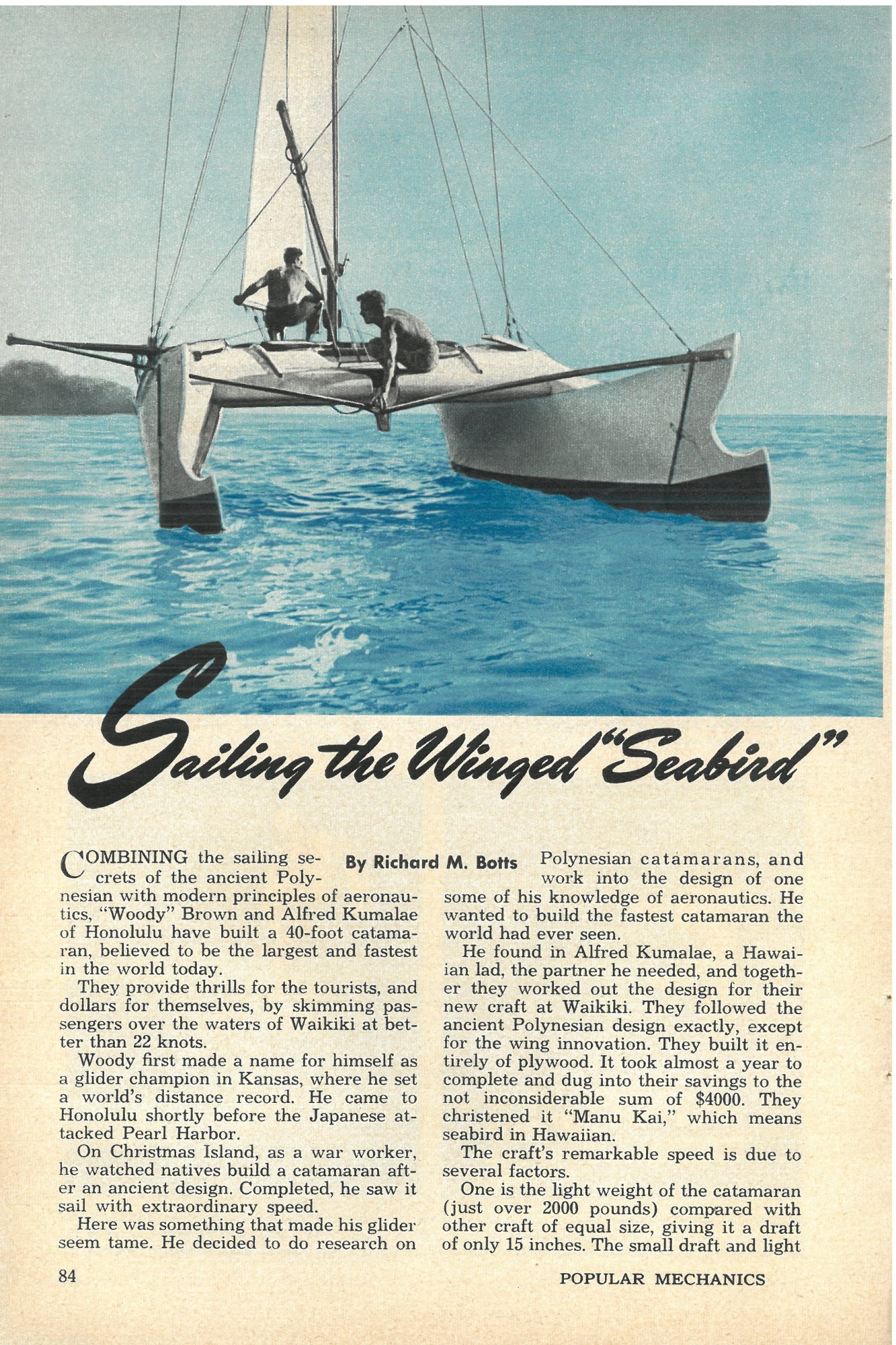
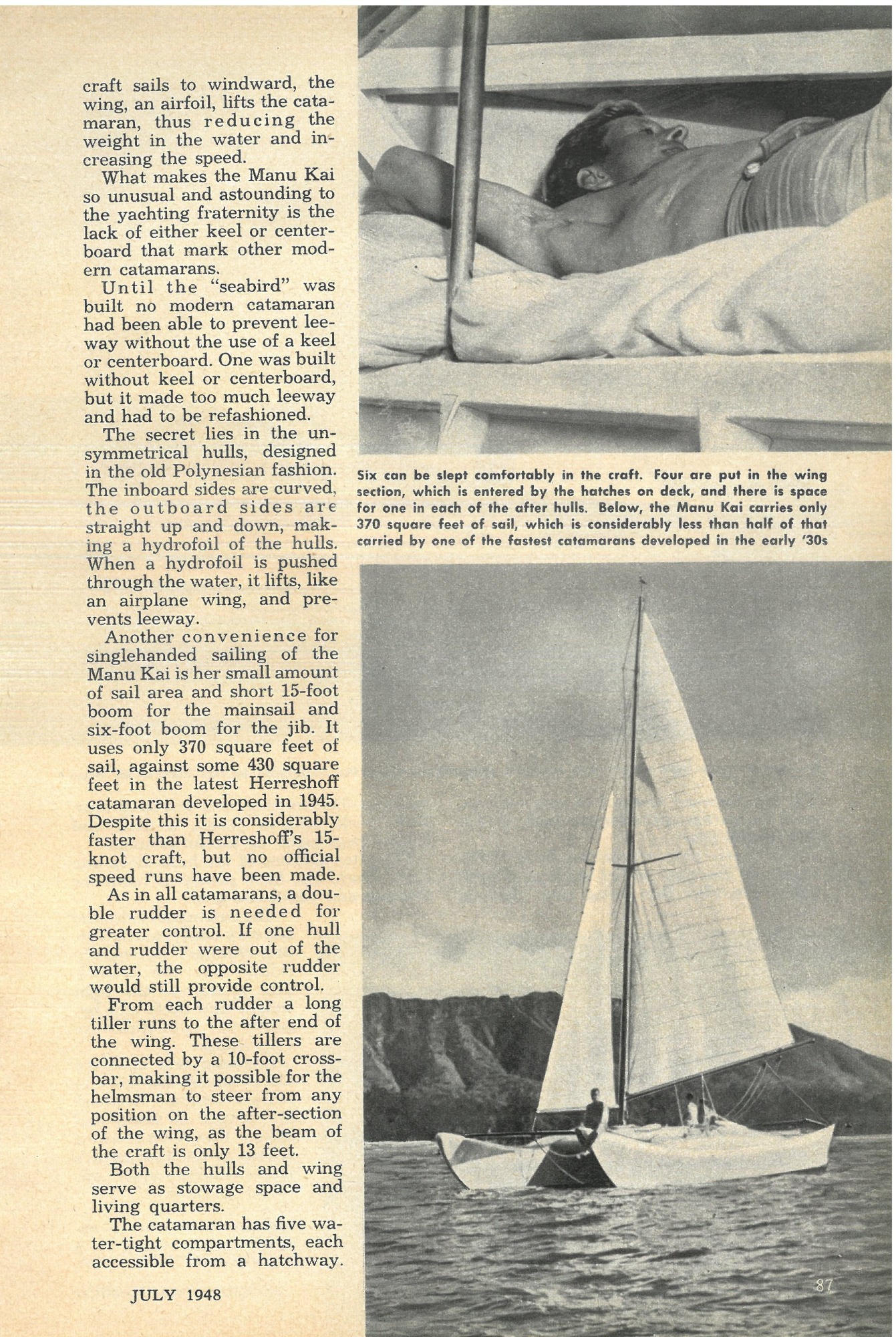
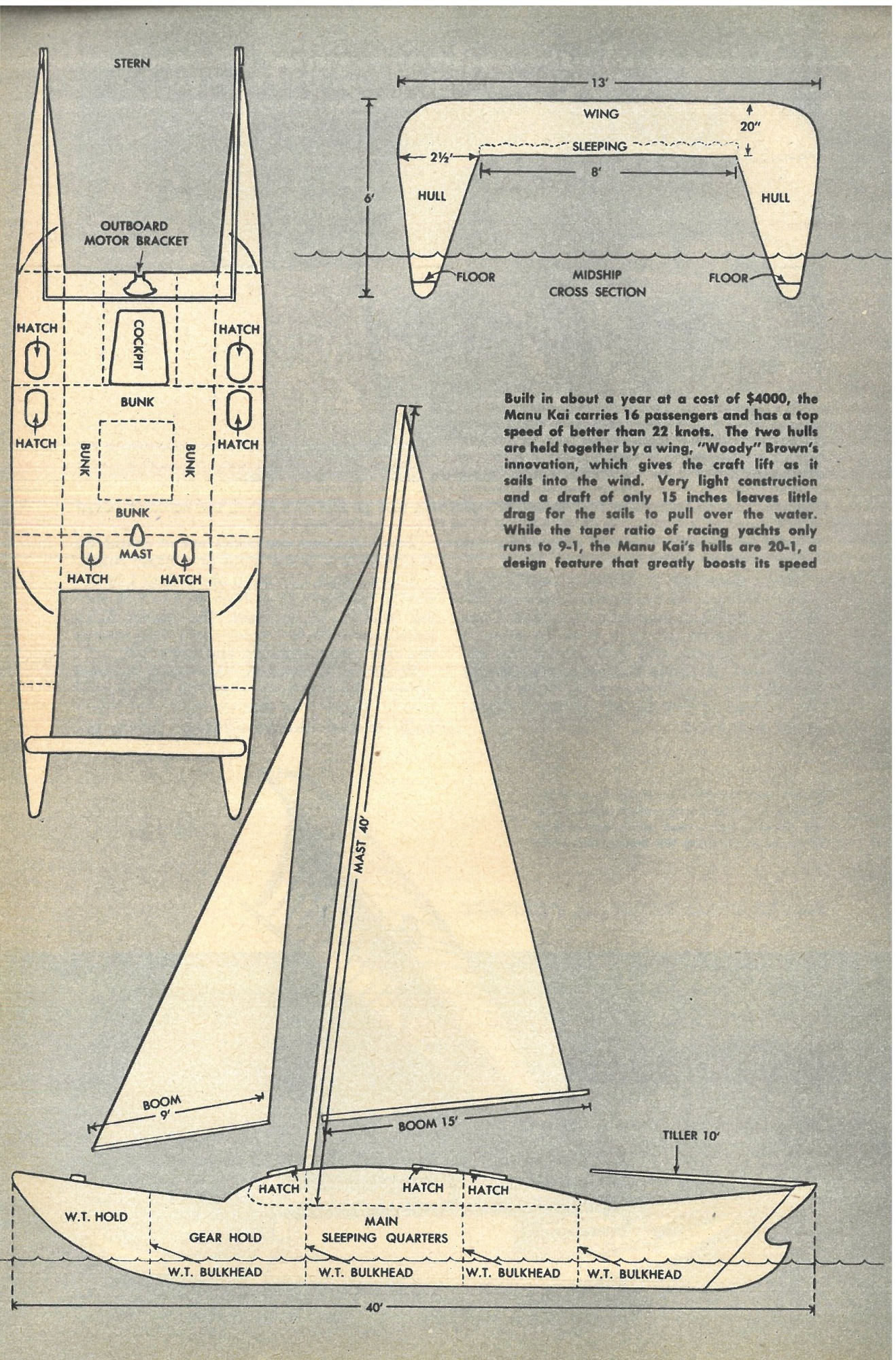
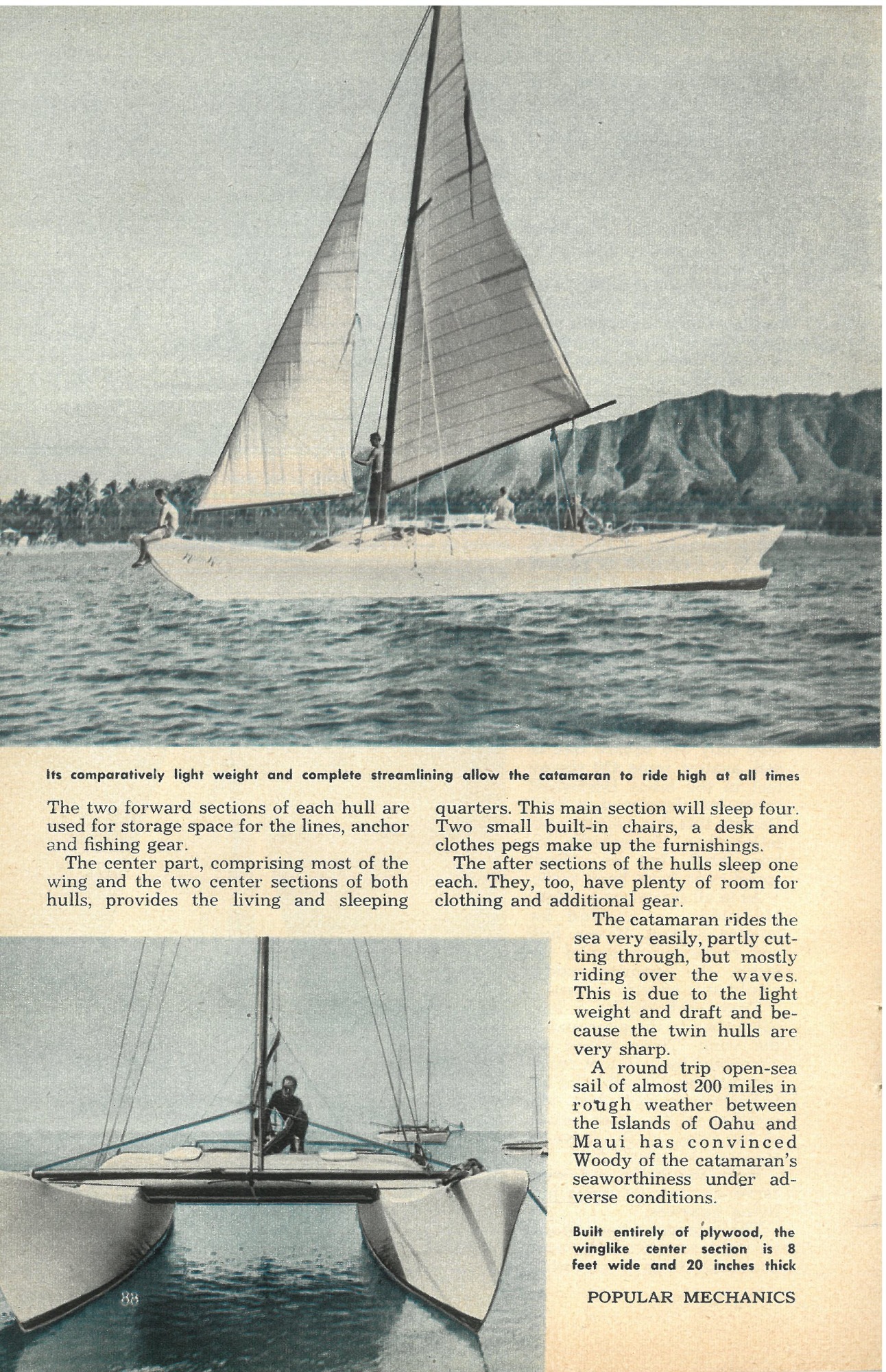
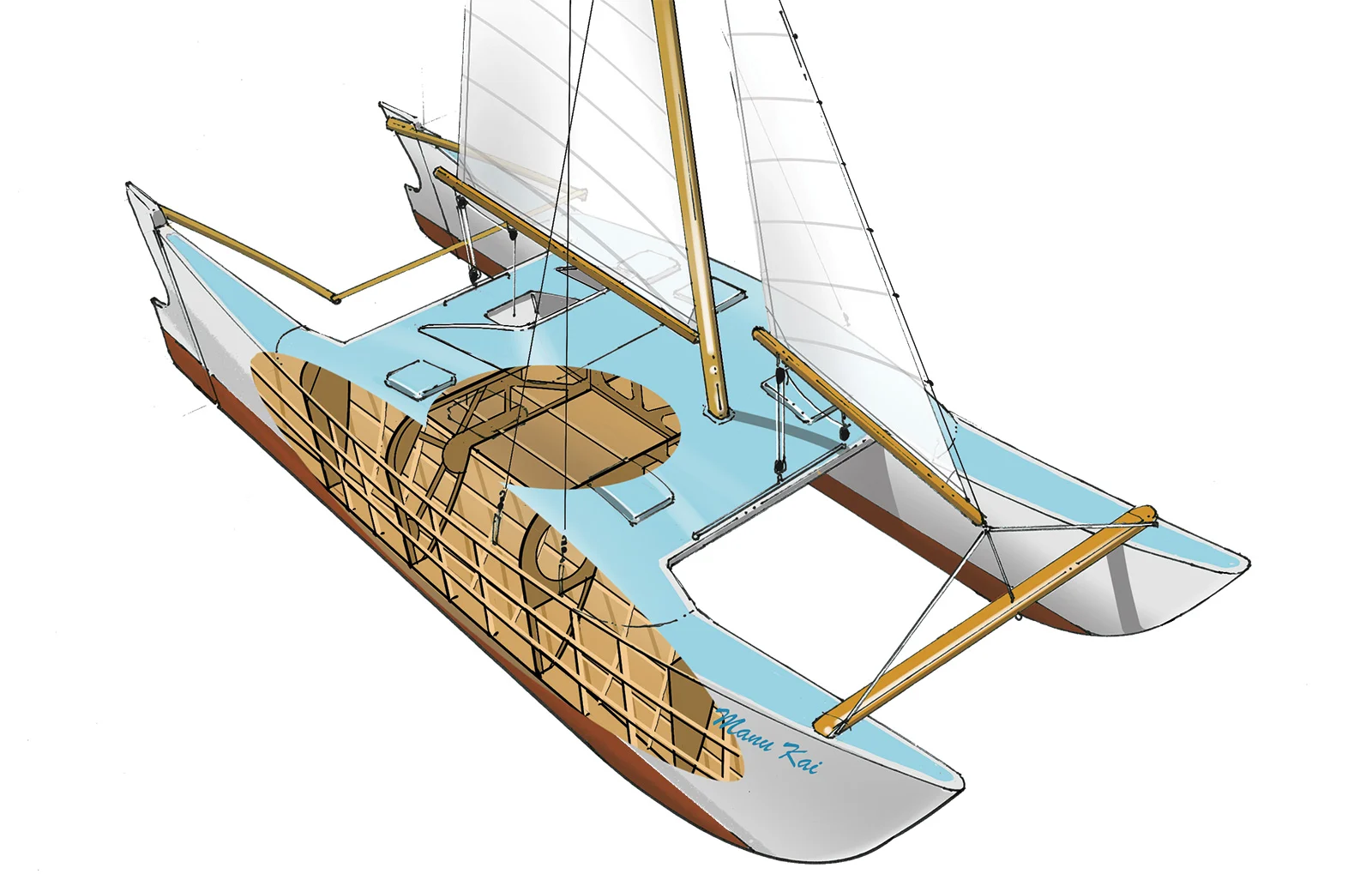
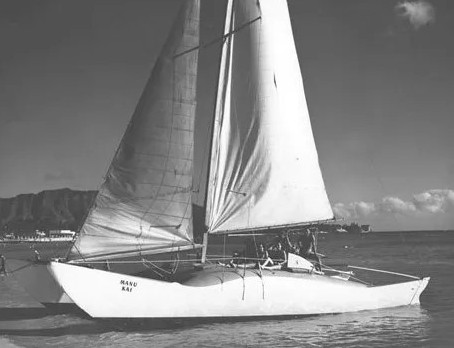
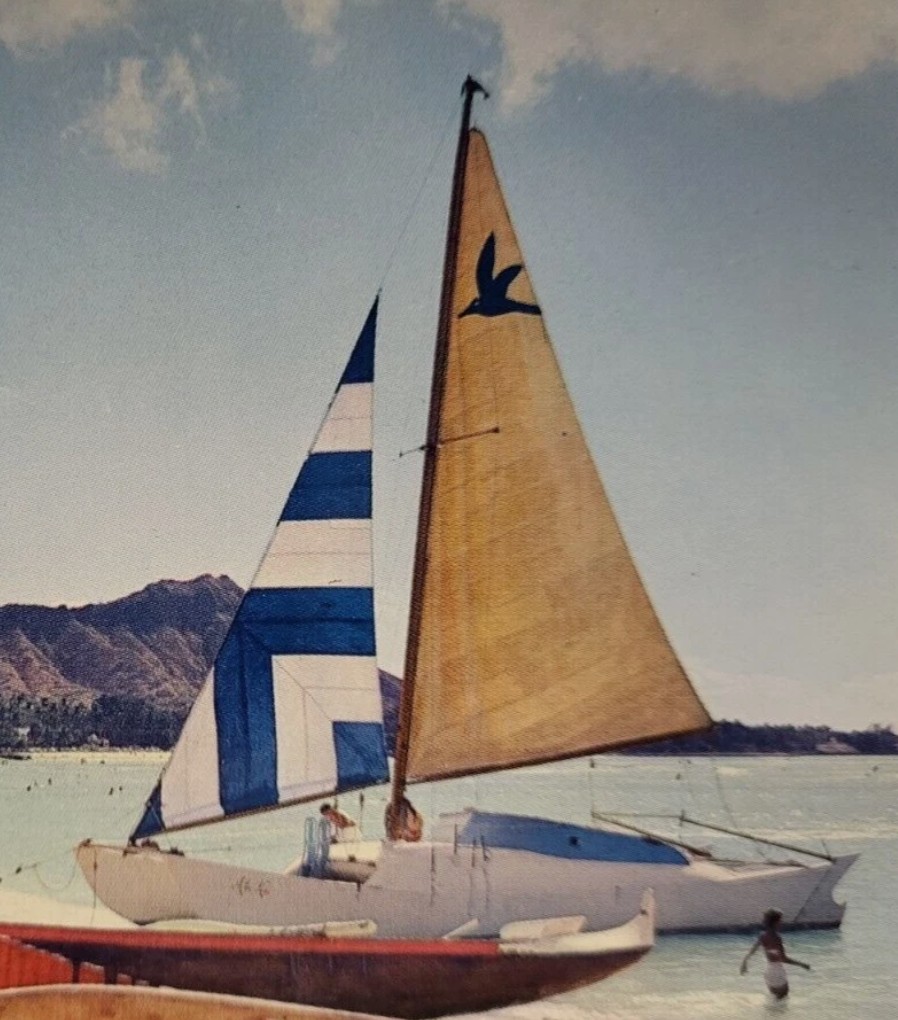
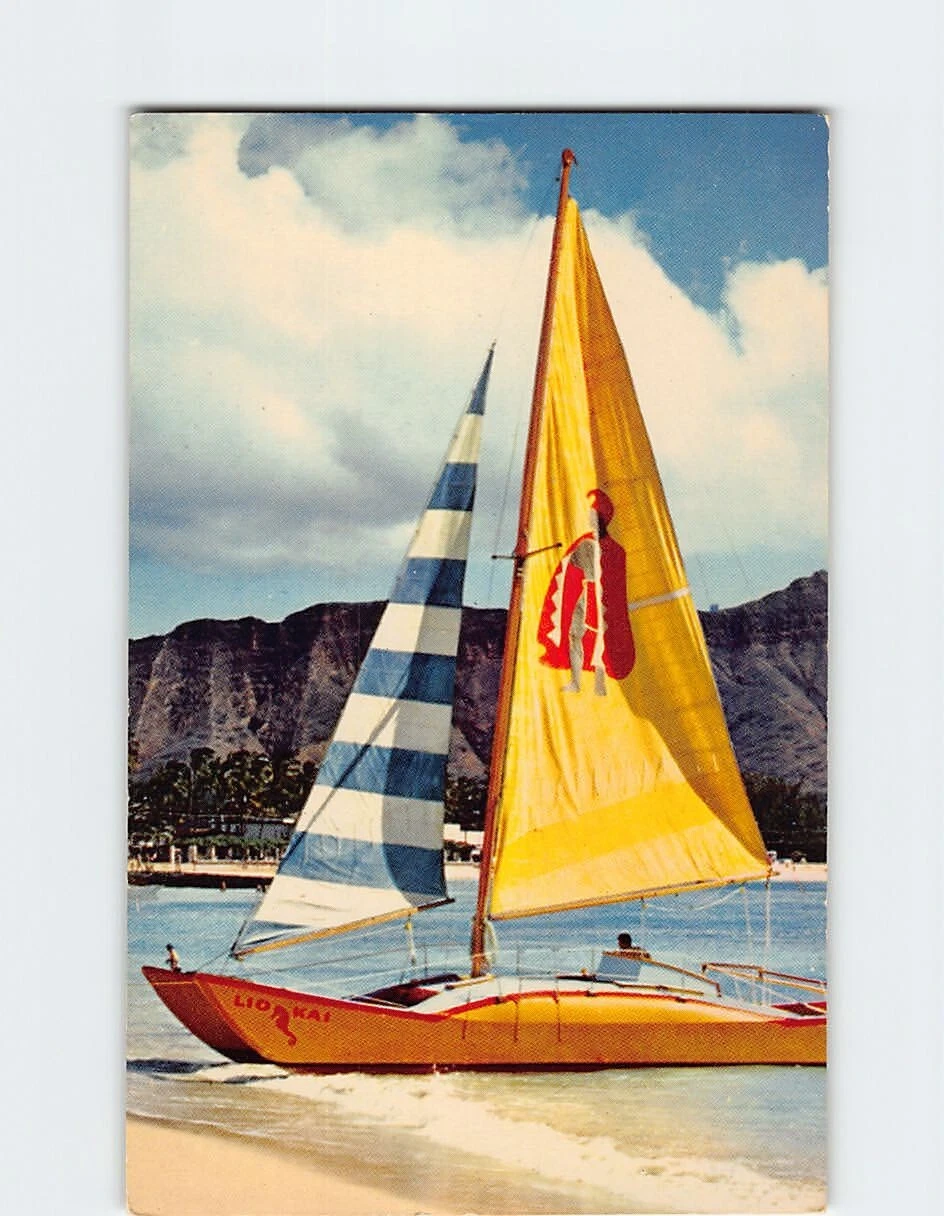
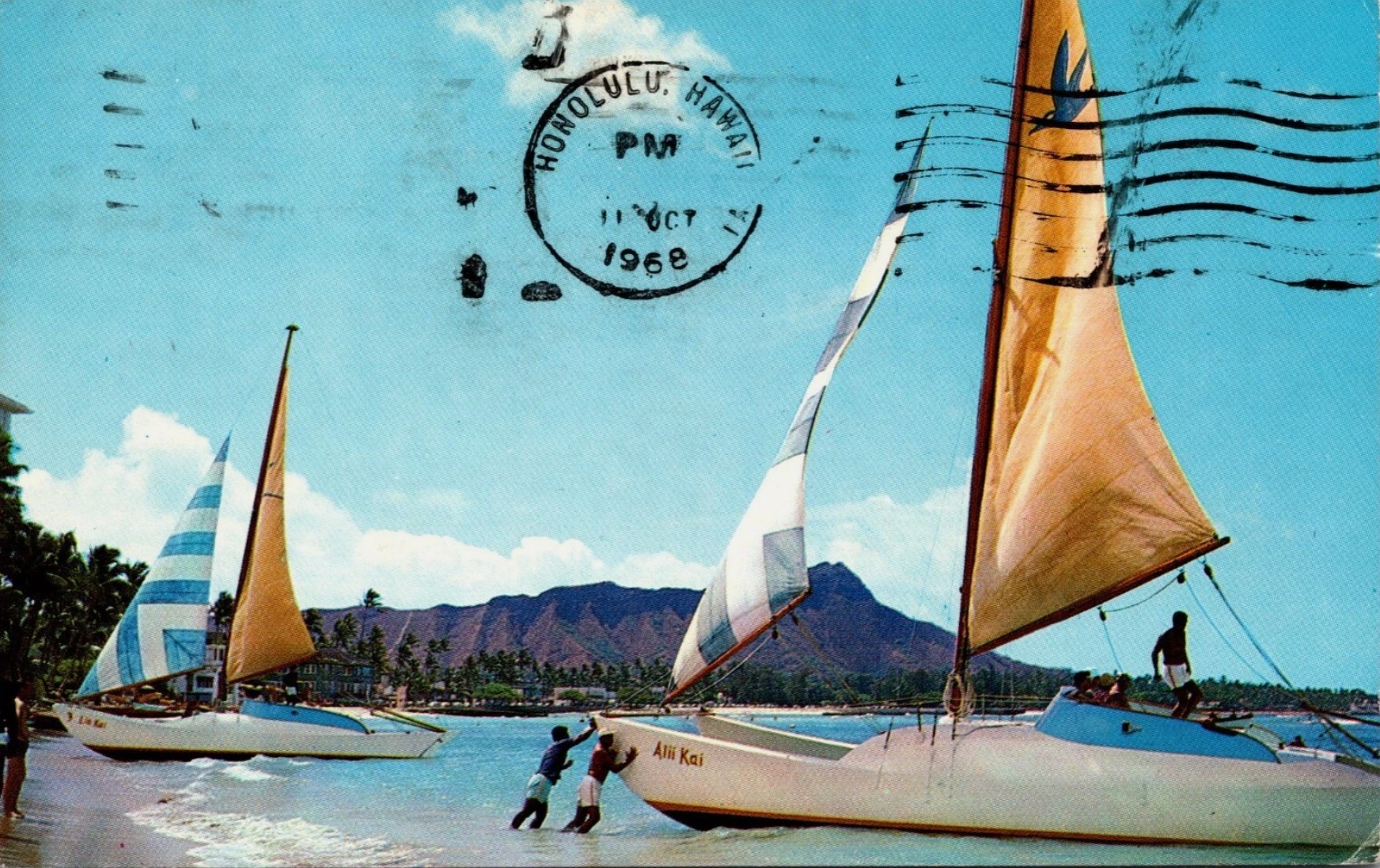
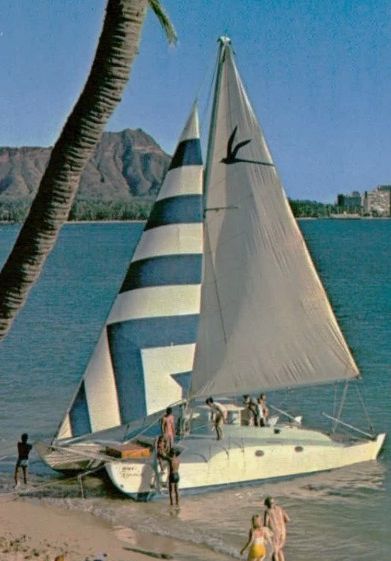
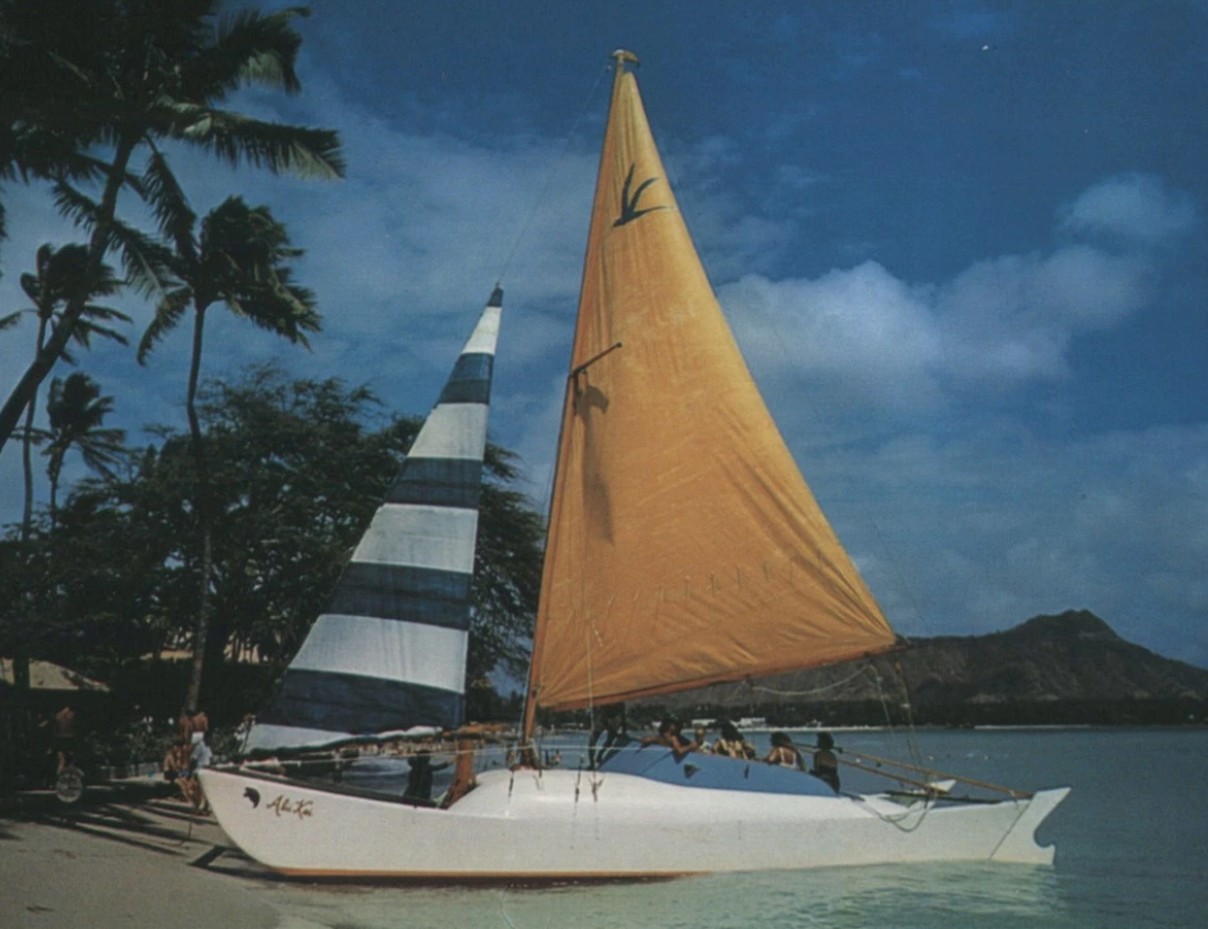
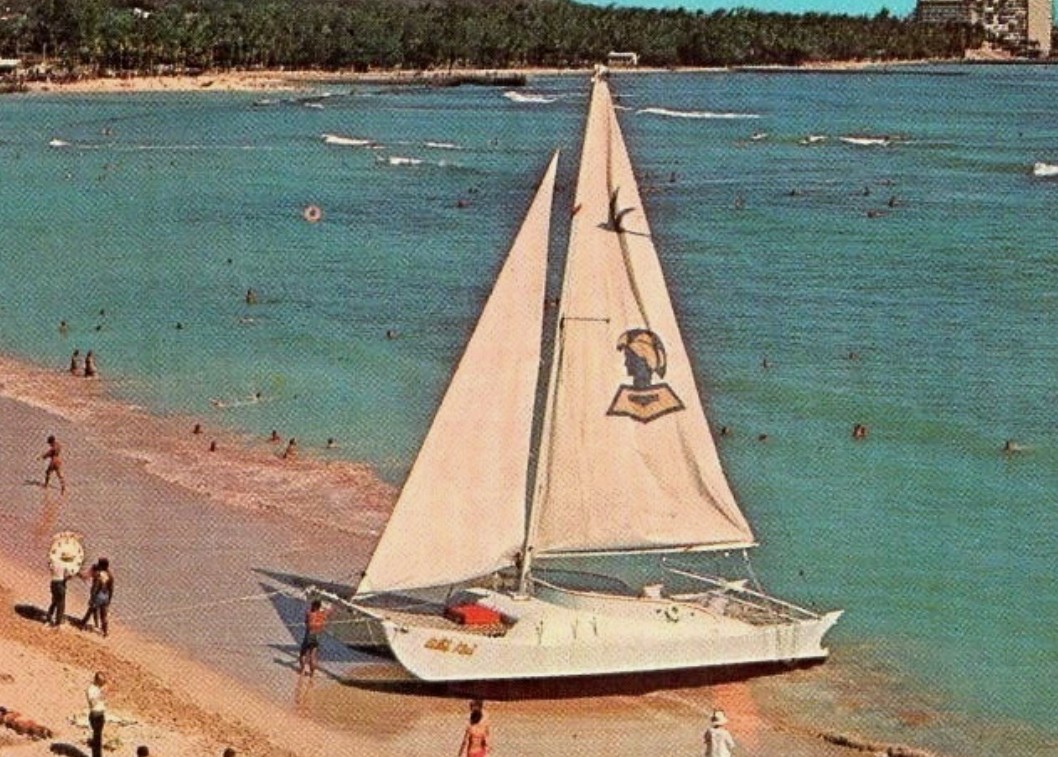
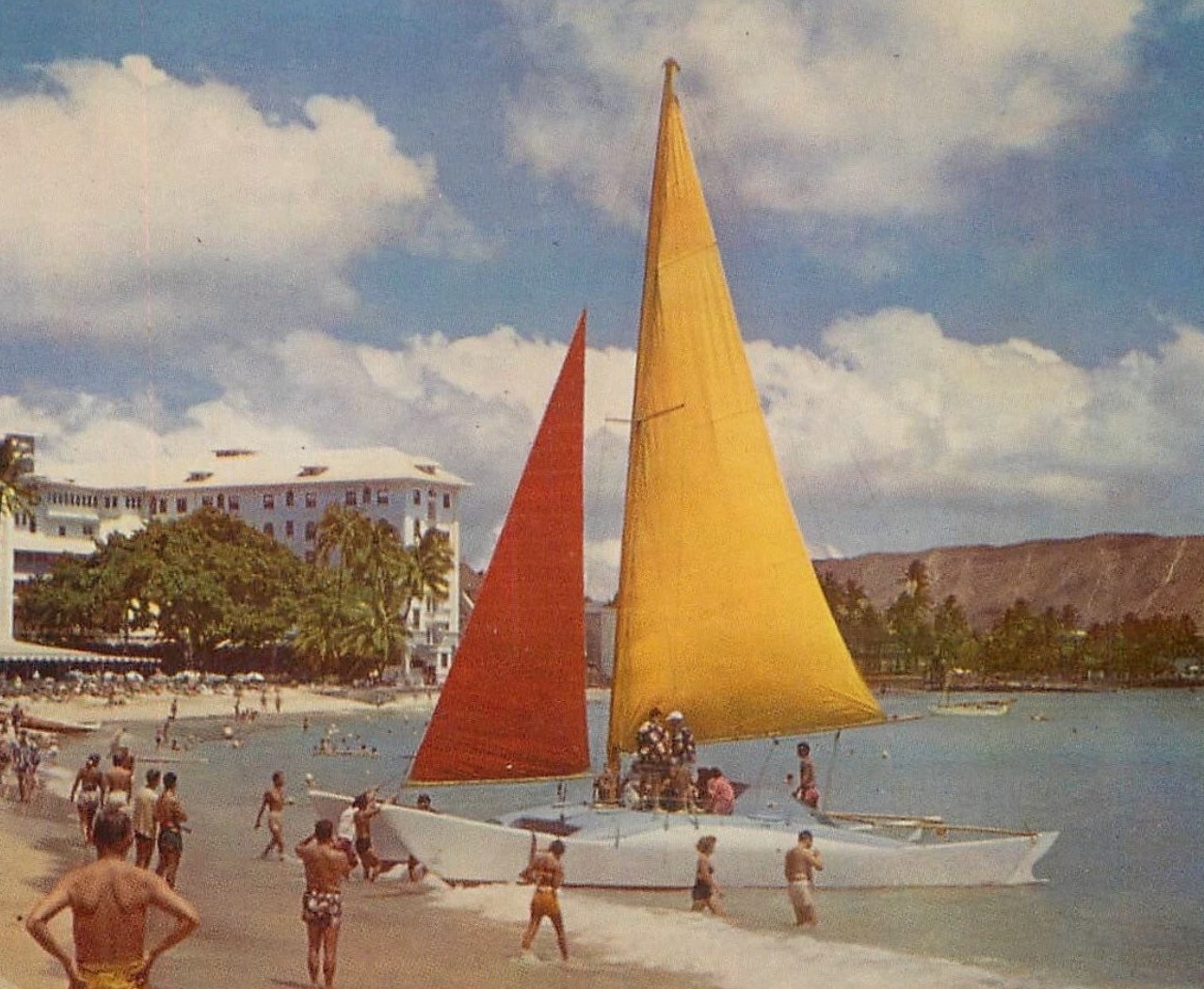
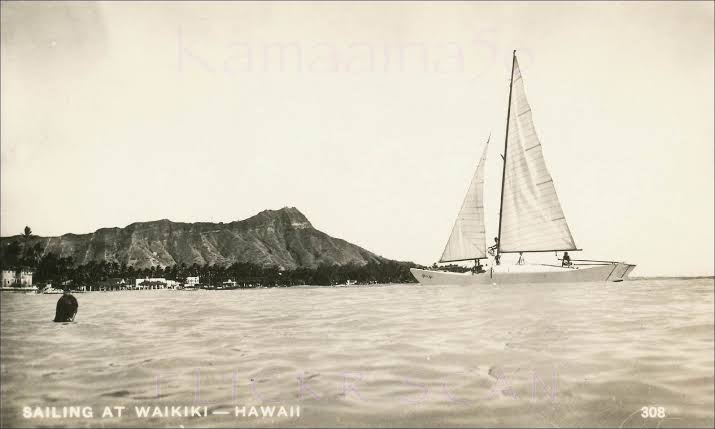
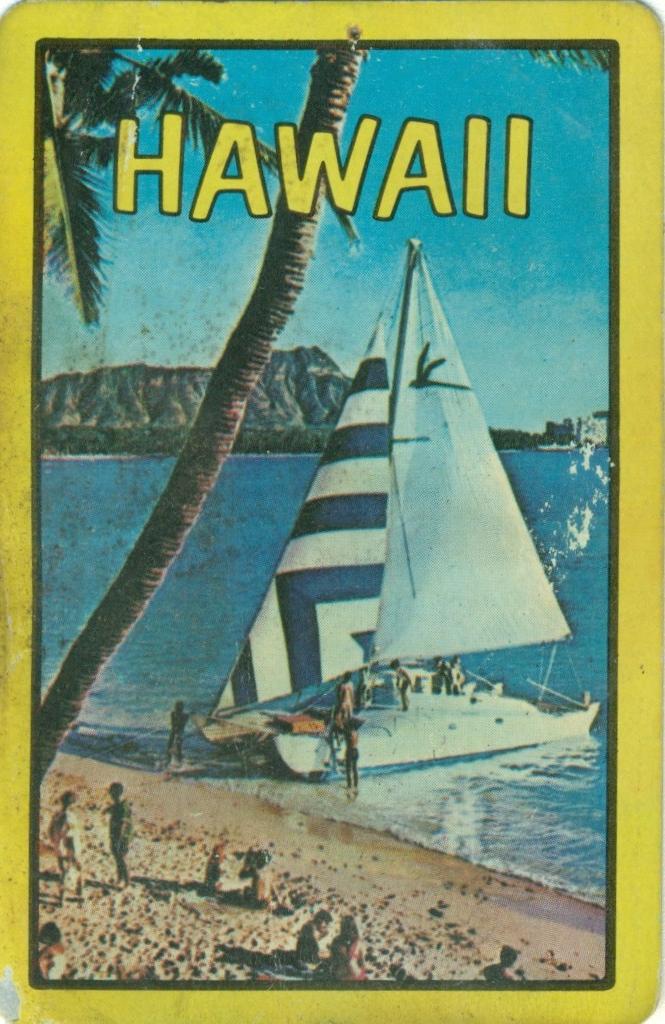
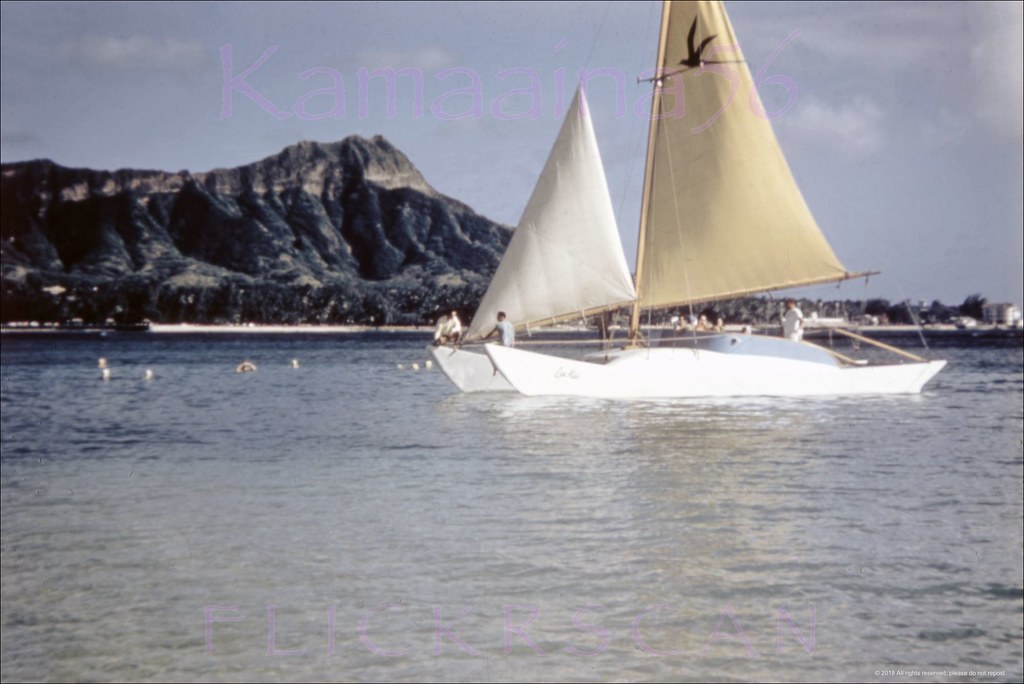
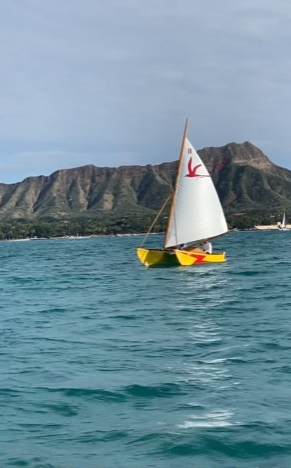
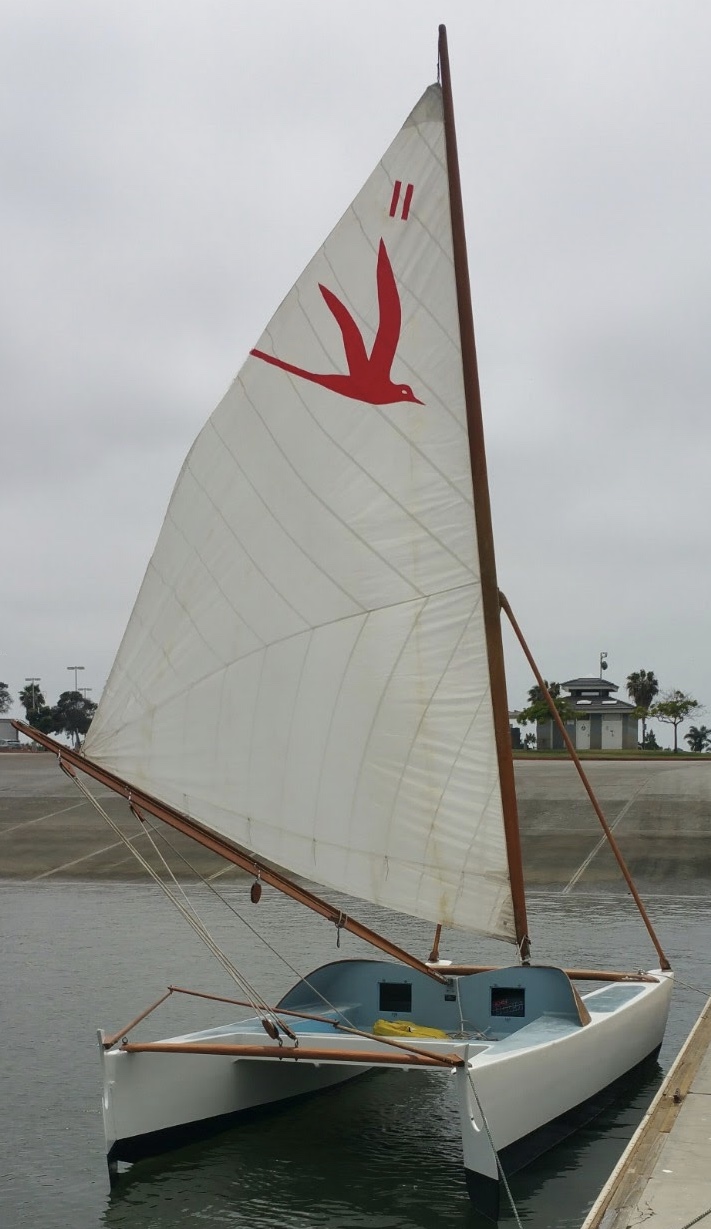
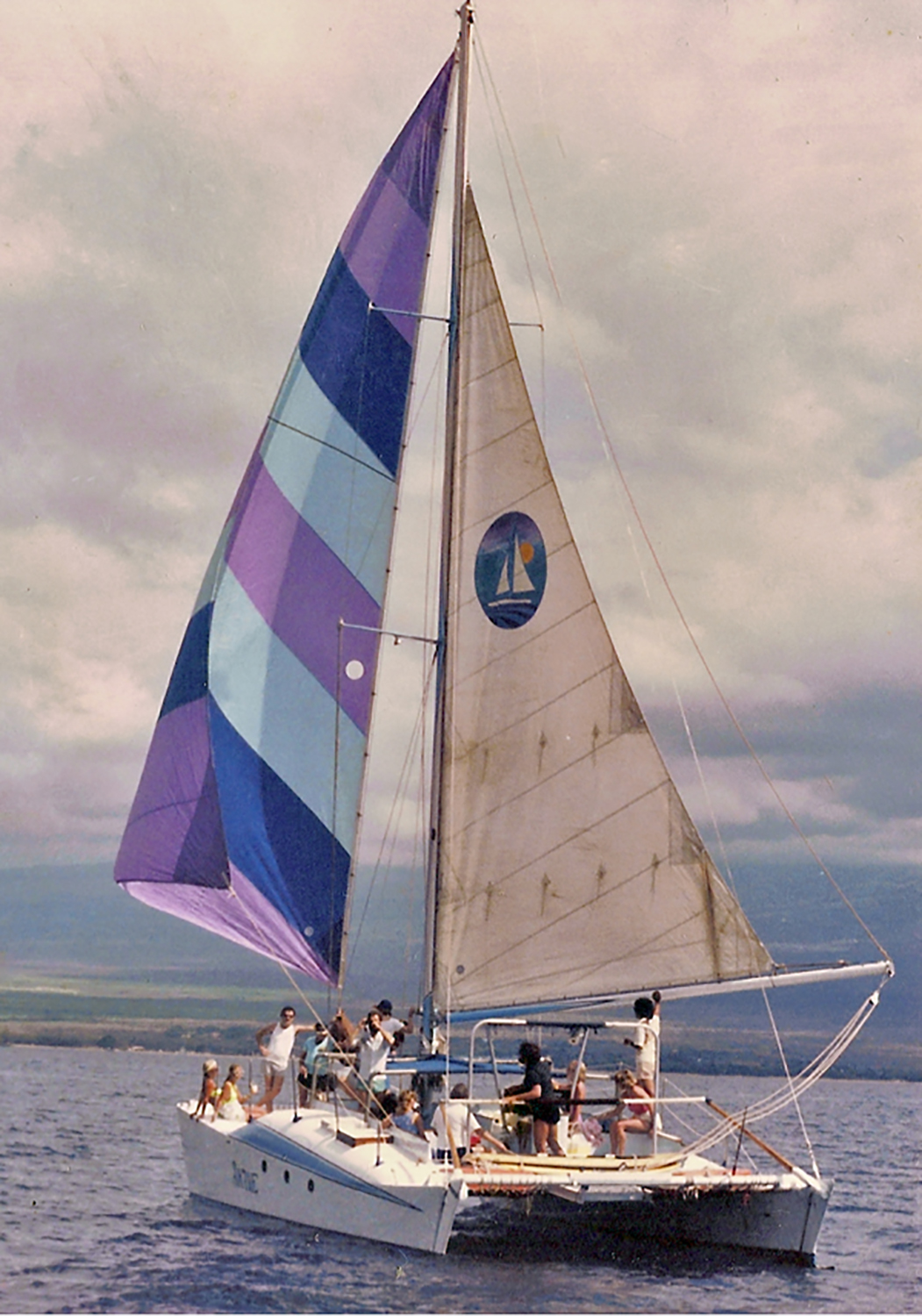
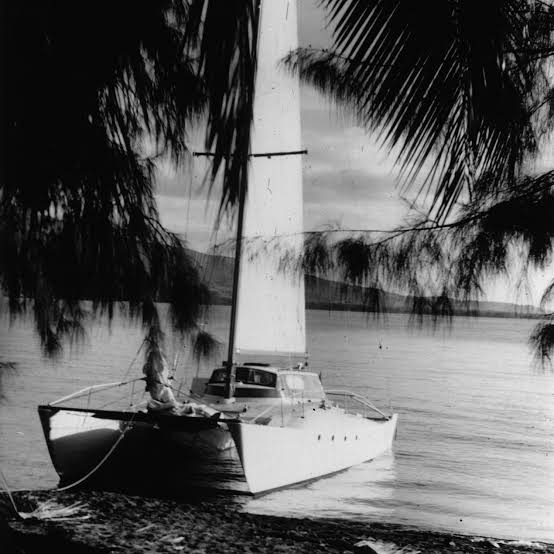
Fascinated by native outrigger canoes he designed a catamaran that was named Manu Kai (“Sea Bird”) and built by Alfred Kumalae and Rudy Choy. Built in wood on a beach at a cost of $4000 in 1947 she started the fashion for fast day sailing beach catamarans based at Waikiki Beach that continues today.
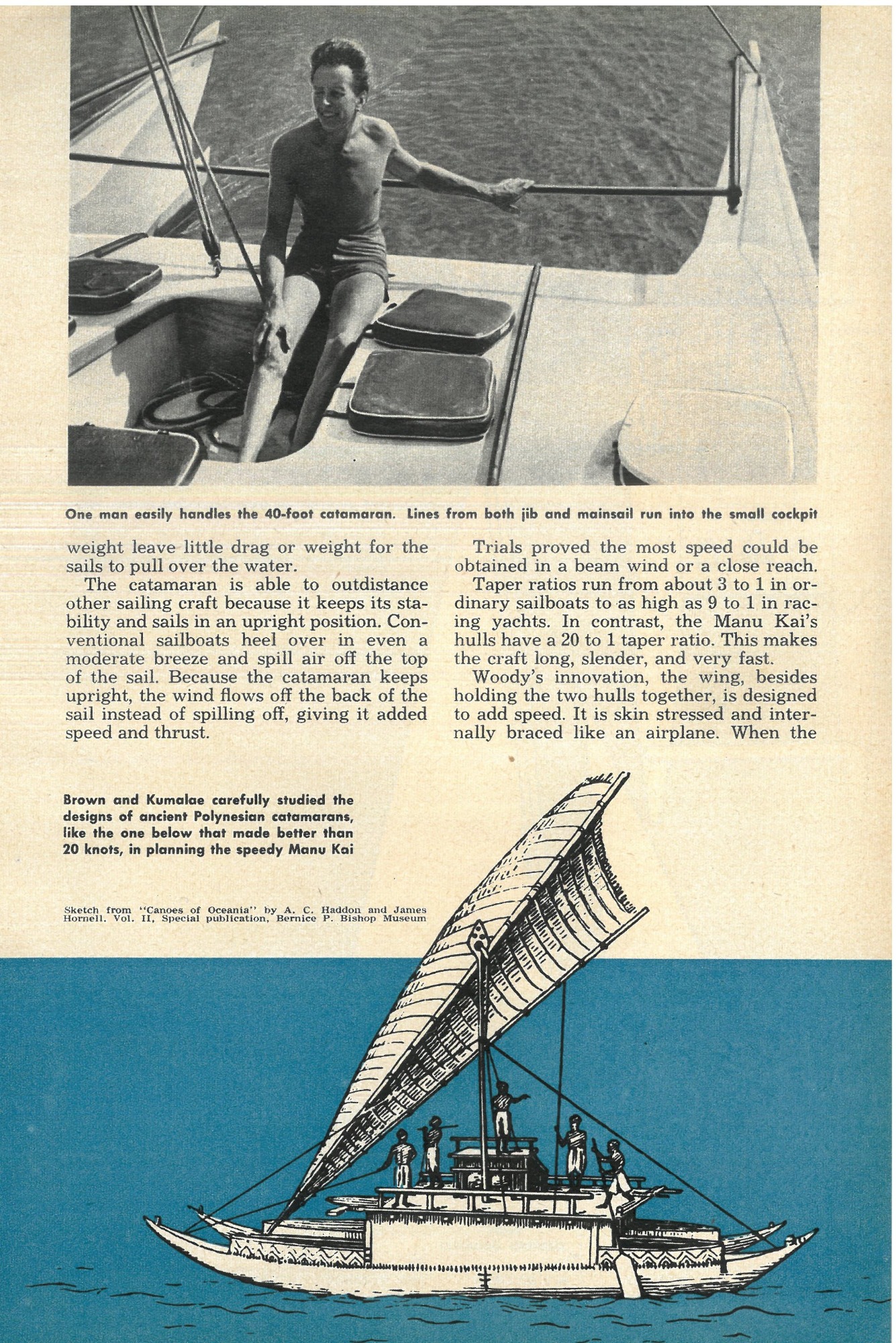
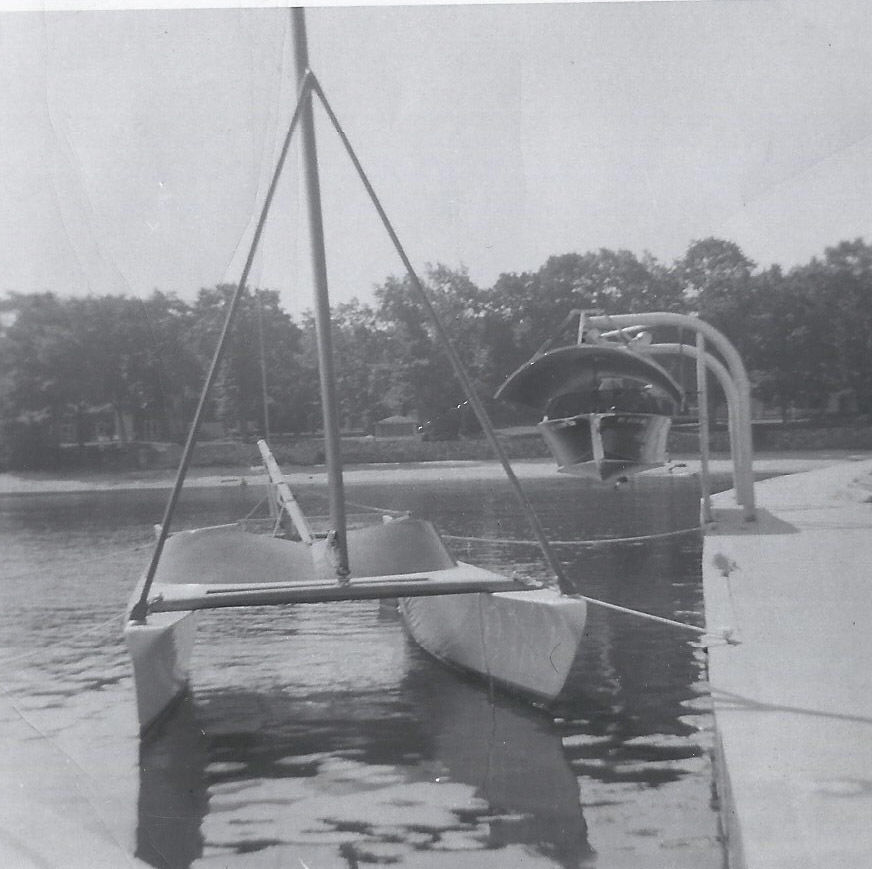
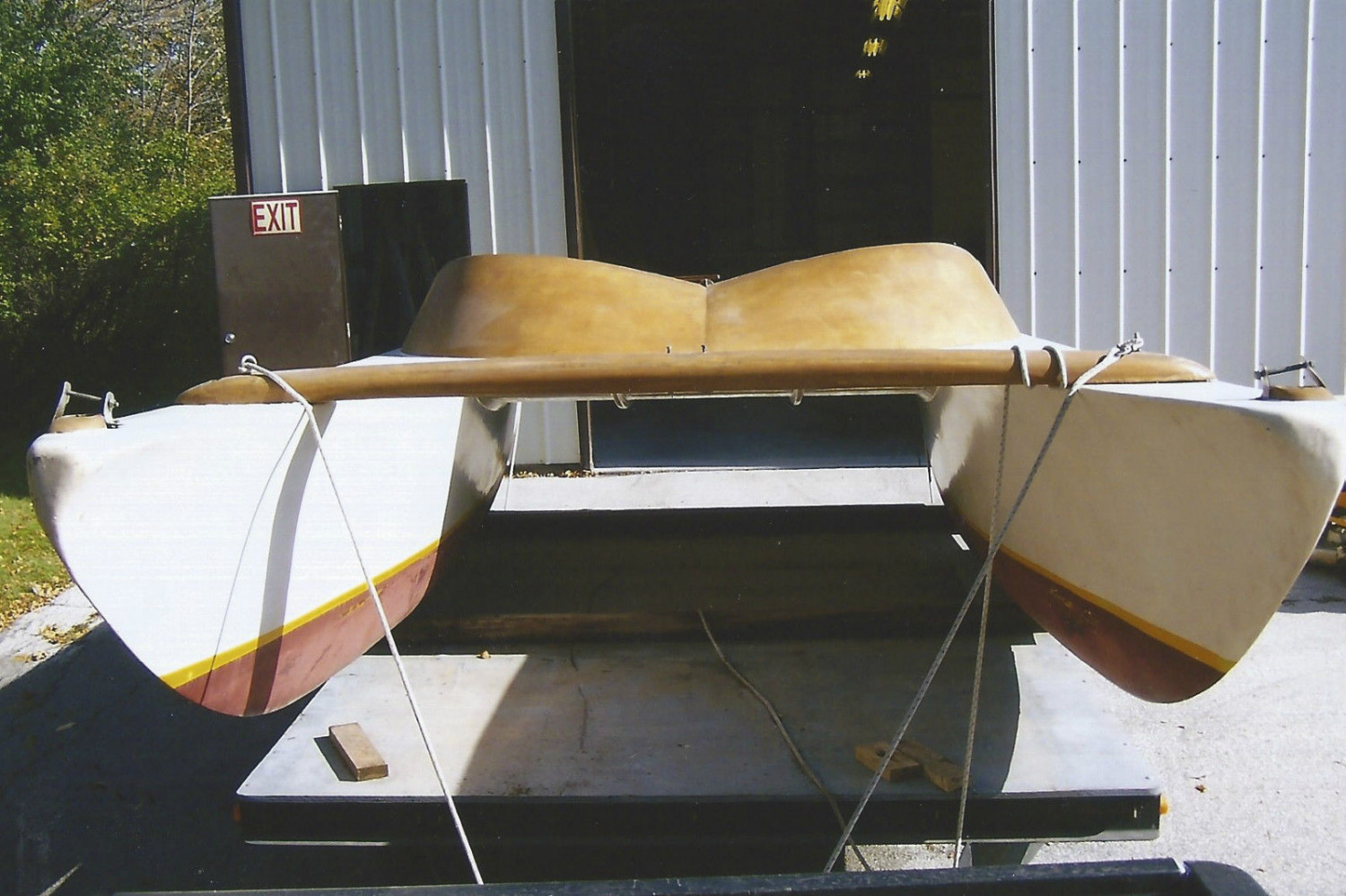
Manu Kai set a whole new style Brown was an experienced pilot and brought the aircraft technology he knew well into the project. Kumalae was an experienced boat builder and the construction of a monocoque was very well engineered. At 40 foot long her weight of only 1.5 tons was remarkable. She was 13 feet in beam and had hulls of a rounded V section with a flat outside, the theory being to gain lateral resistance by the shape of the hulls. Operating off Hawaii she was very fast indeed although even at the time it was noted by Bob Harris that she was slow in stays.
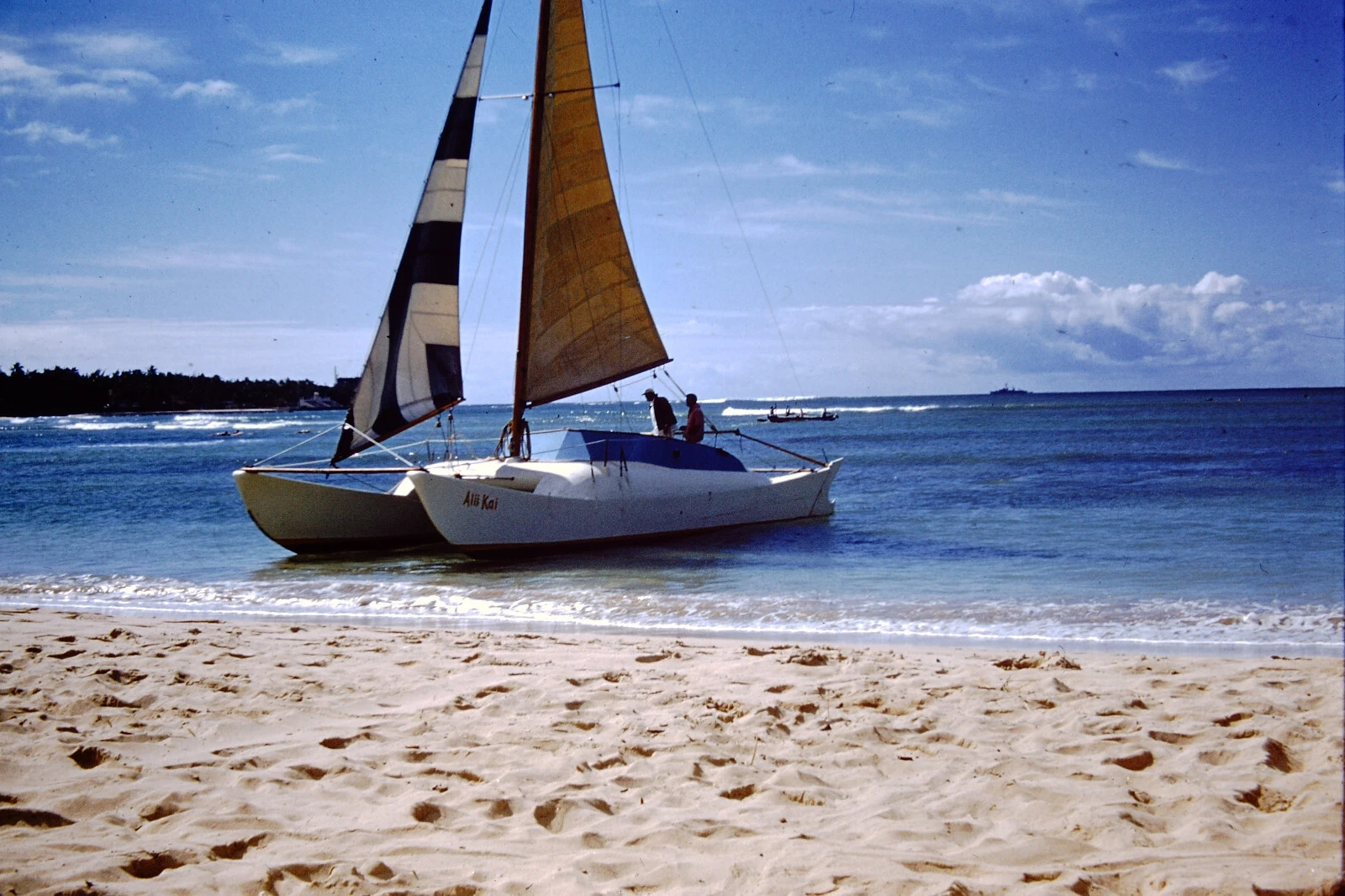
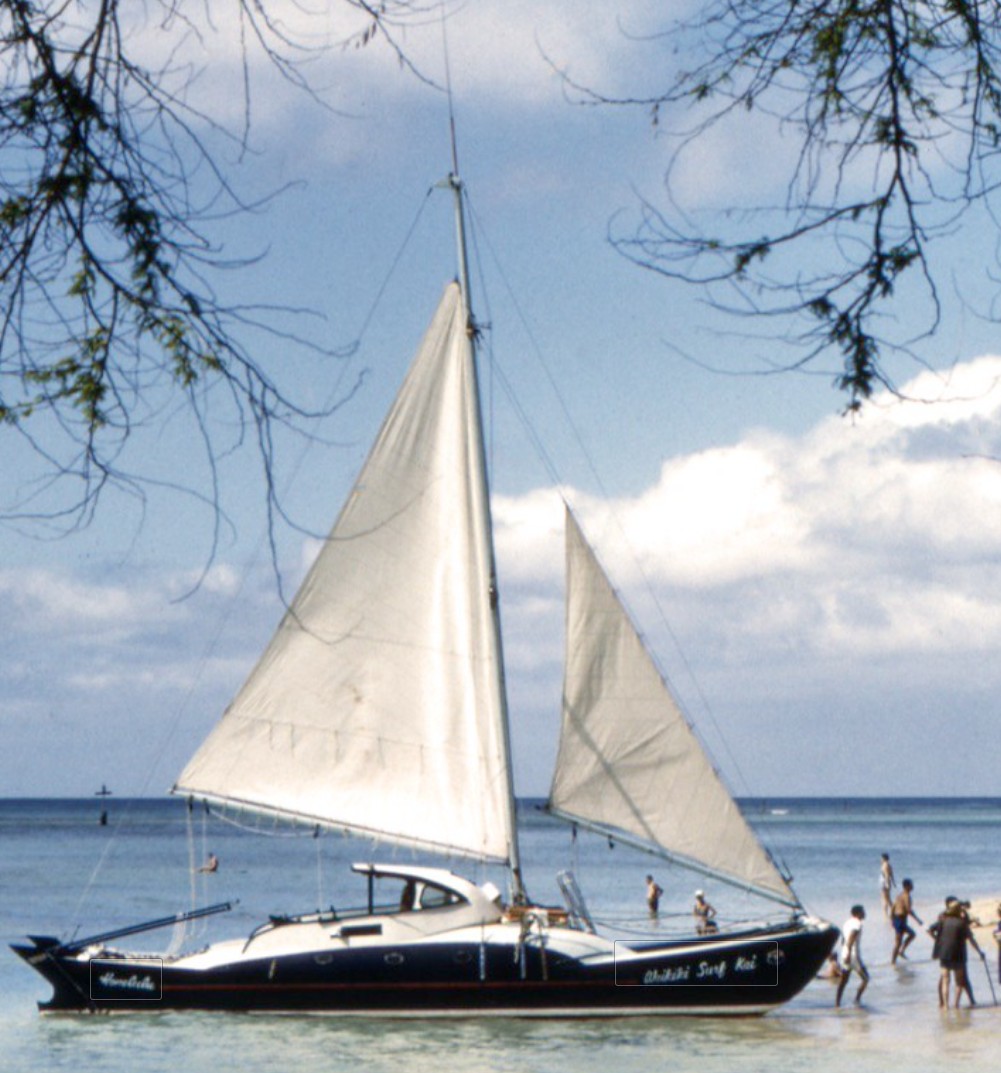
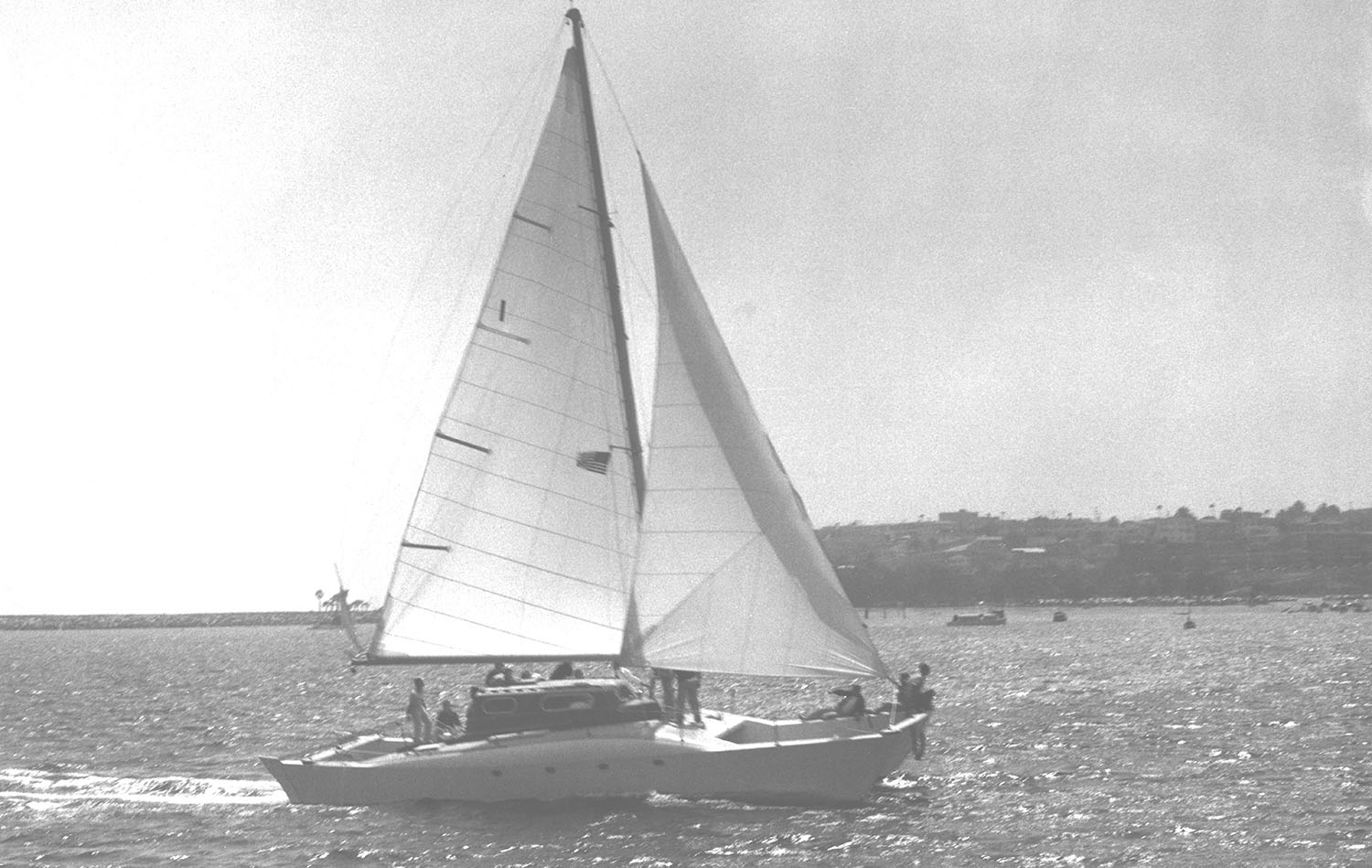
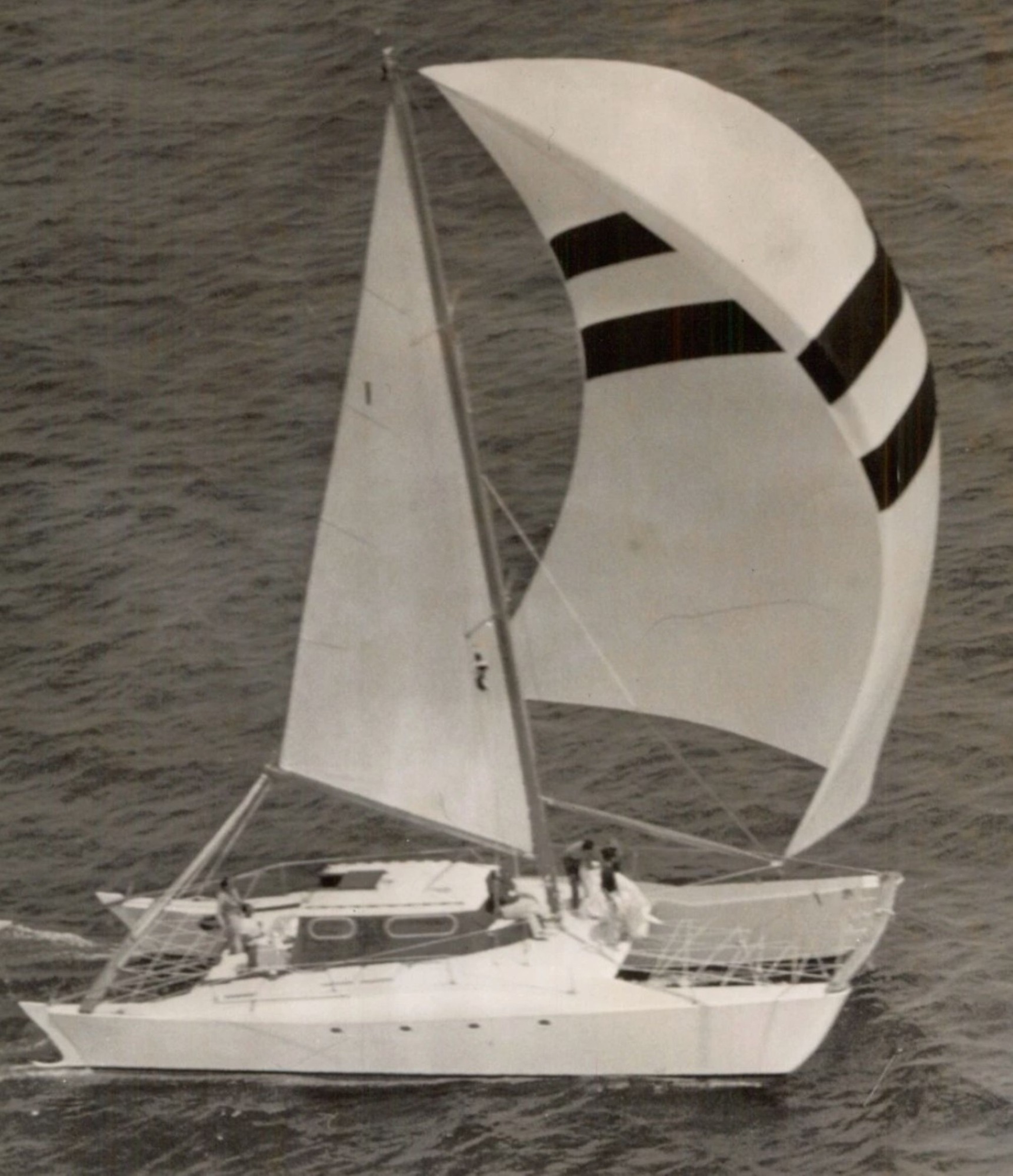
As well as Brown, Rudy Choy and Alfred Kumalae gained a lot of sailing and building experience with Manu Kai in 1947 and second version called Alii Kai. This led them to design and build another version called Waikiki Surf in 1955 40 feet long and 13 foot beam. Cutter rigged with a bowsprit she was given more accommodation and equipped for longer ocean racing and cruising. Brown and Choy sailed her to Los Angeles but were refused entry to the Transpacific race from Los Angeles to Honolulu so the boat’s owner with another crew (Brown and Choy had to leave the boat) shadowed the race instead and finished fifth despite a stress crack in one of the hulls.
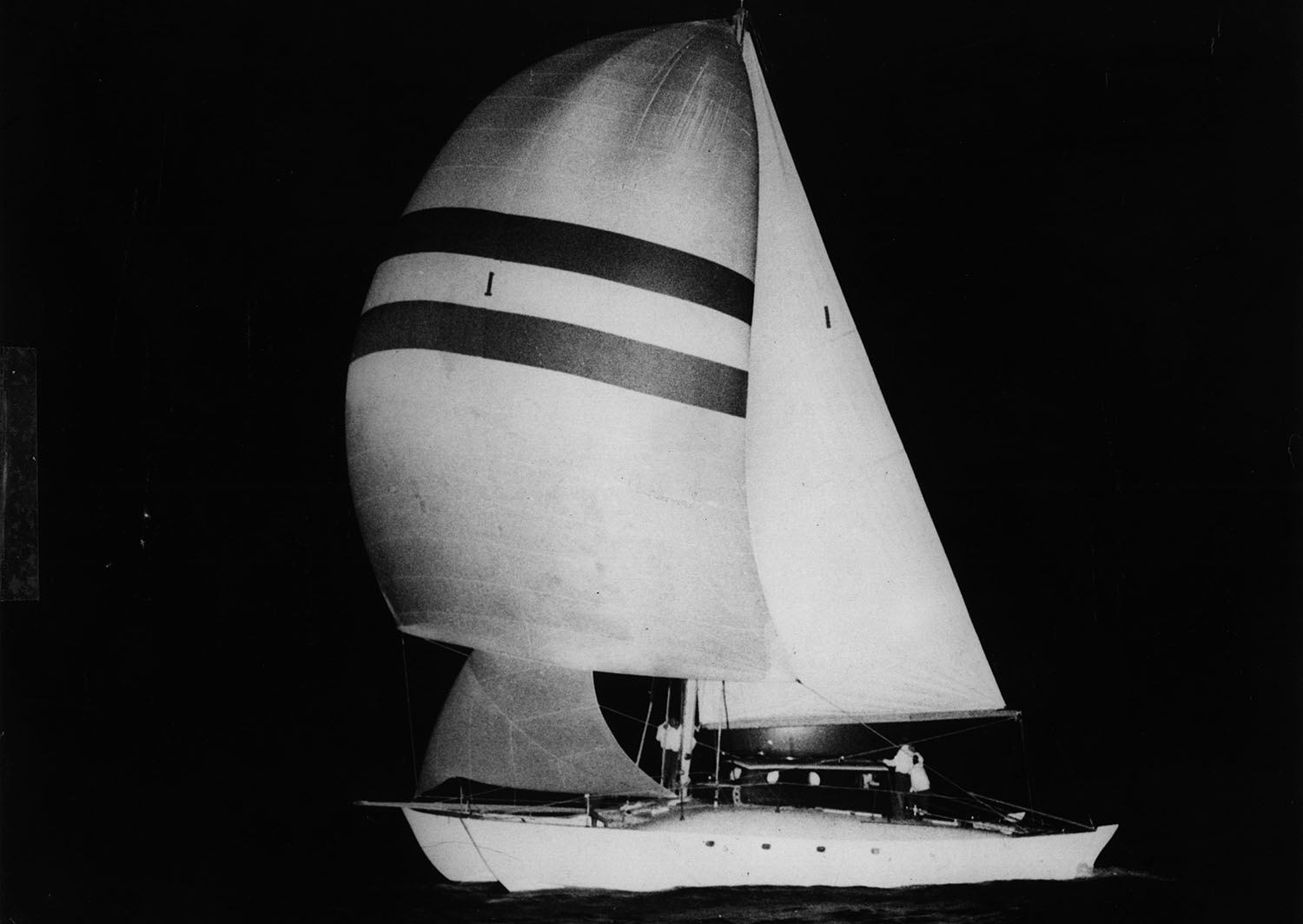
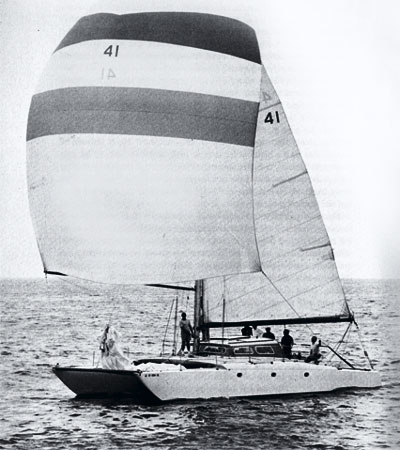
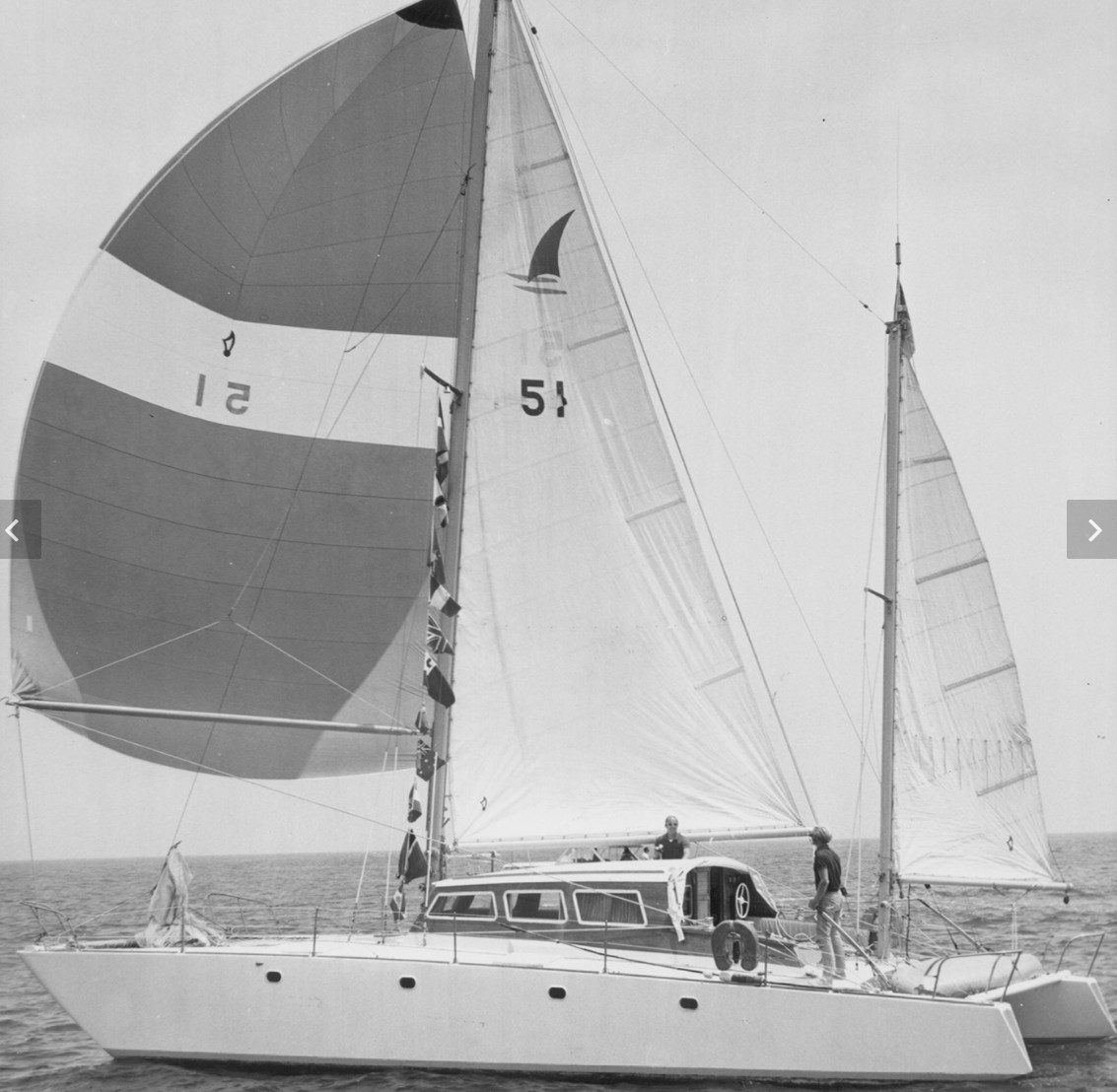
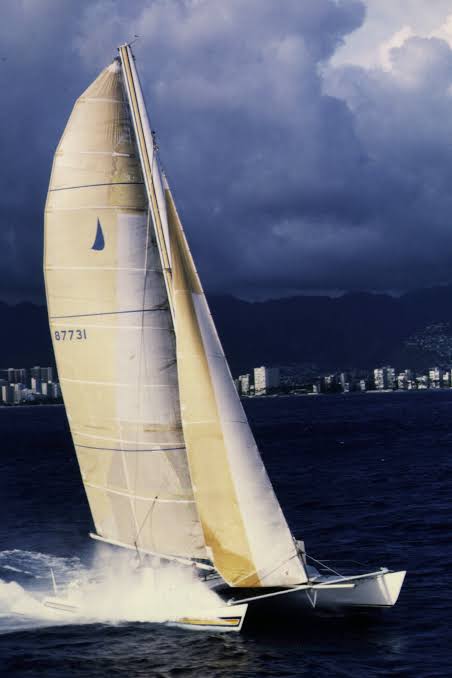
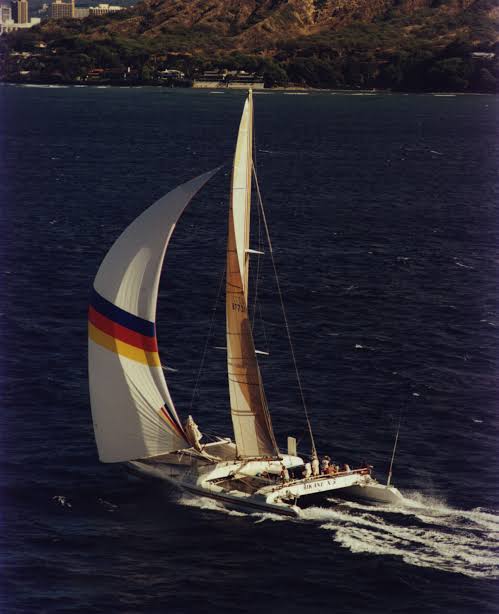
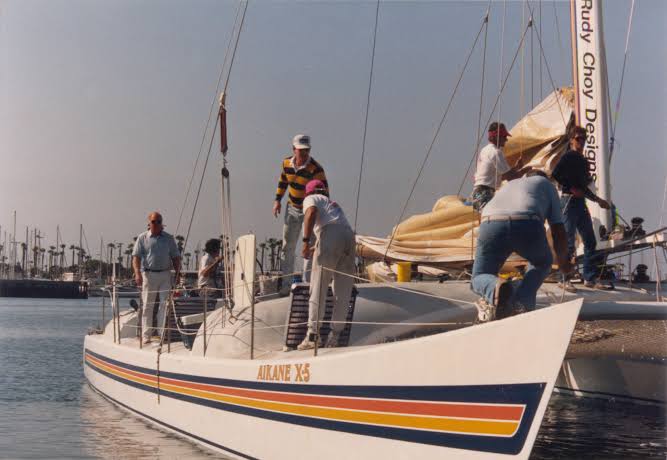
Choy was asked to design and build a larger ocean racer, and he came up with Aikane launched in April 1957. They took her in the Trans Pac race unofficially again as entry was refused and this time beating the fleet by 26 hours.
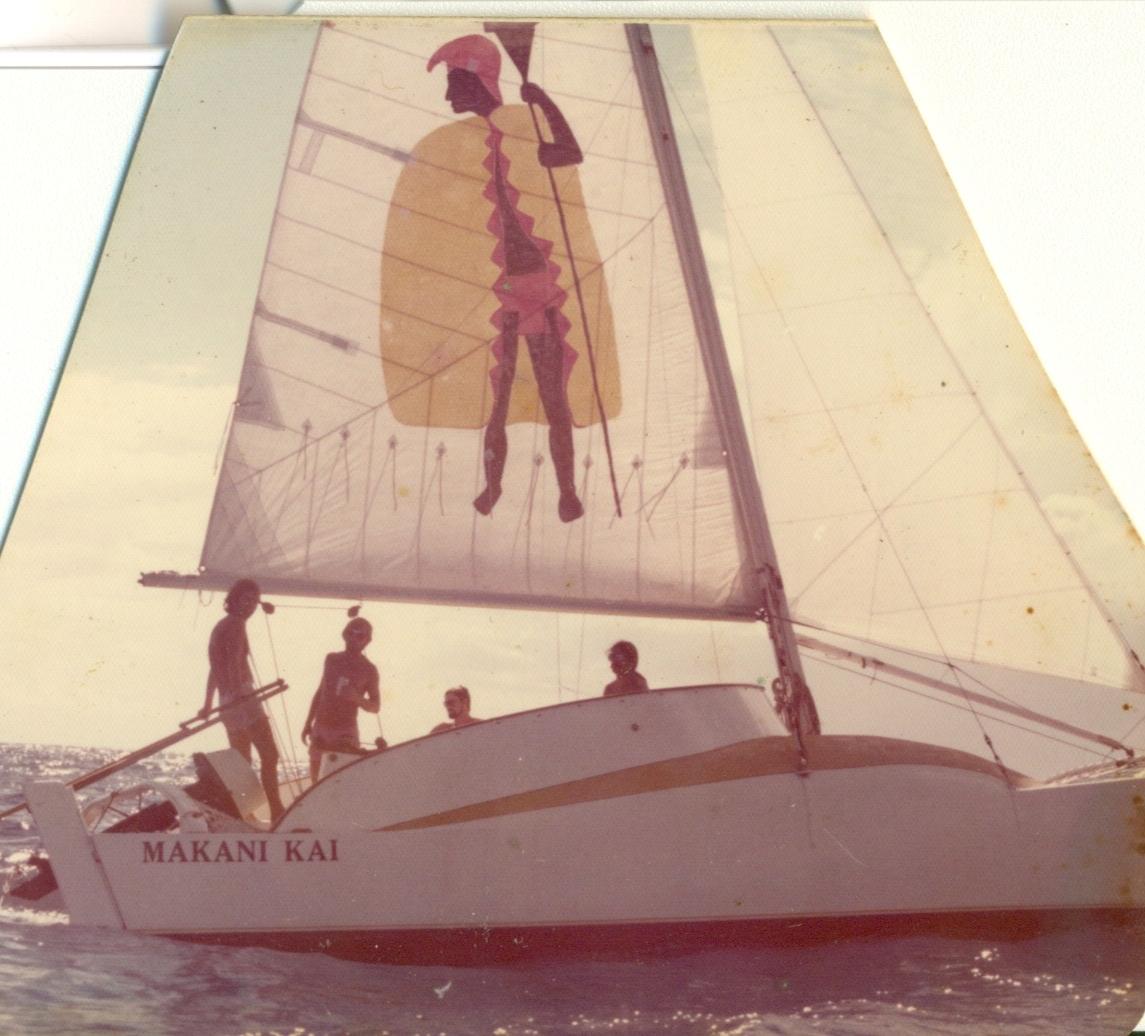
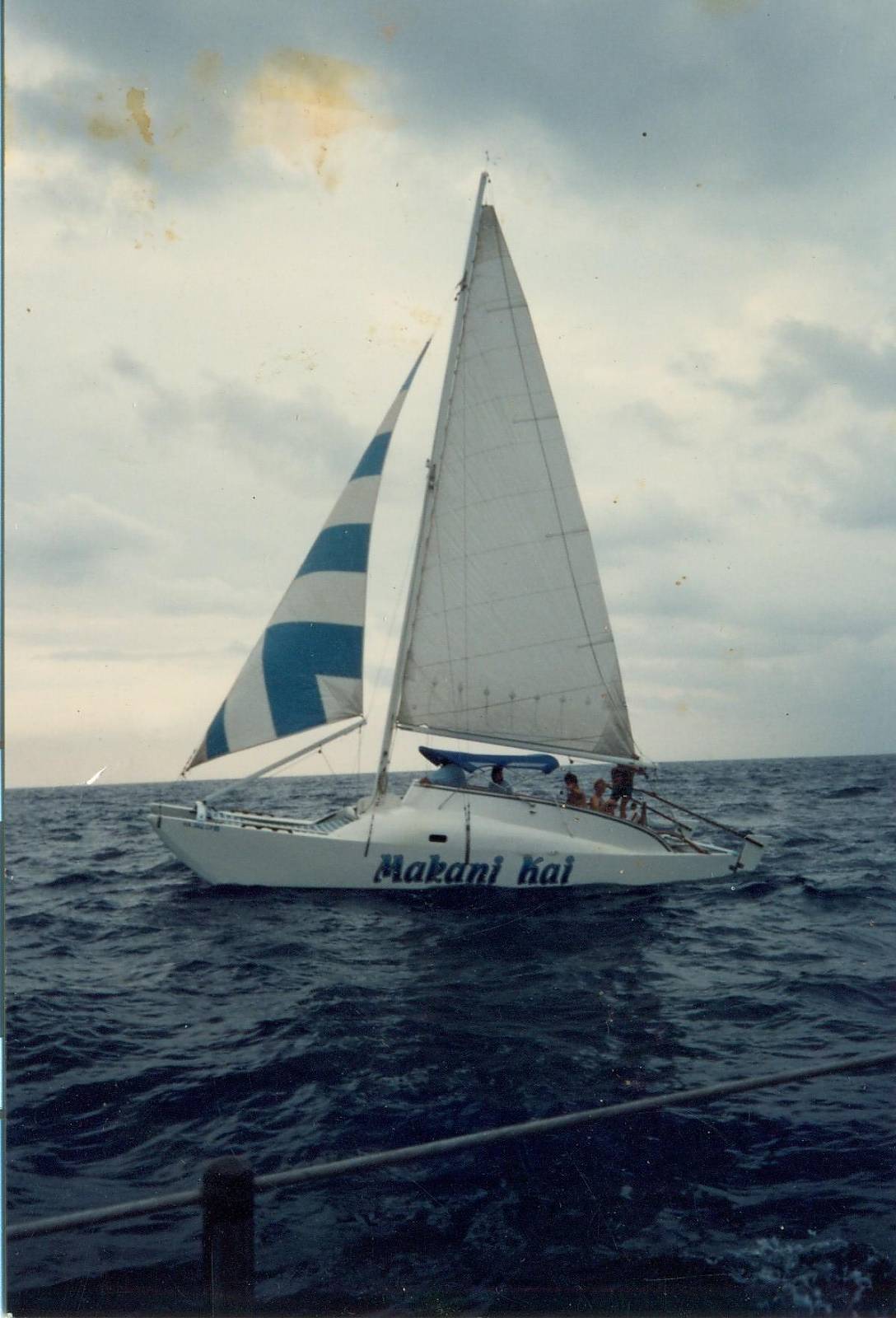
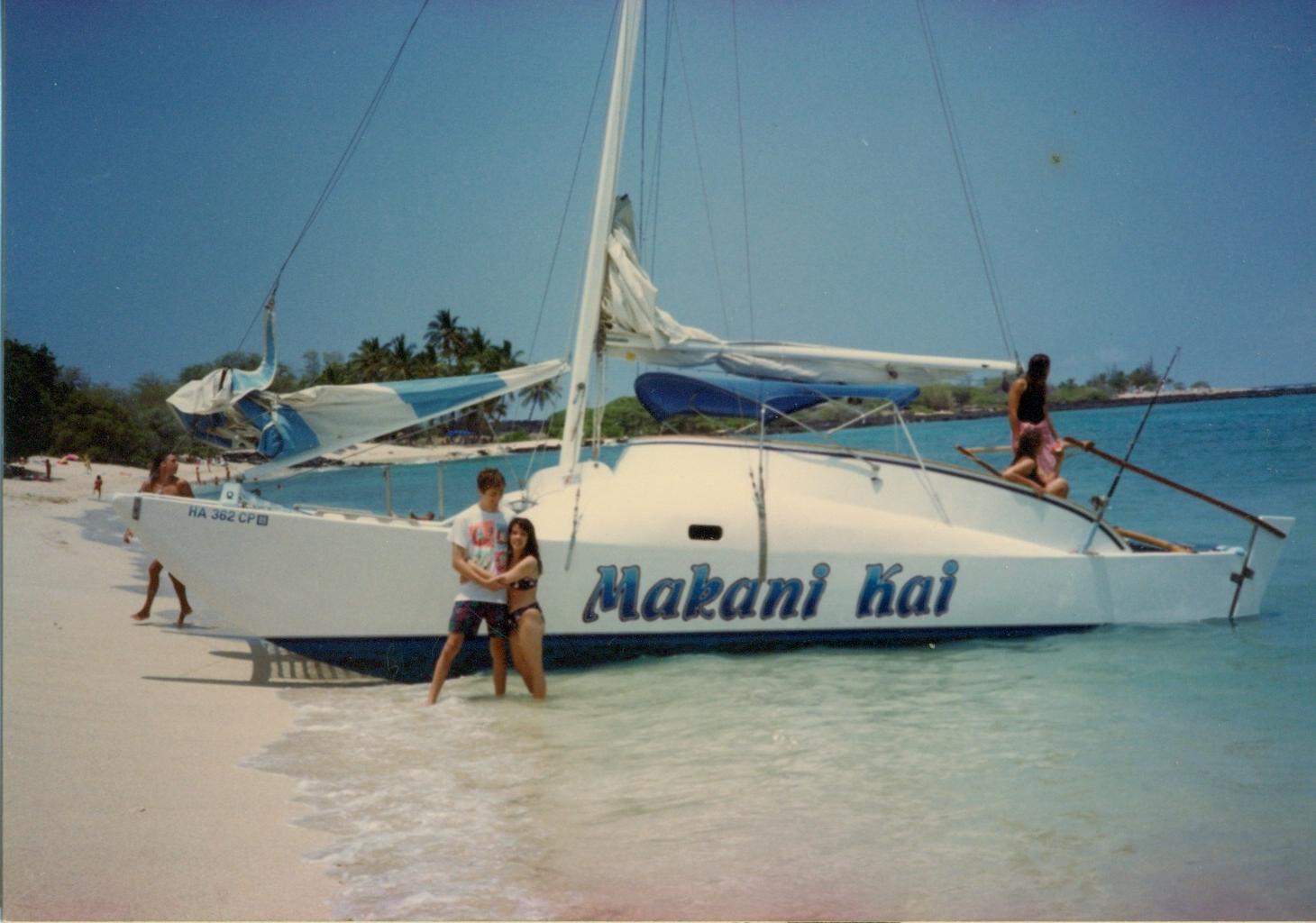
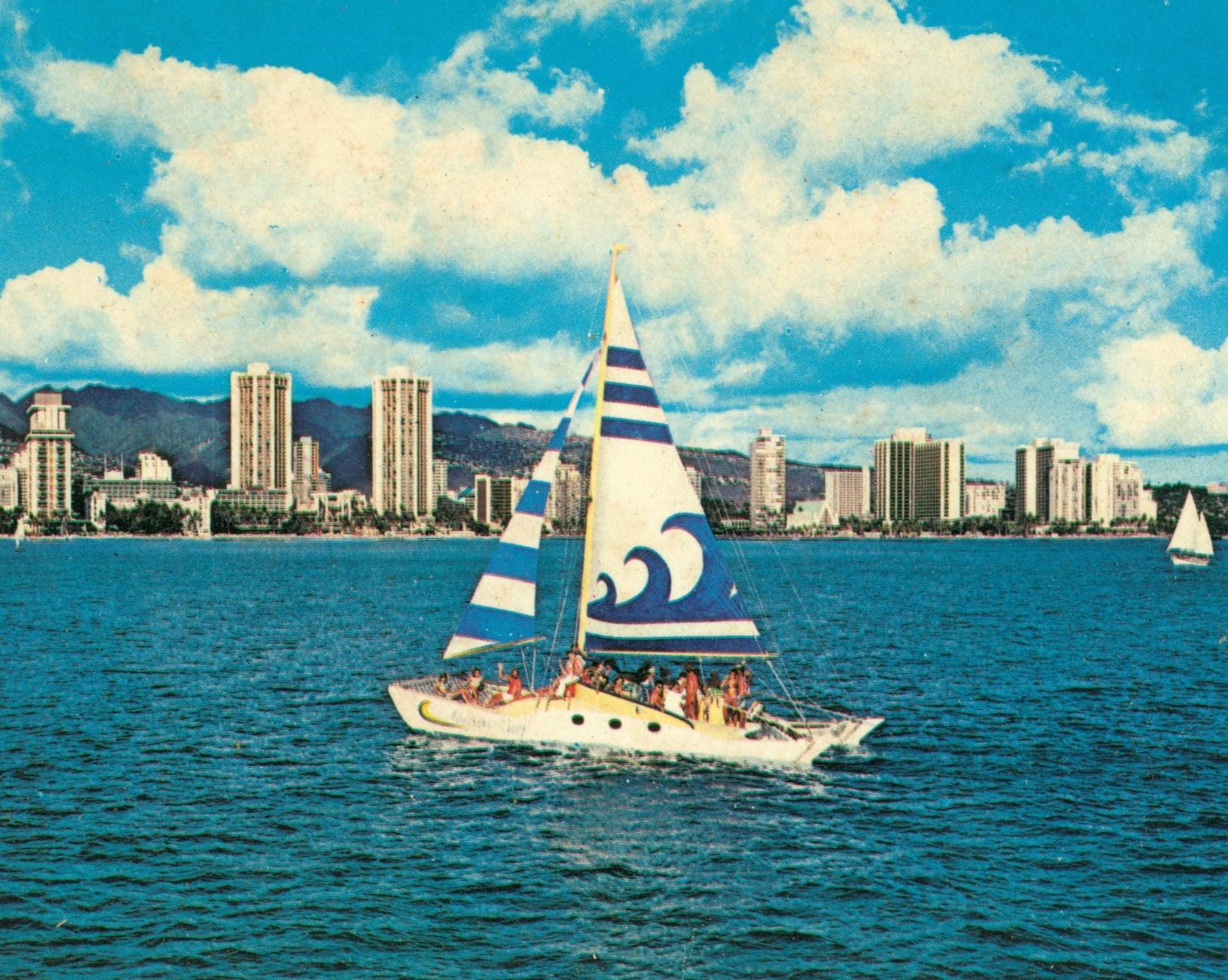
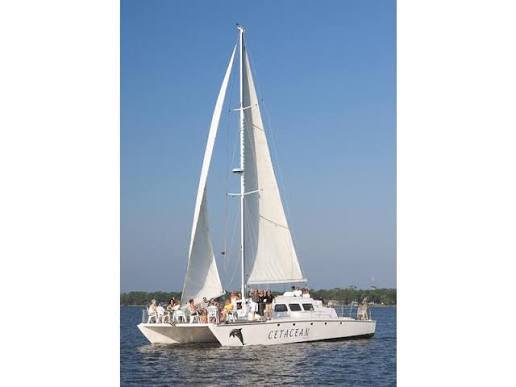
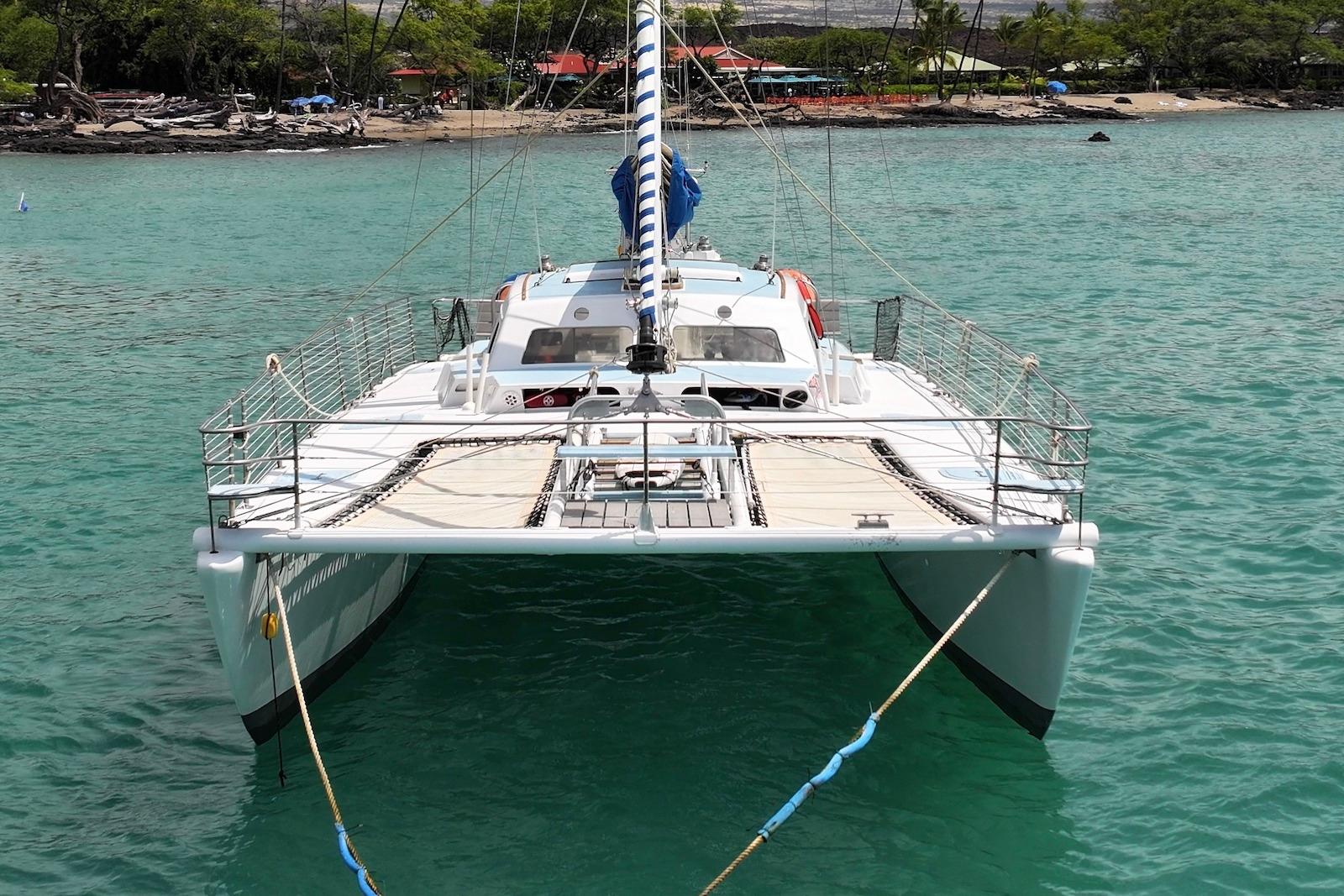
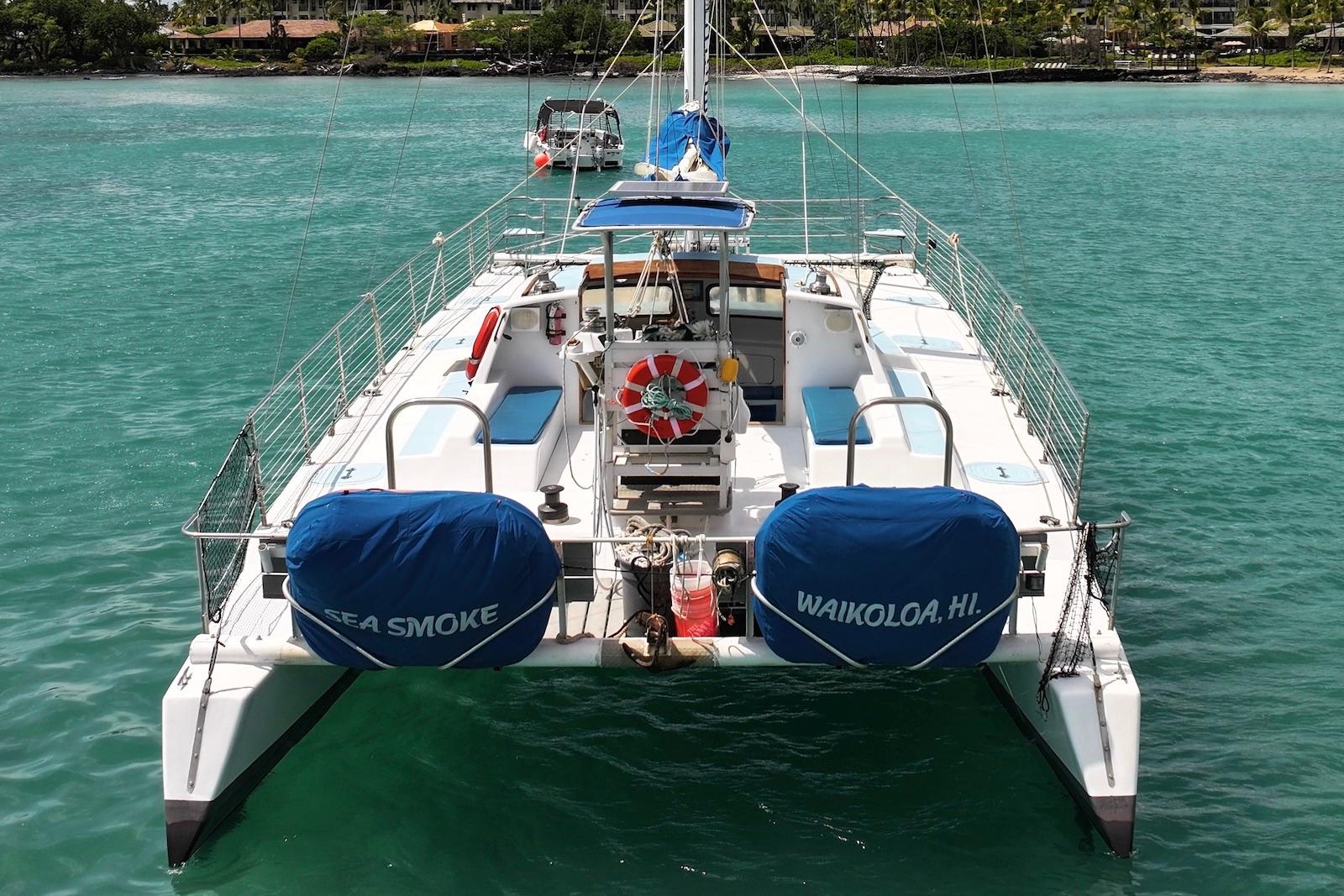
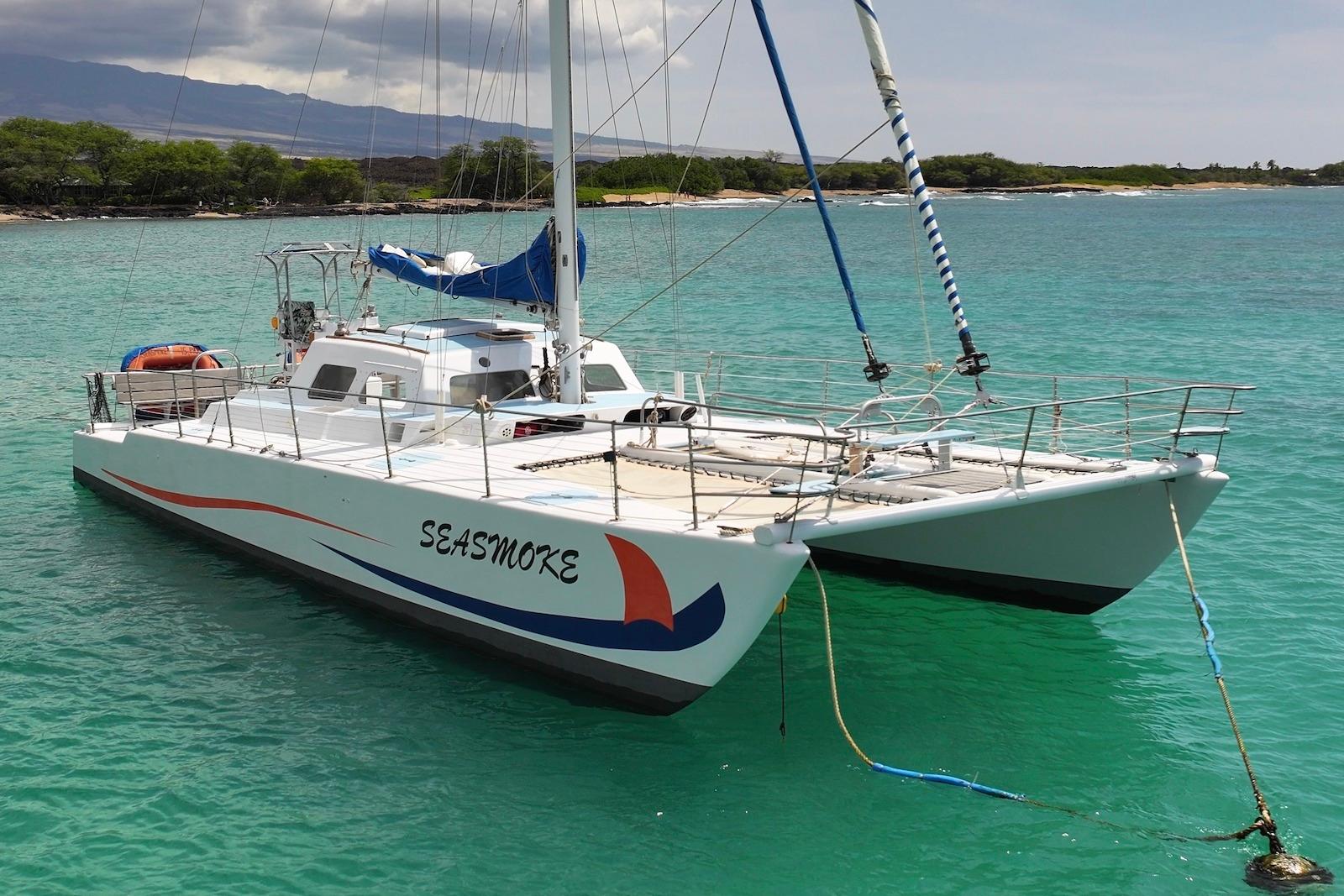
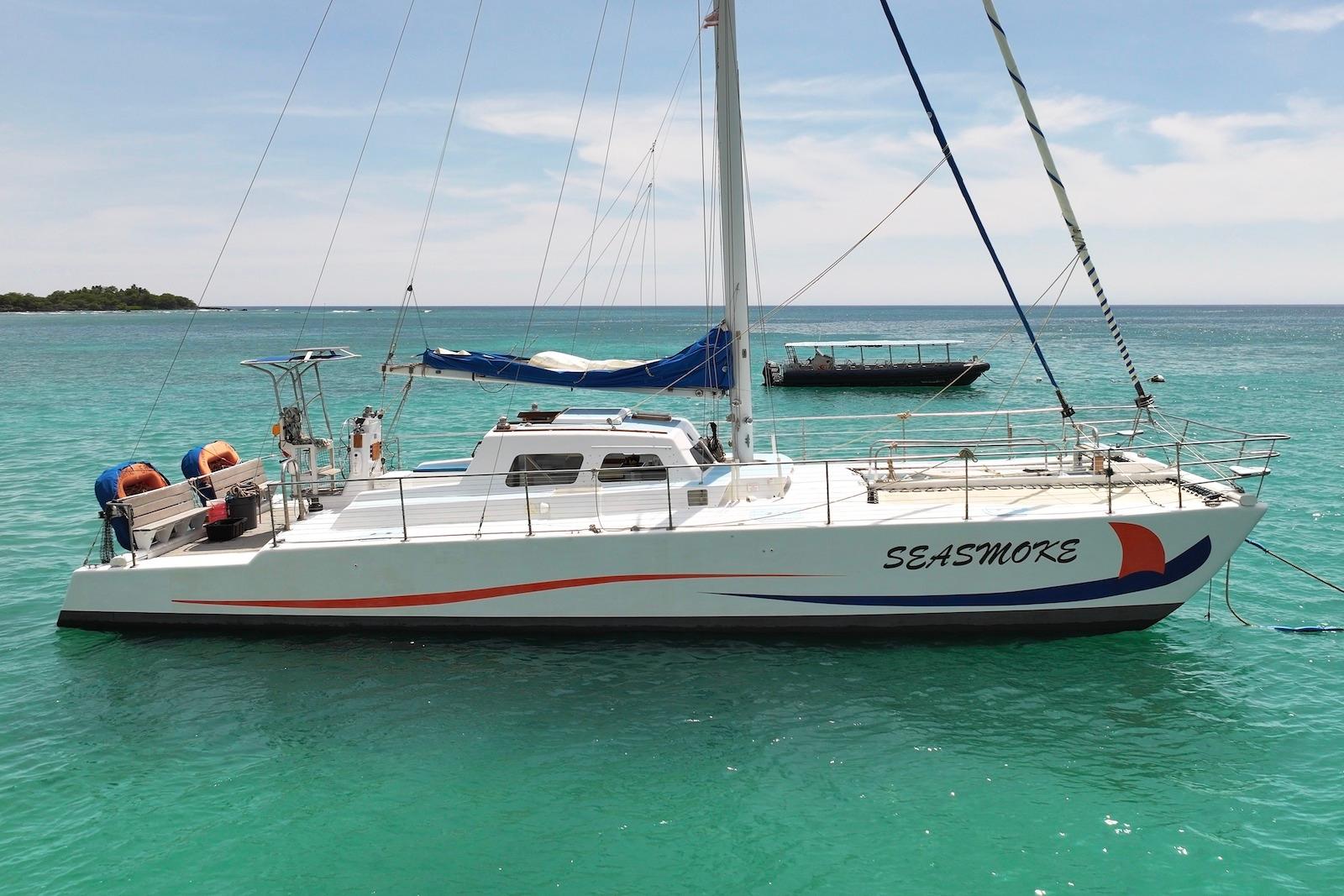
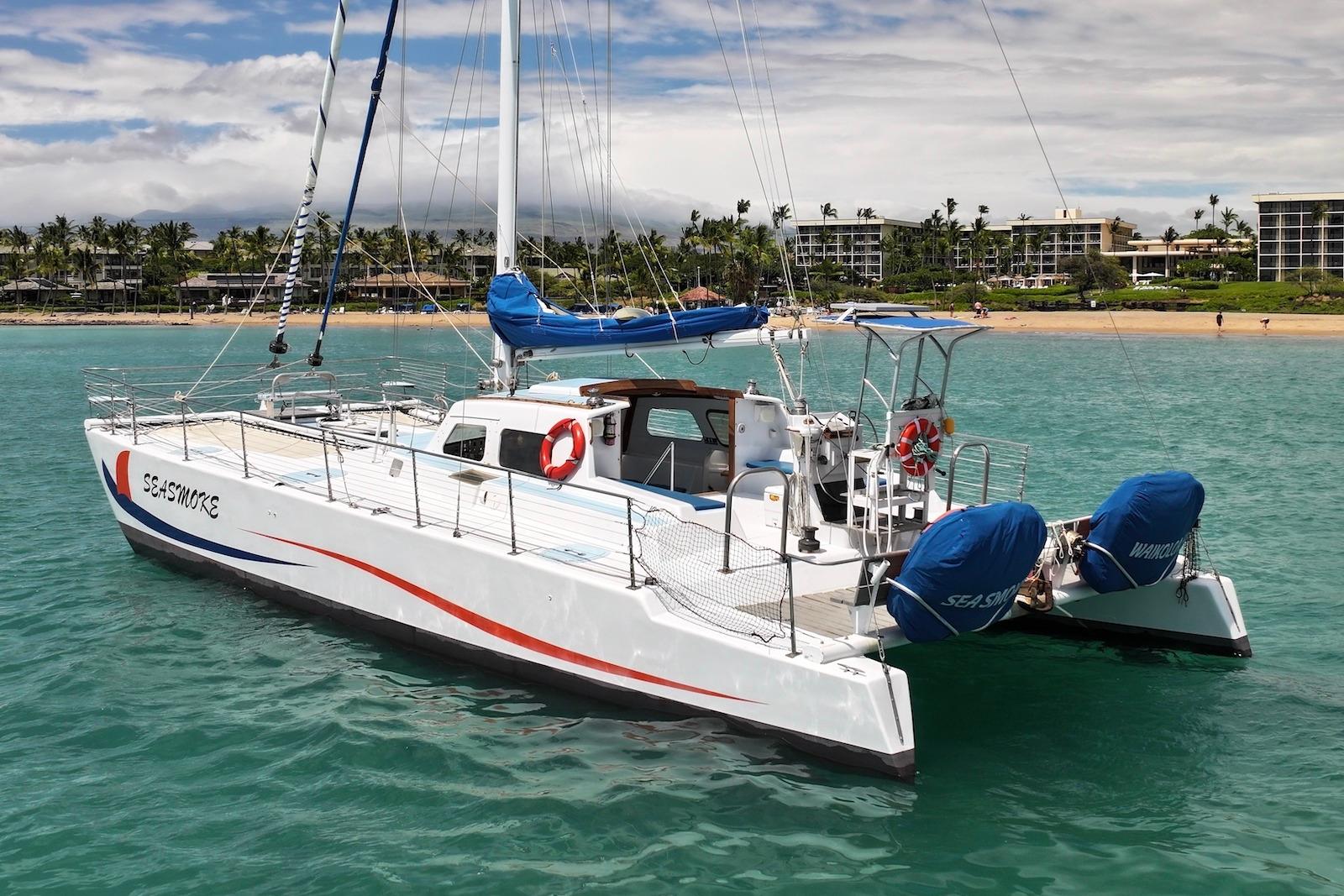
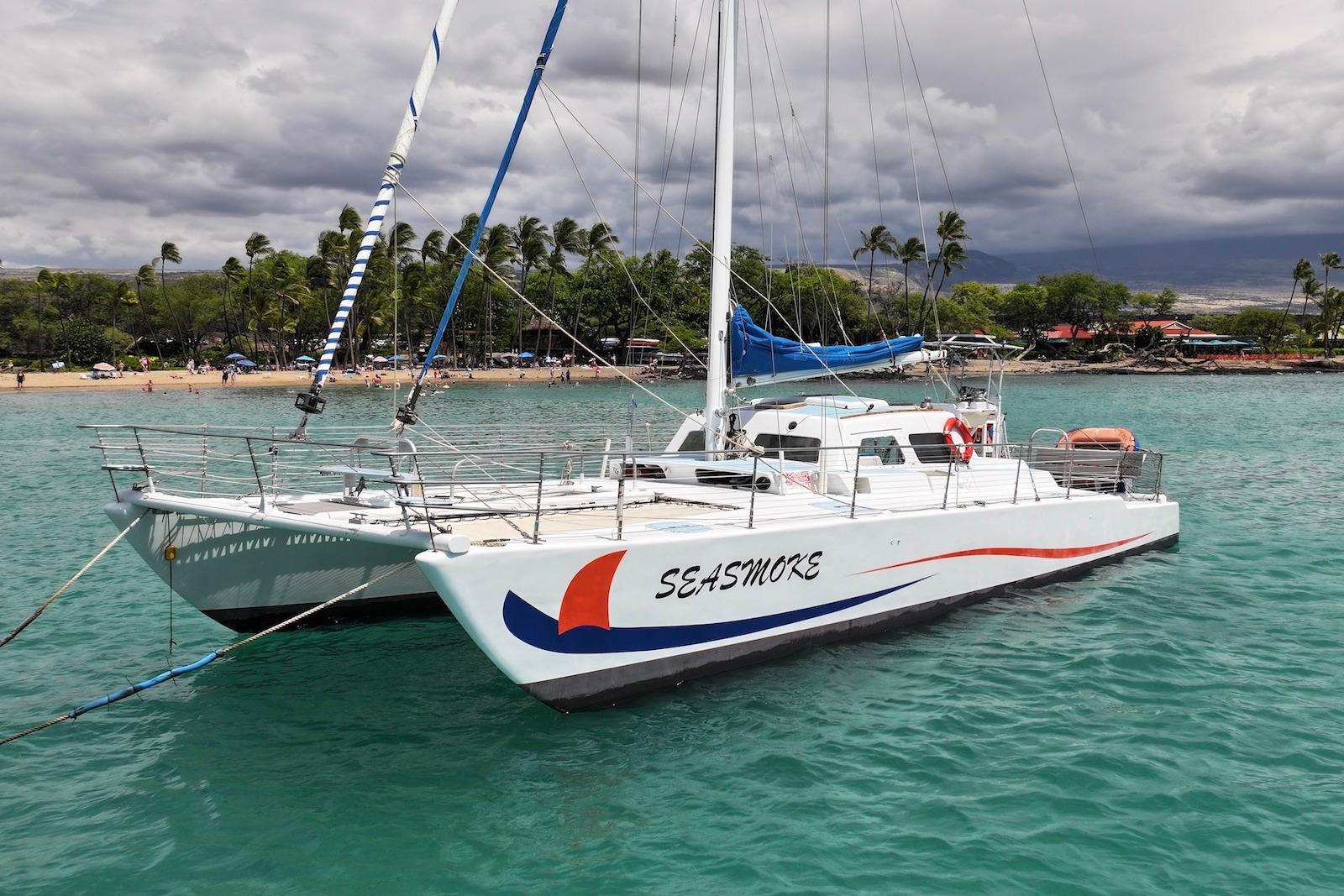
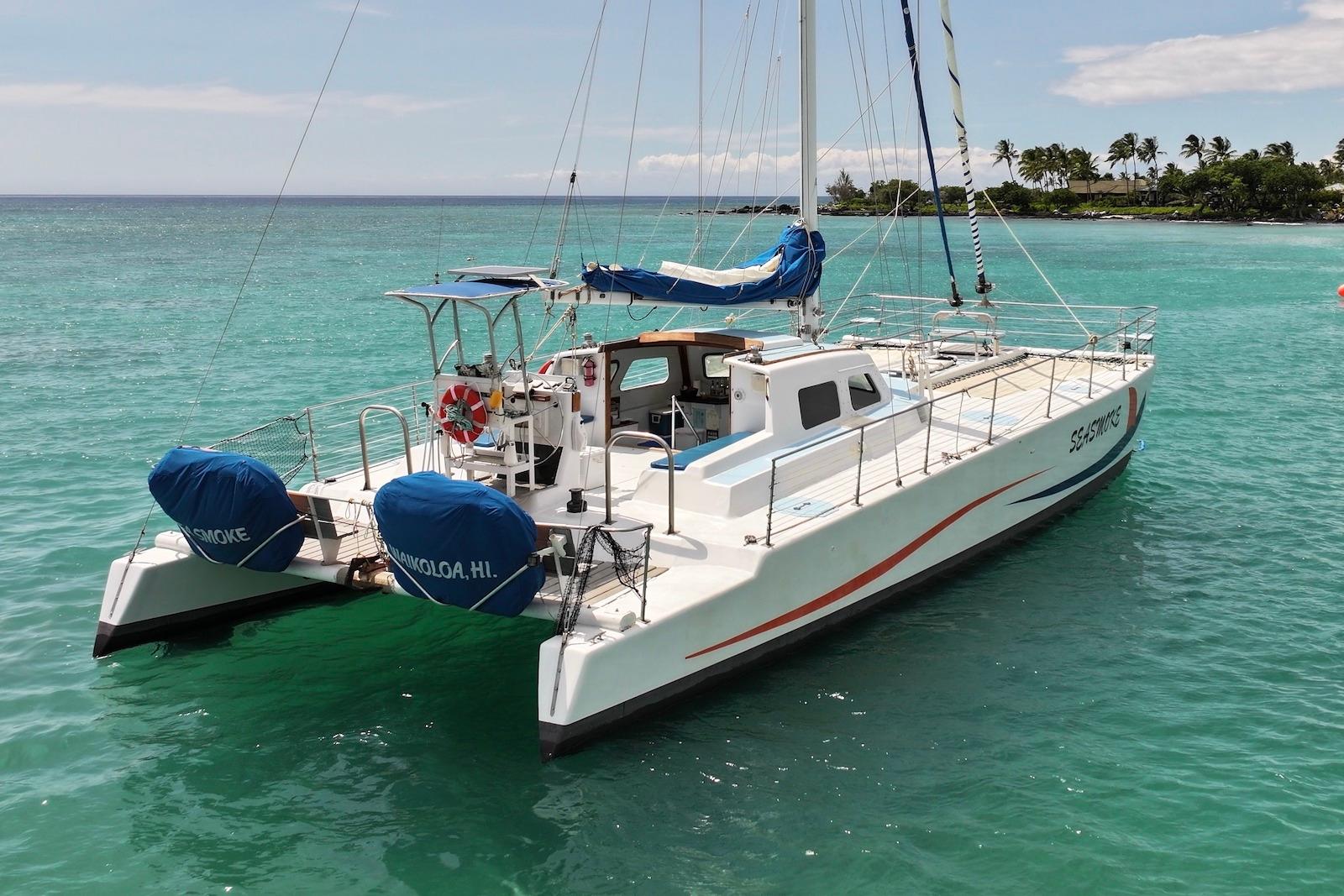
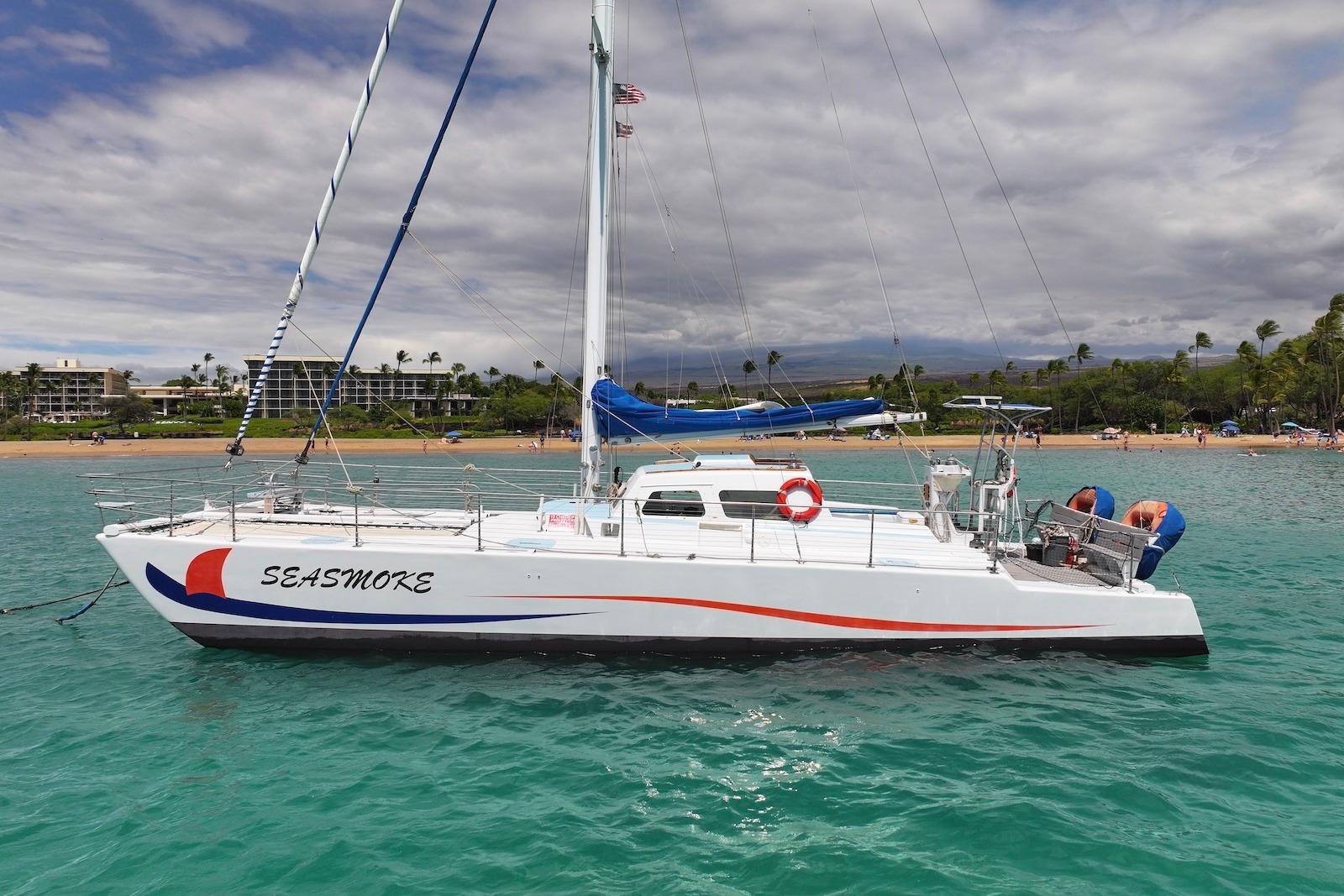
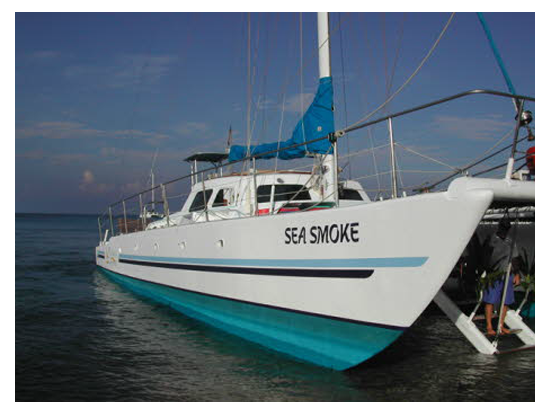
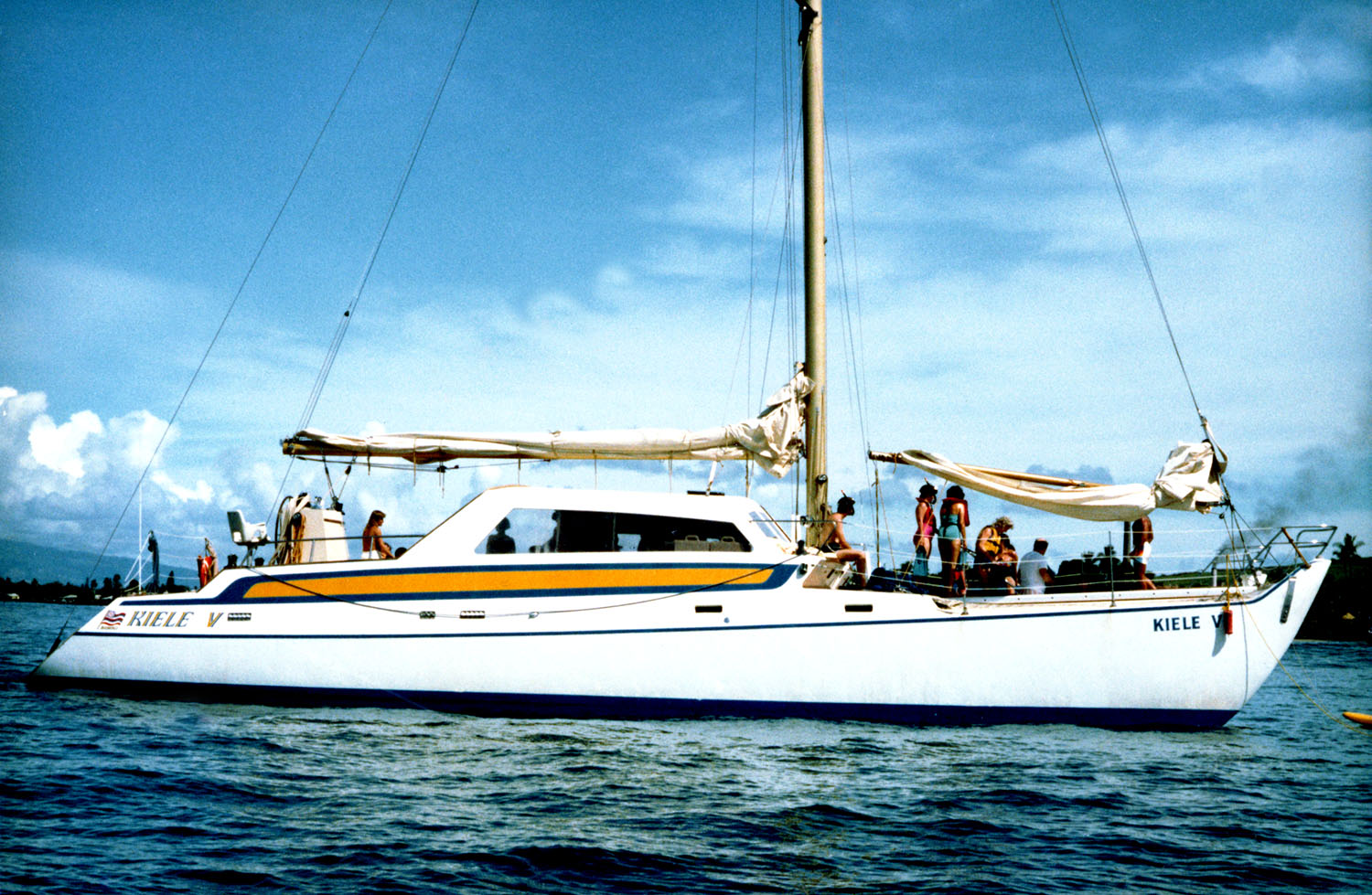
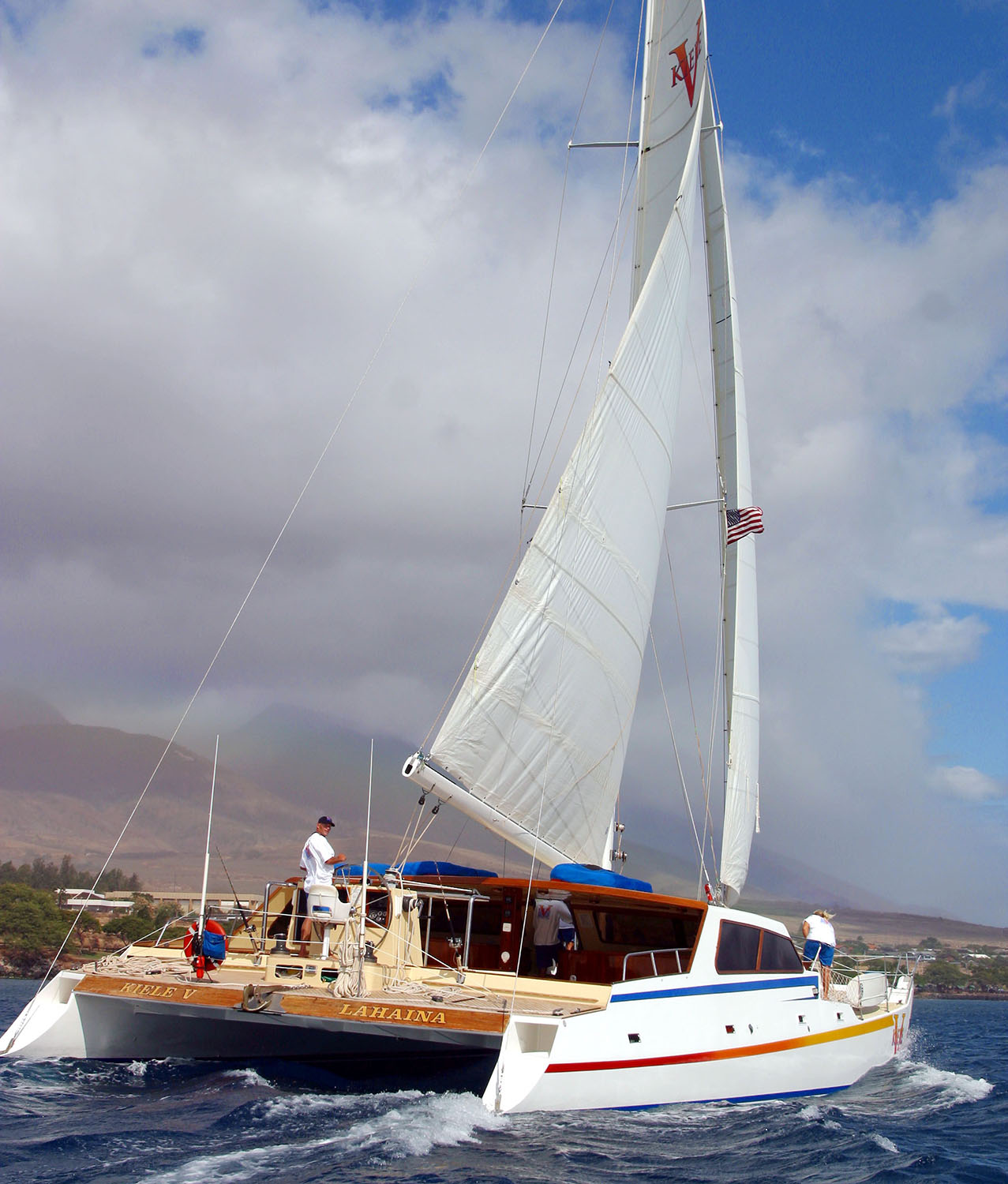
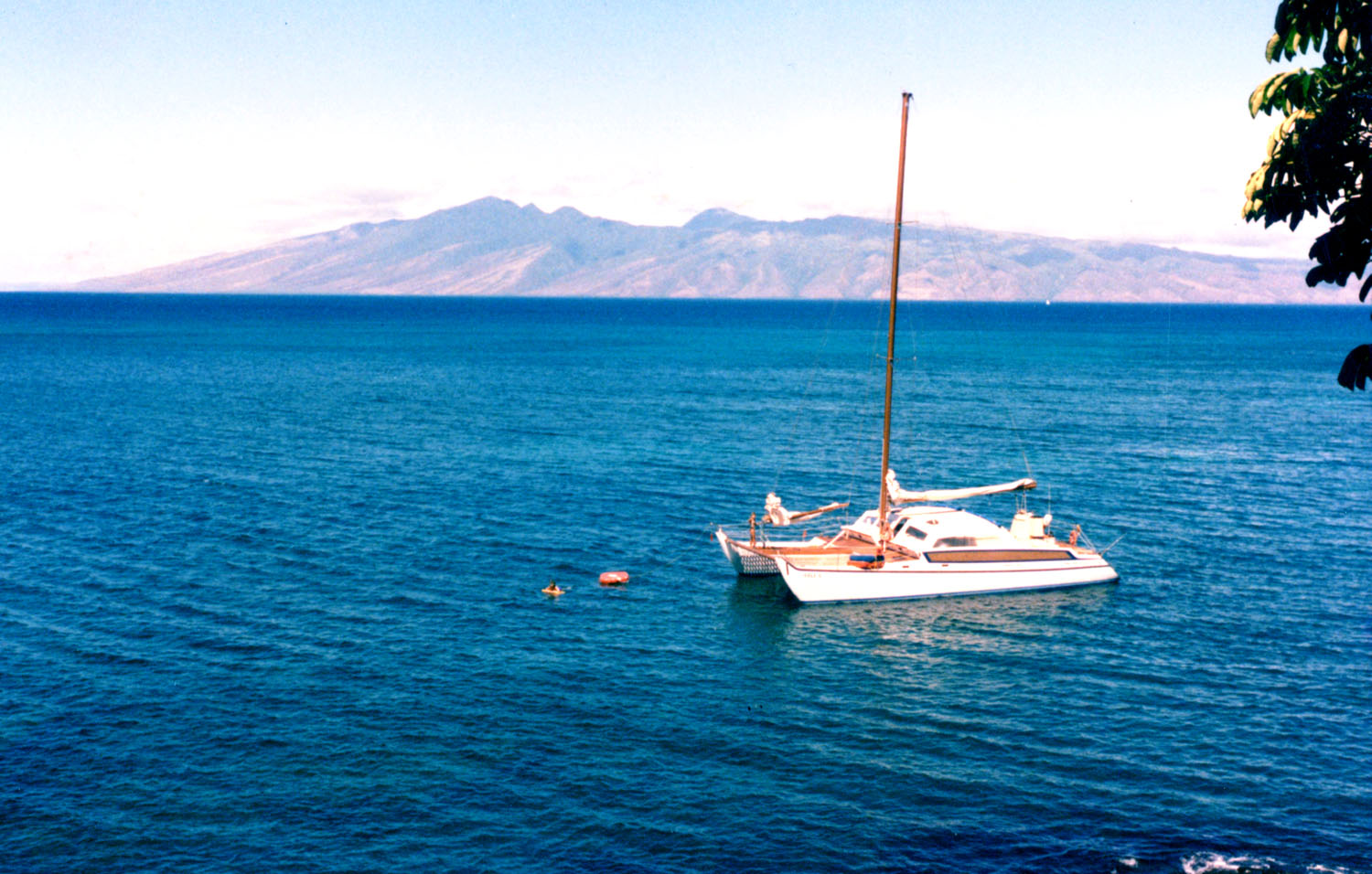
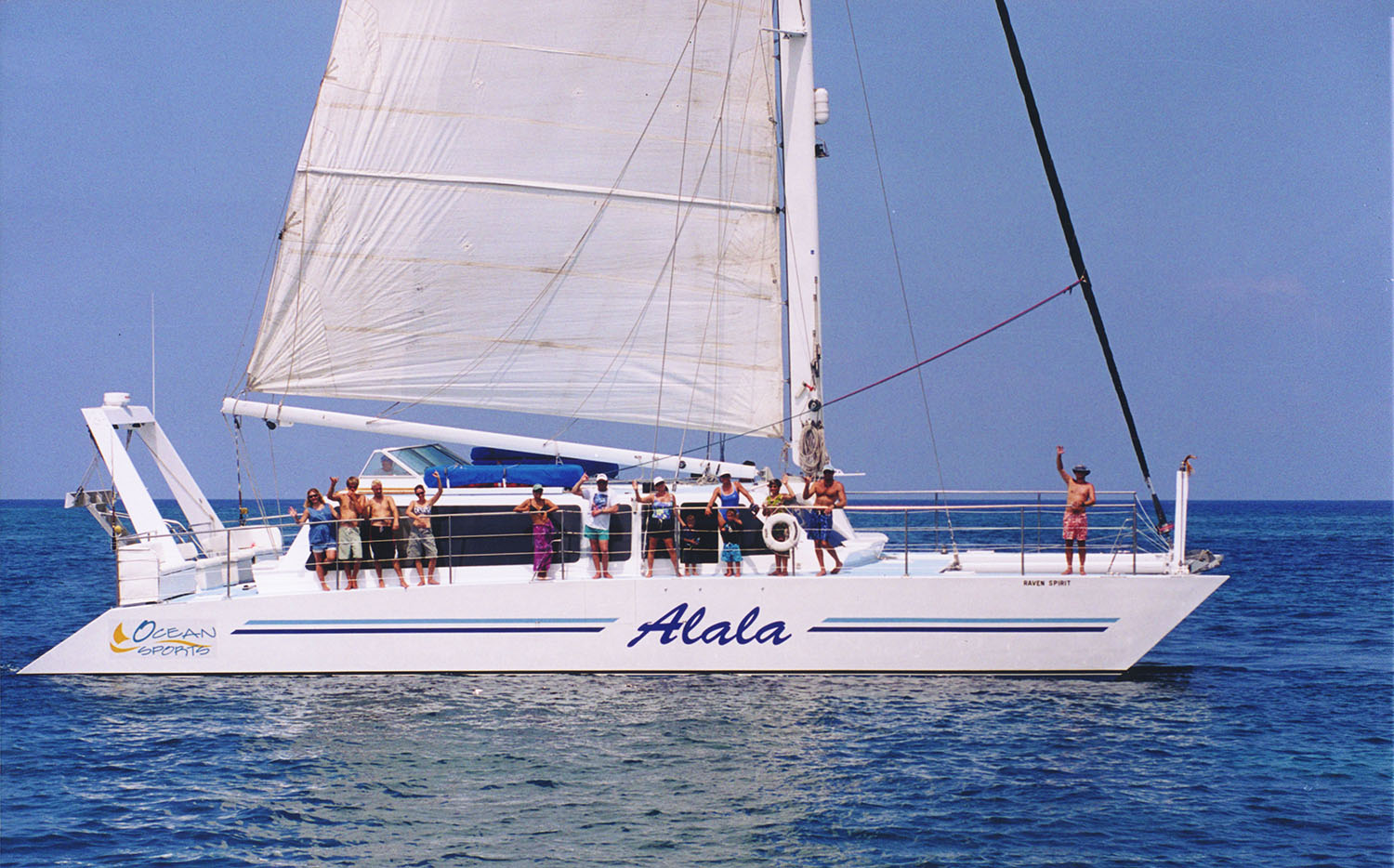
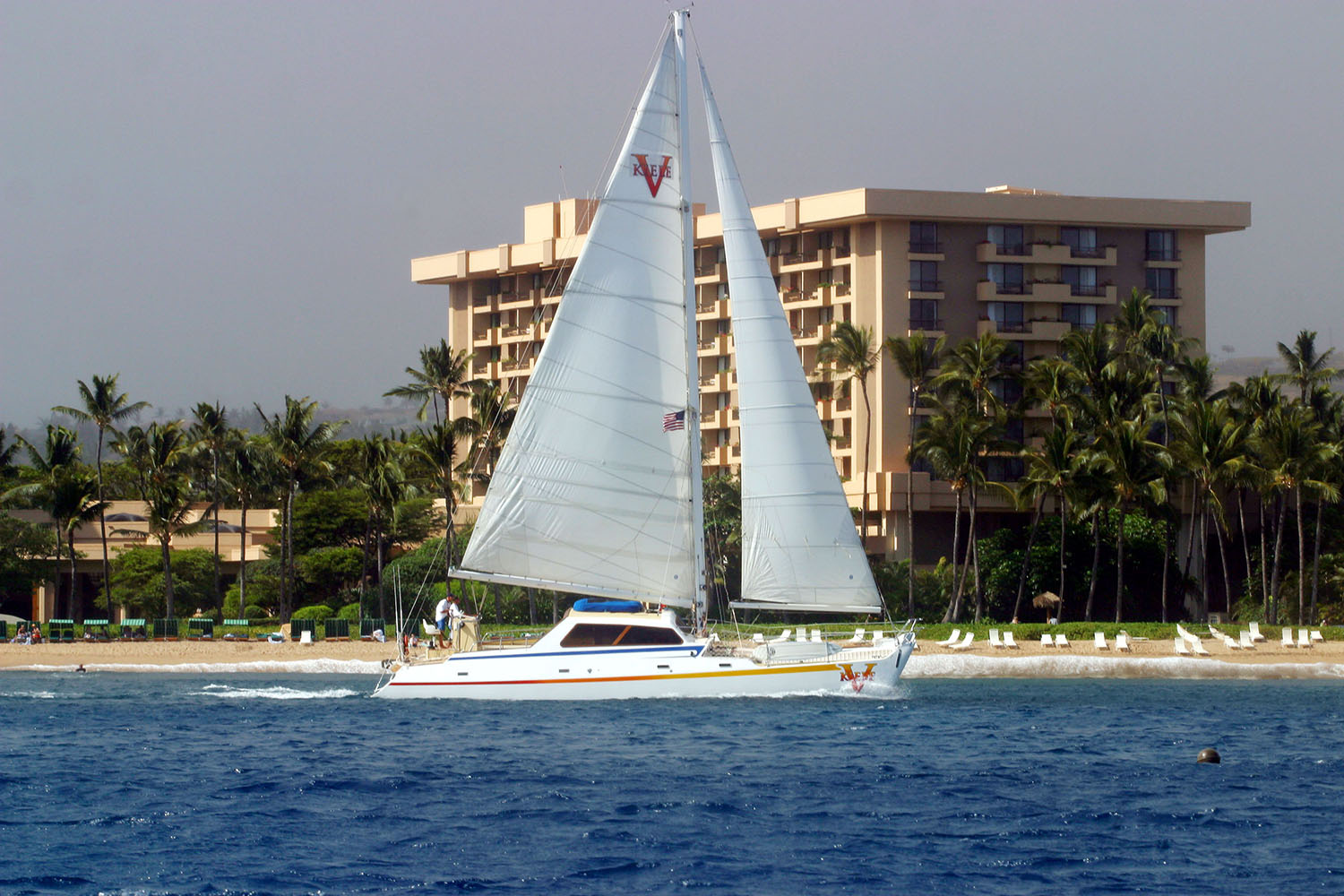
In Hawaii others followed Choy in the 50's building similar big Tourist beach cats like the 63 foot Ale Ale Kai III.
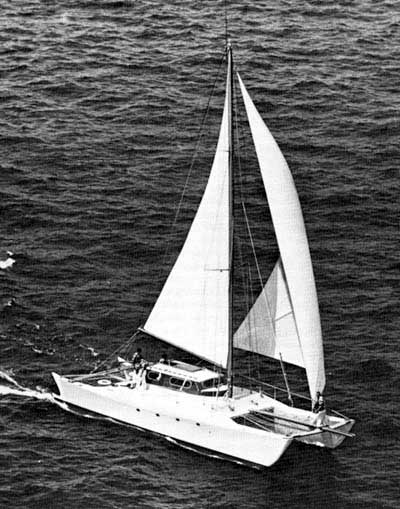
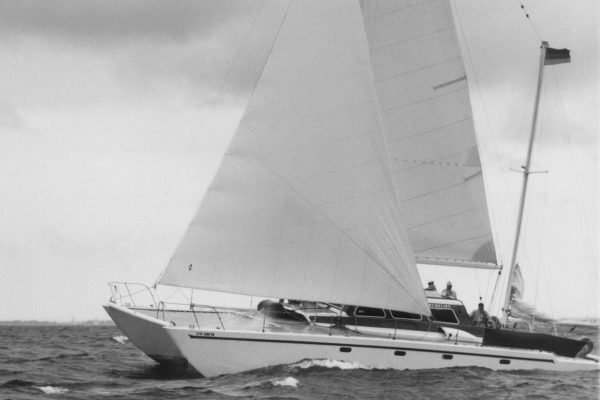
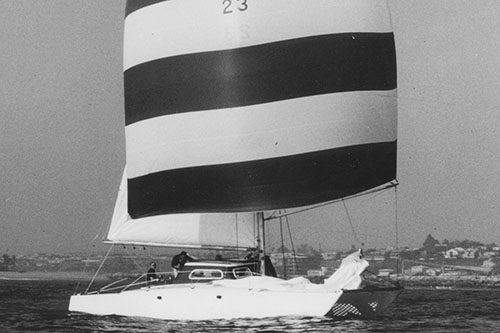
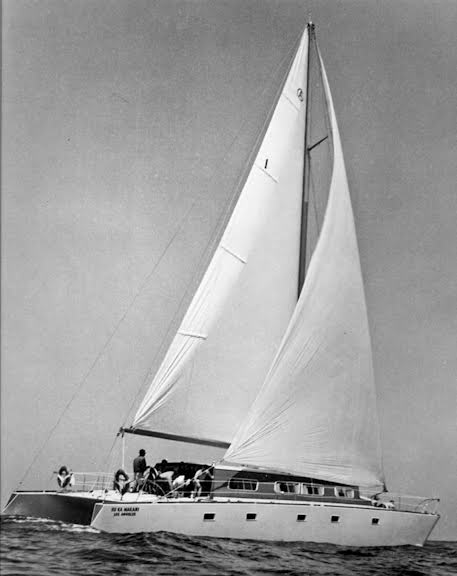
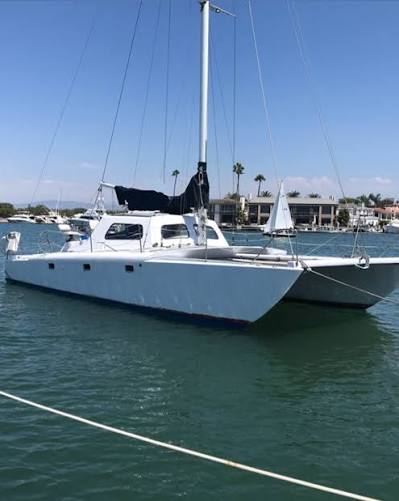
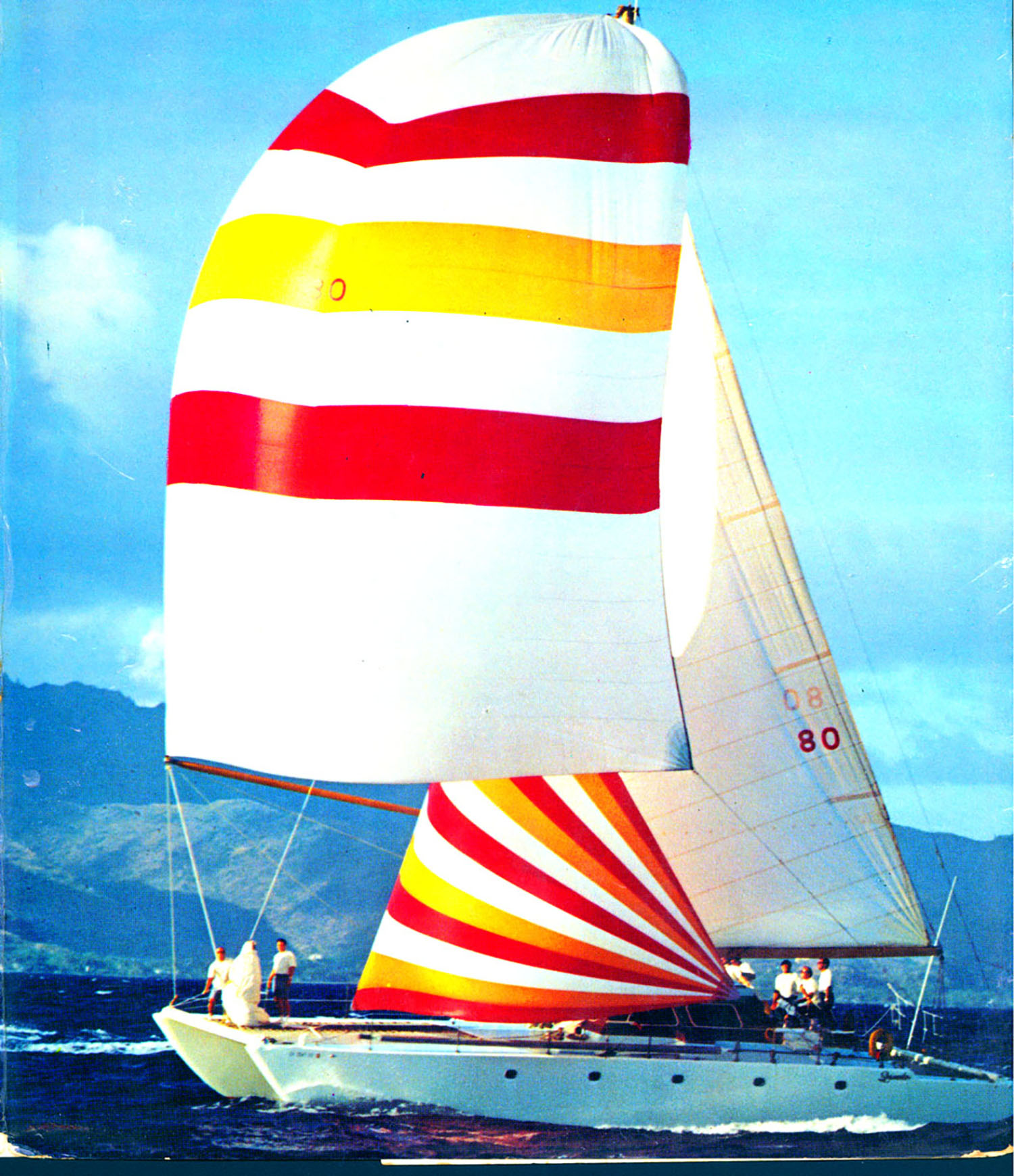
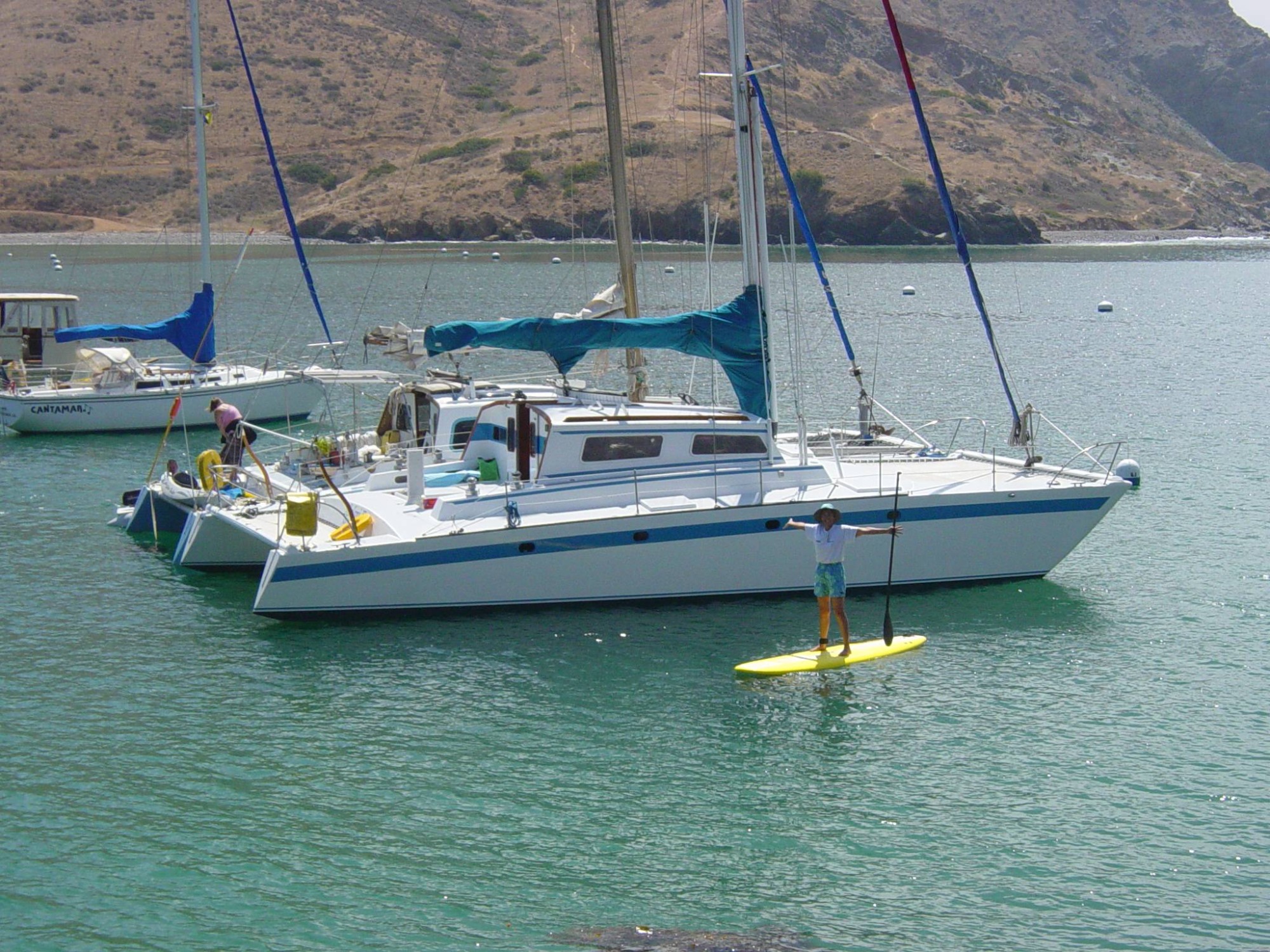
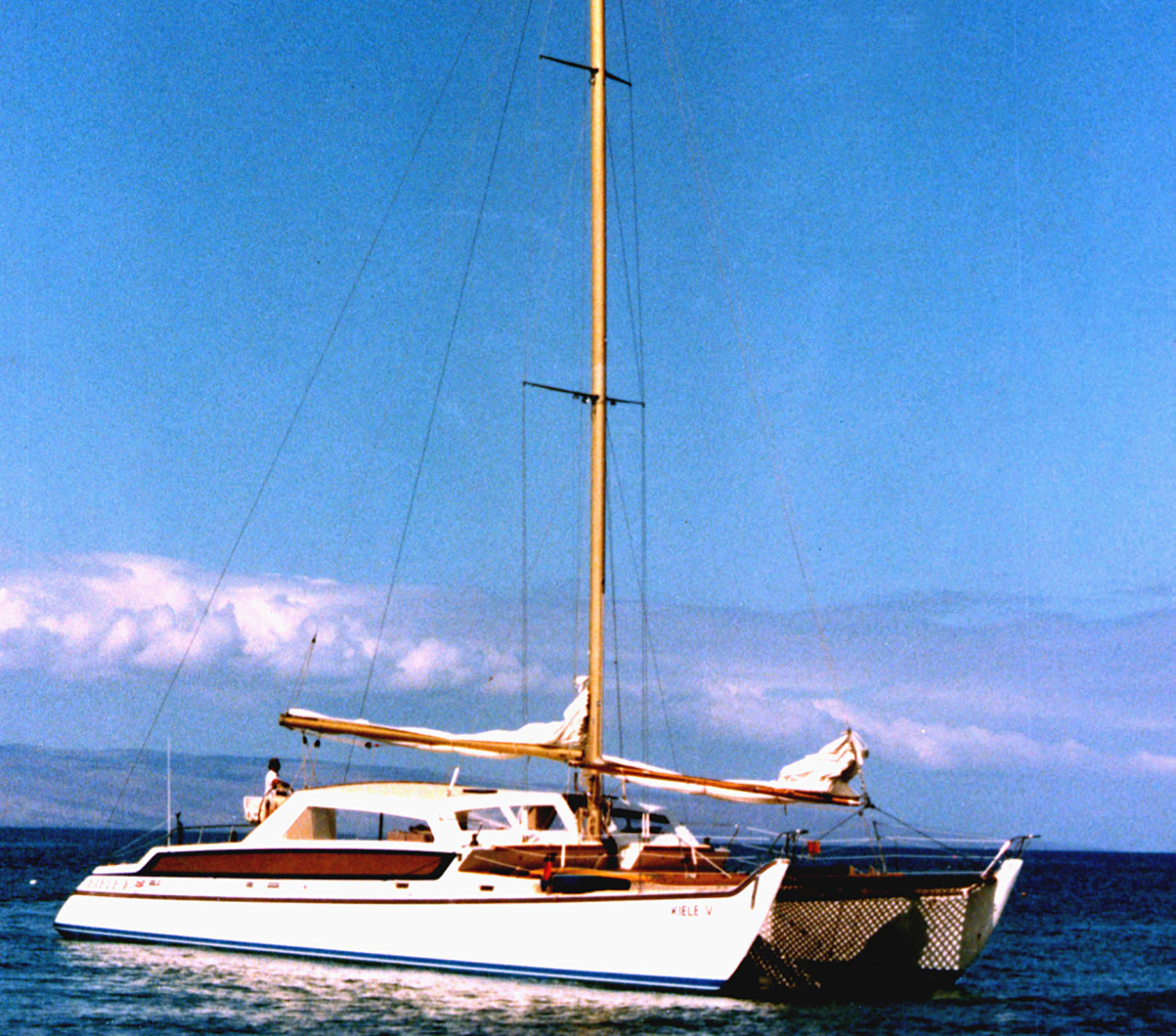
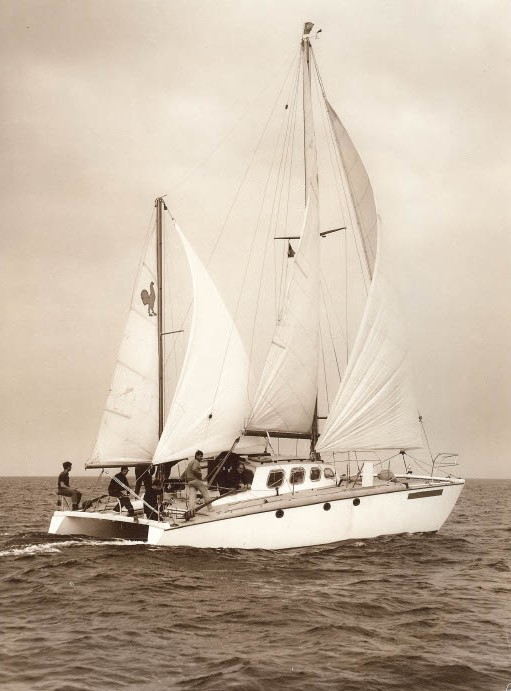
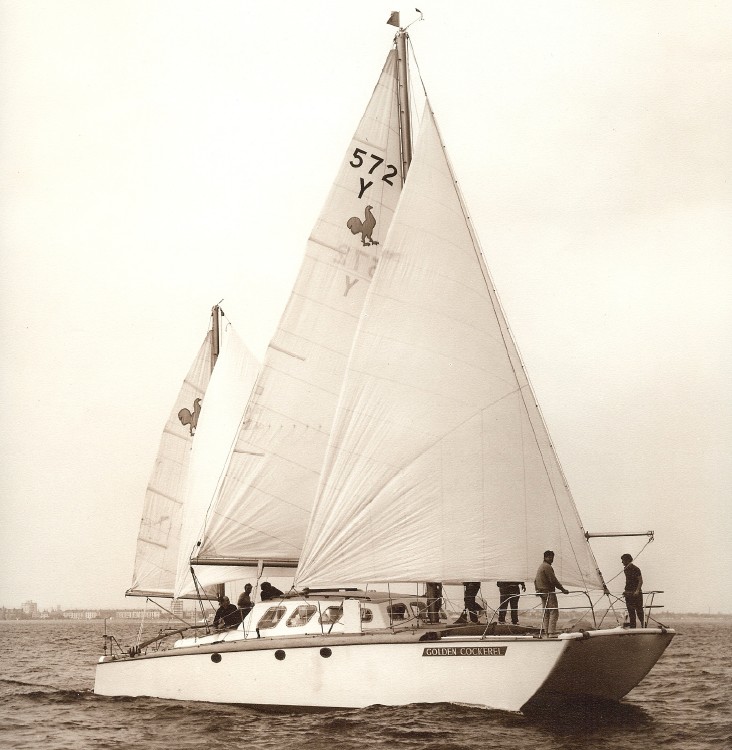
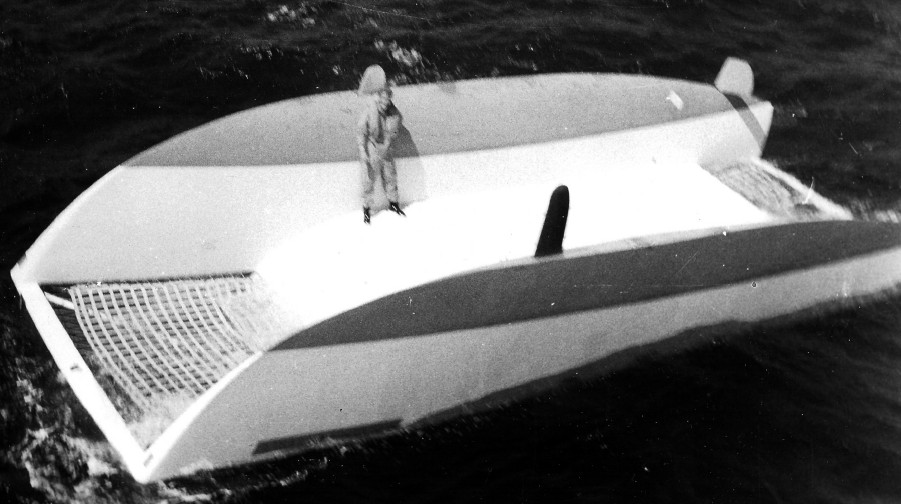
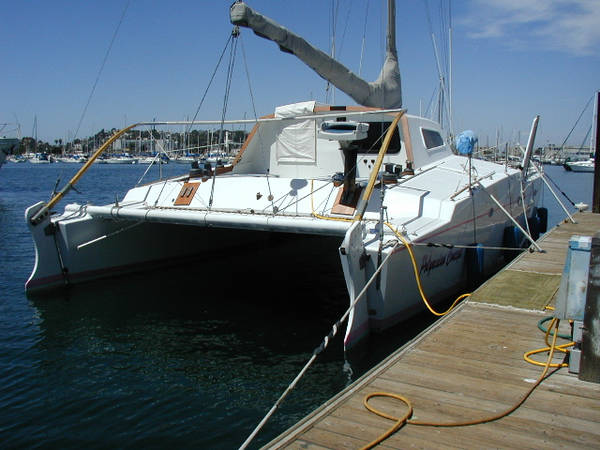
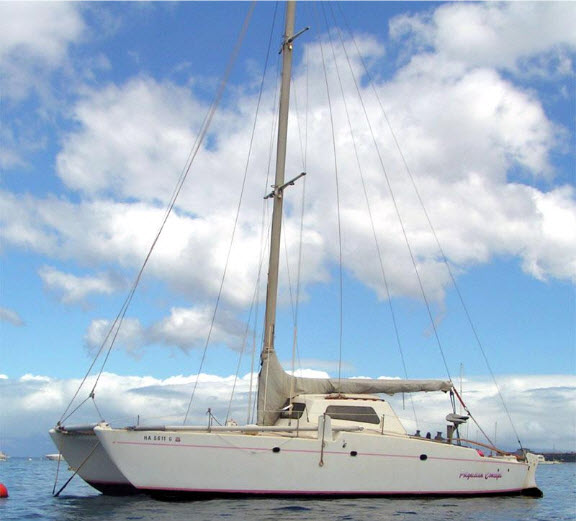
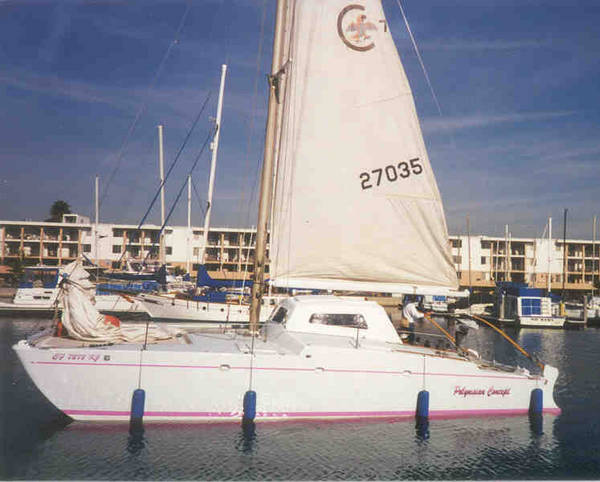
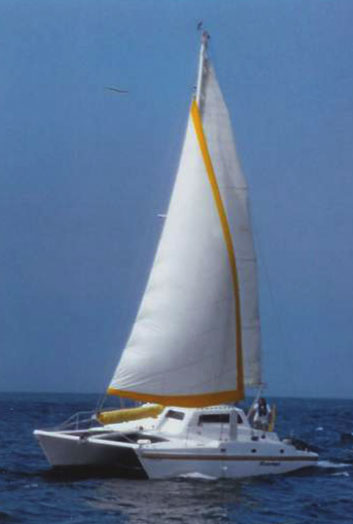
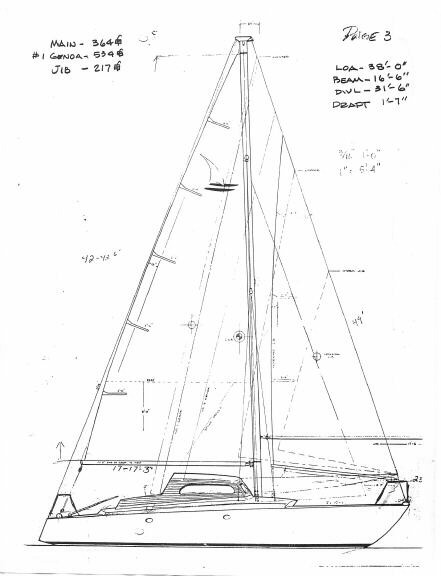
Rudy Choy, Alfred Kumalae and Warren Seaman formed CSK and became a hugely successful design team between 1957 and the 1980's when his son Barry Choy carried on Choy Design in Honolulu. In the 50's and 60's CSK were designing yachts for millionaire businessmen and movie stars that took up ocean racing in their spectacular catamarans which established many records. The 43-foot World Cat circumnavigated 1966 to 68. A similar boat was designed for Australian Bill Howell sponsored by a brewery to race as Golden Cockerel in the UK. Launched in 1967 built in Great Yarmouth unfortunately she capsized in her first race due to the inexperience of her crew with catamarans. There were many incidents in the sixties where the crew of multihulls failed to release the sheets when the boat heeled over until it was too late. In this case they carried to much sail and were actually preparing to set a smaller head sail when the boat lifted a hull and although she was sailing with the mainsheet hand held it was released too late and the genoa remined sheeted flipping the boat. Photographs of the upside down Golden Cockerel created much media speculation and created prejudice against all multihulls. This was about the same time that Australian designer Hedley Nichol and America's Arthur Piver both disappeared at sea in their own designs. Golden Cockerel went on to compete in the 1968 OSTAR and after that renamed Tahiti Bill in 1972,and 1976. She also raced in the Round Britain Races. Howell rode out a hurricane in her and was effussive about her seaworthiness. He learned from the capsize he said and at the time was sure it would not had happened if they had not been racing. Six Atlantic crossings later he had proved the basic seawthiness of Choy's design although she was by modern standards too narrow and her hull shape was prone to hobby horsing, unsuited to short choppy seas in the UK however suited to big Pacific swells.
Woody Brown, and CSK were without doubt the inventors of modern catamarans.